
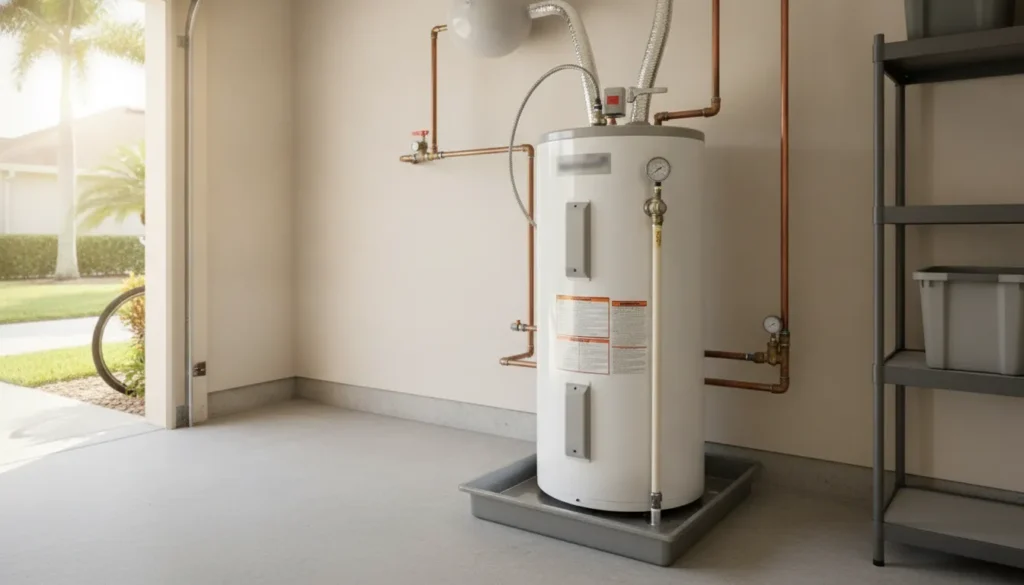
How long a water heater lasts depends on the type sitting in the closet, not on a single number. How long does a water heater last is the question most homeowners ask before they spend money. The U.S. Department of Energy estimates the average life of a storage water heater at about 15 years, based on national housing surveys in its 2024 consumer water heater standards. ENERGY STAR puts the life expectancy of a gas tankless water heater at 20 years, much longer than a conventional tank, on its tankless water heater page. In Fort Myers and Lee County, humid garages, long cooling seasons, and the age of the home can push a unit toward either end of that range. Age is a planning signal. It is not, by itself, a reason to replace a heater that is still doing its job.
Call (239) 785-9022 to schedule water heater service
How Long Does a Water Heater Last by Type?
Use the table below as a planning range, not a promise for any one house. A well-kept tank can outlast a neglected one by several years. A tankless unit only reaches the longer range if the heat exchanger is flushed on the schedule the maker calls for.
| Heater type | Planning range | What the source actually says |
|---|---|---|
| Storage tank, gas or electric | About 15 years on average. | DOE’s 2024 rule puts average storage-heater life at about 15 years. |
| Gas tankless | About 20 years. | ENERGY STAR says a tankless unit lasts about 20 years. |
| Hybrid heat pump | Confirm the model. | Do not assume a heat pump tank matches a standard electric tank. |
The 8-to-12-year figure shows up all over contractor blogs. Treat it as the early end of the range, not as a rule. DOE’s average is higher because it includes heaters that stay in service well past a decade, along with units that fail early. Your heater can land anywhere in that spread.
Whiskey Creek Plumbing installs, repairs, and replaces tank, tankless, and hybrid systems for homes and businesses in Fort Myers and Lee County. That includes hybrid electric units such as the Ruud models listed on our service page, not only standard tanks. When age and symptoms both point the same way, water heater service is the page that covers repair, replacement, and installation, with a fixed price before any work starts.
Why the Same Heater Lasts Longer in One House
Two houses on the same street can retire water heaters years apart. The difference is usually the water, the setting, and whether anyone has opened the unit since it was installed.
Water quality and sediment
The U.S. Environmental Protection Agency says hard water is not a health concern, but calcium and magnesium leave scale on water heaters and other appliances. Scale cuts heat transfer, so the heater runs longer to do the same job, and it can shorten the life of the unit. In its water softener guide, EPA treats water above 120 mg/L, about 7 grains per gallon, as hard.
Many Southwest Florida taps are softer than the national hard-water story. Third-party summaries of Lee County Utilities data, including HardWaterHQ’s Fort Myers page, put treated surface water near 1.8 grains per gallon, which would count as soft. That is not a figure from the utility’s own report, and it is not your tap. Wells, private treatment, and older neighborhood plumbing can look very different. If you see white crust on shower heads or a kettle that scales up fast, test the water at the house before you assume the heater is safe from mineral buildup. Our hard water Fort Myers guide covers how minerals show up in local plumbing.
Temperature and daily demand
A heater set well above 120°F works harder and can scale faster. A full house that showers back to back asks more of a small tank than a couple who stagger their use. Neither fact tells you the unit is failing. They explain why one 12-year-old heater still feels fine and another already runs out of hot water.
Maintenance that was skipped
Sediment at the bottom of a tank and a spent anode rod are the two quiet ways a storage heater rusts out early. Tankless heat exchangers need a flush so scale does not bake onto the coils. We will not repeat the yearly checklist here. If you want the steps, use the Florida water heater maintenance checklist.
The garage, the coast, and the install
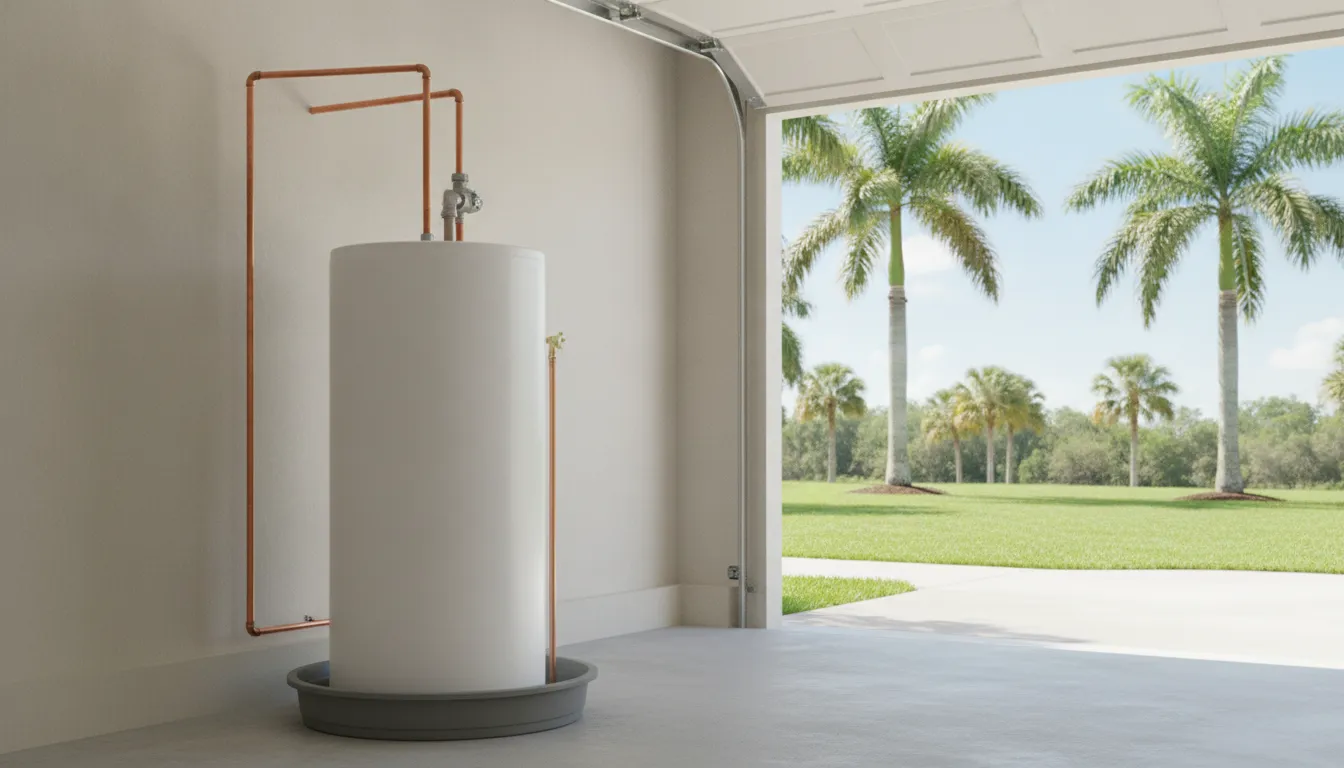
A lot of Lee County heaters live in garages or outdoor closets. Humid air, salt near the coast, and a pan that never gets checked all add wear that a national average does not capture. A unit installed without a proper drain pan, or with a temperature-and-pressure discharge that has been capped, is a safety problem now. Age is secondary.
How Long Does a Water Heater Last From the Rating Plate?
Do not guess from the color of the tank. Read the rating plate. It is a metal or plastic label on the upper front or side of a storage heater, and on the front cover of most tankless units. You want the serial number and any line that says “manufactured” or “date of manufacture.”
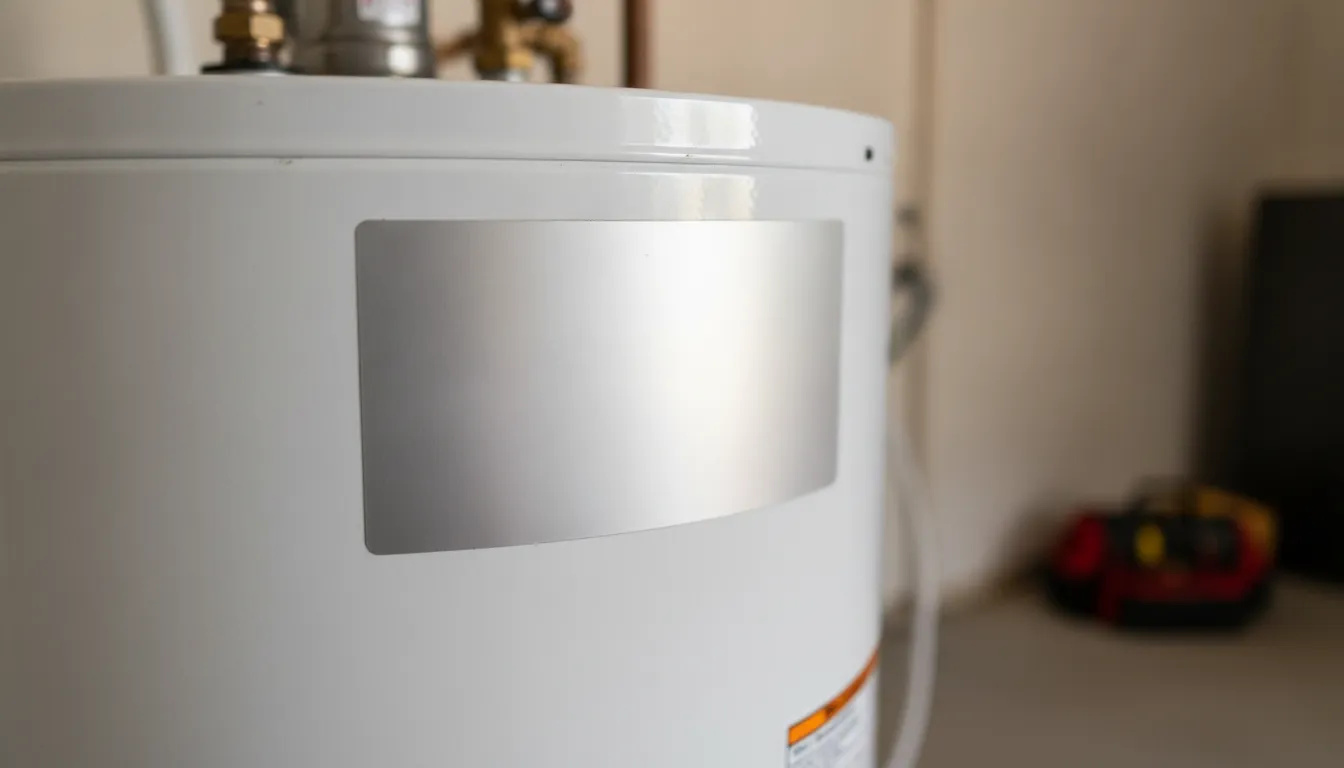
If a clear date is printed, you are done. If you only have a serial number, the maker encodes the year in that string, and each brand does it differently. A few patterns homeowners can check without tools:
- Bradford White. The maker says the first two characters of the serial number are a year letter and a month letter. Bradford White publishes the letter chart on its owner site. Do not invent the year from a blog screenshot. Use the chart for your serial.
- A printed standard year. Many labels list an ANSI or CSA standard followed by a year, such as a code ending in 2016. The Building Intelligence Center notes that those standards are revised about every 4 to 6 years. The heater cannot be older than that year. It is often not much newer than 4 to 6 years after it.
- Gas valve stamp. Many gas control valves carry a four-digit code, year then week, stamped into the metal. That dates the valve. It dates the heater only if the valve is original.
If the label is painted over, rusted, or missing, stop. Scraping a hot tank or removing covers is not a DIY job. A plumber can read the plate during a normal service visit and tell you whether the unit is early, average, or late in its range.
Write the year on a piece of tape inside the closet door once you know it. The next person who looks, including you, will not have to decode the serial again.
What Florida Homeowners Should Watch as the Heater Ages
Age plus one clear change in how the heater behaves is more useful than age alone. These are the changes worth noting. For a fuller symptom list, see signs your water heater is about to fail.
- Hot water runs out sooner than it used to. That can be demand, a failing element, a dip tube, or sediment. It does not automatically mean the tank is too small. Our note on why hot water runs out quickly walks through the difference.
- Water at the base of the tank, or from the relief pipe. A wet base is urgent. A dripping temperature-and-pressure discharge needs a real diagnosis. Never cap that pipe. Read what a dripping relief pipe means before you touch it.
- Popping or rumbling that was not there last year. Hardened sediment often causes that sound. Flushing may help an otherwise sound tank. It will not fix a tank that is already leaking.
- Rusty or odd-smelling hot water only. If the cold side is clear and the hot side is not, the tank or anode may be breaking down. If both sides look the same, the problem may be the supply, not the heater.
- A second repair inside a year or two on a unit already past 12 years. Parts can still be worth replacing. The pattern is the point. One repair is maintenance. A string of them is a replacement conversation.
None of these signs set the age by themselves. A three-year-old tank can leak from a bad install. A 16-year-old tank can still be quiet. Put the year and the symptom in the same sentence when you call, and the visit is shorter.
When Age Means You Should Plan, Not Panic
Here is a simple way to sort the next step. It is a planning guide. The technician still has to see the heater.
- Under about 8 years, and it works. Keep the maintenance schedule. Do not replace it because a neighbor did.
- About 8 to 12 years, and it works. Know the year, know the type, and budget for a future replacement. Fix small, clear faults if the tank is dry and the rest of the system is sound.
- Around the DOE average of 15 years, or older. Get the unit looked at before it fails on a Sunday. If it is already leaking from the tank itself, replacement is the usual path. A tank leak is not a seal you tighten.
- Tankless near 20 years. Plan the replacement around a flush and a combustion or electrical check, not around a rumor that tankless units never wear out.
- Any age, with water on the floor or no hot water at all. Treat that as a service call, not as a research project. Shut off the heater only if you can do it safely, then call.
Repair versus replacement is a job-site decision. We do not use a blanket “replace at 10 years” rule, and we do not quote a price from the age of the unit. Fuel type, venting, pan, code, and access all change the job. For what a replacement can cost in this area, read water heater replacement cost in Fort Myers. For how tank and tankless differ beyond lifespan, use the tank vs tankless comparison.
Call (239) 785-9022 before a small leak becomes a replacement
FAQ: Water Heater Lifespan
How long does a water heater last in Florida?
Use the same national ranges, then adjust for the house. DOE’s average for storage water heaters is about 15 years. ENERGY STAR cites about 20 years for a gas tankless model. Humidity, a garage install, skipped flushes, and the water at your tap matter more than the state line. A heater on soft city water that gets flushed can outlast one on a well that never gets opened.
Is a 15-year-old water heater too old?
Fifteen years is the DOE average life for a storage water heater, not an expiration date. If the tank is dry, the hot water is clean, and you are not stacking repairs, it can stay. If it is leaking from the tank, rumbling, or already on its second recent repair, plan the replacement instead of waiting for a flood.
Do tankless water heaters last longer than tank models?
Yes, as a class. ENERGY STAR says a tankless water heater has a life expectancy of 20 years, which is longer than a conventional storage tank. That assumes the heat exchanger is maintained. A neglected tankless unit can fail earlier than a cared-for tank.
Does hard water make a water heater fail sooner?
It can. EPA notes that hard water leaves scale on water heaters and can shorten their life. Scale makes the unit run longer to heat the same water. If your tap is actually soft, hardness is a smaller factor than sediment, the anode, and the temperature setting. Test your water rather than guessing from a county average.
Should I replace a water heater just because of its age?
No. Replace it when the tank leaks, when repairs are stacking up on an older unit, or when it cannot keep up after a real diagnosis. Age tells you when to schedule a look and when to set money aside. It does not, by itself, mean the heater is done.
Get a Straight Answer on Your Heater
If you know the year on the rating plate and you have noticed a change, that is enough to start. We will tell you whether repair still makes sense or whether replacement is the cleaner path, and we will price the work before we begin. Whiskey Creek Plumbing is a family-run Lee County shop. We have served this area since 2022, with 25 years of plumbing experience behind the work. Water heater repair, replacement, and installation come with a fixed price and a 100% satisfaction guarantee.