
Hot water that runs out early can reflect heavier household demand, a problem at one fixture, or a fault in the water heater. It does not automatically mean that the tank is too small or needs replacement. Start by describing where and when the temperature changes, then ask for testing suited to your heater.
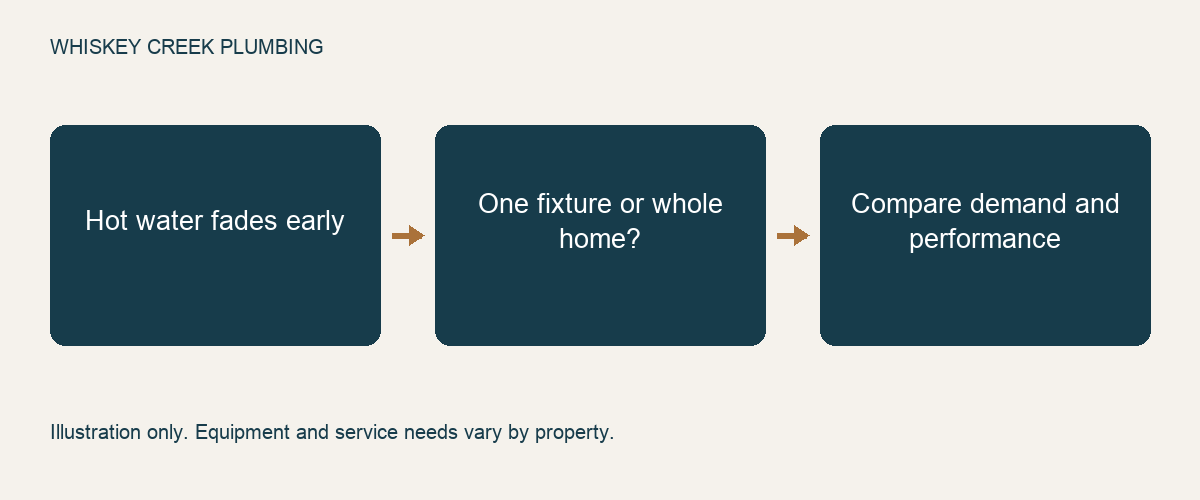
Does it happen at one fixture or throughout the home?
If only the shower turns cool while other outlets have normal hot water, tell the plumber. A fixture or mixing-control issue may need investigation. If several fixtures lose hot water after a similar amount of use, the heater’s delivery and recovery deserve attention.
Observe normal use rather than running an extended hot-water test. Note whether the first shower is normal, whether appliances are running at the same time, and whether this behavior is new. Avoid touching potentially scalding water or increasing the thermostat to experiment.
Compare current demand with the old pattern
More occupants, longer showers, or simultaneous use can change the demand on a storage heater. Share those changes along with the model, fuel type, and tank size if the label is safely readable. The relevant comparison is how this unit performs under this household’s use, not a universal minutes-per-shower rule.
If the same ordinary routine suddenly produces much less hot water, a diagnosis is especially useful. Ask whether testing indicates a heating component, thermostat, cold-water inlet component, plumbing condition, or a capacity issue. Different heater types require different checks.
What professional testing may investigate
A.O. Smith’s gas and electric service bulletins describe checks for insufficient hot-water delivery, including thermostat, dip-tube, and electric-element problems. These are examples of diagnostic paths, not instructions to open your heater or replace a particular part.
Do not remove access panels, test electrical continuity, change gas controls, or repeatedly reset a heater safety device. If the heater is leaking, equipment is wet, or a breaker repeatedly trips, stop experimenting and request professional help. If you smell gas, leave the area and contact the gas utility or emergency services from a safe location.
Decide on repair after the cause is established
Ask the plumber what finding explains the reduced hot-water supply and what a proposed repair is expected to restore. If replacement is recommended, ask how tank condition, repair history, and household demand support that choice. A larger unit should not substitute for investigating an unrelated fixture fault.
Whiskey Creek Plumbing serves Fort Myers properties with water-heater concerns. The assessment should be specific to your installed equipment; Southwest Florida location alone does not identify the cause.
Should I raise the temperature to get a longer shower?
Do not use a higher setting as a troubleshooting shortcut. It can increase scald risk and conceal the underlying issue. Ask the professional to assess delivery and safe operation together.
For related background, read Water Heater Repair Fort Myers: Repair or Replace?. See our water-heater service and Fort Myers service information for the next step.
To discuss your property, call Whiskey Creek Plumbing at (239) 785-9022 or contact us.