
Water heater maintenance Florida homeowners plan once a year can reduce sediment buildup, protect hot-water reliability, and catch safety concerns before they become an emergency. In Fort Myers and across Lee County, mineral-heavy water makes tank flushing and scale control especially important. This checklist explains what to inspect, what you can safely do yourself, and when to call a professional. For the broader picture, see our Water Heater, Drain, and Home Plumbing Systems guide for Fort Myers.
Annual water heater maintenance in Florida usually includes flushing sediment from a tank. Checking the anode rod, inspecting connections for leaks, and testing the temperature and pressure relief valve. Florida homeowners should also watch for rumbling noises, rusty water, unusual odors, or a drop in hot-water supply. Turn off power or gas before any inspection, and never service a gas connection or pressurized safety valve unless you are qualified.
Why Does Florida Water Heater Maintenance Matter Each Year?
Water heaters work throughout the year in Southwest Florida. Mineral deposits can settle at the bottom of a storage tank, where they harden into scale. The layer can make the heater noisier and reduce heat transfer. A yearly inspection gives you a chance to identify sediment, corrosion, loose connections, and a worn anode rod before the tank fails.
Lee County water is often described as moderately hard, with local readings commonly discussed in the range of 7 to 10 grains per gallon. Conditions vary by source and property. The practical takeaway is simple: minerals can affect fixtures, valves, tank heaters, and tankless heat exchangers. If you notice recurring scale at faucet aerators or showerheads, ask about water softener service in Fort Myers as part of a whole-home plan.
- Sediment can create popping or rumbling sounds in a tank.
- Scale can lengthen heating cycles and reduce available hot water.
- Corrosion around fittings or the tank base can signal a leak risk.
What Is Included in an Annual Water Heater Checklist?
A basic review should cover the water heater, nearby connections, and the area around the unit. Keep the inspection visual unless you know the equipment and safety procedure.
1. Check the installation area
Look for standing water, damp flooring, rust, staining, or a musty smell. Keep storage boxes and combustible materials away from gas equipment. Confirm that the drain pan and discharge piping are not blocked. Take a photo of the unit label so you have the model and serial information if you need service.
2. Inspect connections and temperature
Check the cold-water inlet, hot-water outlet, shutoff valve, and visible flex connectors for drips. Do not tighten or remove a connection that is hot, pressurized, or corroded. A temperature that feels excessively hot, fluctuates, or runs out quickly deserves professional diagnosis rather than repeated thermostat adjustments.
3. Flush sediment only with proper precautions
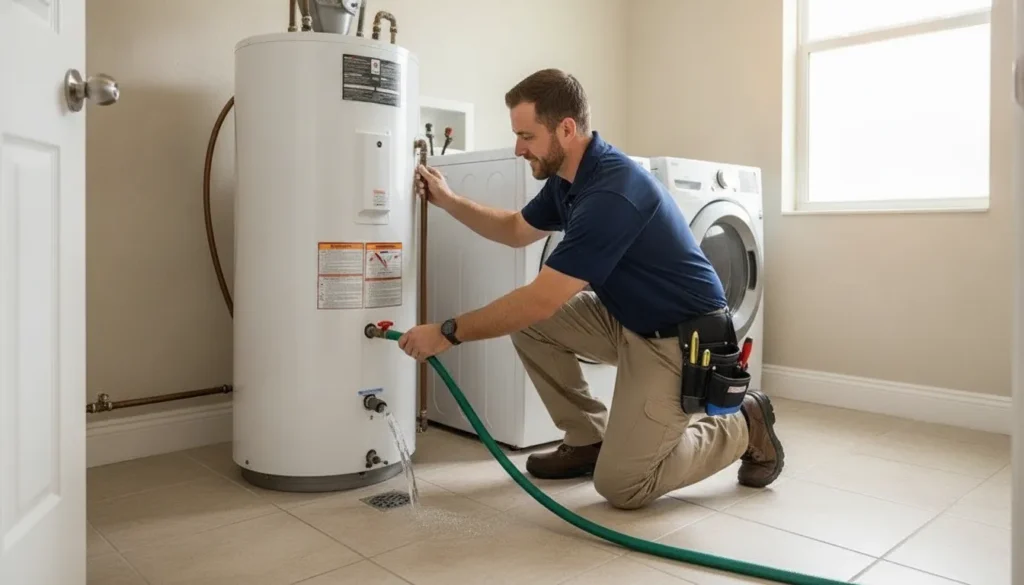
For a storage tank, a trained homeowner may turn off the heat source, allow the water to cool, attach a hose to the drain valve, and discharge water to a safe location. The exact procedure depends on the model. Never energize an electric heater while the tank is empty, and do not discharge scalding water where it can burn people, pets, landscaping, or a neighbor’s property. If the drain valve is blocked or the water remains gritty, stop and call a plumber.
- Turn off the correct breaker or place the gas control in the appropriate off or pilot position.
- Allow the tank to cool and connect a rated hose securely.
- Open the drain carefully and direct water to a safe discharge point.
- Close the valve, refill the tank fully, and check for leaks.
- Restore power or gas only after the manufacturer-approved refill steps are complete.
Whiskey Creek Plumbing provides routine water heater service, repair, replacement, and tankless service for residential and commercial properties. Our water heater service page explains the available options.
How Does Hard Water Affect a Tank or Tankless Heater?
In a tank heater, calcium and other minerals can settle in the bottom. When the burner or element heats water through that layer, the heater may make popping sounds and take longer to recover. Scale can also interfere with the drain valve and make a routine flush less effective.
Tankless heaters do not store water in a tank, but their heat exchangers can still develop scale. A restricted exchanger may reduce flow, produce error codes, or cause the unit to cycle. Tankless descaling requires the correct isolation valves, cleaning solution, and procedure for the model. It is not the same as flushing a storage tank.
Water treatment can reduce mineral exposure, but it should be selected for the home’s water conditions. A water softener or filtration system is not a substitute for checking the heater itself. For a new system decision, compare the maintenance needs in our guide to tank and tankless water heaters for Florida homes.
When Should You Check or Replace the Anode Rod?
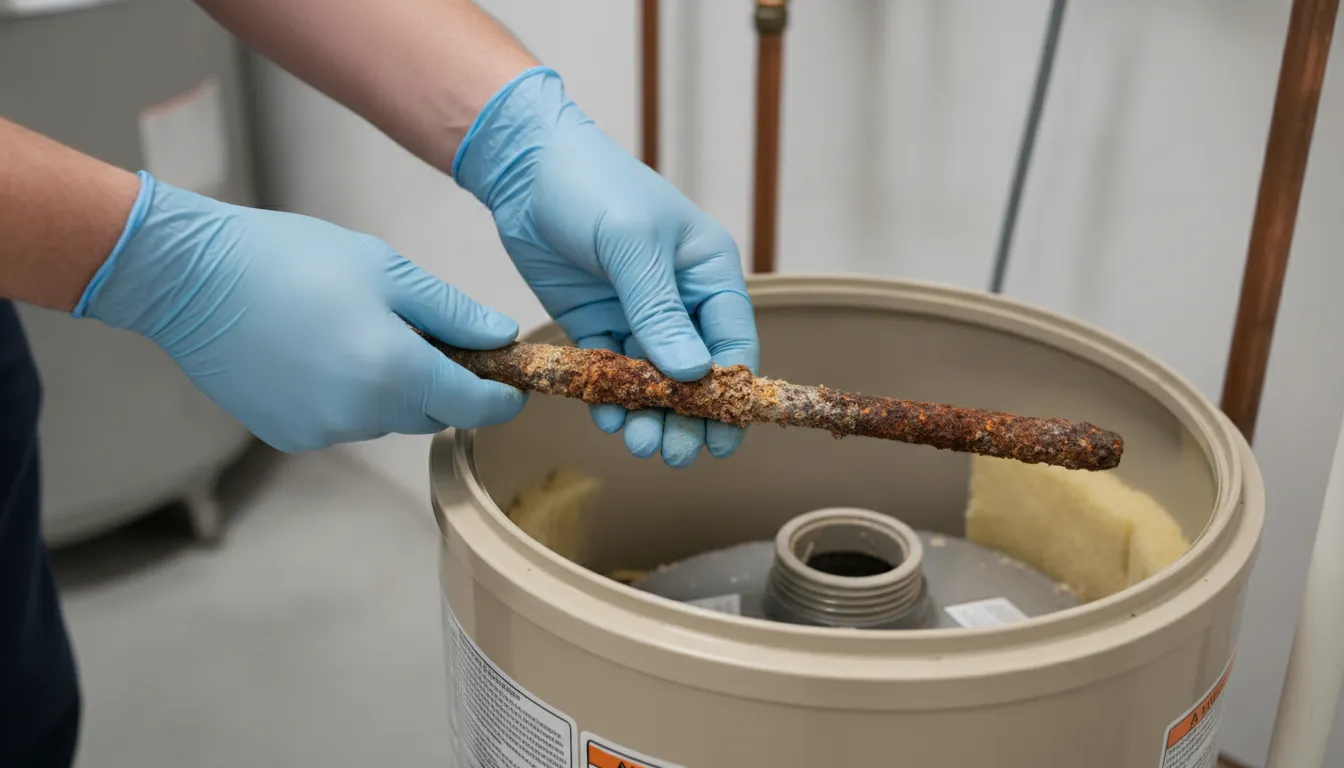
The anode rod is a sacrificial component in many tank water heaters. It corrodes in place of the steel tank, so its condition matters to the tank’s long-term protection. Hard water, water chemistry, and usage affect how quickly it wears. A professional can inspect the rod and recommend replacement based on its condition and the manufacturer’s requirements.
- Hot water has a sulfur or rotten-egg odor while cold water does not.
- Hot water appears rusty or contains unusual particles.
- The rod is visibly thin, heavily pitted, or missing sections.
- The tank is older and has never had an anode inspection.
Removing a rod may require significant torque and overhead clearance. Do not force a seized part or cut into the tank. A plumber can evaluate the rod, thread condition, tank age, and replacement options together.
What Water Heater Problems Need a Professional?
Stop DIY work and request service when you see a leak, a damaged electrical component, a gas odor, a discharge from the temperature and pressure relief valve, or a tank that continues to make loud noises after proper service. Never cap, plug, or disable a safety relief valve. If you smell gas, leave the area and contact the gas utility or emergency services according to local safety guidance.
A leaking tank often cannot be repaired permanently because corrosion is inside the vessel. A leaking valve, fitting, thermostat, heating element, or pipe may be serviceable, but diagnosis matters. Read our guide to signs a water heater is about to fail if your system is showing warning signs.
Whiskey Creek Plumbing is family-run and serves Fort Myers, Lee County, and surrounding Southwest Florida communities. We use a fixed-price service model and explain the recommended work before starting. Our team can help with maintenance, repairs, water heater replacement, and tankless systems.
How Often Should Fort Myers Homeowners Schedule Maintenance?
For many Florida homes, an annual review is a practical starting point. A home with hard-water symptoms, a tankless heater, high hot-water demand, or a history of sediment may need more frequent attention. Follow the manufacturer’s maintenance guidance when it differs from a general schedule.
Keep a simple record of the service date, visible condition, anode inspection, flush or descaling work, and any parts recommended. That record helps you plan replacement instead of waiting for a cold shower or a flooded utility room.
Frequently Asked Questions
Do I need to flush my water heater every year?
Many Florida homeowners use annual flushing as preventive maintenance because sediment and scale can accumulate in storage tanks. The correct interval depends on the unit, water conditions, and manufacturer guidance. If the drain is blocked or the water is dangerously hot, use a professional.
How long does a water heater last in Florida?
Service life depends on equipment, installation, water chemistry, demand, and maintenance. A plumber can assess an older unit’s tank, anode rod, valves, and performance. Our guide to water heater replacement in Fort Myers can help with planning.
Can I descale a tankless water heater myself?
Tankless descaling is possible for trained owners with the right isolation valves, pump, solution, and model-specific instructions. If you are unsure how to isolate the unit or handle the equipment, schedule service instead.
What should I do if my water heater is leaking?
Keep people away from hot water, shut off the water supply if you can do so safely, and turn off the electrical or gas source only when it is safe. Do not touch wet electrical equipment. Call a qualified plumber for diagnosis.