
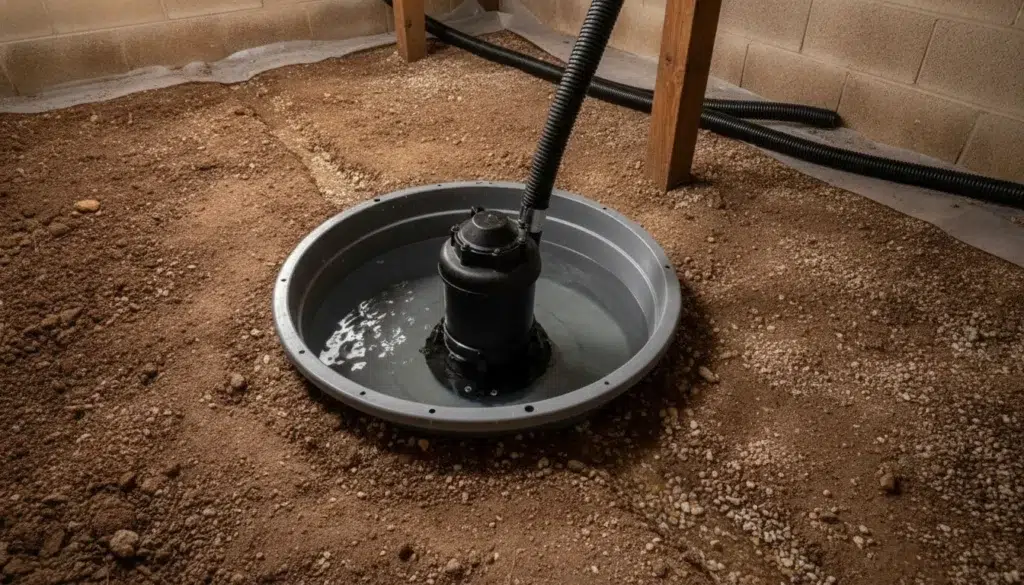
A sump pump basin is the collection point that gathers water below or beside a home so a sump pump can move it away from the foundation. You may need one when groundwater, heavy rain, drainage problems, or a below-grade space create a predictable path for water to collect. The right setup depends on the property, not just the pump.
Talk with Whiskey Creek Plumbing about sump pump installation and repair.
In simple terms, a sump pump basin is a durable container installed at a low point where water can collect. The basin holds that water until a float switch or sensor activates the pump, which sends the water through a discharge line away from the home. It is one part of a complete drainage system.
What Is a Sump Pump Basin?
A sump pump basin, also called a sump pit liner or sump crock, is the container that receives water from the surrounding drainage area. It creates one controlled collection point instead of allowing water to spread across a crawlspace, basement, or other low area. When the water reaches the activation level, the pump removes it through a discharge pipe.
The basin does not remove water by itself. It provides the space and structure that allow the pump, float switch, inlet paths, and discharge line to work together. A good installation also considers how water reaches the basin and where the discharge line sends it afterward.
Sump basin, sump pit, and sump pump are not the same thing
These terms are often used interchangeably, but they describe different parts of the system:
- Sump pit: The excavated opening or low collection area in the floor.
- Sump pump basin: The liner or container installed in that opening to collect and contain water.
- Sump pump: The powered equipment that moves water out of the basin.
- Float switch or sensor: The control that detects rising water and starts the pump.
- Discharge line: The pipe that carries water away from the foundation.
Understanding the difference helps when diagnosing a problem. A pump can be working while the basin is poorly placed, undersized for the site, clogged with sediment, or connected to a discharge line that sends water back toward the foundation.
How Does a Sump Pump Basin Work?
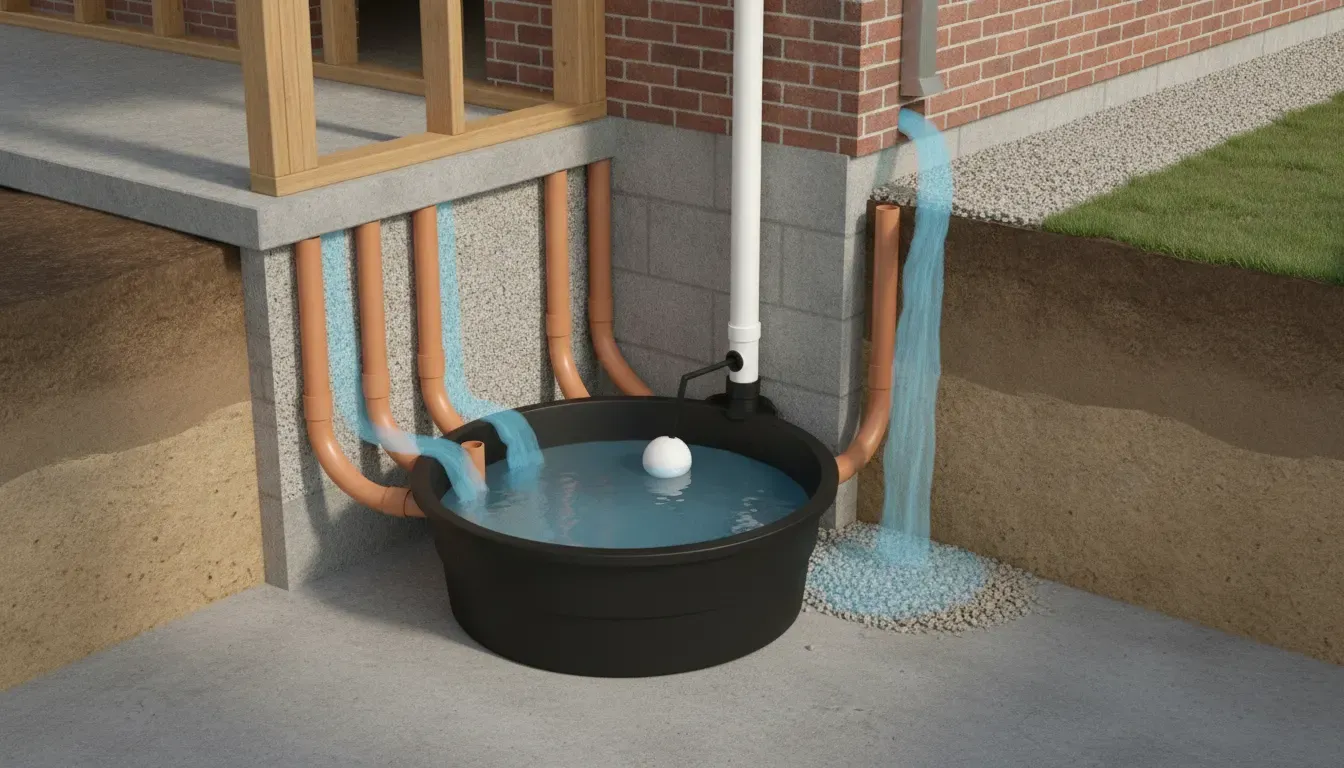
A sump pump basin works as a reservoir in a larger drainage path. Water enters through drainage piping, openings in the basin, or another approved route. As the water level rises, the float switch activates the pump. The pump then pushes the water through the discharge line and away from the structure.
The sequence is simple, but each part has a job. The basin gives water a stable place to collect. The pump needs enough room to operate without the float catching on the wall or nearby piping. The discharge line must carry water far enough away that it does not immediately return to the same drainage area.
Why the low point matters
Water follows the easiest path to a low area. A basin installed at the right collection point gives groundwater and drainage water somewhere controlled to go. If it is placed above the natural collection point, water may remain in another part of the crawlspace or lower level instead of reaching the pump.
The right location is specific to the property. Floor shape, foundation drainage, soil, access, existing piping, and the direction of discharge all affect the plan. A professional evaluation can identify the actual water path before anyone cuts into a floor or installs equipment.
Why the cover and discharge route matter
A fitted cover can help keep debris out of the basin and reduce moisture and soil gases entering an interior space. The Building America Solution Center recommends a tight-fitting, gasketed cover and explains that sump outflow should be directed away from the foundation or to an approved drainage destination. Review the Building America sump pump guidance for the general installation principles.
Local drainage rules and the property layout still need to be considered. A general online diagram cannot determine the right discharge destination for every home in Fort Myers or the surrounding area.
When Do You Need a Sump Pump Basin?
You may need a sump pump basin when water regularly collects in a low area and needs to be moved away automatically. Past seepage, standing water, damp insulation, musty odors, staining, or repeated water entry after heavy rain are reasons to investigate the drainage system. The goal is to identify the water path before choosing equipment.
Signs a basin or drainage evaluation may be worthwhile
- Water gathers in a crawlspace, basement, lower utility area, or another below-grade space.
- Wet spots or staining appear after heavy rain even when there is no visible plumbing leak.
- A property has a history of seepage, flooding, or water collecting next to the foundation.
- A pump runs often, runs continuously, or cannot keep the collection area dry.
- The existing pit is open, unstable, full of sediment, or too small for the equipment around it.
- A remodel, addition, or drainage change creates a new low area where water can collect.
- The discharge line ends too close to the foundation or sends water back toward the same area.
These signs do not prove that a new basin is required. They show that the water-management system deserves a closer look. A plumbing professional can separate groundwater, stormwater, condensation, and supply or drain leaks before recommending a solution.
Why Southwest Florida conditions deserve attention
Fort Myers-area properties can experience intense rain, saturated soil, and fast changes in groundwater conditions. A home does not need to be in a cold climate to have water-management concerns. Crawlspaces, low spots, older drainage systems, and properties with a history of seepage may need a plan for collecting and moving water.
At the same time, not every home needs a sump pump basin. Many homes have no below-grade collection area, while others may use a different drainage design. The useful question is not whether every property should have the same equipment. It is whether water has a repeatable path into a low area and whether the current drainage system handles it safely.

Does Every Home Need a Sump Pump Basin?
No. Whether a home needs a sump pump basin depends on its foundation design, drainage, elevation, soil and groundwater conditions, history of water entry, and the space available for a safe collection point. A basin can be useful protection for one property and unnecessary for another.
Homes with crawlspaces or lower areas that collect water deserve particular attention. A slab home may have fewer below-grade spaces, but the absence of a basement does not automatically answer the question. Water can still collect near a foundation, enter through openings, or overwhelm an existing drainage path during heavy rain.
Past water entry is one of the most useful clues. Note where water appears, when it appears, how long it remains, and whether it follows rain or plumbing use. Those details help a professional distinguish a drainage issue from a pipe or fixture leak. If the concern is specifically about a North Fort Myers property, our storm-ready sump pump guide for North Fort Myers covers the local planning questions separately.
What Should You Consider Before Installing a Basin?
A sump pump basin should be planned as part of a system, not selected as a standalone container. Before installation, the important questions involve location, water entry, basin and pump fit, discharge, cover, power, and access for future service.
- Collection point: Where does water naturally gather, and can the basin reach that path?
- Basin fit: Is there enough room for the pump and float to operate without obstruction?
- Water volume: How much water enters during normal conditions and heavy rain?
- Discharge: Where can the line send water without returning it to the foundation?
- Cover: Can the basin be protected from debris while still allowing safe service access?
- Power and backup: What happens if a storm interrupts power when the pump is needed?
- Access: Can the pump, check valve, and discharge connection be inspected later?
Do not choose a basin by dimensions alone
Online guides often list common basin sizes and materials, but a dimension that works in one property may not work in another. The basin must fit the available space, the drainage path, the pump, the float switch, and the expected water conditions. It also needs to be installed without damaging the foundation or interfering with existing utilities.
The same caution applies to material and perforation choices. A professional can evaluate sediment, groundwater entry, access, and the surrounding floor before recommending a basin. If the installation requires cutting concrete, excavating soil, connecting drainage, or routing a new discharge line, it is not a good place to rely on a generic shopping list.
Leave enough room around the basin for the pump and controls to work reliably.
How Do You Know When a Basin Needs Attention?
A basin or sump system needs attention when water is not collecting or leaving as expected. Standing water outside the normal collection area, a pump that runs constantly, unusual noise, a stuck float, heavy sediment, a damaged cover, or discharge that returns toward the foundation can all indicate a problem.
Routine care is different from installing or redesigning the system. Our sump pump maintenance guide covers basic checks, warning signs, and when to call a professional. If the concern involves the basin location, water entry, pump replacement, or discharge route, a broader inspection may be needed.
Avoid treating a failing basin as a cosmetic issue. Water can move into areas that are difficult to see, and a pump that runs during a storm is not useful if the collection point, float, power, or discharge path cannot do its job. If you are unsure what the water is doing, document the conditions and have the system evaluated before the next heavy rain.
Sump Pump Basin FAQs
What is a sump pump basin?
A sump pump basin is a container installed at a low point to collect water until a sump pump moves it through a discharge line away from the home. It is one component of a complete drainage system.
Is a sump basin the same as a sump pit?
Not exactly. A sump pit is the opening or low collection area, while the sump basin is the liner or container installed in that opening. The sump pump sits in or next to the basin and removes the collected water.
Does every home need a sump pump basin?
No. The need depends on foundation design, drainage, groundwater, elevation, past water entry, and whether the property has a low area where water collects. A site-specific evaluation is more useful than a universal rule.
Where should a sump pump basin be installed?
It is generally installed at a low collection point where water can reach it, with enough room for the pump and controls. The exact location depends on the property’s drainage, floor, foundation, utilities, and discharge plan.
Can a basin be added to a crawlspace?
Sometimes. A crawlspace basin may be appropriate when water repeatedly collects there, but the installation must account for the floor, drainage path, access, pump, discharge line, and power. A plumber should evaluate the space before installation.
When should I call a plumber about a sump basin?
Call when the basin is damaged or unstable, the pump runs constantly, water is not leaving, the float sticks, sediment blocks the system, or water keeps returning toward the foundation. Professional help is also appropriate before a new installation.
Plan the Right Sump Pump Basin for Your Home
A sump pump basin can give collected water a controlled path out of a crawlspace or lower area, but the basin is only effective when its location, pump, controls, cover, and discharge route match the property. For Fort Myers and surrounding Southwest Florida homes, a clear evaluation is the best starting point when water conditions are difficult to predict.
Whiskey Creek Plumbing is a family-run local plumbing company with transparent, fixed-price service. We can help you understand what is happening, explain the available next steps, and provide a clear quote before approved work begins.
Call Whiskey Creek Plumbing at (239) 785-9022 to discuss your sump pump basin needs.