
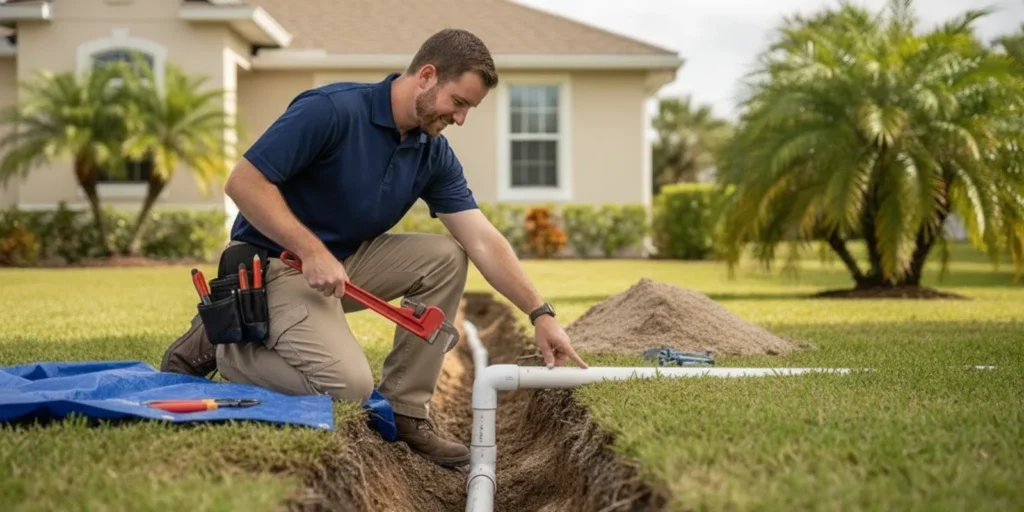
Underground pipe repair services address leaks, breaks, corrosion, and blockages in buried plumbing lines. The right repair depends on the pipe’s location, material, condition, and damage—not simply whether digging can be avoided. For Fort Myers homeowners and local businesses, a careful inspection helps distinguish a targeted repair from a larger replacement.
Call (239) 785-9022 to discuss a pipe concern
What counts as an underground pipe problem?
Buried water, sewer, and drain lines can develop different problems. A water line leak may appear as an unexpectedly high bill, wet areas in the yard, low pressure, or water appearing where it should not. A sewer or drain issue may cause recurring backups, slow drainage, or unpleasant odors. These signs are clues, not a diagnosis; irrigation, rainwater, fixture trouble, or other site conditions may cause similar symptoms.
Start by noting what changed and where. Is the moisture close to a known route from the water meter to the building, or near a drain route? Are multiple fixtures affected, or only one? Does the symptom continue when water use stops? These details help organize the assessment, but they do not confirm the source by themselves. Whiskey Creek Plumbing provides plumbing services for local homes and businesses; review our plumbing services for an overview.
How does a plumber narrow down the repair?
A sound recommendation begins by identifying which pipe is affected, locating the suspected fault, and understanding the condition of the surrounding line. Depending on the system and access, assessment may include reviewing symptoms, checking valves and fixtures, testing a line, or using a camera to view an accessible drain or sewer pipe. No single inspection tool answers every question: a camera shows the pipe interior, while a water supply leak may need another method.
- Describe the timeline. Note when symptoms started, whether they are constant or intermittent, and what water use seems to change them.
- Map the affected area. Identify wet spots, odors, slow fixtures, and any recent landscaping or construction near the suspected route.
- Identify the system. Clarify whether the concern involves a supply line, drain, sewer, or another buried pipe.
- Ask what confirms the diagnosis. Find out what evidence points to the location and whether the pipe material and condition can be verified.
- Agree on the repair boundary. Determine whether the proposed scope is one defect, a section, or a longer run before comparing methods.
For example, a damp patch with no drain symptoms is not enough to conclude a sewer pipe has failed. Likewise, a recurring backup may come from a blockage rather than a broken pipe. The useful question is not only “Which method is available?” but “What evidence shows this method addresses the diagnosed fault?”

What are the main underground pipe repair options?
There is no single best method for every buried pipe. These approaches describe common possibilities. A plumber should confirm whether a method fits the pipe, access, and site conditions.
| Approach | What it involves | May fit when | Questions to ask |
|---|---|---|---|
| Targeted excavation | Expose the affected section and repair or replace it. | The defect is localized and accessible. | Where will digging occur? Is restoration included? |
| Trenchless lining | Install a liner inside an existing pipe to renew its interior surface. | Pipe shape, condition, and access support lining. | How was suitability determined? What preparation is required? |
| Pipe bursting or trenchless replacement | Replace a pipe using equipment that may reduce continuous excavation. | The route and site permit the method and replacement is needed. | What access points, utilities, and surface impacts are expected? |
| Open-trench replacement | Excavate along a section or route and install new pipe. | Damage is extensive or the old line is unsuitable for spot repair. | How much length and depth? What restoration and service interruption? |
Names can conceal important differences. “Trenchless” does not mean no access work, and a lining proposal is not the same as replacing a pipe. Ask what happens to the existing pipe, how the work reaches it, and what the completed repair will address. An academic discussion notes that lining can be faster to install and cause less surface impact in some settings; that general observation does not establish suitability for a particular property. Read the comparison of pipe lining and pipe bursting.
When might digging be the practical choice?
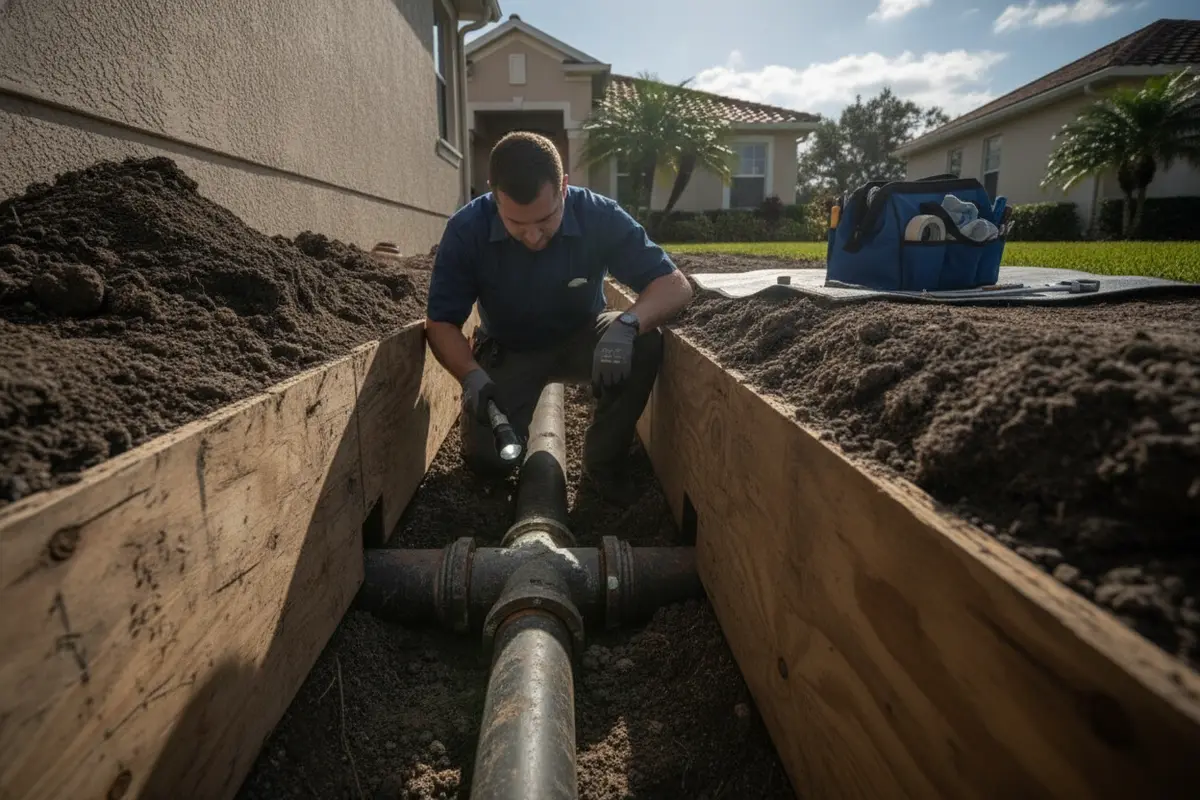
Excavation is not automatically a last resort. A focused dig may be the clearest way to expose a specific leak, reach a failed connection, or replace a short damaged section. It can also let the plumber see the exposed pipe directly and check nearby joints. The tradeoff is disturbance to landscaping, paving, or other surfaces, so the estimate should explain the anticipated dig and restoration responsibilities.
Consider a confirmed leak at one accessible joint. If the surrounding pipe appears sound, a targeted repair may be reasonable to discuss. If exposure reveals cracking or deterioration beyond the joint, the repair boundary may need reconsideration. Ask how a changed condition will be documented and whether additional work requires your approval. Do not dig yourself: buried utilities may be present, and proper locating before excavation is an important safety measure.
When could trenchless lining or replacement make sense?
Trenchless methods can reduce the amount of surface excavation in suitable conditions. Lining generally depends on the existing pipe being a candidate for rehabilitation; it does not make every collapsed, badly misaligned, or otherwise unsuitable pipe repairable. Preparation, access, and the route also matter. A camera inspection may help assess the interior of an accessible drain or sewer line, but its findings must be interpreted in context.
Trenchless replacement has different requirements. Route, soil and site conditions, pipe size, access points, and nearby utilities can affect feasibility. A proposal should explain why its method fits this pipe rather than presenting “no digging” as a guarantee. For instance, a line with extensive damage may call for replacement, while a limited defect may have a more focused option. The correct comparison is between methods that can actually address the confirmed condition, not between marketing labels.
What affects scope, disruption, and cost?
Underground pipe work varies by property, so a generic price or assumption that one method is always cheaper can mislead. The proposal may be shaped by several connected factors:
- Pipe type and material: Water, sewer, and drain lines have different functions and inspection needs.
- Location and depth: Access, excavation conditions, nearby structures, and surface materials affect the work.
- Extent of damage: One accessible defect differs from multiple failures or broader deterioration.
- Method and preparation: Lining or trenchless replacement may require cleaning, inspection, and access work; excavation has its own labor and restoration scope.
- Restoration: Landscaping, pavement, or other disturbed areas may need attention, and that work may not be part of every plumbing proposal.
- Service interruption: Ask whether water or drain service will be unavailable and what occupants should plan around.
- Uncertainty: Some conditions become visible only after access or cleaning. Learn how changes to the initial scope will be explained and approved.
Whiskey Creek Plumbing uses fixed-price service rather than hourly billing, with an upfront quote for the agreed scope. Before authorizing work, ask what the quoted amount includes, what assumptions it depends on, and how any additional work would be approved. A clear proposal helps compare equivalent work, not just headline amounts.
How can you compare proposals fairly?
Two estimates are comparable only when they describe the same repair boundary and responsibilities. Review whether each identifies the affected pipe, the evidence for the diagnosis, the method, and the work included from preparation through cleanup. Ask about restoration separately if it is not listed. If one estimate proposes lining and another proposes excavation, ask each provider to explain how the option addresses the same defect and what conditions would make it unsuitable.
- Where is the suspected damage, and how was it identified?
- Is the scope a spot repair, partial replacement, lining, or a larger replacement?
- Are access, permits if applicable, disposal, testing, and cleanup addressed?
- What happens if more damage appears after the pipe is exposed or cleaned?
- Will work outside the stated scope require approval before proceeding?
- What surfaces are disturbed, and who handles restoration?
- How long might the service interruption last, and what should occupants do?
Ask for an explanation in plain language. You should be able to describe the problem, the planned repair, and what is excluded without relying on a method name alone. For background on materials, see our water pipe guide and PEX pipe guide. If you are investigating a possible water supply leak, our water leak detection guide explains what to note before an assessment.
What should you do before the plumber arrives?
Keep people and pets away from soft, wet, or disturbed ground. Do not open an excavation or try to reach a buried line. If you suspect a water supply leak and know how to operate the main shutoff safely, turning it off may limit water flow; if unsure, ask for guidance. Record the location and timing of symptoms, recent changes, and meter observations you can make without touching equipment you do not understand.
For an active leak, take reasonable steps to protect belongings while avoiding electrical hazards and standing water around electrical equipment. Do not use a fixture that appears connected to a suspected damaged drain or sewer line until you receive advice. Share what you observed, including which fixtures are affected and whether symptoms change with water use. Clear access to the meter, shutoff, or suspected route if safe and practical; avoid moving heavy items or disturbing the ground.
What might different cases look like?
Examples can make the decision process clearer, even though a site inspection is needed to determine the right repair for a real property.
A localized water-line leak
Suppose one patch of ground stays wet during a dry period and water use has not changed. The first task is confirming whether the supply line is involved and locating the leak. If a specific short section is damaged and accessible, a focused repair may be considered. The homeowner should ask whether nearby pipe condition is visible, what surface restoration is included, and how the repair will be checked when complete.
Recurring drain symptoms
Suppose several fixtures drain slowly or a backup returns after temporary clearing. A plumber may need to determine whether the problem is a blockage, damage, or another drain issue. A camera can help view an accessible drain or sewer pipe, but it should not be treated as a universal test for every type of leak. The proposed scope should identify what was seen and whether cleaning or another assessment is needed before selecting lining or replacement.
A damaged section beneath a finished surface
When a suspected fault sits beneath paving or a driveway, surface disruption is an important part of the comparison. Ask whether a trenchless option is technically suitable, what access it still requires, and whether the route has obstacles. Compare that with a targeted opening or a longer excavation, including who is responsible for putting the surface back. A method with less visible digging is useful only if it repairs the actual defect and the total responsibilities are understood.
How can you plan for service interruption and restoration?
Repair planning is not only about the pipe. Before work starts, ask whether the water supply will be shut off, whether drains or fixtures should remain unused, and when normal use is expected to resume. If occupants, employees, or customers use the affected area, identify practical needs such as access to another restroom or protecting stored materials. Do not assume a particular timeline until the contractor has assessed the scope and site.
Also define the handoff after the repair. Ask what testing or verification will occur, whether the work area will be cleared, and what surface restoration is included. Plumbing work and landscaping or pavement restoration can be separate scopes. Putting these details in writing reduces confusion over what “complete” means and who handles each part.
Frequently asked questions
Can every underground pipe be repaired without digging?
No. Some pipes and site conditions are not suitable for trenchless work, and even those methods need access and preparation. Inspection helps establish what the pipe can support.
Does a camera inspection find every underground leak?
No. A camera is generally used to view the interior of accessible drain or sewer pipes. Water-line leaks and other faults may require different assessment methods.
Is pipe lining the same as replacing a pipe?
No. Lining rehabilitates the inside of an existing pipe when it is a suitable candidate. Replacement removes or displaces the old pipe and installs new pipe. The right choice depends on condition and layout.
Should I choose the estimate with the least excavation?
Not on that factor alone. Confirm that the method can address the diagnosed problem, then compare access, disruption, restoration, and the full scope. A limited excavation may be more appropriate for a localized defect.
What should an estimate include?
Look for the diagnosed line and location, proposed method and limits, included preparation and restoration, expected service interruptions, price, and how additional work will be approved.
Contact us to discuss the next step
Plan the next step for your property
When a buried pipe is suspected, start with a clear diagnosis and a written scope rather than choosing a method by name alone. We can help you discuss the symptoms and arrange an appropriate next step for your Southwest Florida property.
Call (239) 785-9022 to talk through the concern
The best repair addresses the confirmed problem with a scope you understand before work begins.