
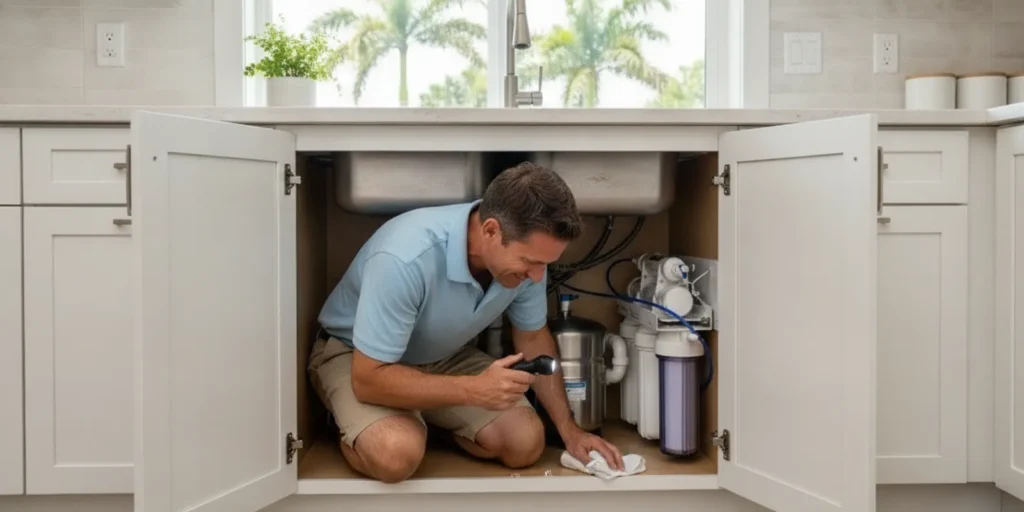
If you are asking how to fix a leaking pipe, first stop the water if you can do so safely, protect the area, and identify whether the leak is visible and accessible. A minor drip at an exposed fitting may allow a temporary measure while you arrange a proper repair. A pipe that is cracked, concealed, corroded, pressurized, or leaking repeatedly needs a careful diagnosis rather than a quick patch.
Call (239) 785-9022 for plumbing help
What should you do first when a pipe starts leaking?
Work through these steps in order. The goal is to reduce water flow and prevent avoidable damage without putting yourself at risk.
- Check for immediate hazards. If water is close to electrical outlets, appliances, wiring, or a breaker panel, do not step into standing water or touch electrical equipment. Move away and contact the appropriate emergency service if there is immediate danger. Do not enter an unsafe space to reach a valve.
- Shut off the nearest safe valve. For a leak at a sink or toilet supply, the fixture shutoff may stop water to that fixture. Turn it gently; if it is stuck, leaking, or difficult to reach, do not force it. If the leak continues and you can safely reach and operate the main water shutoff, use it instead.
- Reduce remaining water in the line. After the supply is shut off, opening a nearby faucet can release some remaining water. Avoid using fixtures supplied by a line you suspect is damaged. If you are unsure which line is affected, leave the water off and ask for help.
- Catch drips and move belongings. Use a bucket or towels under a visible leak, and move furniture, stored items, and electronics out of the wet area. Dry surfaces you can reach safely. Do not open a wet wall or ceiling if doing so could expose wiring or make damage worse.
- Record what you see. Take photos or a short video, note when the leak began, and write down whether it changes when a fixture runs. These observations can help a plumber understand the situation without treating a guess as a diagnosis.
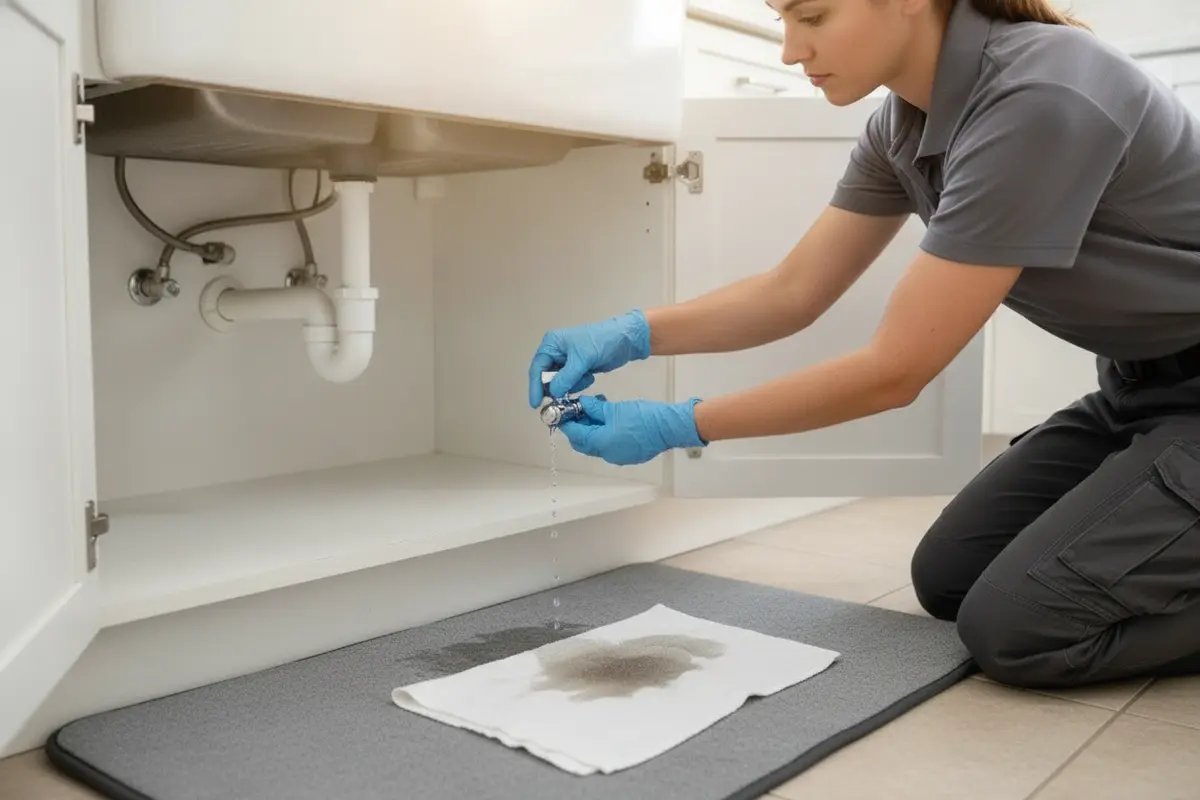
If the shutoff does not stop the water, or the leak is spreading, keep people away from the affected area and contact a plumber promptly. A bucket can limit a small drip, but it cannot control a pipe that is still releasing water under pressure.
How can you tell what kind of pipe leak you have?
The place where water appears is not always the place where it started. Water can travel along a pipe, framing, or the underside of a cabinet before dripping. Look only at areas that are already visible and safe to reach. Avoid removing drywall, moving heavy equipment, or climbing into a confined space just to trace the leak.
- Supply-side leak: Water may keep appearing when a fixture is not in use. A valve, connector, fitting, or water pipe could be involved. If a shutoff stops the flow, that is useful information, but it does not establish exactly which part failed.
- Drain-side leak: Moisture may appear only while a sink, tub, or appliance is draining. A drain fitting, trap, or connection may be the source. Do not keep running water as a test if the leak is substantial or water is reaching a cabinet, floor, or ceiling below.
- Fixture or appliance connection: Water around a faucet base, toilet connection, or appliance hose may come from the connection, the fixture itself, or water that has splashed from elsewhere. Dry the surface and observe from a safe distance; do not tighten a fitting aggressively.
- Hidden leak: Damp material, peeling paint, a musty smell, or unexplained moisture may point to a concealed leak. These clues do not pinpoint its source. A leak behind a wall or beneath a slab may need more than a surface inspection.
If you cannot tell whether the water is from a supply line, drain, fixture, or another source, leave the affected fixture unused and arrange an assessment. Our water leak detection guide explains why locating the source matters before selecting a repair. If the warning signs suggest a leak inside the slab, see our overview of slab leak detection in Fort Myers.
Can you make a temporary repair yourself?
A temporary measure may help contain a small leak on an exposed, accessible pipe while you arrange a permanent repair. It is not a way to restore a damaged pipe or fitting, and a patch can fail without warning. Do not attempt a patch on a hot line, a concealed pipe, an unidentified pipe, a damaged section that remains pressurized, or a line near electrical hazards.
For a minor drip on a visible pipe, first shut off the water if possible and dry the outside of the pipe. If you use a product labeled for temporary plumbing leak repair, follow its instructions and confirm that it is intended for that pipe and situation. Keep a container beneath the area and check it often. If the leak continues, grows, or returns when water pressure is restored, shut the supply off again if safe and arrange professional repair.
A wrap or clamp can be a stopgap, not proof that the pipe is sound. The pipe material, size, location, and condition affect which materials can be used and whether they will hold. A product that works for one exposed pipe may be unsuitable for another. If the instructions are unclear, do not improvise with unrelated household materials.
Avoid these common shortcuts:
- Do not overtighten a fitting. Excess force can damage threads or crack a connector.
- Do not rely on household glue, caulk, or tape as a permanent repair.
- Do not cut, solder, or heat a pipe unless you are qualified and have the correct tools and safety precautions.
- Do not cover a leak with a patch and forget about it. The underlying failure may continue to worsen out of sight.
- Do not turn the water back on abruptly just to see whether a repair held. A failed patch can release water quickly.
The Environmental Protection Agency provides public information on water and conservation at its official website. Regardless of the amount involved, a leak that cannot be controlled should be addressed rather than left running.
When should you call a plumber instead of attempting a repair?
Call for professional help when water is actively escaping and you cannot stop it, when the leak is inside a wall or ceiling, or when its source is not readily visible. A plumber can inspect the conditions and explain what repair fits the pipe, access, and cause. Professional assessment is also appropriate when a pipe is cracked, corroded, bulging, repeatedly leaking, or difficult to reach.
Contact a plumber promptly if any of these situations apply:
- The main shutoff is stuck, inaccessible, or does not stop the flow.
- Water is spreading into more than one area, appearing beneath a slab, or wetting a ceiling below a bathroom or kitchen.
- The leak involves a water heater, pool system, or other equipment rather than a simple exposed fixture connection.
- You have had repeated leaks in the same section or suspect deterioration beyond one fitting.
- Water damage is expanding or the leak affects other occupants, a tenant, a neighbor, or business operations.
- You cannot safely identify the pipe or access point, or a temporary patch has failed.
A visible drip may have an unseen cause, so avoid choosing a larger repair based only on where water shows up. A plumber may need to locate the source, inspect the affected section, and consider nearby pipe condition. For an overview of available work, visit our plumbing services page. For a repair focused on a supply line, you can also review our water line repair information.
What can you do while waiting for a plumber?
Keep the affected water supply off if the leak is active and leave the fixture unused. Put a bucket or absorbent towels beneath a visible drip, move valuables and furniture away, and take photos of the affected area. If water is near electrical equipment, keep clear rather than attempting cleanup where it is unsafe. If you rent or manage the property, notify the responsible owner or manager as soon as possible.
Make a brief record of the situation. Include where water first appeared, when you noticed it, whether a fixture was running, whether the leak changes over time, and what happened when you tried a shutoff. Note any previous repair in the same area. This information is useful context, but it does not confirm the source or determine the repair.
When you call, describe the amount of water, how quickly it is collecting, whether the main shutoff worked, and any safety or access concerns. Mention if shutting off water affects other occupants, a business, or equipment that needs attention. If you can safely send photos through the company’s normal process, they may help explain what you can see; they do not replace an on-site assessment.
Whiskey Creek Plumbing serves Fort Myers and surrounding Southwest Florida communities. You can check our service area information as you arrange the next step.
What repair options might a plumber recommend?
The right repair depends on the pipe material, the location and cause of the leak, access, and the condition of nearby sections. A plumber should explain what was found and why the proposed work addresses it. A small repair at an accessible fitting is different from replacing a damaged section behind a wall or locating a concealed leak under a slab.
Loose or failed accessible connection
- Possible approach
- Repair or replace the fitting or connector
- What to clarify
- Is the leak limited to this connection?
Cracked or corroded exposed pipe
- Possible approach
- Replace the affected section and assess adjacent pipe
- What to clarify
- What caused the failure, and what is the nearby condition?
Leak behind a wall or beneath a slab
- Possible approach
- Confirm the source, then discuss access and repair choices
- What to clarify
- What evidence identifies the source and scope?
Repeated leaks in one area
- Possible approach
- Assess whether a broader repair should be considered
- What to clarify
- Why is a spot repair or larger solution appropriate?
These are examples, not a diagnosis. A plumber may need to inspect more than one point before confirming a cause. If a wider pipe problem is suspected, compare the reasoning for a localized repair and broader replacement. Our guide to pipe repair versus repiping covers that decision in more detail.
How can you compare repair proposals?
Ask for a clear explanation of the diagnosed source, the work included, and any limits or assumptions. A useful proposal should describe what pipe or fitting is being repaired or replaced and whether the price includes the access work needed to reach it. If opening a wall or ceiling is involved, clarify who handles the opening and restoration, and whether those items are included or separate.
Also ask what happens if the inspection uncovers a different problem. The original scope may not cover a second leak, additional damaged pipe, or an unexpected access condition. Before extra work begins, request an explanation of the new finding, the options, and the price for the revised scope. You should be able to decide whether to proceed.
Whiskey Creek Plumbing uses upfront fixed-price quotes for the agreed work. Confirm what the quoted amount covers and ask questions before approving it. A fixed price is most useful when the work description is clear, so compare the scope as well as the number. Our fixed-price plumbing guide explains how to review a defined repair proposal.
How should you prepare for a repair visit?
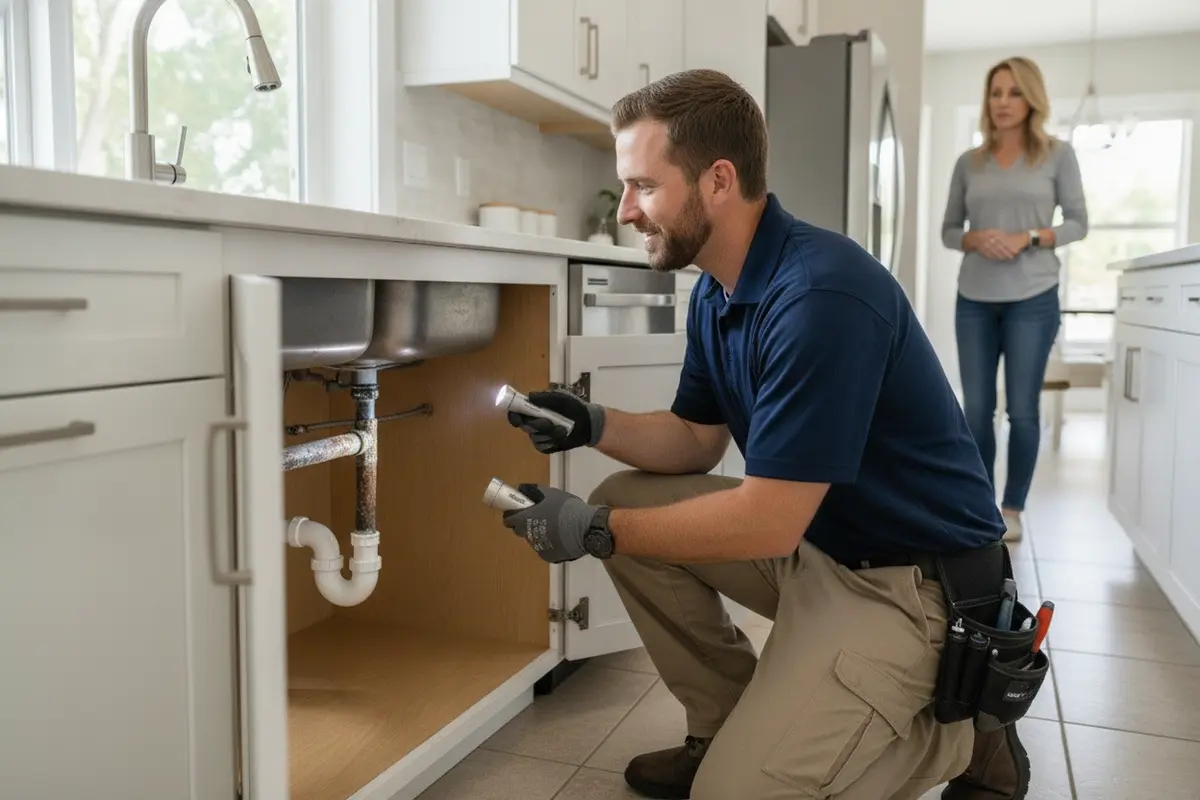
Clear a path to the sink, utility space, or visible pipe if you can do so safely. Do not move heavy appliances or stored items if doing so could cause injury or damage. Keep children and pets away from the work area. Have photos, the timeline, and details of any earlier repair ready, and tell the plumber about any water shutoff that affects other people or equipment.
Before work begins, confirm the diagnosed source, the proposed repair, and the price for that scope. If the inspection reveals something different from what you expected, pause and ask for an explanation and an updated approval before additional work proceeds. A clear conversation reduces confusion about what is being repaired and what is not.
After the repair, ask what to watch for and whether there are any operating steps you should follow. Check the area as advised and report any return of moisture. A dry surface at one moment is encouraging, but ongoing observation is sensible when a leak has affected a cabinet, wall, or floor.
Frequently asked questions
Can I leave the water on if the pipe is only dripping?
That depends on whether the leak is controlled and where it is located. If the drip continues or you are uncertain, shut off the affected supply if it is safe to do so, place a container underneath, and arrange an assessment. Do not leave an active leak unattended.
Does pipe tape permanently stop a leak?
No. Tape or a patch may reduce a small leak temporarily, but it does not restore a damaged pipe or fitting. Monitor the area and arrange a proper repair rather than treating the patch as permanent.
Should I use the main shutoff for a small leak?
If a fixture shutoff works, it may stop water to that fixture without affecting the rest of the property. If it does not work or the leak is elsewhere, the main shutoff may be needed, provided you can reach and operate it safely.
What should I tell the plumber when I call?
Describe where water appears, when it started, whether a fixture was running, how much water you see, and whether a shutoff stopped it. Mention electrical or access concerns and any earlier repairs in that area.
Can I tell the exact source from a damp spot?
Not always. Water can travel before it becomes visible, and a damp spot may be away from the failed pipe or connection. Treat it as a clue, keep the area safe, and have the source checked rather than cutting into a wall based on appearance alone.
Request help with a leaking pipe
Plan a clear next step
A leaking pipe is easier to assess when water is controlled and the symptoms are described clearly. If a safe temporary step is not enough, we can inspect the problem, explain the repair options, and provide an upfront fixed-price quote for the agreed work.
Call (239) 785-9022 to discuss the leak
Until the pipe is repaired, keep an active leak contained only if it is safe, watch for returning moisture, and get help if the problem changes or spreads.