
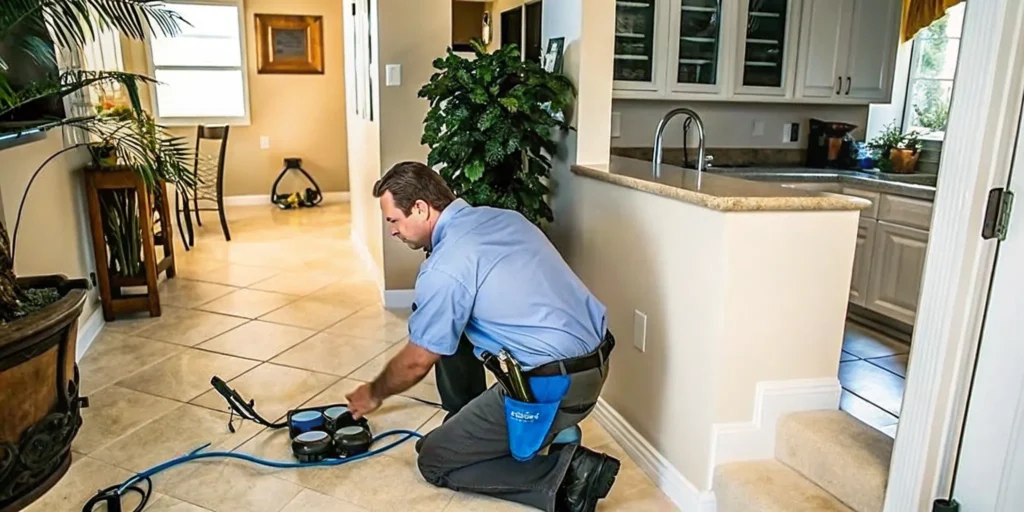
A warm floor patch or unexplained water bill can expose trouble beneath a Florida home. Slab leaks rarely stay small, and waiting can put flooring, walls, and the foundation at risk.
Concerned about a possible slab leak? Call Whiskey Creek Plumbing at (239) 785-9022 for professional leak detection in Fort Myers.
Slab leak detection Fort Myers FL homeowners need starts with recognizing changes that have no clear cause. Warning signs include warm or damp floors, running water sounds after fixtures are off, falling water pressure, cracks, musty odors, or a rising water bill. Because the leaking pipe sits beneath the concrete foundation, water may travel before it becomes visible. That can place the wet spot far from the actual break. A professional plumber can use diagnostic equipment to pinpoint the source without unnecessary damage, then explain the safest repair options. Prompt detection helps limit water damage and reduces the chance that a hidden leak will affect flooring, walls, or the slab itself.
If these signs sound familiar, the first question is what may be happening under the concrete and why quick action matters. Before reviewing detection methods or repair choices, the next section answers What is a slab leak? The explanation begins with:
Slab Leak Detection Fort Myers Fl: What is a slab leak?
A slab leak is a water leak in a pipe that runs beneath a home’s concrete foundation. Because the pipe is hidden below the slab, water may spread before anyone sees a clear sign. The term describes the leak’s location, not a special type of pipe failure.
Where the leak occurs
Many homes have water supply lines routed below the concrete slab. A leak can form in one of these buried lines. It may release water into the soil or materials beneath the home. Moisture may also move through small gaps and reach flooring, walls, or nearby rooms.
The pipe itself is not usually visible without opening part of the structure. That is why slab leak detection in Fort Myers focuses on finding the source before repair work begins. A careful check can help separate an under-slab leak from other plumbing problems.
Slab leaks versus fixture leaks
A fixture leak starts at an exposed or easy-to-reach part, such as a faucet, toilet, shower, or sink connection. You can often see the drip, damp cabinet, or failing seal. An under-slab leak stays concealed, so the first clue may appear far from the damaged pipe.
The location also changes how a plumber checks the problem. A visible leak can often be traced by looking at the fixture and nearby fittings. A suspected slab leak may call for pressure checks and tools that help narrow down its hidden location.
Not every damp spot points to a broken pipe below the foundation. Water can come from a fixture, drain, roof, irrigation line, or indoor moisture. The U.S. Environmental Protection Agency recommends checking common household leak sources, including toilets, faucets, showerheads, and outdoor irrigation.
Florida home context
In Fort Myers, the phrase “slab leak” helps describe a hidden plumbing concern beneath a concrete foundation. Local heat, rain, and indoor cooling can also create moisture that looks like a leak. That overlap makes the source more important than one symptom alone.
Homeowners may notice a warm floor area, damp flooring, running-water sounds, low water pressure, or an unusual bill. These signs do not prove an under-slab leak by themselves. They are reasons to check fixtures first. If no visible source explains the change, consider detecting and repairing slab leaks.
Warning signs of a slab leak in a Florida home
A slab leak can stay hidden because the damaged pipe sits beneath the concrete foundation. The first clue may appear far from the actual leak. Watch for several changes that happen together, rather than relying on one sign alone.
Changes in water use and pressure
An unexplained jump in your water bill deserves attention, especially when your household habits have not changed. You may also hear water running when every faucet, shower, toilet, and water-using appliance is off. Lower water pressure at several fixtures can be another clue.
Your water meter can help you check for hidden flow. First, turn off indoor and outdoor water users, including irrigation. Then note the meter reading and wait without using water. The EPA’s leak-check guidance explains that a changed reading can point to a leak.
A moving meter does not show where the leak is located. It may reflect a toilet leak, irrigation issue, or another damaged pipe. If visible fixtures seem dry, professional testing can narrow down the source without needless damage.
Floor, sound, and odor clues
Changes inside the home may point to water collecting beneath or above the slab. Check for these common warning signs:

- A damp carpet, wet floor area, or moisture that returns after drying.
- An unusually warm patch on tile or another hard floor.
- Hissing, trickling, or running-water sounds when fixtures are off.
- A musty odor that persists in one room or area.
- Warped flooring, loose tiles, lifted planks, or damaged baseboards.
- A sudden pressure drop affecting more than one fixture.
- Water pooling near the foundation without a clear outdoor cause.
Review each clue separately.
A warm floor patch may suggest a leak in a hot-water line. Damp spots and musty smells can also have other causes, such as roof leaks or indoor humidity. Note where each symptom appears and whether it spreads after water use.
Cracks and the right next steps
New cracks in flooring, walls, or the foundation can be concerning, but a crack alone does not prove a slab leak. Florida homes can develop cracks for several reasons. Treat cracks as one part of the full symptom pattern, especially when paired with moisture or meter movement.
If you suspect a leak, stop using water and check whether the meter still moves. Photograph damp areas, flooring changes, and cracks, then record the meter reading. Avoid opening the floor before the source is confirmed.
Prompt slab leak detection in Fort Myers can help locate the problem and guide the right repair. If water is spreading, shut off the home’s main water valve. Then schedule an assessment and share the signs you recorded.
How can you check for a possible slab leak?
A few safe checks can show whether water may be escaping from your plumbing. They cannot prove the leak is under the slab or show its exact location. Avoid breaking flooring, opening walls, or trying to cap a suspected pipe yourself.
A simple water meter check
Start when no one needs water for a short period. Turn off faucets, showers, washing machines, dishwashers, irrigation, and other water-using equipment. Make sure toilets have stopped filling before you begin.
- Find the water meter and note its reading or take a clear photo. Do not turn off the main water supply yet.
- Check every fixture and appliance again. Ask everyone in the home not to flush, run a tap, or use water during the test.
- Watch the meter’s leak indicator, if it has one. Then wait and compare the reading with your first photo.
- If the reading changes, check toilets, outdoor taps, irrigation, and visible pipes for other leaks. These can also move the meter.
- Repeat the check only if you can do so safely. A meter that keeps moving with all water uses off calls for professional testing.
The EPA’s leak-checking guidance also recommends using the water meter to look for hidden household leaks. A still meter does not rule out every problem. Small or occasional leaks may not change the reading during a brief check.
Clues to note around the home
Walk through the home and note warm floor spots, damp flooring, musty odors, or the sound of running water. Also look for cracks, warped baseboards, and unexplained moisture near the slab edge. Write down when each sign appears, but do not pull up flooring to investigate.
Compare recent water bills only if the home’s water use has stayed about the same. A higher bill can support your concern, but irrigation or guests may also explain it. For hidden pipe repair guidance, a plumber can test the system and narrow down the source before recommending a repair.
When to call right away
Call promptly if water is spreading across a floor, pressure drops suddenly, or you hear water running nonstop. Also act fast if moisture reaches electrical outlets or appliances. Keep people away from the wet area and avoid touching electrical equipment.
If it is safe and you know how, shut off the home’s main water valve during an active leak. Professional tools can confirm whether a pipe is leaking beneath the slab without guesswork. That step helps limit needless damage before any repair begins.
Seeing several warning signs together? Schedule professional leak detection before hidden water causes more damage.
How professional slab leak detection works
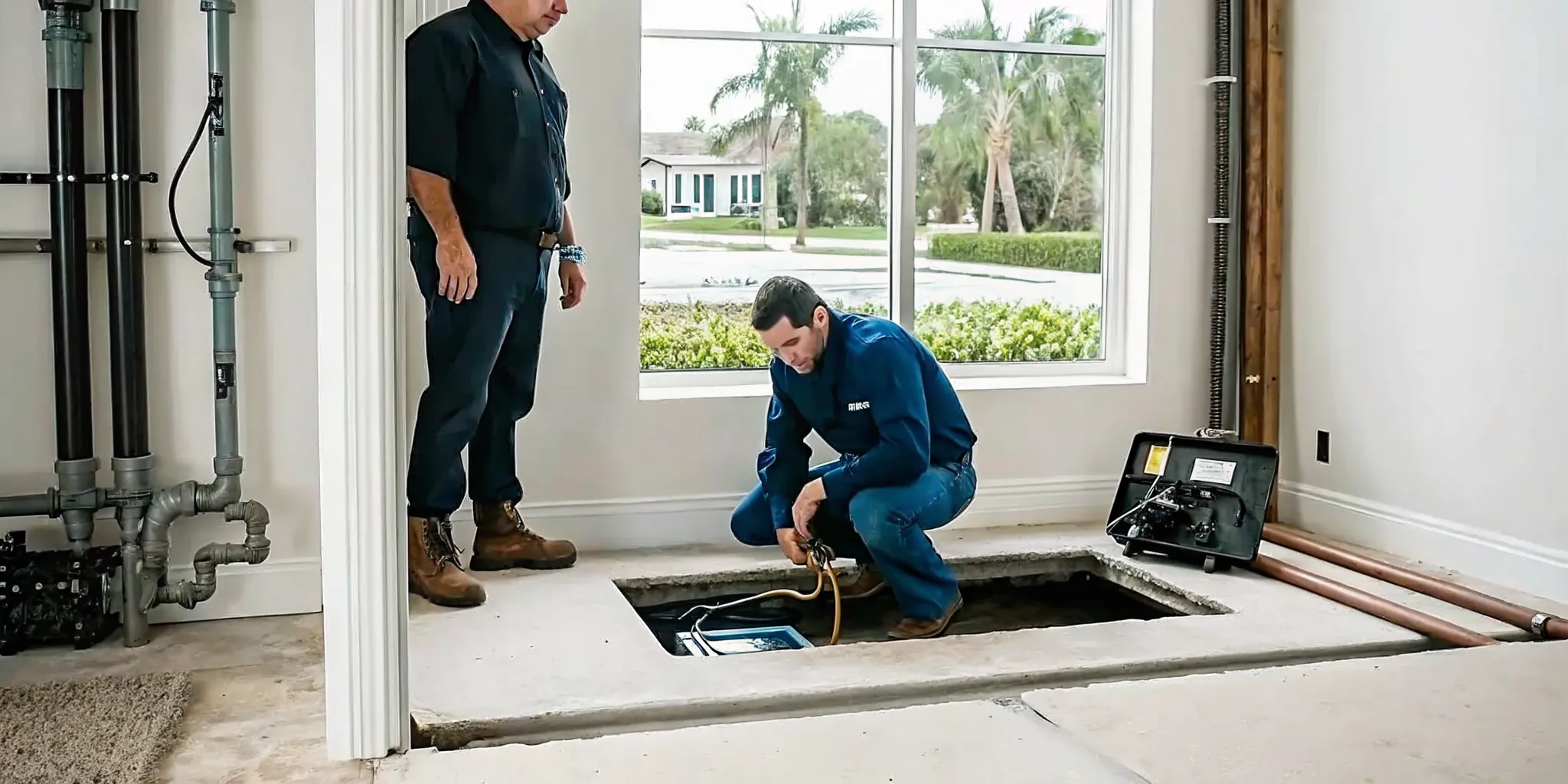
A professional visit starts with evidence, not a guess about where to open the floor. The plumber first confirms that water is escaping from the plumbing system. Then, each test narrows the search before the team discusses repair choices.
Interview and initial checks
The plumber will ask when you first noticed the problem and whether it changes when certain fixtures run. Details such as warm floor areas, damp spots, water sounds, or a rising bill can guide the first tests. The plumber may also inspect visible pipes, fixtures, walls, flooring, and the area around the foundation.
Next, the plumber may shut off all water-using fixtures and watch the water meter for movement. The EPA describes this meter check as one way to look for leaks at home. A pressure test can provide more evidence that a supply line is losing water.
Isolation and diagnostic tools
Finding a leak in the plumbing system is only the first step. The plumber must then narrow it to a line, zone, or section beneath the slab. Isolation tests separate likely problem areas so the search does not rely on sound alone.
Acoustic equipment can help a trained plumber listen for water moving or escaping below the floor. Other tools may help trace pipe routes, check surface temperatures, or test specific lines. The right method depends on the pipe material, leak size, floor finish, and noise around the property.
- Meter and pressure checks help confirm whether a hidden supply leak is likely.
- Line isolation helps narrow the search to a smaller part of the system.
- Listening and other diagnostic tools help find the strongest area for further testing.
These steps can reduce needless cutting, but no responsible plumber should promise a perfectly noninvasive diagnosis in every case. Some leaks are faint, intermittent, or hidden beneath thick flooring. A small access point or added test may be needed to confirm the exact location.
Pinpointing before repair
Once the evidence points to a likely spot, the plumber should explain what the tests found before recommending a repair. That discussion may cover direct access, rerouting, or replacing a damaged pipe section. The best choice depends on the pipe condition, layout, and access limits.
Homeowners seeking slab leak detection in Fort Myers should expect a clear assessment before work begins. Whiskey Creek Plumbing uses guaranteed fixed pricing rather than hourly billing. After the assessment defines the work, you can review the fixed price and repair scope before approving the next step.
If testing confirms a damaged line, learn how Whiskey Creek Plumbing approaches piping and repiping services. If the moisture begins near a water heater rather than below the slab, review the company’s water heater services. Water that backs up or drains slowly can point to a different issue that may require drain cleaning.
Why early slab leak detection matters
Hidden water keeps moving
A slab leak can keep releasing water beneath the floor even when the signs seem minor. That water may raise use, spread into nearby materials, and leave floors or walls damp. The longer the leak runs, the more time moisture has to reach finishes, belongings, and the area around the slab.
Moisture does not guarantee major structural damage, but it can shorten the life of building materials. A National Academies review hosted by NCBI notes that dampness can cause materials to decay, corrode, or become structurally weakened. Early slab leak detection in Fort Myers, FL, helps limit that exposure and gives a plumber a clearer starting point.
Water can also travel away from its source before it becomes visible. This means the first damp spot may not sit above the broken pipe. EPA moisture guidance treats plumbing systems and foundations as linked parts of moisture control, which supports checking the source early.
What delay can change
A small warm spot or faint water sound may be easy to dismiss for a day. But a hidden supply-line leak can continue while fixtures are off. The affected area may grow before the next visible sign. Flooring can stain or lift, drywall can absorb moisture, and stored items may get wet.
Water near a slab also deserves prompt review because the source and path are not clear from the surface. Professional tools can help locate the leak without opening several areas just to search. For local help, contact Whiskey Creek Plumbing as soon as warning signs repeat or persist.
Delay can also make the repair area harder to plan. Wet finishes may need separate attention even after the pipe issue is found. A quick assessment helps separate the leak itself from damage that needs cleanup or repair.
Choosing the right response
The right response depends on what you see, hear, and can safely control. Brief monitoring fits only a weak, isolated sign with no active water. Clear or worsening signs call for prompt service.
| Response | When it fits | What to do |
|---|---|---|
| Monitor briefly. | One weak sign, no active water. | Watch the meter and affected area. |
| Schedule promptly. | Repeated, spreading, or clear signs. | Arrange a professional assessment. |
| Emergency shutoff and call. | Fast flow, flooding, or an electrical hazard. | Shut off water if safe, then call. |
Choose the response that matches what you see.
Monitoring should mean a short, active check, not waiting several days to see whether damage appears. Note meter movement, new damp spots, water sounds, and changes in floor temperature. Do not pull up flooring or break concrete to search for the line.
Schedule promptly when signs repeat, spread, or point to water running with fixtures off. If water is flowing fast, flooding rooms, or reaching electrical hazards, shut off the water only if safe. Then call for urgent plumbing help and keep people away from unsafe areas.
Early action is about limiting uncertainty and exposure, not assuming the worst. A plumber can confirm whether the issue is under the slab and explain the repair options. That timely check can protect finished surfaces and help prevent a manageable leak from affecting more of the home.
When should you schedule slab leak detection?
Signs that call for prompt help
Schedule a professional appointment when you notice a warm or wet floor spot or a higher water bill. Running-water sounds with every fixture off are another warning sign. These signs can point to a hidden leak beneath the slab. A plumber can locate the source before planning any repair.
Do not wait for the floor to flood or the water bill to rise again. Long-term dampness can weaken, decay, or corrode building materials, according to a review of moisture in buildings. Prompt slab leak detection in Fort Myers, FL, helps limit how far water can spread.
- Call promptly if water is pooling indoors or flowing where it should not.
- Turn off nearby fixtures and note whether the sound or meter activity continues.
- Avoid opening floors or walls before a plumber confirms the leak location.
Details to gather before calling
A few clear details can help the plumber prepare for the visit. Note when each sign began, where you found moisture, and whether the area feels warm. Gather recent water bills if the change in use is part of your concern.
Also list any past leaks, pipe repairs, repiping work, or changes near the foundation. Tell the plumber whether the issue affects hot water, cold water, or both. Whiskey Creek Plumbing’s pipe repair services focus on finding the source and planning a targeted repair without needless damage.
- The first date and time you noticed the issue.
- Rooms or floor areas that seem affected.
- Photos of wet spots, stains, or visible damage.
- Recent water bills and any unusual changes.
- Past pipe repair or plumbing service records.
Share these details with the plumber.
What happens when you schedule
When you call, explain the warning signs and whether water is actively spreading. The team can help decide whether you need an urgent visit or a standard appointment. For active leaks or signs that are getting worse, ask about emergency response.
Whiskey Creek Plumbing is a local, family-run company that uses guaranteed fixed pricing instead of hourly billing. That approach makes the approved cost clear before work begins. Call (239) 785-9022 or schedule a leak detection appointment to discuss the next step.
Detection comes before the repair plan. Once the leak is located, the plumber can explain suitable pipe repair options and any other plumbing services the property may need. This keeps the scope tied to the confirmed problem rather than a guess.
Frequently Asked Questions
How do I know if I have a slab leak?
Possible slab leak signs include unexplained wet spots, a sudden increase in water use, and running-water sounds when every fixture is off. Warm flooring, musty odors, or new floor damage may also justify an inspection. These clues do not confirm the leak’s location, so schedule a professional assessment instead of opening the floor yourself.
What is the cost of slab leak detection in Fort Myers?
The cost of slab leak detection in Fort Myers depends on the property’s size, pipe layout, access, and the testing needed. A plumber must inspect the home before providing an accurate price. Ask for a fixed price that clearly covers the diagnostic work, and confirm whether any repair work will require a separate approval.
Does insurance cover slab leaks in Fort Myers?
Homeowners insurance may cover sudden water damage from a slab leak, but coverage for the leaking pipe or foundation access varies by policy. Damage caused by long-term seepage, neglect, or excluded conditions may not qualify. Document visible damage, limit further water loss, and contact both a licensed plumber and your insurance carrier before authorizing major repairs.
How do plumbers find a slab leak without damaging the floor?
A professional assessment narrows down the leak’s location before repair work begins, which helps avoid unnecessary property damage. The plumber reviews the warning signs, checks the plumbing system, and determines where further testing is needed. Prompt diagnosis matters because prolonged dampness can cause building materials to decay, corrode, or weaken, according to the National Academies.
Ready to Find and Address a Possible Slab Leak?
Ignoring possible slab leak signs can allow hidden water damage to spread, raising the chance that a focused repair becomes a larger home project. Starting now gives a plumber time to locate the source before the problem causes more damage, disrupts your routine, or limits repair options. A professional assessment replaces guesswork with a clear diagnosis, so you can plan the next step and protect your Fort Myers home.
Ready to get clear answers about a possible slab leak? Call (239) 785-9022 to schedule a professional slab leak detection appointment and discuss the warning signs you have noticed. The sooner you request an assessment, the sooner you can understand the issue and make an informed repair decision.