
A hidden water leak can waste water for weeks before you see a puddle. A sudden increase in your water bill, damp cabinets, musty odors, staining. Or a toilet that seems to run constantly can all point to a problem behind a wall, under a slab, or in a fixture.
To learn how to find a hidden water leak, start by checking for unusual moisture, shut off every faucet and water-using appliance, then watch your water meter for movement. The U.S. Environmental Protection Agency reports that household leaks can waste more than 9,300 gallons of water each year, so a simple check can protect your home and your budget. If you find signs you cannot safely trace, our professional leak detection services can locate the source without guesswork.
Before calling a plumber, take a calm look at the clues your home is already giving you. The next step is learning which signs suggest an active hidden leak and which may have another explanation.
Schedule professional leak detection in Fort Myers today
How to Find a Hidden Water Leak in Your Home
A hidden water leak often announces itself through small changes before it causes obvious flooding. Watch for unexplained water use, moisture where it should not be, and damage that keeps returning after cleaning or drying. In Southwest Florida homes, these clues may point to a leaking supply line, fixture, drain connection, or pipe behind a wall. The sooner you investigate, the easier it may be to limit water damage and mold growth.
The U.S. Environmental Protection Agency reports that household leaks can waste more than 9,300 gallons of water each year. Nearly 9 percent of homes have leaks wasting at least 50 gallons per day. Correcting an easily repaired leak can also save homeowners about 10 percent on their water bill. Those numbers make an unexplained change in your bill worth taking seriously.
Warning signs to check around your home
- An unexplained water-bill spike: Compare recent bills with the same season in prior years. A family of four using more than 12,000 gallons in a colder month, when outdoor irrigation is reduced, may have a serious leak.
- Water stains on walls or ceilings: Yellow, brown, or spreading discoloration can indicate moisture behind drywall or above a ceiling.
- Musty odors: A persistent damp smell, especially in a closed room, may signal moisture trapped under flooring, inside a wall, or near a plumbing connection.
- Mold growth: New or recurring mold around baseboards, cabinets, ceilings, or plumbing fixtures deserves attention. Cleaning the surface will not solve the problem if water is still entering the area.
- Peeling or bubbling paint: Blistered paint, lifting wallpaper, or swollen drywall can result when hidden moisture pushes outward.
- Soft or spongy flooring: A floor that flexes or feels unusually soft near a bathroom, kitchen, water heater, or wall may have absorbed water.
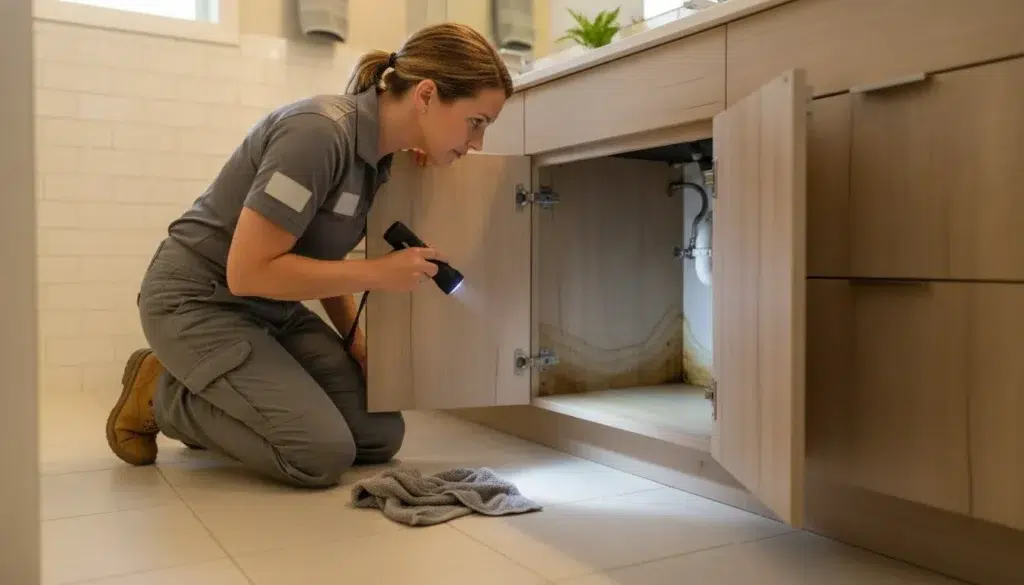
- Damp spots under sinks: Check the cabinet floor, supply connections, shutoff valves, and drain fittings. Even a small amount of recurring moisture can damage cabinetry and flooring.
Can a high water bill indicate a hidden leak?
Yes. A high bill can indicate a hidden leak, particularly when your household habits have not changed and outdoor watering does not explain the increase. First, check accessible fixtures and shut off water-using appliances. Then inspect the meter during a period when no one is using water. If the signs do not identify the source, our professional leak detection services can help locate moisture or a pipe failure without relying on guesswork. Addressing the cause early can protect your home from worsening damage and avoid wasting water day after day.
Check Your Water Meter: The Easiest Leak Test
Your water meter can show whether water is moving through the plumbing even when no faucet is running. This simple test is one of the most useful ways to learn how to find a hidden water leak before opening walls. Digging up a yard, or scheduling a repair.
- Turn off every water source. Close all indoor faucets and make sure toilets are not refilling. Stop the washing machine, dishwasher, ice maker, water softener, pool auto-fill, and any other appliance that may use water. Outside, shut off irrigation or automatic watering for the test period. Ask everyone in the home not to use a faucet or flush a toilet until the test is complete. Even a small, normal water draw can make the result difficult to interpret.
- Locate the water meter. In many Southwest Florida homes, the meter is outside near the curb, sidewalk, or property line in a covered ground box. Some properties have the meter in a basement, utility area, or another accessible location. If you cannot find it, look for the point where the main water service enters the property, or check your utility documentation.
- Record the starting reading. Lift the meter cover carefully and write down every visible number on the register. Depending on the meter style, you may see a digital display or a row of dials. Also look for a small low-flow indicator, often shaped like a triangle or presented as a tiny dial. A photo can help you compare the display accurately later.
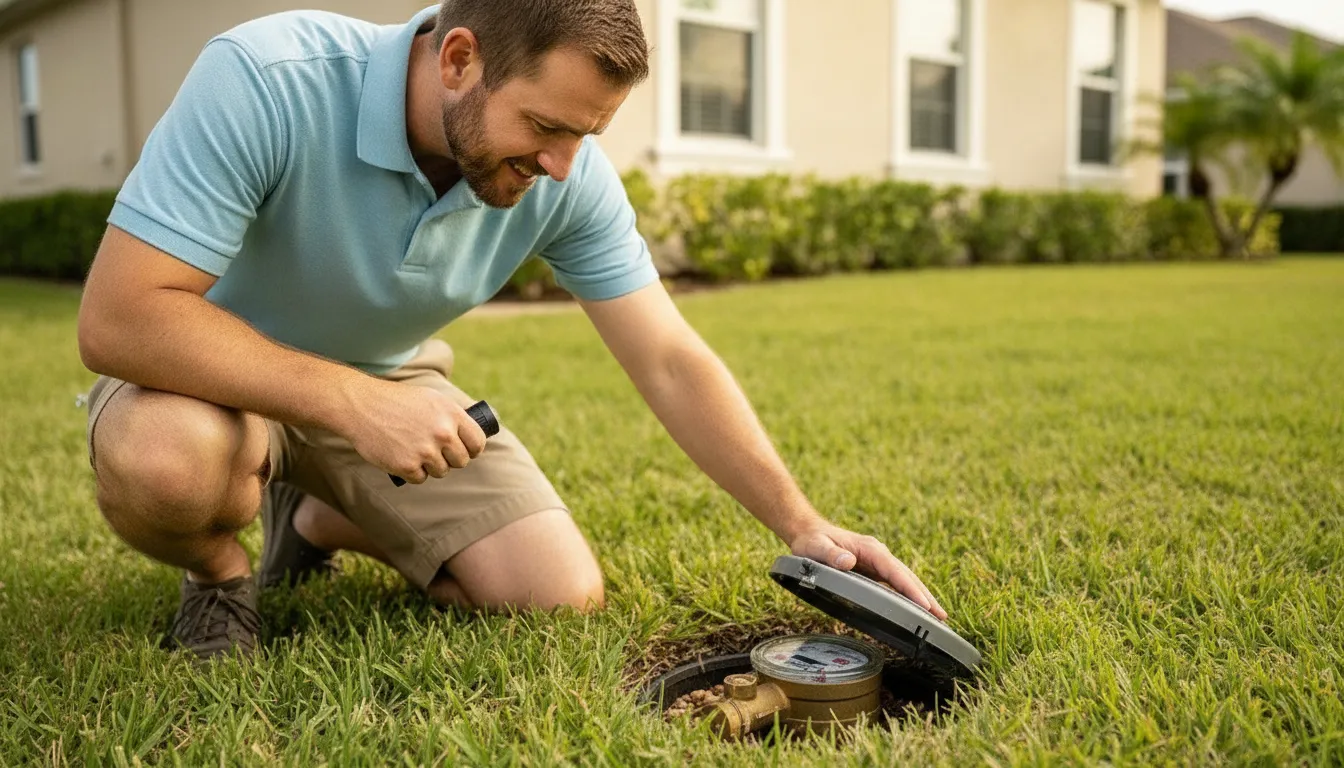
- Wait without using water. Wait at least 30 to 60 minutes for a quick screening. For a more dependable result, leave the plumbing untouched for up to two hours. The U.S. Environmental Protection Agency recommends checking the meter before and after a two-hour period when no water is being used. During that time, avoid flushing, running a hose, watering plants, or using an appliance connected to the water supply. If someone must use water, restart the test afterward.
- Read the meter again and compare. Compare the new register reading with your starting number. If the reading changed at all after the no-use period, water is moving somewhere in the system, and you probably have a leak. The EPA specifically identifies a meter change during this two-hour test as a sign of a leak: EPA leak-test guidance.
Pay close attention to the low-flow indicator while everything is turned off. A spinning triangle or moving dial means water is passing through the meter. If it moves continuously, the leak may be significant. If it moves briefly and stops, a toilet valve or appliance may be cycling. Repeat the test to confirm the pattern, then check visible fixtures and shutoff valves. When the meter confirms water loss but you cannot find a wet cabinet, dripping faucet, or running toilet, professional leak detection can help locate the source without relying on guesswork.
Room-by-Room Hidden Leak Checklist for Homeowners
A hidden water leak may leave no obvious puddle. Work through each room with a flashlight, a dry paper towel, and a few minutes of quiet observation. Look for moisture, mineral buildup, peeling materials, musty odors, or a fixture that keeps running after it should be off. These simple checks can point you toward the source before water reaches cabinets, flooring, or drywall.
Kitchen
- Under the sink: Run a dry paper towel around supply connections, shutoff valves, the drain trap, and the cabinet floor. Check again after running both the hot and cold taps.
- Around the dishwasher: Look along the lower corners and beneath the unit for dampness, swelling, or a musty smell. A loose connection may leak only while the dishwasher is filling or draining.
- At the refrigerator: Inspect the water line and connection behind or beneath the refrigerator. Even a small drip can damage flooring over time.
Bathrooms
- Test each toilet: Add a few drops of food coloring to the toilet tank, then wait 10 minutes without flushing. If color appears in the bowl, the toilet has a leak, often from a worn flapper. This test is recommended by the U.S. Environmental Protection Agency. Read the EPA’s toilet leak guidance.
- Check the sink: Dry the faucet base, supply lines, shutoff valves, and drain connections. Look for moisture that returns after the faucet runs.
- Inspect the shower and tub: Examine seals, caulk lines, corners, and the tub surround. Soft trim, loose caulk, or staining outside the shower can indicate water escaping behind the surface.
Laundry and Hot-Water Areas
- Washing machine: Check both hose connections, the hoses themselves, and the floor behind the machine. Replace or professionally inspect hoses that are cracked, bulging, or consistently damp.
- Water heater area: Look around the tank, temperature and pressure relief discharge pipe, supply connections, and drain valve. Do not remove safety components. Standing water, rust, or a steady drip deserves prompt attention.
Outside the Home
- Check wet areas: A puddle or patch of soil that stays wet long after rain may indicate a leaking irrigation line or other outdoor water line.
- Inspect faucets and fittings: Examine hose bib gaskets and visible pipe fittings for moisture on the outside of the connection. Tightening a fitting is not always the right fix, especially if the connection or pipe is damaged.
How Do I Find a Water Leak That Is Not Visible?
Start with the fixtures above, then compare what you find with your water-meter test. If the meter continues to move while all water use is off, the leak may be inside a wall, beneath a floor, or underground. Review our water leak detection techniques for additional guidance, and contact a professional when the source remains hidden or damage is spreading.
What Causes Hidden Pipe Leaks in Florida Homes?
Florida homes face several conditions that can turn a small plumbing weakness into a hidden water leak. Southwest Florida’s heat, seasonal temperature changes, slab-on-grade foundations, and shifting soil all affect pipes, joints, and outdoor lines. A leak may begin behind a wall, beneath a floor, or below a concrete slab long before you see a puddle.
Common causes include:
- Aging pipes: Older galvanized steel and iron plumbing can rust and corrode from the inside. As the pipe wall weakens, a pinhole leak may release water into insulation, drywall, or the space beneath a home.
- Cracked sealed joints: Temperature swings can make plumbing materials expand and contract. Poorly fitted or aging seals may crack when combined with movement and excess water pressure, allowing a slow leak to develop at a connection.
- Slab leaks: Many Florida homes are built on concrete slab foundations. Supply lines installed beneath the slab can leak where they corrode, shift, or develop a break. Water may travel through the soil or concrete before appearing far from the actual failure point.
- High water pressure: Pressure that is too high places extra strain on supply pipes, valves, fittings, and appliance connections. It can also make a small weakness fail more quickly. A pressure regulator or plumbing inspection can help identify the source.
- Soil movement: Heavy rain, tropical storms, drainage changes, and normal ground movement can shift buried plumbing. That movement may stress underground connections or service lines, especially around the foundation.
- Sun and heat exposure: Outdoor hose bibs, irrigation lines, pool plumbing, and other exposed pipes endure intense Florida sunlight and heat. UV exposure and repeated expansion can weaken some materials and connections over time.
Why Southwest Florida Conditions Matter
A hidden leak is difficult to locate because water does not always move straight down from the failed pipe. It can follow framing, insulation, soil, or the underside of a slab. That is why a damp baseboard, warm floor spot, musty smell, or unexplained water bill increase may appear away from the source.
Do not ignore recurring moisture simply because the visible area dries out. The right water leak detection techniques can help narrow down the location without unnecessary demolition. We can then explain the repair options and provide a fixed-price quote before work begins.
When to Stop DIY and Call a Leak Detection Specialist
Simple checks can help you identify a dripping faucet or a toilet that keeps running. They are not enough for a hidden water leak inside a wall, beneath a concrete slab, under a foundation, or along the main supply line. At that point, continued guessing can turn a small plumbing problem into damaged drywall, flooring, cabinets, or structural materials.
A leak detection specialist can locate the source without immediately opening every wall or excavating the slab. We may use acoustic or electronic listening devices to detect the sound of pressurized water moving through a pipe. Thermal imaging cameras can reveal temperature changes associated with concealed moisture, while moisture meters help identify damp areas that are not visible to the eye. Pressure testing can also help determine whether a closed plumbing system is losing water and narrow the search to a specific section.
| DIY self-check | Professional leak detection |
|---|---|
| Best for visible fixtures such as dripping faucets, running toilets, and damp areas under sinks. | Best for concealed systems in walls, slabs, foundations, and the main supply line. |
| Uses simple tools like food coloring, a flashlight, a paper towel, and your water meter. | Uses specialized tools such as acoustic listeners, thermal imaging, moisture meters, and pressure testing. |
| Helps confirm you likely have a leak, but not where it is hidden. | Pinpoints the source to limit unnecessary demolition and reduce repair guesswork. |
| Low cost and no wait, but limited to reachable plumbing. | Fixed-price and transparent, so you understand the cost before work begins. |
Why professional leak detection matters
A concealed leak does more than waste water. Moisture can remain behind finished surfaces long after the visible symptoms seem minor, increasing the chance of staining, material deterioration, and mold growth. A slab leak can also spread beneath flooring or make you consider disruptive excavation before the actual location is confirmed. Accurate testing gives you better information before repairs begin and helps determine whether the best solution is repairing or replacing leaking pipes.
If water is actively escaping or you have damage that needs immediate attention, review these immediate steps for emergency leaks while you arrange service. Shut off the nearest fixture valve or the home’s main water supply if it is safe to do so, and move belongings away from the affected area.
Call us when:
- Your water meter moves when every faucet, appliance, and toilet is turned off.
- You hear hissing, dripping, or running water inside a wall, ceiling, floor, or slab.
- You see unexplained stains, bubbling paint, warped flooring, soft spots, or persistent dampness.
- A musty odor or recurring mold appears without an obvious surface leak.
- Your water bill rises unexpectedly, or the problem returns after a visible leak is repaired.
- You suspect a leak in the main supply line, beneath the foundation, or in an inaccessible pipe.
We help Fort Myers and Southwest Florida homeowners move from suspicion to a clear repair plan. Whiskey Creek Plumbing provides fixed-price recommendations, so you can understand the work before approving it. Call (239) 785-9022 when the leak is hidden, the damage is growing, or DIY testing no longer gives you a reliable answer.
Call Whiskey Creek Plumbing at (239) 785-9022 for leak detection
Frequently Asked Questions
How do I find a water leak that is not visible?
Start by turning off every faucet and water-using appliance, then check the water meter before and after a two-hour period with no water use. If the reading changes, a leak is likely. You can also compare your water use during a colder month, inspect accessible fittings for moisture, and look for musty odors, stains, or soft flooring.
How can I check my water meter for a hidden leak?
Record the meter reading, make sure no one uses water for two hours, and check it again. Any change suggests a leak somewhere in the plumbing system. If the reading is difficult to interpret or the test repeatedly shows water use, a professional can isolate the source without opening walls or floors unnecessarily. The EPA WaterSense meter test guidance supports this approach.
Where are hidden water leaks most commonly found in a home?
Check under kitchen and bathroom sinks, around toilet tanks and bases, behind washing machines, near water heaters, and at exposed pipe fittings. A few drops of food coloring in a toilet tank can reveal a silent flapper leak if color reaches the bowl after 10 minutes, according to the EPA.
When should I stop investigating and call a plumber?
Call promptly if the meter test confirms water use but you cannot find a surface leak. Or if you see active water, ceiling stains, mold, a bulging wall, or a soft floor. Shut off the nearest fixture valve or the home’s main water supply if needed. Hidden leaks behind walls, beneath floors, or under a slab may require acoustic or thermal detection equipment.
Schedule Professional Leak Detection in Fort Myers
When a hidden leak is difficult to locate, professional leak detection can help identify the source before moisture causes broader damage. At Whiskey Creek Plumbing, we provide transparent local service for homeowners in Fort Myers and throughout Southwest Florida. Our fixed-price guarantee helps you understand the cost before work begins, with clear recommendations based on what your plumbing system needs. We are a family-run team focused on practical answers and dependable repairs, not unnecessary work. For professional leak detection, call Whiskey Creek Plumbing at (239) 785-9022. We will listen to what you are seeing, explain the next step, and help you move forward with confidence.