
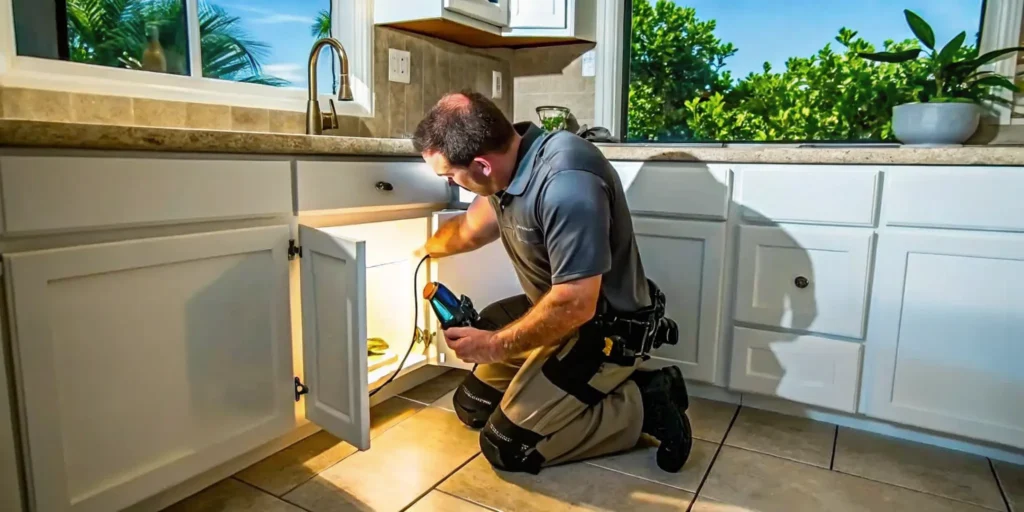
A higher water bill, a musty odor, or the sound of running water can make you wonder what is happening behind a wall or under a floor. Professional leak detection Fort Myers homeowners can rely on turns those scattered symptoms into a focused repair plan. The plumber studies the evidence, checks the plumbing system in a logical order, and narrows the likely source before discussing repair options.
See how Whiskey Creek Plumbing can help locate a hidden leak in your Fort Myers property.
This guide explains what happens during a professional visit, which clues matter, and how you can prepare. It also explains why finding the source and repairing it are related but separate steps.
What does professional leak detection in Fort Myers involve?
Professional leak detection is a structured assessment that follows water-use changes, visible damage, sounds, pressure behavior, and fixture conditions to narrow a leak’s likely source. The findings help a plumber recommend a focused repair rather than opening walls, floors, or outdoor areas based only on a guess.
A leak rarely announces its exact location. Water can travel along framing, pipes, or flooring before it becomes visible. A stain in one room may come from a fitting several feet away. Damp ground can also have more than one possible cause. That is why the first objective is not simply to confirm that water exists. It is to determine where the plumbing system is losing water and which component is most likely involved.
A professional starts with the least disruptive checks and follows the evidence. The exact assessment varies by property and symptom. The plumber may review water-use history, inspect accessible fixtures and connections, observe the meter, and evaluate the areas where damage appeared. Advanced equipment may be used when the initial checks point toward a concealed problem. The selected method depends on the pipe, location, surface, and evidence found during the visit.
Detection and repair are two different decisions
The assessment answers, “Where is the problem likely located, and what appears to be failing?” The repair plan answers, “What access and work are needed to correct it?” Keeping those decisions separate matters. A well-supported location can reduce unnecessary disruption and help the plumber explain the repair scope more clearly.
What happens during a leak detection visit?
A professional visit is a process of elimination. Each check either identifies a likely source or rules out part of the system. Homeowners can expect the plumber to ask questions, examine accessible plumbing, and compare the observed symptoms with how the system behaves.
- Review the symptoms. The plumber asks when the issue began, where you noticed it, and whether it changes when certain fixtures or appliances are used.
- Check water-use clues. Recent bills and the water meter can reveal unexplained use when household demand has not changed.
- Inspect accessible components. The plumber checks visible pipes, fixture connections, valves, the water heater area, and other relevant locations for moisture, corrosion, or deterioration.
- Narrow the system. Based on the evidence, the plumber determines whether the likely issue is near a fixture, in a supply line, below a slab, outdoors, or in another part of the system.
- Evaluate the suspected area. The plumber uses appropriate diagnostic checks for the location and material involved. No single test fits every property.
- Explain the findings. You receive a summary of what was found, what remains uncertain, and which repair options make sense.
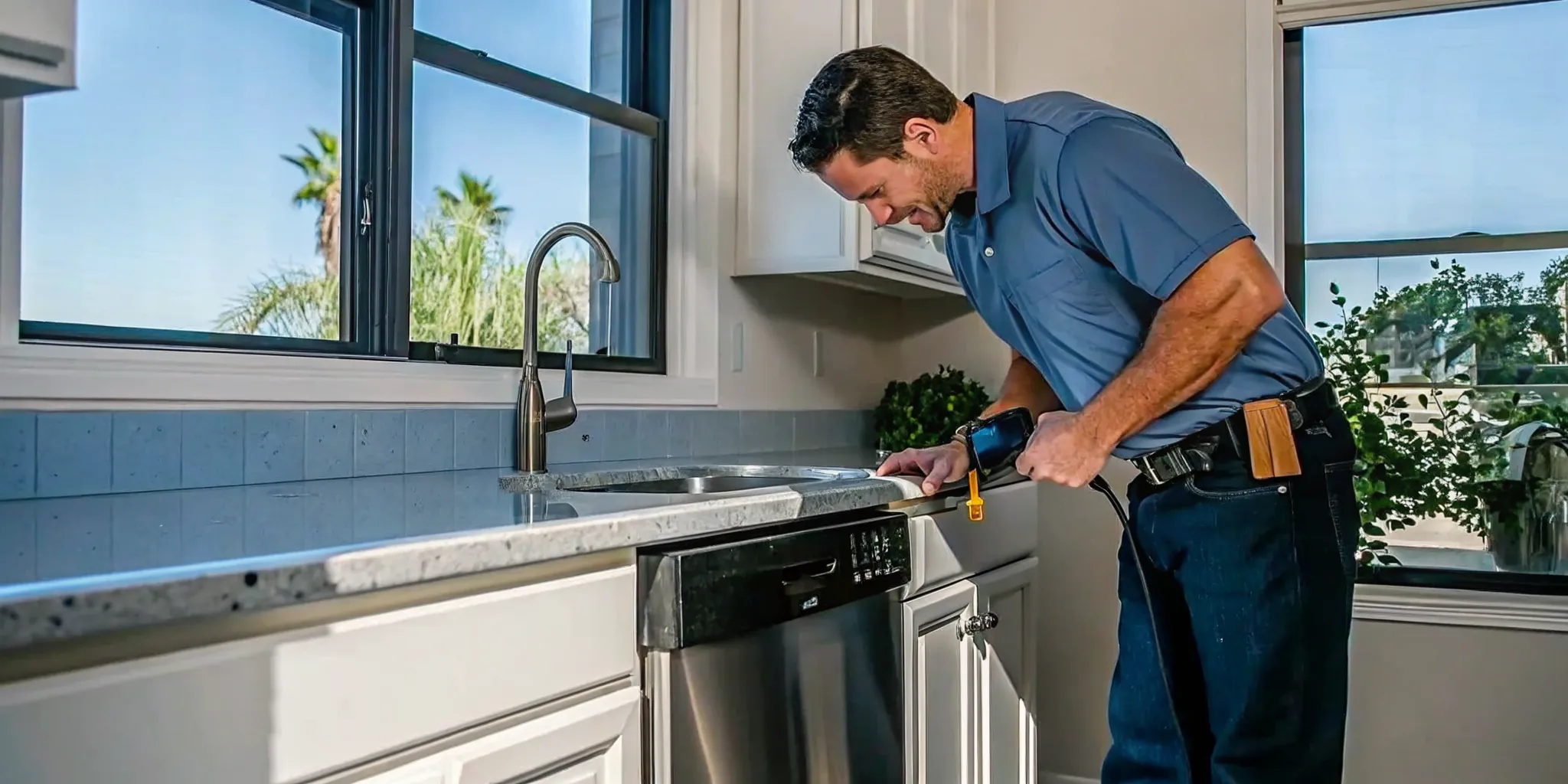
Why the homeowner interview matters
Your observations can shorten the search. Tell the plumber whether the sound is constant or intermittent, whether a stain grows after a shower, and whether the water bill changed suddenly or gradually. Mention recent renovations, fixture replacements, or landscaping work. These details help connect the symptom to a likely part of the plumbing system.
A good assessment does not force every symptom into the same explanation. Condensation, roof intrusion, irrigation, pool water loss, and plumbing leaks can create overlapping signs. The visit should separate those possibilities before a repair is recommended.
Which clues help a plumber trace a hidden leak?
The strongest diagnosis usually comes from several clues that point in the same direction. A single damp spot may not reveal enough. A damp spot combined with unexplained meter movement and a nearby plumbing line gives the plumber a more useful starting point.
- Water-use changes: A bill that rises without a matching change in household habits can indicate ongoing water loss.
- Meter behavior: Movement while every known water-using fixture and appliance is off suggests that water may still be flowing somewhere.
- Visible damage: Stains, bubbling paint, warped materials, or recurring moisture help define the affected area.
- Sounds: Dripping, hissing, or running water when fixtures are off may point toward concealed flow.
- Pressure or flow changes: A noticeable change at fixtures can help identify which part of the system deserves attention.
- Surface and ground conditions: Unexplained warm areas, damp flooring, soft soil, or unusually wet patches can add context.
Fort Myers homes can present additional diagnostic challenges. Humidity can make ordinary condensation look suspicious, while sandy soil can allow outdoor water to disperse without forming an obvious puddle. Concrete slab construction can also conceal supply-line problems. When evidence points below the floor, a focused concrete slab leak assessment can help determine the next step.
Visible leaks versus hidden leaks
A visible drip may look simple, but even visible water does not always identify the failed part. Water may run along a pipe before falling. Hidden leaks require even more care because the first clue can appear far from the source.
| Clue | Visible leak | Hidden leak |
|---|---|---|
| What you may notice | Drip, wet fitting, or puddle | Stain, odor, sound, or unexplained water use |
| First professional check | Nearby fixture, valve, seal, and connection | Water-use history, meter behavior, and affected area |
| Why diagnosis matters | Confirms the component that failed | Narrows the source before repair access is planned |
| Likely next step | Discuss a focused component repair | Continue isolating the suspected line or location |
Pool water loss follows a different path
A pool is exposed to evaporation and has its own plumbing and equipment. If the concern involves a pool rather than the home’s plumbing, mention that when scheduling. Whiskey Creek Plumbing offers dedicated pool leak repair service, allowing the assessment to begin with the right system and symptoms in mind.
How do the findings guide the repair?
At the end of the visit, the plumber should be able to explain the suspected source and the evidence supporting that conclusion. The findings guide the repair location, access approach, materials, and scope. They can also show when additional diagnosis is appropriate before work begins.
A focused recommendation considers more than the leak location. The plumber may assess the pipe material, age, accessibility, surrounding surfaces, and whether the failure appears isolated. A small accessible connection issue calls for a different response than a concealed line problem. If more than one area shows deterioration, the conversation may include whether a limited repair or a broader solution provides better value.
Questions to ask before approving work
- What evidence points to this location or component?
- Is the source confirmed, or is another diagnostic step recommended?
- What access is needed to complete the repair?
- Are there reasonable repair alternatives?
- What restoration work, if any, falls outside the plumbing scope?
- What will the fixed price include?
Whiskey Creek Plumbing uses fixed pricing, so customers can review the quoted plumbing scope before work starts. That transparency is especially useful when a hidden leak has already created uncertainty. You can make a decision based on the diagnosis and proposed work rather than wondering how an hourly bill may change.
How should you prepare for an appointment?
A little preparation gives the plumber better information and easier access. Do not open walls, remove flooring, or dig in the yard to search for the leak. Those actions can create damage without bringing you closer to the source.
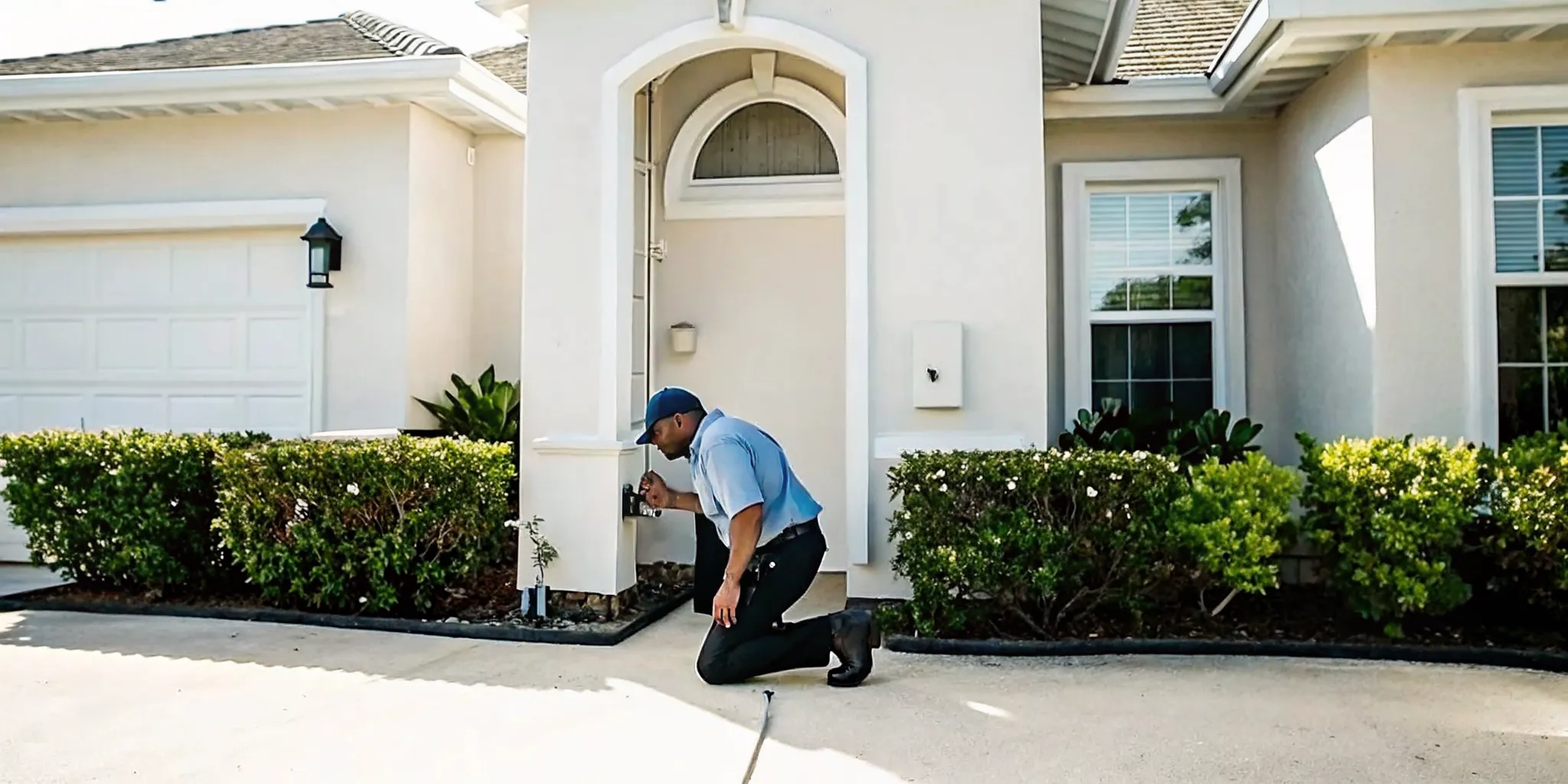
- Gather recent water bills. Mark when the unusual increase began and note any household changes that could explain it.
- Write down symptoms. Record stains, odors, sounds, pressure changes, and when each symptom appears.
- Clear relevant access. Remove stored items from under sinks and provide a clear path to the water heater, shutoff, and meter.
- Pause water use if requested. The plumber may need a short period with fixtures and appliances off to observe the system.
- Secure pets and share property details. Mention recent plumbing work, renovations, irrigation concerns, or pool symptoms.
A simple meter observation can provide context
If it is safe and you know where the meter is, note its reading when no one is using water. Check again after a period of zero use. Movement can be useful information to share, but it does not locate the source on its own. Do not shut off unfamiliar valves or alter plumbing components while investigating.
When should you schedule leak detection?
Schedule an assessment when signs recur, water use changes without explanation, or moisture appears where it does not belong. Acting early can limit continued water loss and give you more repair choices. Waiting for a hidden problem to become visible may also allow damage to spread beyond the failed plumbing component.
- Your water bill rises even though normal use has not changed.
- You hear water moving when fixtures and appliances are off.
- A wall, ceiling, cabinet, or floor repeatedly feels damp.
- Paint bubbles, flooring changes shape, or a musty odor persists.
- Water pressure or flow changes unexpectedly.
- An outdoor area remains wet without rain or irrigation.
For active water flow or rapidly spreading damage, protect people and property first. If you can safely operate the main water shutoff, stop the supply and call a plumber. Avoid electrical hazards and do not enter an unsafe area.
Frequently asked questions about leak detection
How long does professional leak detection take?
Timing depends on the leak location, access, and how clearly the available clues point to the source. An accessible fixture problem may be easier to isolate than an intermittent concealed leak. The plumber can explain the likely assessment scope after reviewing the property and symptoms.
Does leak detection damage walls or floors?
The purpose of professional leak detection is to narrow the likely source before repair access is planned. Some repairs may require access, but careful diagnosis helps avoid opening areas based only on a guess. Ask what evidence supports the proposed access point before approving work.
Can a high water bill mean I have a leak?
Yes, an unexplained increase in water use can be a clue, especially when household habits have not changed. It can also have other causes. Compare recent bills, consider seasonal or occupancy changes, and arrange an assessment when the increase continues.
What should I do before the plumber arrives?
Gather recent bills, note when symptoms started, clear access to relevant fixtures and the water heater, and keep pets away from work areas. Do not open walls or floors to search for the leak yourself. Your notes and observations can help the plumber narrow the source.
Get a clear plan for a hidden leak
A professional assessment replaces guesswork with evidence. Whiskey Creek Plumbing serves Fort Myers homeowners with local, family-run service and fixed-price plumbing work. The team can evaluate the clues, explain the findings, and help you understand the appropriate next step.
Contact Whiskey Creek Plumbing or call (239) 785-9022 to schedule leak detection in Fort Myers.