
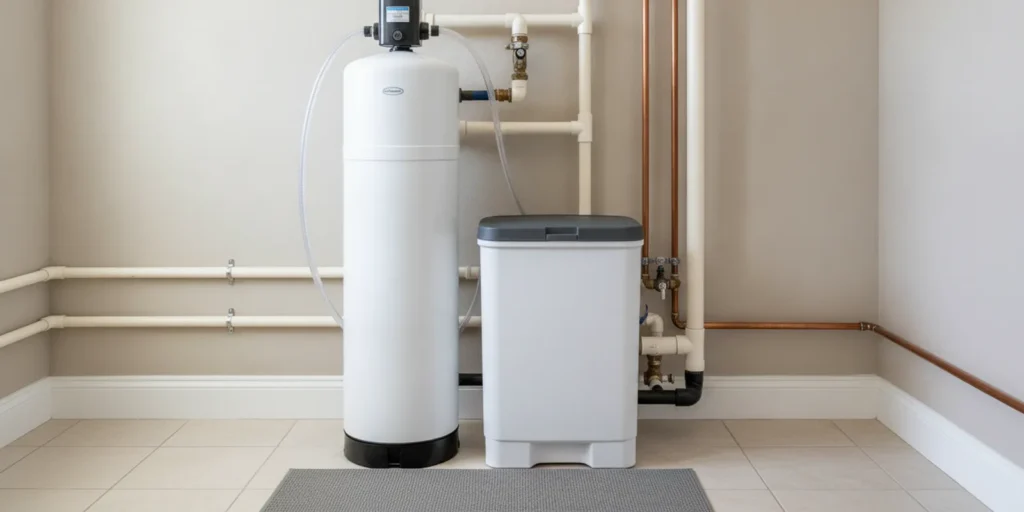
How much does it cost to install a water softener? There is no one price that fits every home. Your total depends on the equipment, the plumbing where it will connect, drainage and electrical needs, and what the installation quote includes. We recommend comparing the system and scope of work—not just the equipment price—before you decide.
Talk with us about water softener installation
What does a water softener installation cost include?
A complete installed price can include the softener, delivery, plumbing connections, a bypass, a drain line, setup, and testing. Some proposals may include only the equipment or a basic connection. Others may account for modifications needed to make the system fit the home. Those are not equivalent quotes.
As a point of reference, the City of Tucson says retail prices for home water softeners may range from approximately $400 to $1,200, depending on the system size and type. That is an equipment-price reference, not a Fort Myers installed quote or a promise about what a particular system will cost. Installation, added materials, and changes to existing plumbing can affect the final amount. See the city’s home water treatment information for its published context.
For that reason, ask each provider to separate equipment and installation in writing. If an estimate gives one total, ask what parts, labor, setup, and follow-up are included. A clear scope helps you compare proposals fairly and reduces the chance of discovering later that a necessary step was not part of the original price.
It can help to think of the amount as several pieces rather than one mysterious number: the selected treatment unit, the materials needed to connect it, the labor for the site-specific work, and startup or testing. Some homes may need little beyond a suitable connection and drain route. Others may need pipe adjustments or a different equipment location. Neither example establishes a universal price; it shows why a quote based on another house or a product listing may not predict your total.
Which factors change the installation price?
Several details affect the work needed. A professional should review the home and intended use before recommending a system. A price based on a brief product description may not account for the actual connection point or drainage route.
System type and capacity
Softener designs and capacities differ. The right choice depends on the water being treated and the household’s needs. A system that is too small may need to regenerate more often than expected; an oversized unit may be more equipment than the home needs. Ask how the recommended size was selected and what information was used. Avoid choosing a model based on tank appearance or a sales label alone.
Ask whether the quote covers the complete system, including the brine tank and any required control or bypass components. Confirm the manufacturer, model, capacity, warranty terms, and any maintenance requirements. If more than one option is proposed, ask for the practical difference between them rather than assuming the higher-priced model is automatically the better fit.
Capacity is not simply a matter of choosing the biggest unit available. The recommendation should take account of the household’s water use and the water conditions being addressed. Ask what assumptions the installer used. For example, if the estimate is based on a particular number of occupants or a recent test result, make sure that information is correct. If the household’s use changes—such as a new resident or a renovation—ask whether the settings or system sizing should be reviewed.
Existing plumbing and installation location
A straightforward connection where the water line is accessible may require less alteration than a location with crowded, difficult-to-reach, or mismatched piping. The installer also needs to identify which fixtures or branches will receive softened water and whether the proposed location allows the equipment to be serviced.
Ask whether the planned connection treats the whole home or only a portion of it. Have the installer explain how the system will be isolated for service and whether a bypass is included. If the installation requires moving equipment or changing existing plumbing, the quote should describe that work before it begins.
Drainage, electrical access, and other connections
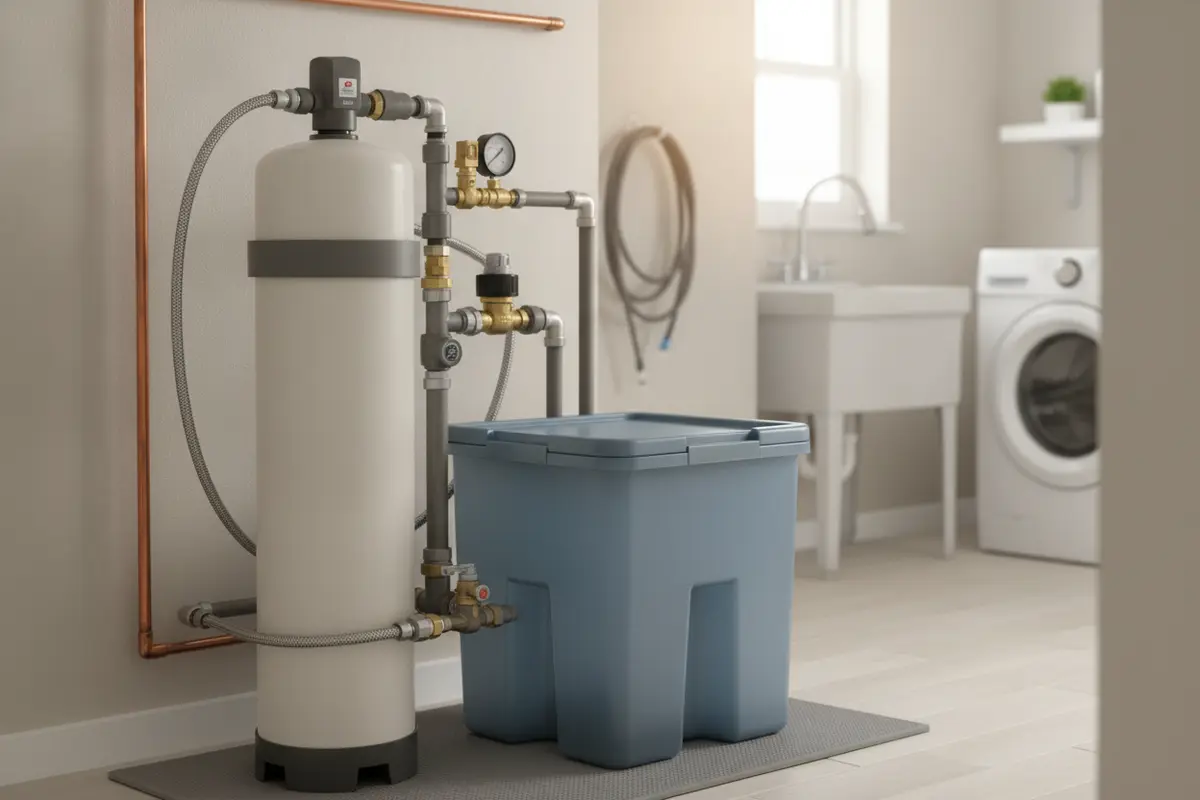
Many systems need a suitable route for regeneration discharge and access to power, depending on the selected equipment. The distance to a drain, the available connection, and the system’s instructions can affect the installation plan. Ask where the discharge will go, how the connection will be made, and whether any drain or electrical work is included in the estimate.
Do not assume a nearby pipe or outlet is suitable without checking the system requirements and applicable local rules. If a proposed location needs a new route or connection, ask the plumber to identify that work and any associated cost before authorizing the job.
Location decisions have practical effects beyond the first day. The softener needs enough space for its tanks, service access, and the tasks required by the particular model. A convenient corner may not work if it blocks access to a shutoff or leaves no practical way to refill supplies. Before approving a location, ask the installer to show where the equipment will sit, how its connections will be routed, and whether you will be able to reach the controls afterward.
Water testing and system setup
System selection and settings should be based on relevant water information and household demand, not guesswork. Ask whether the price includes testing or review of a recent water report, initial programming, and a demonstration of normal operation. Also ask who to contact if the system displays an error or does not seem to be operating as expected.
Water treatment needs can vary between homes. If you are unsure whether a softener is the right approach, start with what you want to address and what is in your water. Our guide to hard water and plumbing in Fort Myers provides additional background, while our water softener installation guide discusses local installation considerations.
How can you compare water softener quotes?
Compare scope and equipment details side by side. A low initial total may not include the same work or components as another proposal. Use a written checklist and ask each installer to answer the same questions.
| Quote item | What to confirm | Why it matters |
|---|---|---|
| Equipment | Manufacturer, model, capacity, and included tanks or controls | Confirms that proposals cover comparable systems |
| Water and household needs | How the size and settings were selected | Shows whether the recommendation fits the intended use |
| Plumbing work | Connection point, bypass, piping changes, and fixtures served | Makes the installation scope clear |
| Drain and power | Discharge route and electrical needs, if applicable | Flags work that could change the total |
| Startup and handoff | Programming, testing, instructions, and warranty information | Clarifies what happens after the equipment is connected |
| Price and exclusions | One written total, included materials, and potential additional charges | Helps you compare complete proposals rather than headline prices |
Ask whether the proposed amount is fixed for the described scope or subject to change if additional work is found. If the price can change, ask what conditions would trigger a change and how you will approve it. We believe homeowners should understand the work and the price before moving ahead; see our explanation of fixed-price plumbing for more on how a clearly defined price differs from open-ended hourly billing.
A useful estimate does not have to be complicated. It should identify the equipment, the connection plan, the work included, and the assumptions behind the price. If two proposals differ substantially, ask what explains the gap. One may include plumbing changes or a more complete startup, while another may leave those items outside its base price.
Try a simple comparison exercise. Put each proposal in a separate column and mark every checklist item as included, excluded, or not stated. If one quote includes a bypass and startup but another does not say, ask for clarification before treating the lower amount as a better deal. Then compare the equipment model and any written warranty information. The aim is not to negotiate from a headline number; it is to make sure each provider is pricing the same result and that you understand what happens if site conditions differ from the initial assessment.
What can homeowners do before requesting an estimate?
A little preparation makes it easier to get a useful recommendation. You do not need to select a model first. Instead, gather information that helps the plumber understand the home and the problem you want to solve.
- Describe what prompted you to consider a softener and which parts of the home are affected.
- Share any recent water test results or water-quality information you already have.
- Note the number of people living in the home and any unusual water-use needs.
- Take a clear photo of the proposed installation area and nearby plumbing, if an in-person visit is not yet scheduled.
- Ask about access, drainage, power, ongoing salt or other supplies, and service requirements.
- Tell the plumber about recent plumbing changes or restrictions on where equipment can be placed.
Use these details to discuss options, not to self-diagnose. A photo cannot always show pipe size, water conditions, or the best connection point. A site assessment may be needed to confirm the scope and give a reliable installed price.
Use a focused estimate request
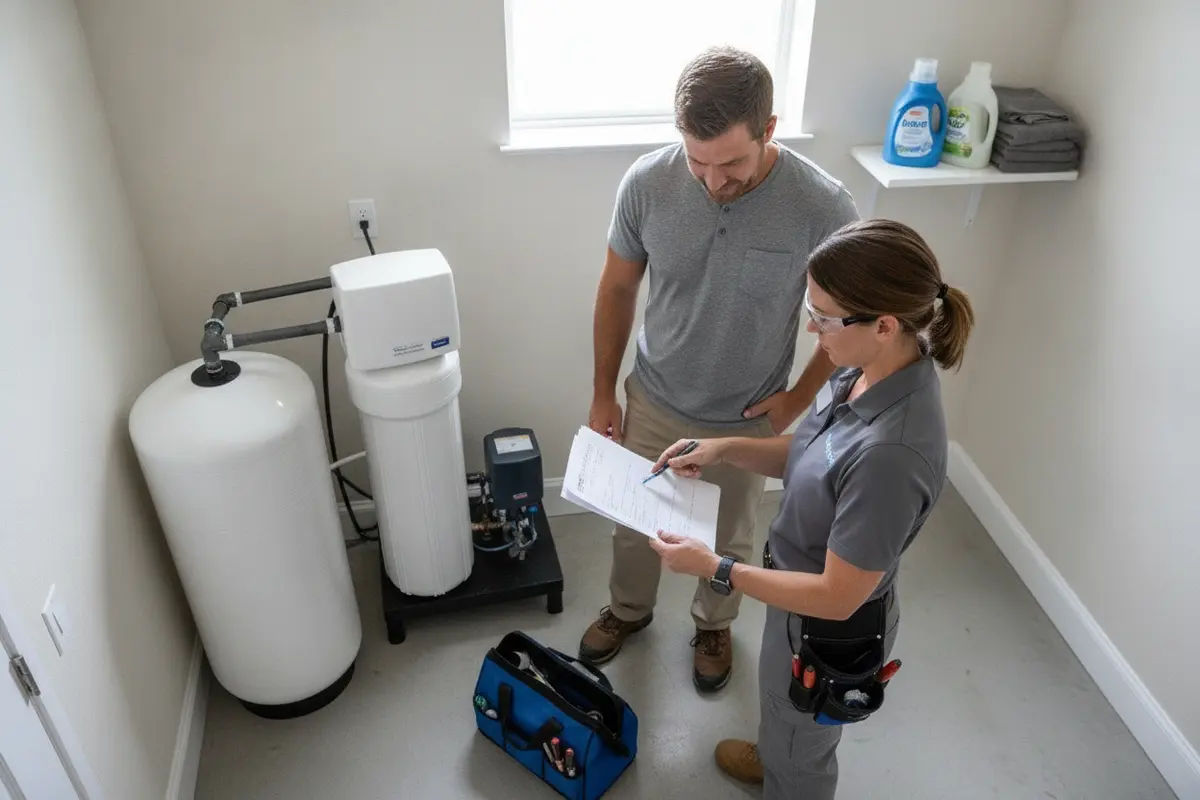
When you contact an installer, explain the issue in ordinary terms rather than naming a system you have not yet selected. You might say that you are comparing softener options, share what prompted the decision, and mention whether you have test results. Then ask whether the estimate includes a review of the connection and drain location. This gives the installer a useful starting point without pushing you toward a product before the home has been assessed.
Before the visit or call ends, repeat back the main scope: which equipment is proposed, what parts of the home it will serve, what installation work is included, and whether any unknown conditions could change the price. If you receive the quote later, check that those points appear in writing. A few minutes spent confirming assumptions can prevent misunderstandings about what the quoted total buys.
How should you think about equipment options?
Start with the result you need, then compare systems that can reasonably meet it. A water softener is not the same thing as a filter that targets a particular taste, odor, or contaminant. If your concern is not simply water hardness, explain it during the estimate and ask whether a softener is the appropriate treatment. Do not pay for equipment based only on a broad promise that it will improve every aspect of water quality.
Ask the installer to explain how the proposed system operates in plain language: what water it treats, what it needs to regenerate or clean itself, and what maintenance you will handle. Confirm whether the quoted setup sends softened water to every fixture or only selected plumbing branches. If you have a separate drinking-water concern, ask whether that calls for a different treatment approach rather than assuming one unit addresses it.
When there are multiple recommendations, request a side-by-side explanation of the differences in capacity, controls, maintenance, and included installation work. You do not need to choose the most feature-rich unit if a simpler option fits your needs. You also should not choose a smaller or less capable system based only on its lower starting price. A useful recommendation explains the trade-offs and the reasoning behind the proposed size.
What ongoing costs should be included in your decision?
The purchase and installation are only part of the ownership decision. Depending on the system, ongoing needs may include salt or other supplies, water for regeneration, maintenance, and eventual repairs or replacement. Ask the installer to explain the routine tasks and what they cost or require. Check the manufacturer’s instructions for the specific model rather than assuming every softener uses the same supplies or schedule.
Salt-based systems also send regeneration discharge to a drain. Local water and wastewater policies may matter. For example, the City of Eden Prairie reported that residents with home softeners increased water costs by an average of $3.77 per thousand gallons in its local context. That figure is not a Fort Myers rate or a universal estimate; it illustrates why homeowners should ask about their local utility rules and the likely operation of the system they are considering. Read the city’s water softener cost discussion for the details of its report.
Ask how often the equipment typically needs attention under the conditions in your home, what you can safely handle yourself, and which service tasks require a qualified technician. Include those answers when comparing options. A system with a lower purchase price may not be the best value if it has different maintenance needs or does not match the household’s water use.
To make ongoing costs easier to compare, ask for the maintenance schedule and identify which supplies you will buy, how frequently the system may regenerate under the proposed settings, and what service is covered by any warranty. Do not assume a seller’s general estimate will match your household: water use and equipment settings matter. You can then compare the responsibilities involved as well as the upfront installation price. These questions will not produce a precise lifetime cost without more details, but they will reveal which ownership assumptions need to be checked.
What happens during a typical installation?
The exact sequence depends on the home and the selected equipment, but discussing the work in stages can help you understand what an installation quote covers. Before work starts, confirm the agreed system and location, the planned water connection, how the unit will be isolated, and the drain arrangement. Ask whether the installer expects any change to the scope and how that will be discussed with you before additional work proceeds.
- Prepare the location. The work area is checked for access to the connection, drain, and power where needed. Move stored items that block the proposed equipment area and ask how nearby surfaces will be protected.
- Make the plumbing connections. The installer connects the system according to its requirements and the approved plan. Ask which fixtures will receive softened water and where a bypass or shutoff can be found.
- Set up and check the unit. The system is programmed as applicable, and connections are checked for leaks and proper operation. Confirm that testing and initial settings are included in the quote.
- Review the handoff. Ask how to check normal operation, what routine tasks are yours, and where to find the manufacturer’s instructions and warranty information.
This checklist is not a promise that every home follows the same installation sequence. Its purpose is to make the estimate more concrete. If the work requires a different connection plan or additional plumbing, ask for a clear explanation of the change and revised price before the scope expands.
When is professional installation worth considering?
Professional installation can help when the water line is hard to access, the drain route is unclear, the installation location needs plumbing changes, or you want help confirming equipment size and setup. It also gives you a chance to agree on the connection plan and price before work starts. DIY installation may appear less expensive if you already have plumbing experience and the manufacturer’s instructions allow it, but mistakes can lead to leaks, poor operation, or an installation that does not meet system requirements.
Before hiring anyone, confirm that the proposal names the system and describes the work. Ask how the installer will protect the work area, test for leaks, set up the controls, and explain routine operation. Whiskey Creek Plumbing is a family-run plumbing company serving Southwest Florida, and we help customers understand their options before choosing plumbing products. You can also review our plumbing services or learn more about our approach on the about us page.
Review water softener installation options
Frequently asked questions
How much does it cost to install a water softener in Fort Myers?
The total varies with the equipment, water and household needs, installation location, and plumbing or drain work. The available price reference cited above is for retail equipment in Tucson, not a local installed price. Ask for a written Fort Myers estimate that separates the system from installation and clearly lists what is included.
Does a water softener quote include the equipment?
Not always. Ask whether the amount includes the complete system, required tanks and controls, installation materials, labor, startup, and testing. Also request a list of exclusions so you can compare it with other proposals.
Will every home need plumbing changes?
No single installation plan fits every house. Existing pipe access, the selected location, drain route, and system requirements determine what work is needed. A plumber can review the site and describe any changes before you approve the job.
What information should I have before I choose a system?
Bring any water test results you have, describe your household’s needs, and explain what you hope to address. Ask how the recommendation was sized and what maintenance it requires. A professional can tell you whether more testing or an on-site review is needed.
Plan your water softener installation
A dependable cost comparison starts with a clear scope: the system, its capacity, the plumbing and drain connections, setup, and ongoing needs. If you are comparing proposals, make sure each one addresses the same items and explains any possible added work.
Call Whiskey Creek Plumbing at (239) 785-9022 to discuss your options
We are glad to help you understand the installation details and decide on a practical next step for your home.
Related guide: Why Is the Salt Level in My Water Softener Not Dropping?.