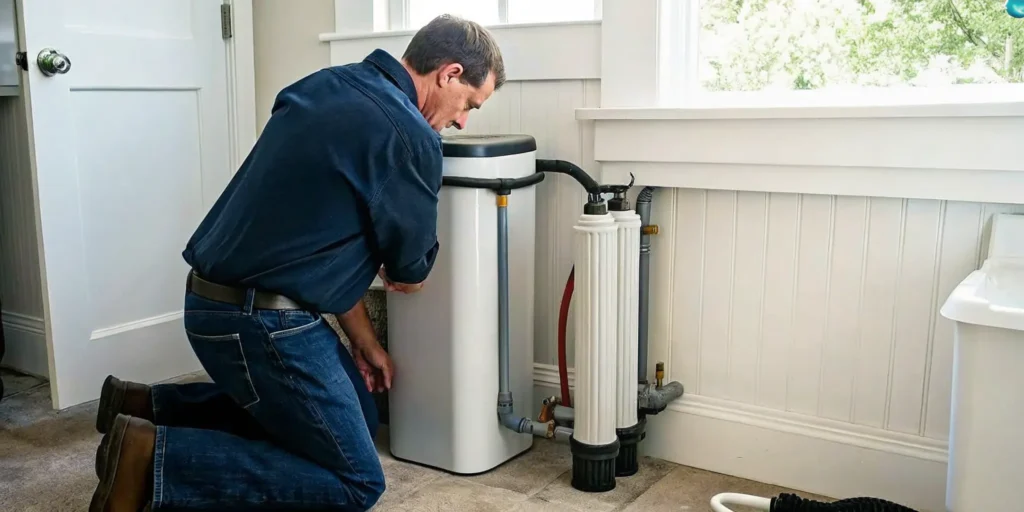
Fort Myers homeowners often wonder if water softener installation is truly needed given the local water conditions. The answer lies in understanding the significant impact hard water has on homes and appliances.
Water softener installation in Fort Myers is highly recommended for homeowners due to the region’s very hard water. Which consistently registers above 10.5 grains per gallon (GPG) and often exceeds 15 GPG. This mineral-rich water leads to scale buildup in pipes, reduced appliance lifespan, increased energy bills, and dry skin and hair. A water softener system uses ion exchange to remove calcium and magnesium, effectively protecting plumbing, improving water heater efficiency, and making cleaning easier. Investing in a softener is a practical solution to combat these pervasive issues and enhance daily living.
Many residents ask exactly how hard their water is and what those numbers mean for their homes. To understand the specific challenges hard water presents in your area, let us look at the local data. Here is how hard the water in Fort Myers truly is.
Water Softener Installation Fort Myers: How Hard Is the Water in Fort Myers? (The Local Data)
Fort Myers water is notably hard. This is largely due to Florida’s natural geology. Much of the state sits atop limestone aquifers. As water flows through these rock formations, it picks up minerals. These minerals, primarily calcium and magnesium, are what define water hardness. The more of these minerals present, the harder the water becomes.
Understanding Fort Myers Water Hardness
Local data indicates that Fort Myers experiences significant water hardness levels. Measurements typically range from 10 to 25 Grains Per Gallon (GPG). The U.S. Geological Survey (USGS) classifies water over 10.5 GPG as “very hard.” This places Fort Myers water firmly in the very hard category. Understanding these levels is key for homeowners.
To learn more about how this impacts your home, consider our Fort Myers plumbing services.
Impacts of Very Hard Water
Very hard water can lead to several common household issues. Mineral deposits, often called scale, build up inside pipes and appliances. This scale can restrict the diameter of pipes. Over time, this reduces water pressure and the efficiency of water heaters. Hard water also leaves residue on dishes and clothes, making cleaning more challenging.
For more detailed information on water hardness classifications, you can refer to the U.S. Geological Survey’s guidelines.
What Does a Water Softener Actually Do?
A water softener works by removing hard water minerals through a process called ion exchange. Hard water contains dissolved minerals like calcium and magnesium. These minerals cause scale buildup in pipes and appliances, reduce soap lather, and leave residue on dishes and clothes. A water softener helps solve these common issues.
The Ion Exchange Process
Inside a water softener, resin beads are charged with sodium ions. As hard water flows through the softener, the positively charged calcium and magnesium ions in the water are attracted to the negatively charged resin beads. The softener exchanges these hard minerals for the sodium ions on the beads. This process effectively removes the hardness minerals from your water.
- Hard water enters the softener.
- Calcium and magnesium ions bind to resin beads.
- Sodium ions are released into the water.
- Softened water flows out for use.
- Once the resin beads are full of hard minerals, the system goes through a regeneration cycle. This cycle uses a brine solution (saltwater) to rinse the beads, flushing the collected hard minerals out of the system and recharging the beads with fresh sodium ions. Modern demand-initiated regeneration (DIR) softeners use 25-40% less water for this process compared to older models.
Key Benefits and Considerations
Softened water provides several important benefits for your home. It extends the life of appliances that use water, like water heaters and dishwashers, by preventing mineral buildup. This also reduces energy use in water heaters, as there is no scale insulation on heating elements. A water softener can also remove up to 10 ppm of iron and manganese from your water.
While highly effective, a water softener alone may not fix issues like sulfur odors in your water. If you notice signs your system needs attention, such as changes in water pressure or quality, consider seeking professional water softener service in Fort Myers. Regular maintenance helps ensure your softener works efficiently and continues to provide soft water.
Signs Your Home Could Benefit from a Water Softener
Hard water is a common issue in many homes, especially in areas like Fort Myers. It can cause a range of problems that affect your plumbing, appliances, and even your daily routines. Recognizing these signs early can help you decide if a water softener is right for your home.
Spotty Dishes and Fixtures
- Visible Spots: After washing dishes or glassware, you may notice white spots or a hazy film. This is often due to mineral deposits left behind by hard water.
- Shower Film: Soap scum and mineral residue can build up on shower doors, tiles, and fixtures, making them look dull and unclean even after scrubbing.
- Clogged Faucets: Scale buildup from hard water can restrict the flow in showerheads and faucets. This reduces water pressure over time.
Appliance and Plumbing Issues
- Reduced Water Heater Efficiency: Hard water minerals can create scale inside your water heater. This forces the unit to work harder to heat water, using more energy and increasing your utility bills.
- Shorter Appliance Lifespan: Appliances that use water, such as dishwashers and washing machines, may break down sooner. Hard water scale can damage their internal components.
- Pipe Scale: Over time, hard water deposits can narrow your home pipes. This leads to lower water pressure and can cause more serious plumbing problems if not addressed.
If you notice these signs, the first step is to test your water. This helps determine the level of hardness and confirm if a water softener is needed. For professional water softener service in Fort Myers, consider an expert assessment.
Water Softener vs. Water Filtration: Which Do You Need?
Understanding the difference between water softeners and water filtration systems is key to improving your home water quality. Both systems treat water, but they target different issues. A water softener deals specifically with hard water minerals. A water filtration system addresses a wider range of impurities and taste concerns. Knowing what problem you want to solve will guide your choice.
Many homes, especially in areas like SWFL, benefit from a multi-stage approach. This often includes a sediment filter paired with a water softener. This combination handles both physical particles and hardness. Specific issues, such as sulfur odors, may need special filters like activated carbon or aeration systems.
What a Water Softener Does
Water softeners work by removing calcium and magnesium ions. These are the primary causes of hard water. Hard water leads to scale buildup in pipes and on fixtures. It can also make soap less effective. Softeners use an ion-exchange process, typically with salt, to replace these hardness minerals.
What a Water Filtration System Does
Water filtration systems remove various contaminants. These can include chlorine, lead, sediment, and volatile organic compounds (VOCs). The specific impurities removed depend on the type of filter used. Filtration can improve water taste and smell. It also makes water safer for drinking and cooking. However, it is important to note that home water treatment systems do not remove all contaminants, according to the CDC.
Comparing Water Treatment Systems
| Feature | Water Softener | Water Filtration System |
|---|---|---|
| Primary Function | Removes hardness minerals (calcium, magnesium) | Removes contaminants, improves taste/smell |
| Contaminants Addressed | Calcium, magnesium, some iron | Chlorine, lead, sediment, VOCs, bacteria, cysts |
| Maintenance | Salt refills (monthly to quarterly) | Filter replacements (every 3-12 months) |
| Best Use Case | Whole-house scale prevention, appliance longevity | Improved drinking water quality, contaminant removal |
| Typical Goal | Prevent hard water damage and effects | Safer, better-tasting water for consumption |
Maintaining any water treatment system is crucial for it to work well. For filtration systems, this means regular filter changes. Neglecting maintenance can lead to reduced effectiveness or even system failure. You can find out more about proper care and maintenance for these systems.
Cost of Water Softener Installation in Southwest Florida
For many local homeowners, understanding the cost of water softener installation in Southwest Florida is the first step toward cleaner water. While the initial price is an investment, it helps prevent plumbing repairs and extends the life of your appliances. Knowing the typical costs and factors that affect pricing can help you plan your home upgrade.
Proper Sizing and Key Factors
The cost of your system depends heavily on its capacity. Proper sizing is calculated by multiplying the number of people in your home by your daily water usage and your water hardness in grains per gallon (GPG). Sizing a system correctly ensures it can handle your daily water needs without wasting salt or water during regeneration cycles.
Most modern systems are highly efficient and programmed to regenerate during low-usage hours, typically between 2 a.m. and 4 a.m. This ensures you always have plenty of soft water available when you wake up. To get an accurate assessment of your home needs, it is best to set up a professional water test with Whiskey Creek Plumbing.
Average Cost Breakdown
In Southwest Florida, the total cost for a whole-house water softener installation generally averages $1,500 to $4,500. This price range includes the high-quality softening system, materials, and professional labor. A standard installation typically takes about 3 to 4 hours, assuming your home main water line is easily accessible.
At Whiskey Creek Plumbing, we offer transparent, fixed-price quotes for your installation project. This means you will know the exact cost before any work begins, with no unexpected fees or hourly charges. Our upfront pricing and 100% satisfaction guarantee provide peace of mind for every local family we serve.
Long-Term Maintenance and System Lifespan
A quality water softener is built to last. The resin beads inside the tank, which physically remove hard minerals, typically have a lifespan of 10 to 15 years. Regular upkeep will ensure your system operates at peak performance throughout its life.
Fortunately, maintaining a modern water softener is simple and inexpensive. Homeowners should check the salt levels in the brine tank monthly and replenish them as needed. Additionally, a professional should clean the brine tank every 5 to 10 years to prevent salt bridging and mineral buildup. If you need help with system maintenance or want to inspect an existing unit, you can count on our team for professional water softener service.
Frequently Asked Questions
Understanding water treatment options can help you make the best decision for your home. Here are answers to some of the most common questions Southwest Florida homeowners ask about water softeners.
Is Fort Myers water hard or soft?
The water in Fort Myers is considered very hard. Because Southwest Florida draws its water from limestone aquifers, the groundwater naturally absorbs high concentrations of minerals like calcium and magnesium. Tap water in our area typically ranges from 10 to 25 grains per gallon (GPG), which is well above the U.S. Geological Survey classification of very hard water.
Do I need a water softener in Fort Myers?
While a water softener is not legally required, it is highly beneficial for homes in Fort Myers. Without one, hard water minerals will create scale buildup in your pipes and water heater. Reduce the lifespan of your appliances, leave spotty residue on dishes, and cause dry skin and hair. A softener protects your home plumbing infrastructure and improves your daily comfort.
What is the cost of water softener installation in Fort Myers, FL?
The total cost of water softener installation in Fort Myers typically ranges from $1,500 to $4,500. This price depends on the size of your home, your water usage, and the specific features of the system. Professional installation includes connecting the unit to your main supply line, proper drain setup, and a bypassed outdoor spigot connection.
What are the benefits of a water softener in Fort Myers?
A water softener prevents limescale buildup in your plumbing and water-using appliances, helping them run more efficiently and last years longer. It also eliminates white mineral spots on glass and dishes, improves soap lathering, and leaves your hair and skin feeling much softer after bathing.
How long does a water softener last in Florida?
With proper care, a high-quality water softener in Florida typically lasts between 10 and 15 years. The system resin beads do the heavy lifting of mineral removal and eventually wear out. But regular maintenance like monthly salt checks and periodic brine tank cleanings will help maximize your system lifespan.
Ready to Improve Your Fort Myers Water Quality?
Ignoring hard water issues can lead to costly repairs and less efficient appliances over time. Scale buildup shortens the life of water heaters, dishwashers, and washing machines, costing you more in energy and replacements. Acting now to test your water and install a softener can save you money and headaches down the road.
Ready to schedule a free water test and water softener installation consultation? Call Whiskey Creek Plumbing to get started today.