
An unchanged salt level does not by itself prove that a softener has failed. Reduced water use can reduce salt consumption on a demand-controlled unit. An extended unchanged level together with hard-water symptoms may point to a salt bridge, a metering problem, or a regeneration issue that needs assessment.
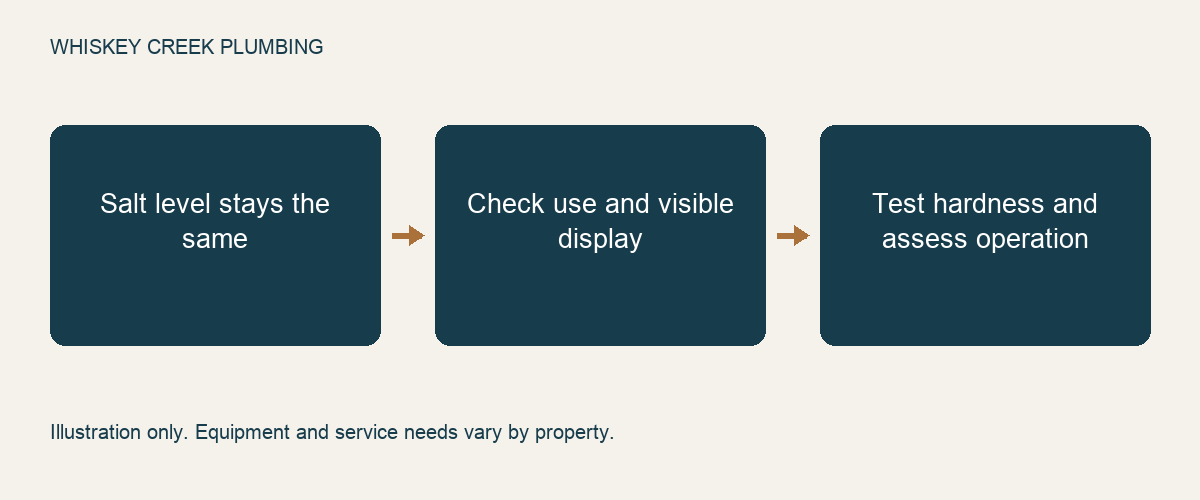
Compare salt use with household use
Note when salt was last added and whether the home has been occupied normally. A seasonal home with little water use may behave differently from the same home during a busy visit. There is no dependable universal number of bags per month for every system.
Take a photograph of the visible salt level and display if you can do so safely. Record any error message and the equipment model. Avoid adding more salt simply because the water feels different; a full tank can conceal what is happening below its surface.
Understand what a salt bridge means
A bridge is hardened salt with space beneath it, which can interfere with brine formation. Whirlpool’s guidance identifies humidity, unsuitable salt, a very full tank, and long intervals between recharges as contributing conditions for its equipment. That does not mean every system in Lee County has a salt bridge.
Follow the exact manufacturer’s instructions for your model or have the unit serviced. Do not stab into the tank, use sharp tools, strike the housing, or improvise hot-water or chemical treatments. Internal parts and repair procedures differ between systems.
Low salt use can have other causes
Whirlpool’s low-salt-use troubleshooting also considers whether the system meters water use and fills correctly during recharge. Those checks explain why salt appearance alone cannot identify the fault. A technician can assess the model’s flow sensing, settings, and regeneration process.
Do not change hardness settings or force repeated recharge cycles to see what happens. Give the professional any recent water-test information and note whether the unit was bypassed for earlier work. If you do not recognize the valves, leave them alone and ask for help.
Verify performance with an appropriate test
Hardness testing can help evaluate softening performance. Explain whether the sample was taken before or after treatment, and let the professional interpret the result in context. A hardness result does not certify water as safe to drink or identify every contaminant.
Whiskey Creek Plumbing offers softener repair, maintenance, and free water tests and consultations related to softener projects. Ask what the proposed test covers. A softener consultation should not be represented as certified laboratory testing unless that specific service has been arranged and verified.
Should I replace the softener because salt is not moving?
Start with diagnosis. Ask what finding explains the low salt use, whether a repair is available, and how performance will be checked afterward. A measured assessment can distinguish normal low demand from a service problem.
For related background, read Water Softener Services in Fort Myers: Care Signs. See our water-softener repair and maintenance and Fort Myers service information for the next step.
To discuss your property, call Whiskey Creek Plumbing at (239) 785-9022 or contact us.