
Restored water pressure shows that water is moving again. It does not establish that a private well is safe to drink from. After well-system repair, ask the contractor and local health department what testing, disinfection, and temporary water-use precautions apply to your property.
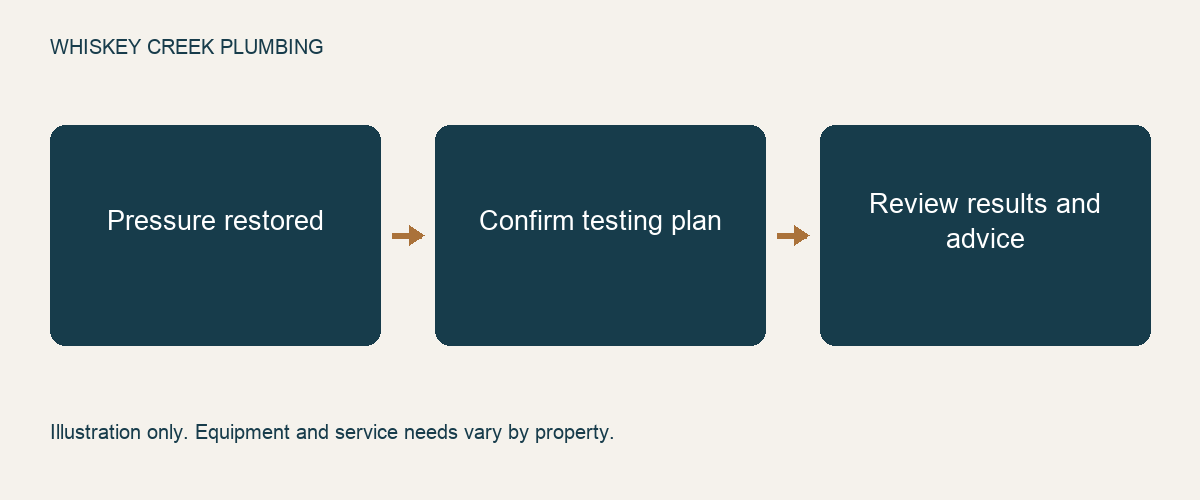
Arrange the water-quality follow-up
The EPA recommends testing after any part of a private well system is repaired or replaced, as well as when water quality changes. Use a laboratory certified for drinking-water testing. Ask the laboratory or health department which tests fit the repair and the well’s circumstances, and how and when to collect the sample.
If disinfection is part of the work, sampling must be coordinated with the professional’s instructions. Do not guess at chemical quantities or decide that a chlorine smell proves the water is ready. Follow the contractor, laboratory, and health department’s directions for treatment, flushing, sampling, and use while results are pending.
Keep the mechanical and water-quality records separate
A useful repair handoff explains which component was repaired, what operating checks were performed, and whether the well system was opened or treated. The water-quality record should identify the sampling date, sampling location, substances tested, results, and any follow-up advice.
Ask for clarification if the handoff only says that the pump now runs. That statement does not describe a laboratory result. Keep the records for future service and comparisons, especially if the original problem included a change in color, odor, or sediment.
Know what a test actually covers
No single basic water test answers every water-quality question. A hardness test helps with softener planning, but it does not replace testing for bacteria or other health-related contaminants. A softener consultation is a different service from laboratory drinking-water verification.
Clear water can still need testing. Conversely, a visible change is a reason to investigate rather than proof of one particular contaminant. Give the laboratory the repair history and mention flooding, nearby disturbance, or other relevant changes. Do not assume that every Fort Myers well has the same water conditions.
Questions for the contractor and laboratory
- What was repaired, and was any part of the water system opened?
- Was treatment recommended or performed, and what instructions apply afterward?
- Who arranges the sample, and what collection method and timing should be used?
- Which tests are included, and which concerns would require additional testing?
- What water-use precautions apply while results are pending?
- Who explains an abnormal result and the next step?
If a result raises a concern, contact the health department for advice and follow its directions about confirmation and treatment. Do not use taste or appearance to overrule a laboratory finding.
Does this replace routine testing?
No. A repair-related check is an additional event in the well’s history. Keep a routine testing plan with advice tailored to the well and household, and retain both sets of records.
For related background, read Fix a Well Pump: Safe Checks Before You Call. See our water-well repair and Fort Myers service information for the next step.
To discuss your property, call Whiskey Creek Plumbing at (239) 785-9022 or contact us.