
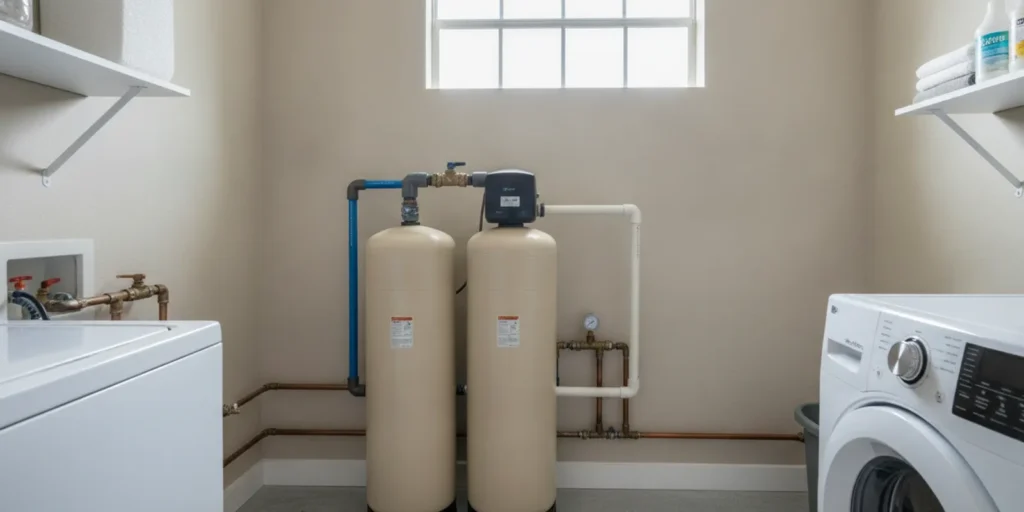
Choosing a water softener for well water starts with knowing what is in the water—not with picking a tank from a product list. A test can show whether hardness is the issue and whether other conditions need a separate treatment approach. Once you know the water results and household demand, you can compare system capacity, regeneration style, installation needs, and ongoing upkeep with fewer guesses.
Talk with our plumbing team about your water
What should you know before choosing a water softener for well water?
A water softener is designed to reduce hardness minerals, mainly calcium and magnesium, through an ion-exchange process. In a typical unit, water passes through resin beads that exchange hardness ions for sodium or potassium ions. When the resin reaches capacity, the system regenerates using a brine solution and sends the rinse water to an approved drain connection.
That process can help reduce mineral scale and the feel of hard water. It does not make every well-water concern disappear. A softener is not a substitute for testing for bacteria, nitrate, iron, sulfur compounds, or other contaminants. Some wells have more than one issue, and each may call for a different treatment method. The right design may therefore involve a softener, another treatment device, or no softener at all.
For Southwest Florida homeowners, avoid assuming that a neighbor’s equipment will fit your well. Water quality can vary between properties, and demand depends on the home and its plumbing. Get the water tested, record the results, and use those details to guide the equipment conversation.
Which water tests help determine whether you need a softener?
Start by asking a qualified testing laboratory or water-treatment professional which tests suit your well and concern. At minimum, a hardness result is needed to size and assess a softener. Depending on the well, you may also want results for iron, manganese, pH, and other water-quality measures. Testing can help distinguish hardness from stains, odor, or sediment that may have a different cause.
- Hardness: A result reported in grains per gallon or milligrams per liter helps establish whether softening is appropriate and informs capacity planning.
- Iron and manganese: These can contribute to staining and may affect equipment performance. Ask whether any measured level requires pretreatment or a different system design.
- pH and other chemistry: These results can affect corrosion, treatment performance, and the materials selected for the installation.
- Health-related concerns: If the water source or circumstances call for testing beyond hardness, request appropriate analysis. A standard softener should not be treated as a device for making unsafe water safe.
Use a recent test from a representative sample and keep a copy of the report. If an installer recommends equipment for a condition not shown in the results, ask what evidence supports that recommendation. For background on how softeners work and maintenance expectations, Consumer Reports’ overview of hard water and water softeners is a useful starting point.
How do you match softener capacity to a household?
Capacity is not simply a matter of choosing the largest tank available. A properly selected unit should account for the measured hardness, the number of people and fixtures using water, and expected daily demand. The installer also needs to consider how often the system will regenerate and how much treated water is available between regeneration cycles.
Ask for the proposed system’s rated capacity and how the sizing calculation was made. The calculation should be tied to your test result and household use rather than an unexplained model number. A system that is too small may regenerate frequently or struggle to meet demand. One that is much larger than needed can add equipment and operating expense without a clear benefit.
Think about actual water use patterns as well. A home with several bathrooms, frequent laundry, or multiple people using water at the same time may have different demand than a smaller household. If the home has an irrigation system, pool fill, or other high-volume use, clarify whether that water is routed through treatment. In many setups, outdoor water is not softened, but the plumbing layout determines what the equipment serves.
What kinds of water softener systems can you compare?
Most homeowners comparing a conventional softener will encounter timer-based, metered, and demand-initiated regeneration systems. The distinction is how the system decides when to regenerate. Product features vary, so compare the actual control and service requirements rather than relying on a label alone.
| System approach | How regeneration is triggered | Questions to ask |
|---|---|---|
| Timer-based | Regenerates on a set schedule. | Does the schedule reflect real water use and the test results? |
| Metered | Tracks treated water use and regenerates after a set volume. | How is the capacity programmed, and what happens if demand changes? |
| Demand-initiated | Uses controls to trigger regeneration based on measured or calculated demand. | What data does this model use, and can its settings be checked or adjusted? |
Ask about the resin, control valve, bypass, brine tank, and availability of replacement parts. A bypass lets water flow around the treatment equipment for service or when untreated water is preferred. Confirm that the setup is accessible for salt replenishment and maintenance, and that the planned drain connection and electrical supply meet the equipment requirements.
How should you weigh salt-based and salt-free options?
Salt-based ion-exchange equipment is the conventional approach when the goal is to remove hardness minerals from water. Salt-free products are often described as conditioners, but products can use different processes and do not necessarily reduce measured hardness in the same way. Before treating the names as interchangeable, ask the seller what the device is designed to change and what test or performance measure will show that it worked.
Use your water report and the specific problem you want to solve. If your primary concern is scale, ask how each option performs under your measured conditions and what result you should expect at fixtures and appliances. If you want to avoid adding sodium through a salt-based process, explain that preference and ask whether a salt-free device is appropriate for your water and goals. Do not assume that a conditioner will provide the same result as a softener or that either system will address unrelated water-quality concerns.
Also compare everyday ownership. Salt-based systems require salt replenishment and a suitable regeneration discharge route. Other treatment devices may avoid salt handling but can have their own media replacement, cleaning, or performance limits. Ask what maintenance is required, what consumables cost, and how often the unit should be checked. The best choice is the system that addresses a documented need and fits the home’s plumbing and upkeep preferences—not simply the product with the most features.
What practical details can affect the system choice?
Two systems with similar advertised capacity can differ in their controls, service access, footprint, and water use during regeneration. Check the dimensions of the equipment and measure the proposed location before ordering. Leave room to open the brine tank, remove covers, and reach the shutoff and bypass valves. A cramped location can make ordinary salt checks or future service harder than expected.
Ask whether the model can be programmed for the actual hardness result and household demand, and how settings are restored after a power interruption if that applies. Find out whether the control displays a service alert and whether the homeowner can see water use or regeneration history. These features are useful only if you know what they mean and can get support when something looks wrong.
Finally, consider the intended water route. Some households prefer softened water at most indoor fixtures but untreated water at selected taps or outdoor lines. That arrangement may require separate plumbing branches. Have the installer explain where the system will connect and which outlets will be affected, rather than assuming that a whole-home label answers every routing question.
Does well water need pretreatment before a softener?
It may, but the decision should follow test results and equipment specifications. Some well-water conditions can interfere with a softener or shorten the useful life of its resin. Sediment, iron, or other measured concerns may lead a professional to recommend a prefilter or another treatment step. That does not mean every well needs several filters. Each added device should address a documented condition or a clear operational need.
Ask the installer to explain the treatment sequence. For example, if a proposal includes a sediment filter, softener, and an additional treatment unit, ask which test result or concern each component addresses, how often it needs attention, and what maintenance it adds. A simple diagram of the intended water path can make the proposal easier to understand.
Do not treat softening and reverse osmosis as interchangeable. A softener targets hardness minerals in the home’s water supply. Reverse osmosis is a separate filtration process often installed at a selected drinking-water tap, with its own requirements and maintenance. Whether either system makes sense depends on the water test and the household’s goals.
What should you compare in a water softener quote?
A useful estimate explains more than the equipment price. Compare the same practical details across proposals so the lowest number is not hiding a different scope. Ask whether the quoted price covers the unit, connections, bypass, drain routing, startup, programming, and testing after installation. Clarify any work that is excluded or conditional.
- Equipment and capacity: Record the make, model, rated capacity, control type, and sizing basis.
- Water conditions addressed: Match each proposed device to a test result or identified need.
- Installation scope: Confirm where equipment will sit, how it ties into the plumbing, where regeneration discharge goes, and whether electrical work is included if needed.
- Operation: Ask how to set the unit, use the bypass, check salt, and recognize a fault or service need.
- Ongoing care: Compare salt use, filter changes if applicable, service intervals, and the availability and cost basis of replacement parts.
- Price terms: Ask what is included, what could change the scope, and whether the proposed price is fixed for the described work.
Whiskey Creek Plumbing uses fixed-price service, with the price explained before work begins. When comparing a quote, ask for the scope and assumptions in writing so you can see what the stated price covers. Our plumbing services overview provides context about the plumbing work we handle, and you can also review our water softener installation information for Fort Myers.
What does installation planning involve?
Before installation, identify the main water line entry point, the space available for the equipment, and a suitable nearby drain and electrical outlet if the selected system needs one. The installer should verify these details on site. A softener needs enough clearance for servicing and salt replenishment, and its discharge connection must be planned for the specific home and local requirements.
Discuss which fixtures or branches will receive treated water. The system may be placed to serve most indoor plumbing while leaving selected lines untreated, but the right layout depends on the home. Talk through the impact on drinking-water taps, outdoor hose bibs, irrigation, and pool equipment before the plumbing is changed.
On installation day, the plumber should explain how the unit is connected, how the bypass works, and how to monitor the system. Ask for the programmed settings, the recommended salt type, and the first maintenance steps. Keep the equipment manual and water test report together. If you are also investigating an unusual water bill or suspected leak, our guide to plumbing water leak detection explains a separate plumbing issue that should not be confused with water-treatment performance.
How much maintenance does a water softener need?
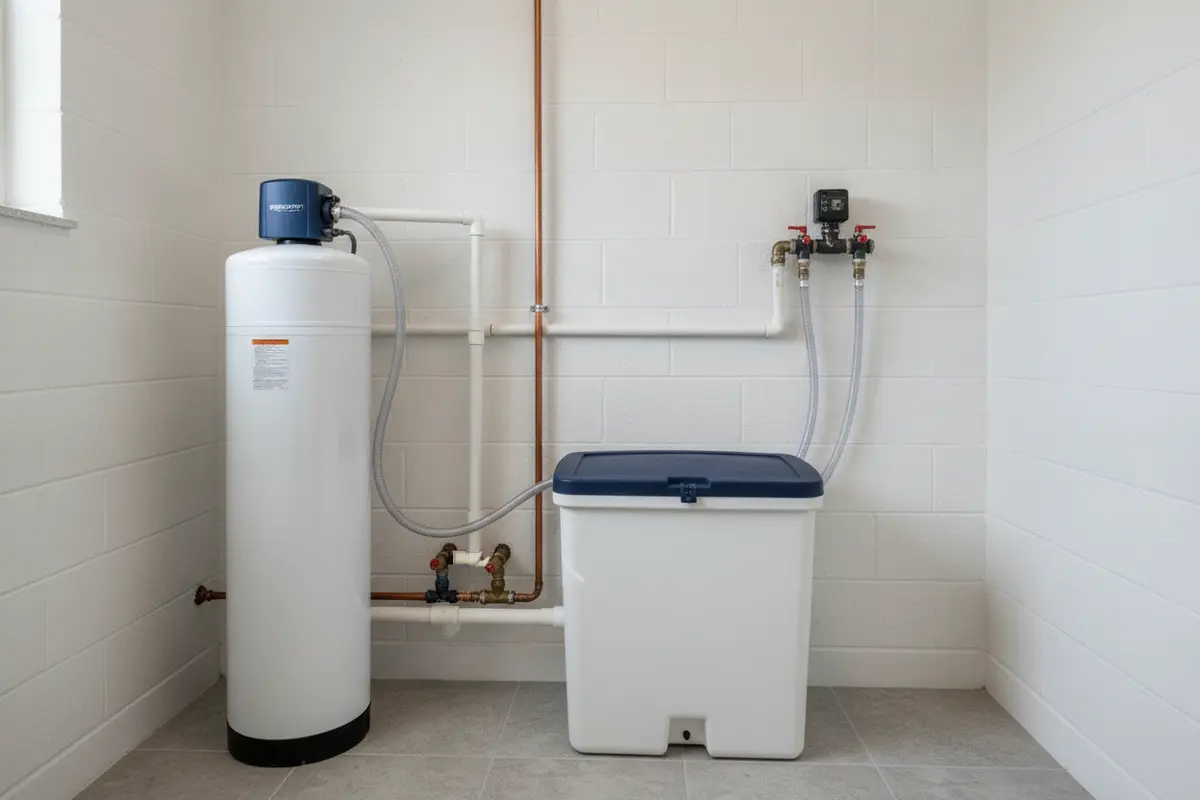
Maintenance depends on the equipment, water conditions, and amount of water used. A conventional salt-based softener generally needs a regular check of the salt supply and occasional attention to the brine tank and controls. Follow the manufacturer’s manual and the installer’s recommendations rather than using a one-size-fits-all service schedule.
Check the salt level as directed and use the type of salt approved for the unit. Avoid letting the tank run empty for long periods, but do not fill it beyond the recommended level. Look for a salt bridge or buildup if the system appears to be using salt without producing the expected result. Do not open or adjust components if you are unsure how they work; contact the installer for guidance.
Notice changes in water feel, spotting, or scale, but do not use those signs as the only measure of performance. A control setting, bypass position, exhausted resin, or change in the well water could affect results. If the system has a test or service indicator, follow the manual and ask how performance should be verified. For a broad overview of expected service life and upkeep, see the Consumer Reports water softener guide.
When should you call a plumbing professional?
Get professional help when test results show multiple water conditions, the proposed treatment includes unfamiliar equipment, the water softener needs plumbing modifications, or you cannot identify a safe drain location. Professional evaluation is also sensible if water quality changes suddenly, the system leaks, or treated water no longer seems consistent after basic checks from the manual.
Before arranging a visit, gather the water test report, the current equipment model, a description of the symptoms, and any maintenance records. Note whether the issue affects all taps or only one fixture. This information can help focus the evaluation and avoid replacing equipment before the cause is understood. Homeowners may also want to review the company’s approach and background when deciding who to invite into the home.
Call (239) 785-9022 to discuss your water treatment options
Frequently asked questions
Can a water softener make well water safe to drink?
No. A softener is designed to reduce hardness, not to remove every contaminant or confirm that well water is safe to drink. Test for the concerns relevant to your well and choose treatment based on those results.
Should every well-water home have a water softener?
No. The need depends on the water’s measured hardness, household preferences, and the plumbing and equipment involved. Test first, then decide whether softening addresses a real concern.
Can one softener treat water for the whole home?
A properly sized and installed unit can be connected to serve a home’s selected plumbing branches. The installer should confirm the capacity and layout, including whether outdoor water or drinking-water taps are included.
How do I know what size softener to buy?
Use the measured hardness and household water demand to size the unit. Ask the installer to show how the test result, number of occupants, and expected use informed the recommendation.
Do I need reverse osmosis with a water softener?
Not automatically. Reverse osmosis and water softening perform different jobs. Consider an additional drinking-water treatment only after identifying the water concern it is intended to address and confirming the system suits your needs.
Plan the right water treatment for your home
A good water-softener decision is grounded in a water test, a clear explanation of capacity, and a complete installation and maintenance plan. Compare proposals by what they treat and include, not by tank size or product claims alone. If the test identifies several concerns, ask how each one will be handled and how you will know the equipment is working as intended.
Request a fixed-price plumbing consultation
We can help Southwest Florida homeowners review the plumbing setup and understand the practical next steps for their home.