
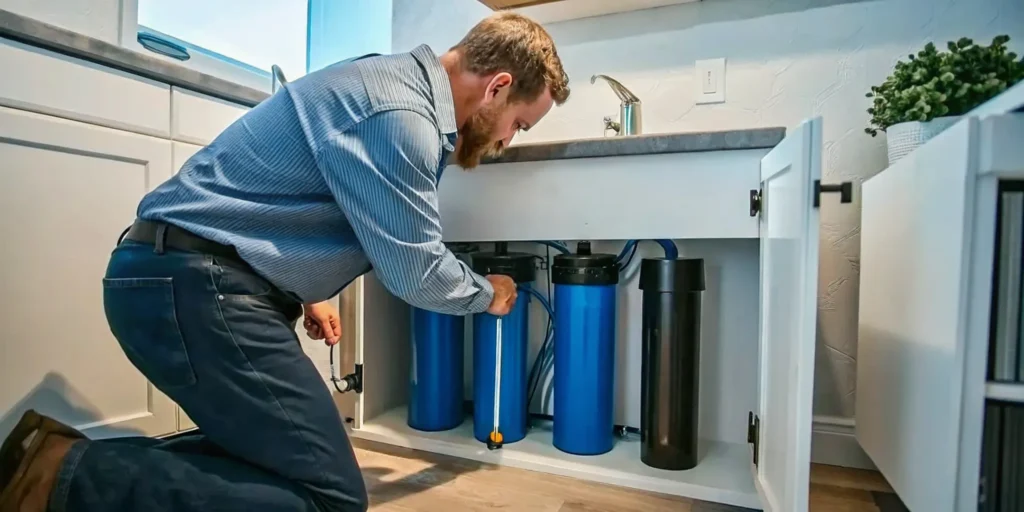
Hard water stains on your glass shower doors. A sulfur-like smell from the kitchen tap. Sediment clouding your drinking water after a heavy storm. These are everyday realities for Lee County homeowners. And they all point to the same question: Is water filtration system installation in Lee County the solution your home needs?
Water filtration system installation in Lee County removes contaminants like chlorine, sediment, volatile organic compounds (VOCs), and heavy metals from your home’s water supply. The type of system you need depends on which contaminants are present, your home size, and your budget. Options range from whole-house systems that treat every tap to under-sink units for drinking water only. Testing your water first ensures you choose the right system for your specific concerns.
Lee County’s water comes from the Floridan Aquifer, a limestone-based system that naturally picks up minerals, sediment, and organic matter. Municipal treatment adds chlorine for disinfection, which leaves a taste and odor many homeowners find unpleasant. In this guide, we explain the types of water filtration systems available in Florida so you can make an informed choice for your home.
Water Filtration System Installation Lee County: Types of Water Filtration Systems Available in Florida
Residential water filtration covers several system types, each designed to address specific contaminants. Understanding the difference helps you match the right technology to your needs.
Activated Carbon Filtration
Granular activated carbon (GAC) is the most common filtration method in home systems. It works by trapping contaminants on the surface of carbon particles as water passes through. The EPA notes GAC is highly effective for removing taste- and odor-producing compounds, volatile organic compounds (VOCs), and disinfection byproduct precursors (F003). These systems are the go-to choice for homes dealing with chlorine taste, sulfur odor, or low-level chemical contamination.
Reverse Osmosis
Reverse osmosis (RO) systems push water through a semi-permeable membrane that blocks dissolved solids, heavy metals, nitrates, and fluoride. The CDC explains that RO reverses the natural flow of water, pushing it from a more contaminated solution through the membrane to a cleaner one (F011). RO systems produce the highest purity water of any home filtration method, but they are slower and produce wastewater during the process. Most RO units install under the sink and serve a dedicated faucet.
Sediment Filtration
Sediment filters capture larger particles such as sand, silt, rust, and debris. They are typically the first stage in a multi-stage system and protect downstream filters from clogging prematurely. Homes on well water or those that experience seasonal sediment from Lee County’s stormwater runoff benefit the most from a dedicated sediment pre-filter.
UV Water Treatment
Ultraviolet treatment uses UV light to neutralize bacteria, viruses, and parasites without adding chemicals. Unlike carbon or RO filters that trap contaminants, UV systems disrupt the DNA of microorganisms, making them harmless. UV treatment is often combined with other filtration stages rather than used alone.
Water Softeners
Water softeners are a separate category from filtration, but Lee County homeowners often install them alongside a filtration system. Softeners use ion exchange to remove calcium and magnesium, which cause hard-water scale on fixtures, water heater inefficiency, and soap scum. While filtration targets taste, odor, and chemicals, softeners target mineral content. Many homes benefit from both: a whole-house softener paired with a carbon or RO drinking water filter.
Need help choosing the right system? We offer professional water filtration services for Lee County homes and can guide you through the options.
What Does a Water Filtration System Remove?
The effectiveness of a water filtration system depends on the pore size and type of filter media. Different filtration levels trap different contaminants, and knowing the distinction prevents you from buying a system that does not address your specific concern.
What Filtration Removes
- Chlorine and chloramines: Activated carbon filters effectively remove the taste and odor of chlorine used in municipal water treatment (F014). This is the most common reason Lee County homeowners install whole-house filtration.
- Sediment and debris: Sediment filters capture sand, silt, rust, and loose particles stirred up during main breaks or heavy rain. If you see cloudy water or brown specks after a storm, a sediment pre-filter is the solution.
- Volatile organic compounds (VOCs): GAC filtration removes many VOCs that may enter water supplies from industrial runoff or agricultural activity (F003).
- Parasites and bacteria: Microfiltration removes parasites like Giardia and Cryptosporidium, while ultrafiltration removes both parasites and bacteria (F005, F006). Nanofiltration adds virus removal, and RO pushes further to block dissolved chemicals (F007).
- Heavy metals: Reverse osmosis systems can remove lead, arsenic, copper, and other heavy metals that may leach from older plumbing or natural deposits.
What Most Home Filters Do NOT Remove
The CDC cautions that most standard home filters like pitcher or refrigerator filters are not designed to remove germs from water (F009). They typically use carbon to improve taste or capture heavy metals. Ultrafiltration does not remove dissolved chemicals, and microfiltration does not remove viruses. A multi-stage system that combines sediment, carbon, and RO or UV treatment provides the broadest protection.
It is also worth noting that filtration can remove beneficial minerals. The same carbon that removes chlorine may also strip some fluoride from your water, which is added to help prevent cavities (F010). If maintaining fluoride levels matters to your household, discuss this with your installer when choosing a system.
For a deeper look at what’s possible with comprehensive water treatment, explore our residential water filtration installation options.
Whole-House vs Under-Sink Filtration: Which Is Right for You?
Whole-house filtration systems connect to your main water line and treat every faucet, shower, and appliance in your home. Under-sink systems install beneath one sink and treat only that tap. The right choice depends on your home size, budget, and the specific contaminants you want to remove.
Whole-House vs Under-Sink Filtration: Key Differences
| Factor | Whole-House (Point-of-Entry) | Under-Sink (Point-of-Use) |
|---|---|---|
| Water treated | Every tap, shower, and appliance | One sink or faucet only |
| Initial cost | Higher (system + professional installation) | Lower (unit + basic installation) |
| Filter lifespan | 6 to 12 months per stage | 2 to 6 months per cartridge |
| Installation complexity | Requires professional plumbing at the main line | Can be DIY or simple under-sink setup |
| Maintenance | Annual media changes, periodic tank sanitization | Frequent cartridge swaps, lower effort per change |
| Contaminant coverage | Chlorine, sediment, VOCs, scale (with softener) | Same technology, but only at one tap |
| Space needed | Basement, garage, or utility room | Under a single sink cabinet |
| Best for | Homes over 2,000 sq ft, families, hard water areas | Apartments, small homes, drinking-water-only needs |
Testing Comes First
Before you choose either system, testing your tap water is the smartest first step. The CDC recommends testing to identify exactly which contaminants are present in your water supply before investing in treatment (F008). A whole-house system that removes sediment and chlorine but leaves heavy metals untouched is wasted if lead is your real concern. Likewise, an under-sink reverse osmosis system is overkill if your only complaint is hard-water scaling on fixtures. Water testing removes the guesswork and ensures the system you install matches the problem you are solving.
Many water filtration system installation providers offer free or low-cost water testing as part of their initial consultation. This gives you a clear picture of your water quality before spending on equipment.
Cost of Water Filtration Installation in Lee County
The cost of installing a water filtration system in Lee County varies based on several factors. While exact pricing depends on your home’s plumbing layout and the system you choose, understanding what goes into the cost helps you budget realistically.
What Affects the Price
- System type: A basic under-sink carbon filter costs a fraction of a whole-house multi-stage system with sediment, carbon, and UV stages. Reverse osmosis systems fall between these extremes, with higher-end models adding remineralization and permeate pumps.
- Installation complexity: Adding a whole-house system to an existing home may require cutting into main water lines, installing a bypass valve, and mounting equipment on a wall. New construction installations are generally simpler and less expensive.
- Brand and warranty: Systems from established manufacturers with NSF certification carry higher upfront costs but typically include longer warranties. Some local providers offer 5-year, 10-year, or even lifetime warranties on their equipment.
- Ongoing maintenance: Replacement filter media and annual professional service are recurring costs. The EPA notes that GAC media must be replaced or regenerated when its capacity is exhausted, which adds to long-term ownership costs (F015).
Fixed-Price Peace of Mind
At Whiskey Creek Plumbing, we provide upfront, fixed-price quotes for every water filtration system installation in Lee County. Our fixed-price model means the price we quote is the price you pay, with no hourly billing surprises. This transparency allows you to compare system costs without worrying about hidden fees or overtime charges.
Return on Investment
While a quality whole-house system requires a meaningful upfront investment, it often pays for itself over time. Filtered water protects your water heater, dishwasher, and washing machine from scale buildup and sediment damage, extending their lifespan. It eliminates the need for bottled water, reduces soap usage, and keeps fixtures free of hard-water stains. For Lee County homes, where hard water and seasonal sediment are facts of life, the long-term savings frequently outweigh the initial installation cost.
How to Maintain Your Water Filtration System
A water filtration system is only effective when it is properly maintained. Filters and media have a finite lifespan, and neglecting replacement schedules can turn a once-effective system into a breeding ground for bacteria. Follow these steps to keep your system performing at its best.
- Replace sediment pre-filters every 3 to 6 months. Sediment filters catch the largest particles and are the first to clog. Check them quarterly during the rainy season when sediment loads are highest. A visibly dirty or discolored filter should be replaced immediately.
- Change carbon filters annually. GAC and carbon block filters lose their adsorption capacity over time. The EPA confirms that GAC media must be removed and replaced when capacity is exhausted (F015). Annual replacement is the standard recommendation for most whole-house systems.
- Sanitize the system housing annually. When you replace the filters, wipe down the inside of the housing with a mild bleach solution to prevent biofilm growth. This is especially important in Florida’s warm climate, where bacteria multiply faster.
- Monitor water pressure and flow rate. A noticeable drop in water pressure often means a filter is saturated or the system has a blockage. Check your pressure gauge monthly and investigate any sudden changes.
- Schedule an annual professional inspection. A licensed plumber can inspect the entire system, test water quality, check for leaks, and confirm that each stage is functioning correctly. Professional maintenance catches issues early and extends the life of your investment.
If you are installing water filtration systems, plan your maintenance schedule from day one. A well-cared-for system delivers clean water reliably for 10 to 15 years.
Frequently Asked Questions
Here are answers to common questions Lee County homeowners ask about water filtration system installation.
How do I know whether I need a water filtration system or a water softener?
Filtration systems target taste, odor, chlorine, and sediment. Water softeners target hard-water problems like scale buildup, spotting on glassware, and dry-feeling skin. Testing your water is the best way to determine which issue is present. Many homes in Lee County benefit from both a whole-house softener and a dedicated drinking water filter.
Can whole-home filtration help with chlorine taste or smell?
Yes. Whole-house carbon filtration is the most effective solution for removing chlorine and chloramine taste and odor from all taps in your home. This is the most common reason Lee County homeowners invest in whole-house systems.
Should I have my water tested before installing a filtration system?
Yes. The CDC recommends testing your tap water to identify which contaminants are present before purchasing any treatment system (F008). Testing prevents you from over-investing in a system that does not address your specific problems or under-investing in one that misses the real issue.
Are water filtration systems in Lee County NSF certified?
Reputable local providers typically sell and install NSF-certified water filters and treatment systems. NSF certification verifies that a filter meets specific performance standards for contaminant reduction. Always ask about certification before purchasing a system.
What maintenance does a water filtration system need?
Regular filter replacement is the primary maintenance requirement. Sediment pre-filters need changing every 3 to 6 months, carbon filters annually, and RO membranes every 2 to 3 years. Annual professional inspection helps catch issues before they affect performance.
Clean water should not be a guessing game. Whether you need a whole-house system, an under-sink reverse osmosis unit, or a complete water treatment package. Whiskey Creek Plumbing delivers professional installation with upfront fixed pricing and a 100% satisfaction guarantee.
Ready to Install a Water Filtration System in Lee County?
Stop living with chlorine taste, hard-water scale, and sediment concerns. Our team serves homeowners across Fort Myers, Cape Coral, Naples, Bonita Springs, and all of Lee County. We test your water, recommend the right system for your specific needs, and install it with the same care we would use in our own homes.
Call us today at (239) 785-9022 to schedule your consultation and get a fixed-price quote. No hourly rates. No surprise charges. Just honest, expert service from a family-run Lee County plumbing company you can trust.
