
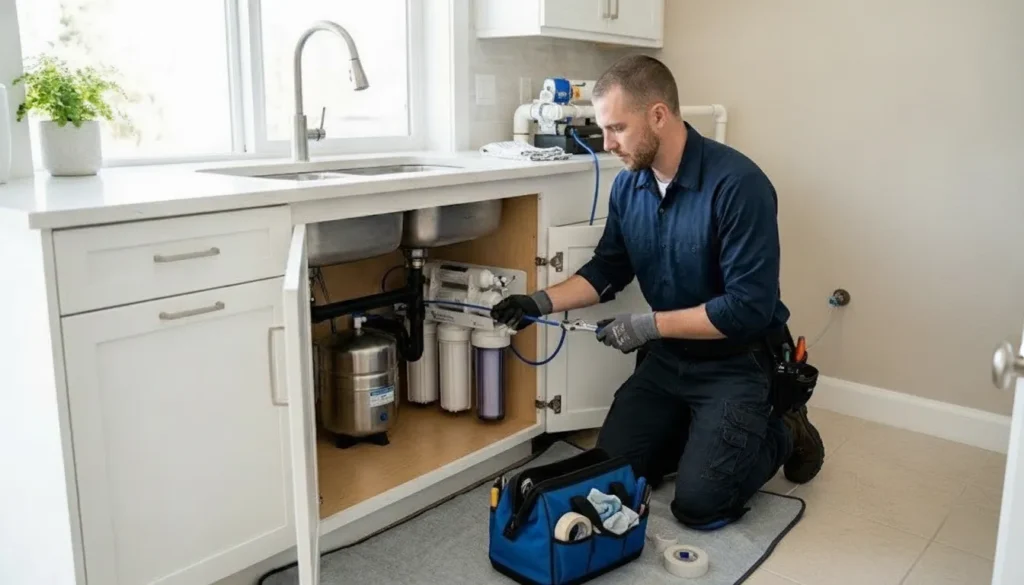
Installation day is easier when you know what the plumber needs to evaluate before connecting anything. In a Fort Myers home, the work depends on the incoming water line, available access, shutoff locations, and the goals you want the treatment equipment to address. A clear plan helps prevent rushed decisions and makes the handoff easier to understand.
Call Whiskey Creek Plumbing at (239) 785-9022 to discuss your water filtration system installation.
Water filtration system installation usually begins with confirming your water concerns and treatment goals, then checking the home’s incoming plumbing. We select a practical placement, make the connection safely, and verify flow before the system is handed over. The exact steps vary by equipment and existing plumbing.
We believe homeowners should understand that process before authorizing work. The most useful preparation starts before the installer arrives: review what you have noticed about the water. Gather any available water report or test, and make sure the plumbing access area is clear. Here is what to check first.
What Should You Check Before Water Filtration System Installation?
Before choosing equipment, start with the water concern you want to solve. Taste, smell, and appearance can point to a concern, but they do not reliably show whether water is safe. The CDC notes that testing can help identify harmful germs or chemicals and guide the selection of an appropriate home water filter. Read the CDC guidance on choosing home water filters rather than relying on appearance alone.
Define the treatment goal
Write down what you want to improve: drinking-water taste, an odor, visible sediment, or another specific concern. The EPA recommends identifying treatment goals before purchasing a unit. If your home uses public water, review the utility’s Consumer Confidence Report for available information about the local water supply. The EPA explains how to find and use these reports in its home water treatment guide. A report can provide useful context, but it does not replace testing when you need to investigate a concern at your property.
Check the home’s plumbing and installation space
Before installation, identify where the main water supply enters the home and confirm that the shutoff is accessible. Note the available floor or wall space, nearby drainage options, electrical needs if applicable, and the condition of the surrounding plumbing. In a Fort Myers or Lee County home, the practical installation plan should fit the existing layout rather than assume every property has the same connections or room.
We also review how the system will serve the home, which fixtures need treated water, and whether the current supply can support the selected equipment. Once the goals, water information, access, and space are clear, we can explain the installation requirements and provide an upfront fixed-price quote before work begins.
What Does Water Filtration System Installation Look Like in a Fort Myers Home?
Installation day is less about dropping a filter into place and more about fitting the treatment equipment into the home’s existing water path. We first confirm what the system is intended to do, then plan a safe connection that preserves access to shutoff valves and service components. The exact sequence depends on the equipment, the home’s plumbing, and whether the supply is municipal or from a well. A typical whole-home installation follows these five stages:
- Confirm the treatment goal. We review the homeowner’s concerns, any available water report or test results, and the type of system being installed. This matters because treatment equipment is not interchangeable. The CDC explains that whole-home, or point-of-entry, filters treat water as it enters the home, while the NSF notes that some systems address one contaminant and others address several. We use that information to confirm that the selected equipment matches the intended application rather than assuming a filter solves every water concern.
- Inspect the incoming line and placement. We locate the main water entry, identify the existing shutoff and available working space, and inspect the pipe condition and routing. Whole-house systems are commonly placed near a municipal water meter or a well’s pressurized storage tank, according to the NSF’s home water treatment guidance. The actual location in a Fort Myers home may vary when access, drainage, equipment clearance, or existing plumbing requires a different arrangement.
- Isolate the water and make the connection safely. We shut off the appropriate supply, relieve pressure, and protect the work area before cutting into the incoming line. The filter is installed in the water path so treated water can reach the intended fixtures. For a point-of-entry system, that generally means the incoming supply before it branches throughout the home. We avoid treating this as a one-size-fits-all connection because pipe material, valves, and prior plumbing changes can affect the work.
- Configure bypass and drainage where appropriate. Depending on the equipment, we connect the valves, bypass arrangement, and drain or discharge line required by that specific system. This gives the homeowner and future service technician a practical way to isolate the equipment when needed. Not every filter uses the same valve or drain setup, so we follow the system’s installation requirements instead of promising a universal configuration.
- Restore flow and inspect the finished work. We reopen the supply gradually, check the new connections for leaks, and observe flow through the system and nearby fixtures. We also confirm that valves are positioned correctly and that the equipment is accessible for future service. Before we leave, we explain the basic operating positions and any system-specific next steps, so the homeowner knows what was connected and what to watch for after installation.
That hands-on evaluation is why a professional visit can look different from one home to the next. The goal is a secure, serviceable connection that fits the home’s plumbing, not a rushed installation based on a generic diagram.
How Is a Whole-Home Filter Connected to Existing Plumbing?
A whole-home filter is usually integrated into the main water line so treated water can reach multiple fixtures. That is different from a point-of-use system, which treats water at a specific location, such as a kitchen faucet. The connection must fit the home’s incoming supply, available space, shutoff arrangement, and the treatment goals identified for the property.
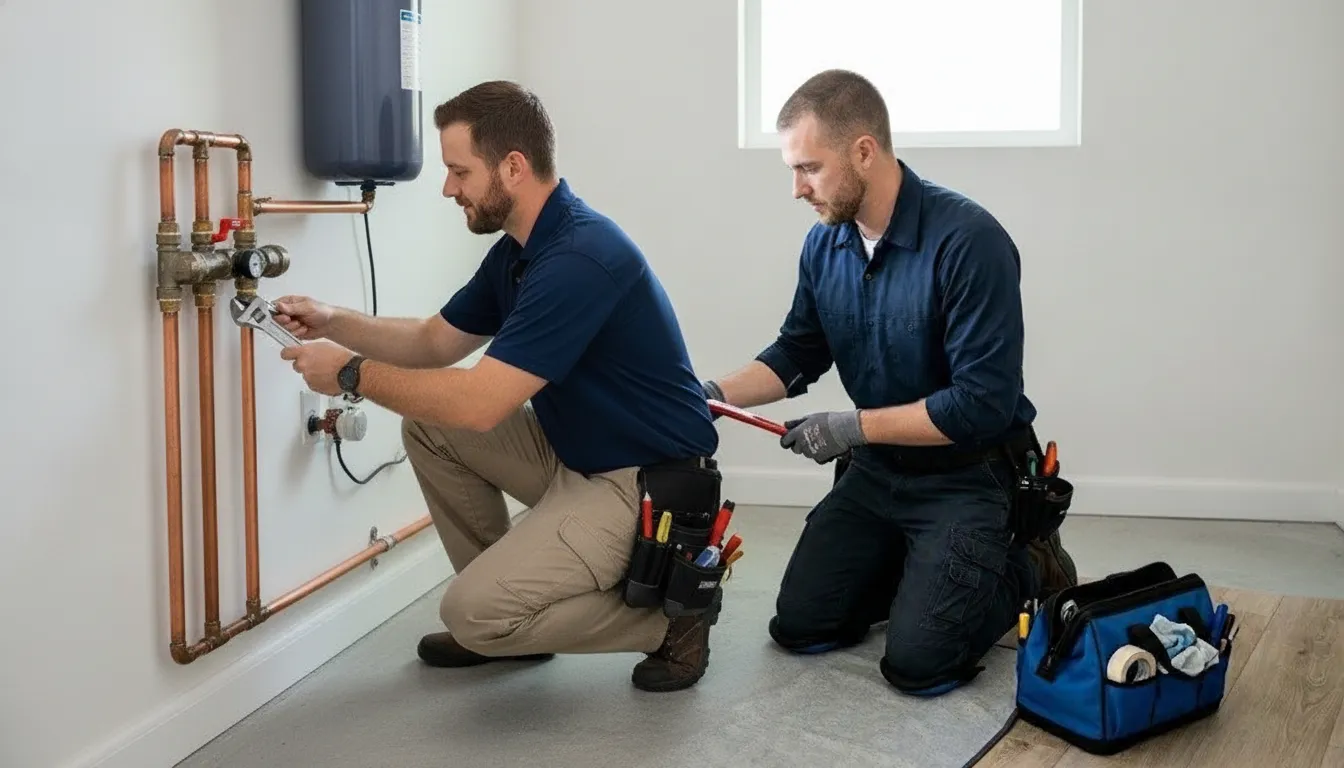
NSF explains that whole-house, or point-of-entry, systems treat water as it enters a residence. They are commonly installed near a municipal water meter or a well’s pressurized storage tank. The exact location in a Fort Myers or Lee County home can vary, especially when the main line enters in a garage, utility area, side yard, or another constrained space. Learn more about point-of-entry and point-of-use treatment.
What the plumbing connection typically needs
An installer first identifies the incoming line and determines where the filter can remain accessible for inspection and future service. The layout may include isolation valves so the system can be shut off without leaving the entire home without water. Depending on the equipment and existing plumbing, the installation may also require a bypass arrangement, drain connection, or changes to nearby fittings. Those details should be confirmed from the actual equipment and the home’s plumbing, not assumed from a product photo.
Pressure and flow matter as well. A filter that is placed in the wrong location or sized without considering household demand can affect how water behaves at fixtures. We look at the existing supply, available clearances, connection sizes, and practical access before recommending an installation approach. The goal is a serviceable connection that works with the home’s plumbing rather than forcing a generic layout into an unsuitable space.
Why the home inspection matters
Treatment systems do not all address the same concern. NSF notes that some reduce one contaminant while others address multiple contaminants. That is why a professional evaluates the water source, the intended treatment goal, and the physical plumbing before work begins. Whiskey Creek Plumbing provides plumbing installation, maintenance, and repair, along with a fixed-price quote before work starts. We use that evaluation to explain the proposed connection clearly and help homeowners make an informed decision.
What Should Homeowners Prepare Before Installation Day?
| Installation checkpoint | What to have ready |
|---|---|
| Water concern | Note changes in taste, smell, color, or sediment. |
| Water information | Keep a utility report or recent test results available. |
| Access | Clear the water-entry area and make the main shutoff reachable. |
| Handoff questions | Ask how valves, first use, and future service will be explained. |
A little preparation makes the appointment more useful and helps the installer understand your home. Start by writing down what you have noticed: changes in water color, taste, or smell, spots on fixtures, scale on appliances, or concerns about a particular tap. These observations are useful, but they do not prove that water is safe or unsafe. The CDC notes that taste, smell, and appearance are not always reliable indicators of water safety. A change in any of them is a good reason to consider testing: review the CDC’s guidance on home water testing and filters.
- Gather water information. If your home uses public water, locate the utility’s Consumer Confidence Report, which summarizes certified testing results. If the report does not answer your questions, or if you use a private well, consider independent testing. EPA guidance recommends periodic well-water testing by a state-certified laboratory. Bring the report or test results to the consultation.
- Describe the goal. Be specific about whether you are focused on taste, odor, color, a reported contaminant, or protecting plumbing and appliances. Treatment goals should be identified before choosing a unit, and test results can help connect the goal to an appropriate solution.
- Clear the access path. Move stored items away from the water-entry area, meter, utility room, well equipment, or the planned installation location. The exact placement depends on the home’s plumbing and the system selected, so leave enough room for the installer to inspect connections and work safely.
- Identify important fixtures. Point out the kitchen sink, ice maker, showers, outdoor taps, water heater, and any fixture that must remain available. This helps clarify whether the plan is for incoming water or a specific point of use.
- Plan for a temporary shutoff. Ask which fixtures may be unavailable while connections are being made and whether someone should be home when water service is restored. Do not assume a universal installation duration.
- Ask about the handoff. Before work begins, ask how filter changes, bypass valves, maintenance reminders, and future service will be explained. Request the model information and any manufacturer guidance supplied with the system.
If hard water is part of your concern, review these Fort Myers hard-water treatment options before the appointment. A prepared list of symptoms, documents, access details, and questions gives you a better basis for an informed installation decision.
How Do You Confirm the Installation Is Complete?
Before we consider an installation finished, we walk through the system with the homeowner. There is no single universal test for every water filtration setup, so the final check depends on the equipment, the home’s plumbing, and the treatment goal. A careful handoff should still answer a few practical questions.
Check for leaks and normal water flow
With the water restored, look closely at the filter housing, fittings, valves, and nearby connections. There should be no dripping, dampness, or spray. Open a representative fixture and observe whether water flows as expected. If pressure seems noticeably lower than before, do not assume the filter is simply settling in. Our guide to common causes of low water pressure explains other conditions that may need attention.
For a whole-home point-of-entry system, the installer should also confirm that the normal service path is open. If the equipment has a bypass valve or isolation valves, ask which position provides filtered water and which position bypasses the treatment unit. Valve handles and layouts differ, so a clear explanation is more useful than relying on a generic diagram.
Review first use and future care
Ask whether the system needs any first-use flushing or other manufacturer-specific steps before drinking the water. The answer can vary by model, so we do not recommend assuming that every filter has the same startup procedure. Keep the model information, cartridge or media details, and any replacement guidance supplied at hand. If a schedule is not provided, ask who can confirm the correct maintenance interval for that equipment and your home’s water conditions.
Finally, make sure you know who to contact if a leak, pressure change, unusual taste, or other concern appears after the work. Add the system to your annual plumbing maintenance checklist so its connections and related plumbing are not forgotten. A good handoff leaves you with working equipment, understandable valve guidance, and a clear path to help when questions come up.
When Should Fort Myers Homeowners Call a Professional?
Some water concerns are easy to describe but difficult to diagnose from taste, smell, or appearance alone. If you are unsure whether the issue involves hardness, sediment, a plumbing leak, pressure, or another water-quality concern, a professional can help define the problem before you choose equipment. That keeps a whole-home project focused on the result your household actually needs.
Professional help is especially valuable when the work affects the home’s main water line. A whole-home filter is installed at the point where water enters the house. So the job may involve existing pipe layout, shutoff access, valves, available installation space, and the home’s flow or pressure conditions. Those details vary from one Fort Myers home to another. They also matter if you have noticed a sudden pressure change, recurring leaks, or water around the plumbing entry point.
Do not treat an active leak or an unexplained pressure problem as a filter-selection exercise. The immediate plumbing concern should be evaluated first. Likewise, if valves are difficult to reach or the main line has older connections, professional planning can reduce the chance of turning a water-treatment project into a broader plumbing problem.
Local water conditions can also shape the conversation. Our guide to Fort Myers hard-water treatment options explains why mineral-related concerns deserve attention beyond a single fixture. If softening is part of the discussion, review what to consider with water softener installation in Fort Myers rather than assuming every home needs the same solution.
At Whiskey Creek Plumbing, we educate homeowners about professional plumbing products and explain the proposed work before it begins. We provide an upfront fixed-price quote, so you can make a decision with the scope and price clearly stated. Our work also includes a 100% satisfaction guarantee. That combination gives you room to ask questions and choose professional installation when the home’s plumbing, access, or water concern calls for it.
Call (239) 785-9022 for a fixed-price water filtration installation conversation in Fort Myers.
Frequently Asked Questions
How is a water filtration system installed?
We confirm the treatment goal, identify the incoming water line, and select an accessible installation point. A whole-home, or point-of-entry, system is typically connected where water enters the house, near the municipal meter or a well pressure tank. We then check connections and operation.
Can I install a water filtration system myself?
Some small point-of-use filters may be designed for homeowner installation, but a whole-home system changes the main water line and requires careful shutoff, connection, and leak checks. Professional installation is the safer choice when you are unsure about pipe sizing, valves, drainage, or local plumbing conditions.
What should I do before installation day?
Clear access to the water entry point, make sure the main shutoff is reachable, and share any recent changes in water taste, smell, or appearance. Testing can help identify treatment needs, since those characteristics do not always show whether water is safe. See CDC guidance for planning.
What does the installation process include?
The process includes reviewing goals, confirming the system location, connecting the equipment, checking for leaks, and verifying that water flows as expected. We explain the basic operation and next steps at handoff. The exact work depends on the home, water source, and equipment, so the quote should reflect those conditions.
Ready to Plan Water Filtration System Installation?
We can help Fort Myers and Lee County homeowners understand the installation plan, confirm how the system will fit the home’s plumbing, and outline the next step clearly. We provide a fixed-price quote before work begins and back our work with a 100% satisfaction guarantee, so you know what to expect before moving forward.
Call Whiskey Creek Plumbing at (239) 785-9022 to discuss your water filtration system installation.