When water is pumped out but the ground nearby stays wet, the route that carries it away deserves a closer look. A puddle near the outlet or a visibly disconnected section may be a clue, although either symptom can have more than one cause.
Learn about sump pump repair and installation
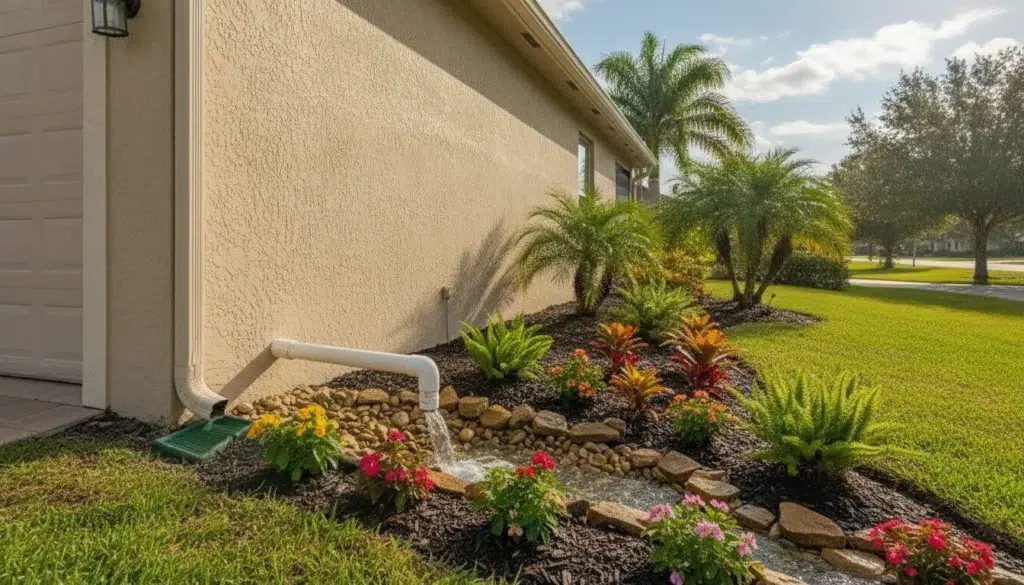
A sump pump discharge line carries collected water away from the building and toward an appropriate drainage area. Its route and endpoint should suit the property and avoid sending water back toward the foundation; there is no one-size-fits-all layout for every Southwest Florida home.
We can help you understand how the discharge path fits into the larger sump pump system and what to look for before changing anything. The next step is to follow the water from the collection basin through the pump to the outlet and see why each part matters.
What Does a Sump Pump Discharge Line Do?
A sump pump discharge line carries water moved by the pump away from the building. Water collects in the sump basin, the pump pushes it into the discharge piping, and the line provides a path to an appropriate drainage area. It is the outlet portion of the system, turning water collected indoors into water conveyed elsewhere on the property or to another permitted destination.
Each part has a different job. The basin is the collection point; the pump moves the water; the discharge line carries it away. A check valve in the piping helps reduce water flowing back toward the basin after the pump stops. If water seems to return or does not travel where expected, a valve or another part of the system may need attention. The visible symptom is a reason to investigate, not enough by itself to identify the cause. For a short explanation of the collection point, read how a sump pump basin fits into the system.
The line’s job does not end where it exits the building. Its endpoint matters: if water drains back toward the foundation or into a place that sends it back toward the building. The route can work against the reason the pump moved it. The U.S. Department of Energy’s Building America Solution Center describes discharging to a dry well away from the foundation. And says a storm sewer should be used only where the local municipality permits it. Those are useful planning considerations, not a substitute for checking requirements and conditions for a particular property. See the Building America Solution Center’s sump pump guidance.
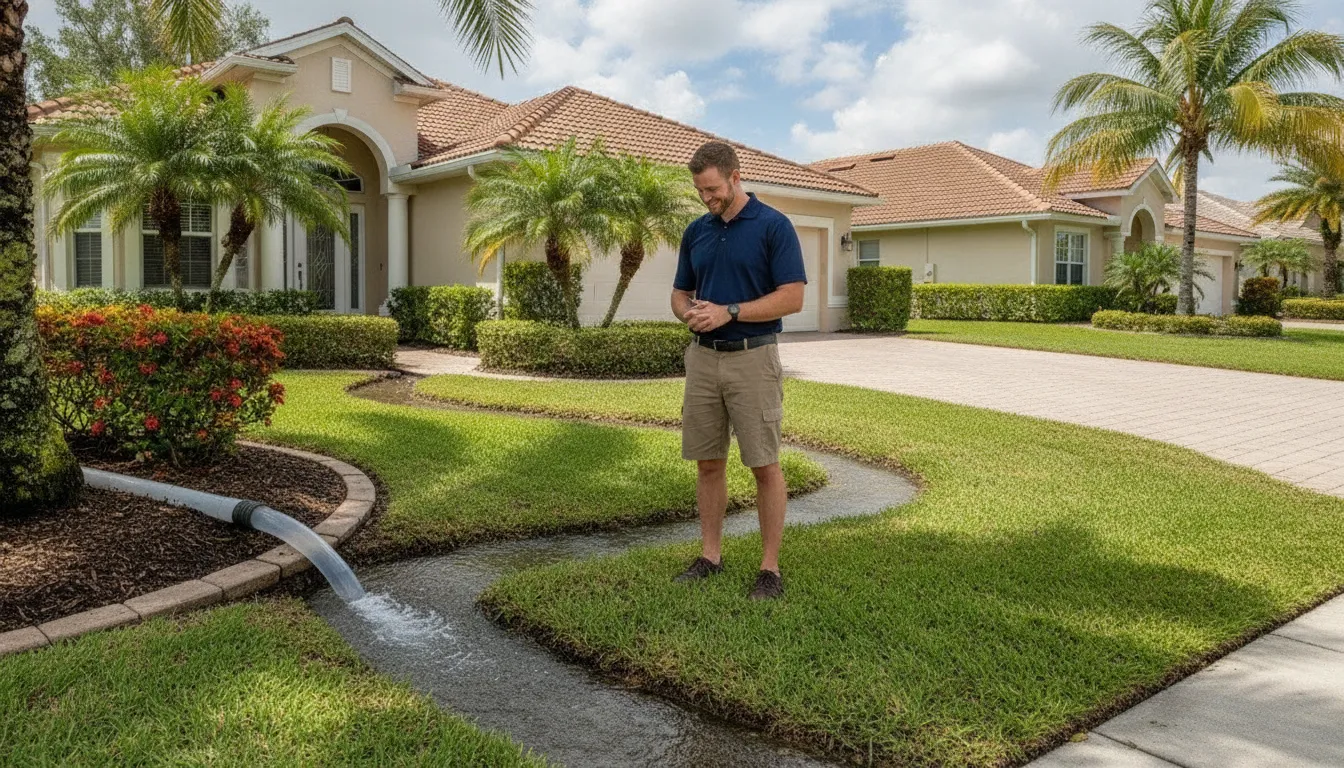
Thinking of the system as a continuous path can make observations more useful. Start with the basin where water collects, then follow the route through the pump and valve to the discharge outlet. If the pump runs but water is not visibly leaving the line. Or if water is pooling near the outlet or flowing back toward the home, note what you can see and when it happens. These clues can help describe the concern, but they do not prove that the line itself is blocked. The pump, valve, connection, or drainage destination may also be involved.
In Southwest Florida, the important question is how the actual property handles the water, not whether a generic diagram matches every home. Lot layout, existing drainage, and applicable local requirements can affect what counts as an appropriate endpoint. A line that carries water out is only doing its intended job when that water has somewhere suitable to go and does not simply return toward the building.
How to Plan a Sump Pump Discharge Line Route
A reliable route carries water away from the home without sending it back toward the foundation or creating a new drainage problem. Before choosing a path, check the pump manufacturer’s installation instructions and identify where water can be discharged safely on your property. The right layout depends on the pump, the building, and the site, so there is no single distance that works for every home.
Start with the pump and the property
Locate the pump outlet and trace a possible path to an appropriate discharge area. The pump maker’s specifications determine what the equipment is intended to handle, including the requirements for its discharge piping. A longer or more complex route can affect how the system operates, so do not assume that a layout used at another house will suit yours. If the instructions are unavailable or the route is uncertain, have a plumber assess the setup before changing it.
Then consider the property’s grading and where the water will go after it leaves the pipe. Choose a destination that directs water away from the foundation and does not simply let it collect beside the home. Flow back toward the building, or create an issue for a neighboring property. Look at the route during wet conditions when possible; the visible slope and low points can help show where runoff tends to gather.
It can help to walk the proposed path from the pump outlet to the discharge point and note the changes in elevation. Tight turns, and any place where water could pool. Think about the route as a whole, not just the pipe’s endpoint: a discharge area may seem far from the house but still drain back toward it. If the site has more than one possible destination, compare how water moves through each area before deciding where the line should end.
How far can a sump pump discharge line run?
There is no universal maximum distance. The suitable run depends on the specific pump and the route, including elevation changes and bends. Follow the manufacturer’s limits and have the system evaluated if the proposed distance is near or beyond them. A longer pipe is not automatically better if the outlet sends water to a poor location.
Check local drainage requirements
Before installing or redirecting a line, confirm applicable local drainage rules for your property. Do not rely on a neighbor’s layout as proof that a route is allowed. In Fort Myers and elsewhere in Southwest Florida, plan around the actual lot, grading. And intended discharge point rather than assuming a cold-weather setup or a standard route applies everywhere. Requirements can depend on the location and property conditions; we recommend verifying them with the appropriate local authority or a qualified professional.
If you cannot identify a suitable destination, or water keeps returning toward the home, get the route assessed instead of extending or burying the pipe by guesswork.
What Causes a Sump Pump Discharge Line to Stop Draining?
If a pump runs but little or no water reaches the outdoor outlet. The issue may be somewhere along the discharge path, at a valve, or with the pump itself. A visible symptom can help narrow down what to report, but it does not confirm a diagnosis. Check only what you can see from a safe, dry location; do not take the system apart or reach into a pipe.
Visible clues can help narrow down the problem
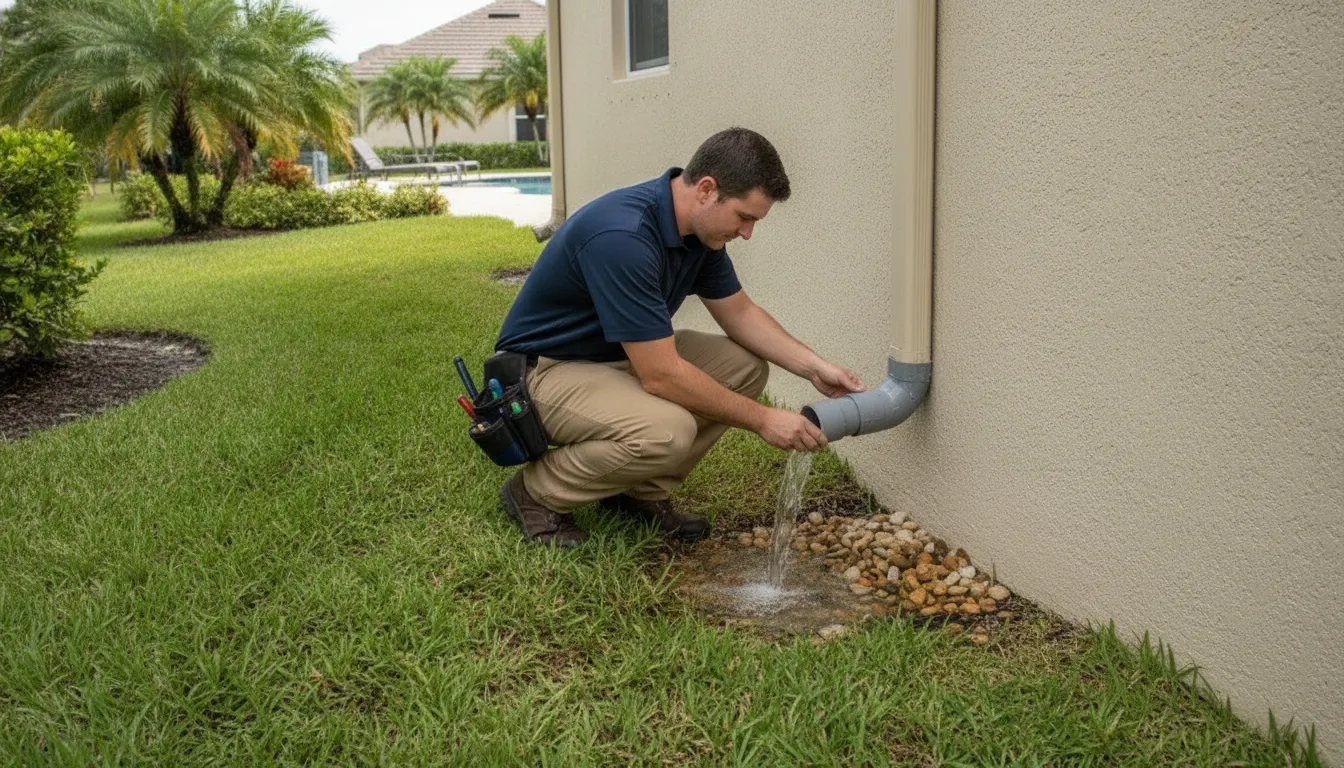
- No water at the outlet: Look for obvious leaves or other debris at the exposed outlet, and check visually for a kinked, crushed, or disconnected section. Do not push tools into the opening or remove a fitting. If the visible end looks clear, the restriction could be farther along the route, where it cannot be safely confirmed by looking from outside.
- Water leaking before it reaches the outlet: A wet area beside an exposed pipe or a visible separation at a joint can suggest that water is escaping along the route. Observe from a distance and note where you see water. Avoid touching wet fittings or attempting to reconnect them.
- Water seems to return after the pump stops: A check valve is intended to reduce discharge water flowing back into the sump. Whiskey Creek Plumbing’s sump pump information identifies a possible check-valve issue when discharged water does not go where expected. Repeated return flow is worth mentioning during an inspection, but it is not enough by itself to identify a failed valve.
- The pump runs, cycles repeatedly, or sounds different: These observations may accompany a discharge restriction, backflow, or a pump or control problem. They are clues rather than proof that the line is clogged. Note when the sound or cycling occurs instead of trying to test or adjust the equipment.
- The basin water level is rising: If the pump appears unable to lower the water, treat the situation as time-sensitive. A blocked path is one possibility, but the pump or another part of the system may also need attention.
Keep troubleshooting to safe observations
From a dry place, you can look for an exposed obstruction, a damaged visible pipe section, or water pooling along the route. If useful, take a photo of the visible issue and note whether the pump was running; share those observations with the plumber. Do not clear a buried line, dismantle plumbing, open the pump, handle wiring, or reach into the sump basin. If water is near electrical equipment, stay clear and do not touch the pump or nearby connections.
When the outlet looks unobstructed but water still does not discharge, the basin level keeps rising. Or the system repeatedly cycles or makes unusual sounds, have a qualified plumber assess it. An inspection can help distinguish a line obstruction or leak from a check-valve or pump problem. See our sump pump repair and installation information for service details.
Three checks before settling on a route
- Confirm the pump: Read the model-specific directions for pipe compatibility and routing.
- Trace the path: Consider elevation changes, turns, and where water will drain.
- Check the site: Verify applicable drainage requirements before burying or redirecting a line.
How Should You Choose Pipe, Length, and Burial?
There is no single pipe material, route length, or burial depth that suits every sump pump. The right setup depends on the exact pump, how water moves across the property, and the drainage requirements that apply at the site. Start with the pump manufacturer’s installation instructions, then check the proposed route against local drainage rules and the property’s layout.
For pipe material, use a discharge pipe or hose that the manufacturer approves for that pump and the conditions along the route. Check the product’s intended use, connection size, and whether it is suitable for outdoor exposure or burial if either applies. A material that fits the outlet is not automatically right for the full route. If the instructions do not clearly cover the setup, confirm compatibility before installing or replacing pipe.
Length is a site-specific design choice, not a standard distance to copy from another property. The line needs to carry water to an acceptable drainage destination without sending it back toward the foundation or creating a problem for neighboring areas. Its route, changes in elevation, bends, and outlet location can all affect how the system works. Ask a qualified professional to assess the complete path if the required route is long, complicated, or unclear.
Burying the line may help keep it out of the way, but burial is not automatically better. Before choosing an underground route, confirm that the pipe is approved for burial. That the discharge location is allowed, and that the installation will not create a drainage issue. Requirements can vary with the property and local rules, so do not assume a depth used elsewhere is suitable. Contact the relevant local authority or a plumbing professional if the drainage requirement is uncertain.
Before digging, identify underground utilities and plan the route so the outlet remains accessible for inspection. Avoid burying a connection or outlet in a way that makes it difficult to notice damage or a blockage. In Southwest Florida, the practical question is how water will drain on this particular property, not how to protect the line from freezing.
Quick Discharge Line Decision Check
Pipe: Match the pump maker’s approved material and connection requirements to the location.
Route: Consider bends, elevation changes, and the actual drainage destination.
Burial: Verify local rules, locate utilities, and keep the outlet and connections accessible.
When comparing options, ask:
- Does the pump maker approve the pipe or hose and its connections?
- Does the proposed route carry water to an acceptable destination without directing it toward the building?
- Do local requirements and site conditions support burial, and can the line still be inspected?
These checks help narrow the choices without relying on a one-size-fits-all measurement. If any answer is uncertain, verify the pump instructions and drainage requirements before changing the line.
When Should a Plumber Inspect the Discharge Line?
A single unusual pump cycle may be hard to interpret, but repeated trouble is a reason to look beyond what you can see from the outlet. If the pump keeps running without moving water as expected, the line may be obstructed or damaged. Water may be flowing back, or the pump or check valve may need attention. These possibilities can look similar from the surface, so repeated trial and error is unlikely to identify the cause.
Arrange a professional assessment when the same problem returns after the visible outlet is clear, or when water discharged outside appears to flow back toward the foundation. The outlet and route should carry water away without returning it to the foundation drainage system; the right destination depends on the property’s setup and applicable local requirements. Building America Solution Center guidance on sump pump drainage describes that principle and notes that storm-sewer discharge is subject to local permission.
It is also sensible to ask for help if you cannot tell where the line runs, where it empties, or whether it is connected as intended. Much of the route may be concealed underground or behind finishes. Guessing where it leads, digging, or changing a connection without understanding the layout can create a new drainage problem. A plumber can assess the visible setup and determine what further inspection is appropriate.
Do not ignore signs of physical damage or leakage along an accessible part of the pipe. Repeated pump alarms, water returning to the basin or building, and any backup are further reasons to seek an evaluation rather than waiting for another cycle. If water is accumulating indoors, protect people and belongings first, and avoid handling wet electrical equipment. Do not open electrical components or attempt repairs that require cutting or disconnecting pipe.
When you contact a plumber, describe what you observed: whether the pump ran. Whether water came from the outlet, where it went, and whether the problem has happened before. Those details help distinguish a discharge-path concern from a pump or check-valve issue. Whiskey Creek Plumbing provides general sump-pump service in Southwest Florida. The team can discuss the situation and determine whether an assessment is appropriate, without assuming every problem is a discharge-line repair.
Learn about sump pump repair and installation or call (239) 785-9022.
Frequently Asked Questions
How far can you run a sump pump discharge line?
There is no single distance that fits every pump and property. The pump’s instructions, pipe layout, elevation changes, and the place water can drain all affect the route. The goal is to move water away so it does not flow back toward the foundation. Have the full route assessed if the pump struggles or water returns near the home.
What type of pipe should I use for sump pump discharge?
Choose pipe that is compatible with the pump outlet and suitable for the route’s indoor or outdoor conditions. Check the pump manufacturer’s guidance rather than choosing by appearance alone; connections and layout also affect whether water can flow as intended. If the existing line is damaged, loose, or repeatedly leaks, ask a plumber to identify a compatible replacement.
Should you bury a sump pump discharge pipe?
Burial is not automatically right for every property. The route still needs to carry water to an appropriate drainage destination without sending it back toward the foundation. The Building America Solution Center says storm-sewer discharge should be used only when the local municipality permits it, or water can be directed to a dry well away from the foundation. Site conditions and local requirements matter.
How deep should a sump pump discharge hose be underground?
There is no universal burial depth to apply to every discharge line. The right installation depends on the pump instructions, site drainage, the route, and applicable local requirements. Before burying a line, confirm that the outlet will remain functional and that water will not collect or return toward the home. A plumber can evaluate the route if its destination or performance is uncertain.
Ready to Discuss Your Sump Pump Discharge Line?
If you are unsure whether the discharge route carries water away from your home or you have noticed recurring drainage concerns. A professional assessment can help clarify what is happening and what next steps may suit your property. The right approach depends on the pump setup and where the water drains, so an on-site evaluation is more useful than guessing from general advice.