
Sewer line maintenance is easier when you know what to watch, what to leave alone, and when to get a professional opinion. For Fort Myers homeowners, a few careful habits can help catch developing trouble before a slow drain turns into a backup. This checklist focuses on the sewer line that carries wastewater away from your home, not routine care for every drain fixture.
Need sewer line help in Fort Myers? Learn about our sewer line services.
What does sewer line maintenance actually include?
Your home’s building sewer connects the plumbing inside the house to the public sewer or another approved wastewater system. The line is mostly underground, so maintenance is less about frequent hands-on work and more about preventing avoidable strain. Recognizing changes, and investigating recurring symptoms before they get worse.
There is no single checklist or inspection interval that fits every property. Pipe material, age, previous repairs, how the home is used, and what is growing near the line can all affect the right plan. If you have a history of backups or repairs, keep those records and tell your plumber. A past problem can help guide what to check next.
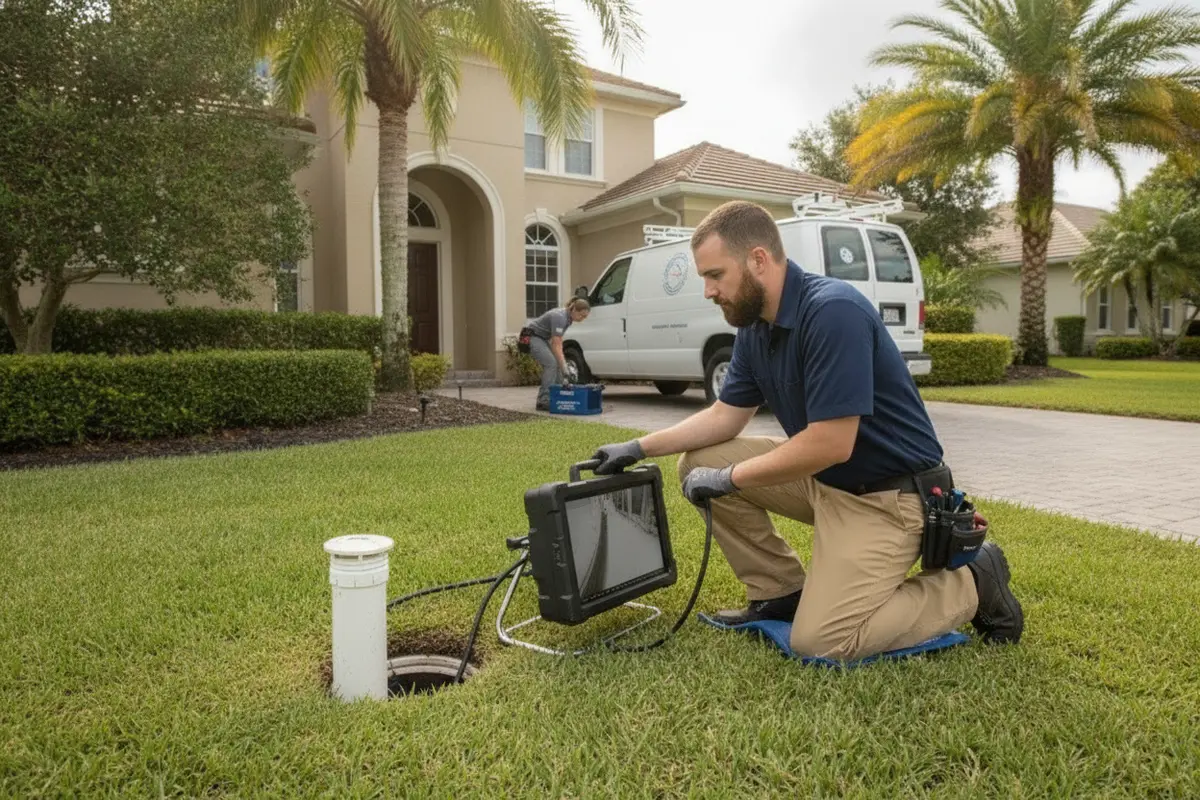
Our work includes sewer services and video inspection. A camera inspection can help a plumber see the pipe’s interior and evaluate a concern, rather than relying only on a surface symptom. Learn more about our sewer line services and the options that may be considered after an assessment.
What should you check around your home?
Use this homeowner checklist periodically and whenever you notice a change. It is not a substitute for professional diagnosis, but it can help you describe what is happening clearly.
| What you notice | What to record | Why it helps |
|---|---|---|
| One slow fixture | Fixture, timing, and whether it returns | Helps separate a local clog from a wider pattern. |
| Several affected fixtures | Rooms involved and what was running | Shows whether the issue may involve a larger section of the system. |
| Outdoor odor or wet area | Location, timing, and recent weather | Gives a plumber useful context without requiring unsafe digging. |
- Notice patterns in drains. Keep track of whether one fixture is slow or several fixtures act up at the same time. Note which rooms are affected and whether the issue comes and goes.
- Listen for unusual gurgling. Sounds from a toilet, tub, or sink while another fixture drains may be useful information for a plumber. Record when you hear it and which fixtures are involved.
- Watch for sewage odors. A persistent foul smell indoors or near the yard deserves attention. Do not assume that a fragrance or drain product has solved the underlying issue.
- Look for unexplained wet or unusually soft areas. If one part of the yard stays damp when surrounding areas do not, or you see a new patch of unusually lush growth, note its location. These observations alone do not prove a sewer leak, but they are worth reporting.
- Check for repeated backups. Write down the dates, affected fixtures, and what was happening before each event. A recurring problem is more informative than a one-time clog.
- Locate any accessible cleanout without opening it. A cleanout is a capped access point used for plumbing work. Know where it is, but do not remove the cap if there is standing water, a backup, or uncertainty about what is inside.
- Protect the line from what goes down the drain. Put cooking grease, wipes, hygiene products, and other trash in the garbage rather than flushing or rinsing them away. Use fixtures as intended and follow product labels.
- Keep basic records. Save invoices, inspection information, and notes about repairs. Share them if you contact a plumber, especially when the same symptom returns.

How can you reduce avoidable sewer line problems?
Every home and pipe is different, so no habit can guarantee that a sewer line will never clog or fail. Still, simple choices can reduce common sources of trouble and make changes easier to spot.
Be selective about what you flush
Toilets are not trash cans. Flush only what the toilet and wastewater system are designed to handle. Items marketed as flushable may still contribute to a blockage in a particular plumbing system. Put wipes, paper towels, cotton products, and similar waste in a bin instead.
Keep grease and food scraps out of the drain
Let cooking grease cool, then dispose of it in the trash. Avoid rinsing large food scraps into a sink drain. A sink clog can occur in the fixture branch rather than the main sewer line. But good disposal habits help avoid unnecessary drain problems and make it easier to identify a separate sewer issue.
Pay attention to trees and landscaping
Roots seek moisture and can enter existing openings or damaged joints in buried pipes. That does not mean every tree near a sewer line is a problem. Avoid planting new trees directly over the route of a buried line when you know its location. And do not dig to locate or expose a pipe without confirming where utilities run. If a plumber finds root intrusion, ask what the inspection shows and what repair or cleaning options fit the condition.
Do not treat chemicals as a maintenance plan
Pouring strong chemical drain cleaner into a fixture does not inspect or maintain the sewer line. It may not reach the source of a main-line issue and can introduce safety concerns. Do not mix cleaning products. For a recurring clog, multiple slow drains, or suspected sewer trouble, stop experimenting and get advice from a plumber.
Respond to changes before they become routine
A single slow fixture may have a local cause. When several drains slow down together, toilets gurgle during use elsewhere, or backups keep returning, make a note and arrange an evaluation. If you are unsure whether a problem is limited to one drain, our guide on when to call a plumber for a clogged drain can help you think through the next step.
Which warning signs call for a plumber?
Call for professional help when symptoms point beyond an isolated fixture clog, or when the same issue returns after it has been cleared. Warning signs include:
- More than one fixture is slow or backing up at the same time.
- A toilet bubbles or gurgles when a nearby tub, sink, or washing machine drains.
- Wastewater comes back through a floor drain, tub, or another low fixture.
- A backup recurs after a drain has been cleared.
- You notice a persistent sewage odor or an unexplained wet area outdoors along the suspected line route.
If sewage is actively backing up, stop using water-consuming fixtures to limit additional discharge, keep people and pets away from contaminated water, and contact a plumber promptly. Avoid touching wastewater or trying to open a cleanout during a backup. For a more detailed immediate-response checklist, see our article on what to do during a sewer backup in Fort Myers.
Not every warning sign means the buried sewer line has failed. A vent, fixture branch, or another plumbing issue can create similar symptoms. Inspection helps distinguish among possible causes and avoids guessing based only on one clue.
What can a professional sewer line evaluation tell you?
A useful evaluation starts with the symptom history. Tell the plumber which fixtures are affected, when the problem occurs, whether it has happened before, and whether any prior work was done. Mention outdoor odors or wet areas, but do not dig to trace the line yourself.
Depending on the situation, a plumber may recommend a video inspection to view the interior of the pipe. The findings can help identify a visible blockage, roots, damage, or another condition that needs further attention. The camera view is information for diagnosis; the appropriate next step depends on what is found and the pipe’s condition.
Ask the plumber to explain the observed issue, the proposed work, and whether the recommendation addresses the cause or only the immediate symptom. If cleaning is suggested, ask what the method is intended to do and whether a follow-up inspection is appropriate. For an overview of one specialized cleaning option, read our comparison of hydro jetting and drain snaking. The right method depends on the situation; a comparison article cannot determine what your particular line needs.
When a line is damaged, repair choices depend on the location and extent of the problem, access, and pipe condition. Some situations may call for a localized repair; others may require a broader plan. Our guide to trenchless sewer repair in Fort Myers explains a repair approach to discuss if it is relevant to your findings. Do not assume a method is suitable until a plumber evaluates the actual line.
How can you prepare for a sewer line evaluation?
A little preparation can make a service visit more useful without asking you to investigate the pipe yourself. Before the appointment, gather a few simple details:
- Make a fixture list. Note which toilets, tubs, showers, or sinks are affected and which seem normal. Mention whether symptoms happen together or separately.
- Describe the timing. Explain whether the issue is constant, occasional, or tied to ordinary water use. Do not run extra water just to reproduce a backup.
- Share the work history. Bring any notes or invoices from earlier drain clearing, sewer inspection, or repairs. If you know where a repair was made, point it out without digging.
- Point out outdoor observations. Identify an odor, wet patch, or cleanout location from a safe distance. Do not touch sewage, remove a cap, or enter a flooded area.
- Ask about the diagnostic step. Find out whether the plumber recommends a camera inspection or another evaluation, and what question that step is meant to answer.
- Request an explanation of options. Ask what the findings mean, what work is proposed, and what is included in the price before you authorize it.
This preparation is especially useful when symptoms have come and gone. A problem that is not active at the moment of the visit can still have a history worth explaining. Clear notes can help the plumber focus on the pattern and decide whether the sewer line is likely involved or whether another part of the plumbing should be checked.
Does the right maintenance plan depend on the property?
Yes. A home with no previous sewer symptoms may need only sensible disposal habits and awareness of changes. A property with repeated backups, a prior repair, or a known concern deserves a conversation about whether inspection or follow-up is appropriate. A remodeling project or major plumbing change is also a good time to ask how the work affects the existing system. Do not assume that a neighbor’s inspection schedule applies to your home; pipe condition and service history can differ even on the same street.
For buyers or owners who have inherited incomplete maintenance records. Do not treat a lack of paperwork as proof that a line is failing or proof that it is clear. Use current symptoms, available records, and a plumber’s evaluation to decide whether more information is worthwhile. The goal is a proportionate next step, not unnecessary work or a promise that problems can be ruled out forever.
What information helps narrow down the cause?
Several details can help a plumber understand whether a symptom seems limited to one fixture or may involve a larger section of the system. Think about the pattern, not just the most recent moment. Did the toilet bubble only when the washing machine drained? Did a tub back up while other fixtures were in use? Did the odor appear after rain, after a backup, or continuously? You do not need to test the plumbing or recreate a backup to answer these questions. Simply share what you have already observed.
Also mention recent changes that could matter, such as plumbing work, a newly recurring clog, a prior sewer repair, or a change in how the property is occupied. These details do not prove a cause, but they can help a plumber decide what to inspect. If you have paperwork from earlier service, gather it before the appointment. A record of where a repair was made or what was previously observed may prevent an unnecessary repeat of basic troubleshooting.
What should you ask after an inspection?
Ask the plumber to explain what was actually observed and where it was found. If a camera was used, ask what the images show and whether the findings explain your symptoms. Clarify whether the recommendation is intended to clear a blockage, repair damage, or gather more information. Ask what could happen if you wait, what the proposed work includes, and whether there are other reasonable options. A clear explanation should connect the proposed work to the condition identified, rather than relying on a vague warning.
Before authorizing work, make sure you understand its scope and price. Whiskey Creek Plumbing uses fixed-price service rather than hourly billing, with an upfront quote for the work. Ask any provider to explain what is included and whether the quote changes if the scope changes. Keeping the diagnosis, proposed work, and price clear helps you make an informed decision.
How should Fort Myers homeowners plan sewer line care?
For a home without symptoms, start with practical prevention and awareness rather than a made-up maintenance schedule. Know where the cleanout is, avoid putting trash and grease into plumbing, and watch for recurring changes. If you have a known history of sewer trouble, ask a plumber whether an inspection or a property-specific plan makes sense.
For a home with symptoms, prioritize describing and diagnosing the problem. A short log can be helpful:
- Write down the date and time the symptom appeared.
- List the fixtures involved and what was running when it happened.
- Note any odor, gurgling, backup, or outdoor condition without touching wastewater.
- Record whether the issue cleared, returned, or affected additional fixtures.
- Gather earlier repair or inspection records, if available.
That information helps guide a conversation, but it does not replace an on-site evaluation. If you need help deciding whether a recurring drain symptom may involve the sewer line, contact us and describe what you have observed. We serve Fort Myers and communities across Lee County, and we can explain the next step for the plumbing concern.
For general information about water and environmental protection, you can also visit the U.S. Environmental Protection Agency. For a plumbing concern at your property, a qualified plumber can assess the line and recommend an appropriate response.
Call Whiskey Creek Plumbing at (239) 785-9022 for sewer line help.
Frequently asked questions about sewer line maintenance
How often should a sewer line be inspected?
There is no universal interval that suits every property. Pipe material, age, repair history, and symptoms matter. Ask a plumber whether your home’s specific history supports an inspection and what it would be intended to evaluate.
Can I maintain a sewer line with drain cleaner?
Drain cleaner is not a substitute for sewer line inspection or diagnosis. It may not reach a main-line problem, and mixing products can be dangerous. For recurring clogs or multiple affected fixtures, ask a plumber to evaluate the cause.
Does one slow sink mean the sewer line is clogged?
Not necessarily. A slow sink can have a blockage near that fixture. Multiple slow drains, recurring backups, or gurgling across fixtures are more reason to seek an evaluation, but only diagnosis can determine the cause.
Can tree roots cause sewer line trouble?
Roots can enter existing openings or damaged sections of buried pipe. Nearby trees alone do not confirm a sewer problem. If symptoms occur or a camera inspection shows root intrusion, ask the plumber to explain the condition and suitable next steps.
What should I do if sewage backs up into my home?
Stop using water-consuming fixtures, keep people and pets away from wastewater, and contact a plumber promptly. Do not open a cleanout or handle sewage yourself. If there is an immediate safety concern, follow local emergency guidance.
Take the next step when symptoms repeat
Good sewer line maintenance means noticing changes, avoiding preventable drain habits, and getting recurring symptoms evaluated instead of repeatedly treating the surface problem. If you are seeing warning signs at your Fort Myers home, contact Whiskey Creek Plumbing so we can help you understand the options.
Call Whiskey Creek Plumbing at (239) 785-9022 to discuss recurring sewer line symptoms.