
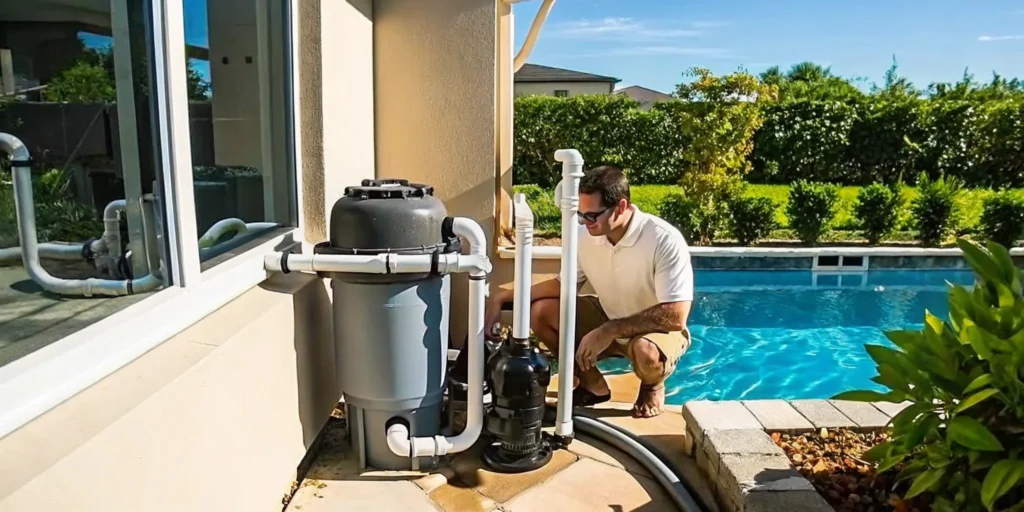
A struggling pool pump can turn clear water cloudy, weaken circulation, and put other pool equipment under stress. If you are looking for pool repair in Fort Myers, the first question is usually the same: can the pump be repaired, or is replacing it the smarter move? The answer depends on the symptom, the condition of the pump, and whether one failed part or the entire unit is causing the problem.
Pool-pump repair and replacement decisions depend on the fault, the equipment, and the cost of each option. This article is general information. Whiskey Creek Plumbing does not provide pool-pump repair; its pool-related work is limited to pool pump and pool equipment installation and replacement. For an eligible project, contact the team or call (239) 785-9022.
What Does a Pool Pump Do?
The pool pump keeps water moving through the circulation system. It pulls water from the pool, sends it through the filter and other installed equipment, and returns it to the pool. That circulation helps the filter capture debris and supports consistent water treatment.
A pump problem can therefore look like more than a motor problem. Weak flow, air entering the system, a clogged basket, a dirty filter, a leaking seal, or a damaged plumbing connection can all affect circulation. A proper diagnosis checks the pump and the connected system before recommending a repair or replacement.
Common Signs Your Pool Pump Needs Attention
Pool pump problems tend to announce themselves through sound, water flow, leaks, or repeated shutdowns. Pay attention to a change from the pump’s normal operation rather than waiting for it to stop completely.
The pump will not start
If the pump is completely silent, the cause may be related to its power supply, controls, or motor. If it hums but does not run, switch it off rather than repeatedly trying to restart it. Continuing to energize a pump that cannot turn may worsen the problem. Electrical testing and internal motor work should be left to a qualified professional.
The pump is unusually loud
Grinding, screeching, rattling, or a noticeably louder motor deserves prompt attention. Debris, worn bearings, vibration, or restricted water flow may be involved. A new noise does not automatically mean the entire pump must be replaced, but ignoring it can allow a smaller repair to become a larger failure.
Water flow is weak
Weak return-jet flow can point to a dirty basket or filter, a blockage, low pool-water level, an air leak on the suction side, or trouble inside the pump. Start with safe, routine checks such as the water level and accessible baskets. If flow remains weak after basic maintenance, the system needs a closer look.
The pump loses prime or shows air bubbles
A pump that repeatedly loses prime cannot maintain the water flow it needs. You may also see bubbles at the return jets or air under the clear pump lid. Common causes include a poor lid seal, a low water level, or an air leak in the suction plumbing. Because several problems produce similar symptoms, diagnosis matters before parts are replaced.
Water leaks around the pump
Water beneath or around the pump may come from a loose connection, a worn seal, or a crack in the housing or nearby plumbing. Shut the equipment off if water is reaching electrical components. If you are unsure whether the loss comes from the equipment pad or the pool itself, review these pool leak warning signs.
The pump shuts off repeatedly
A pump that runs briefly and stops may be overheating or experiencing an electrical or motor issue. Keep the area around the motor clear, but do not remove electrical covers or attempt wiring repairs. Repeated shutdowns call for professional testing.
When Is Pool Pump Repair Usually Worth It?
Repair is often the practical choice when the pump is otherwise in good condition and the problem can be isolated to one serviceable component. The goal is not simply to get the pump running again. A sound repair should restore dependable operation without leaving another obvious failure around the corner.
Repair may make sense when:
- The pump housing is intact and the plumbing connections are sound.
- The issue is limited to a seal, gasket, connection, control component, or another replaceable part.
- The pump was operating reliably before one clear symptom appeared.
- The repair cost is reasonable compared with the cost and benefits of a suitable replacement.
- Replacement parts are available for the existing model.
Catching trouble early improves the chance that a focused repair will be enough. For example, addressing a leak before water reaches the motor may prevent more extensive damage.
Repair and maintenance options depend on the equipment and the diagnosed issue. Whiskey Creek Plumbing’s pool-related work is limited to pool pump and pool equipment installation and replacement. See our pool pump and equipment installation information.
When Does Replacing a Pool Pump Make More Sense?
Replacement becomes the stronger option when the pump has extensive damage, recurring failures, or no longer suits the pool’s circulation needs. It may also make financial sense when a major repair would put substantial money into a unit that is already in poor overall condition.
Consider replacement when:
- The pump housing is cracked or structurally damaged.
- The motor and other major components have failed.
- The pump has required repeated repairs in a short period.
- Parts for the model are difficult to obtain.
- The pump is badly corroded or shows widespread wear.
- The current pump is not properly matched to the pool and installed equipment.
- A professional comparison shows that replacement offers better long-term value than a major repair.
Do not select a replacement based only on the idea that a larger pump is better. Proper sizing depends on the pool, plumbing, filter, and other connected equipment. An appropriately selected pump supports the system without creating unnecessary strain.
Pool Pump Repair vs. Replacement: A Quick Comparison
| Decision factor | Repair may be appropriate | Replacement may be appropriate |
|---|---|---|
| Extent of damage | One identifiable, replaceable part | Cracked housing or multiple major failures |
| Recent reliability | Previously dependable operation | Frequent breakdowns or recurring symptoms |
| Parts availability | Correct parts are readily available | Parts are unavailable or impractical to source |
| System fit | Pump is properly matched to the pool | Pump is poorly matched or no longer meets system needs |
| Long-term value | Focused repair restores dependable use | Major repair offers limited value compared with a new unit |
A technician should inspect the whole circulation system before making the final call. A clogged line, air leak, filter issue, or valve problem can imitate pump failure. Replacing the pump without finding the underlying cause may leave the original symptom unresolved.
What Can You Safely Check Before Calling for Service?
A few simple observations can help you explain the problem and may reveal a routine maintenance issue. Turn the pump off before opening a basket or touching accessible equipment. Never work inside an electrical panel or motor housing.
- Check the pool-water level. If it is too low, the skimmer may pull in air.
- Look at the pump basket. If you know how to access it safely, check for leaves and debris after turning the system off.
- Inspect the filter indicator and follow the manufacturer’s maintenance guidance. A dirty filter can restrict circulation.
- Look for visible leaks. Note whether water appears at the lid, connections, housing, or nearby plumbing.
- Listen and observe. Record the sound, whether the pump starts, how long it runs, and whether bubbles appear at the return jets.
- Check for obvious storm-related damage. After severe weather, look for debris, standing water, or visible damage around the equipment pad without touching electrical components.
Stop and call for service if the pump is smoking, repeatedly tripping a breaker, leaking near electrical parts, or making severe grinding or screeching noises.
Why Fort Myers Pool Pumps Need Prompt Attention
Fort Myers pools often operate through long stretches of warm weather. Heat, humidity, rain, debris, and year-round use can expose a weak seal, restricted flow, or deteriorating component quickly. A pump problem that might be noticed during seasonal startup elsewhere may become apparent during regular operation here.
Prompt service helps protect more than the pump. Poor circulation can affect filtration and water clarity, while leaks around the equipment pad can damage nearby components. After storms, it is especially important to keep damaged or submerged electrical equipment off until it has been assessed.
A noisy pump, loss of prime, or reduced circulation can have several causes. A qualified pool professional can evaluate repair options. Whiskey Creek Plumbing does not diagnose or repair pool pumps; its pool-related work is limited to installation and replacement of pumps and equipment.
What to Expect From a Professional Pool Pump Diagnosis
A useful service visit should identify the actual source of the symptom before recommending work. The technician may inspect the pump housing, seals, accessible plumbing, flow, motor operation, and connected equipment. They should also consider whether a restriction or air leak elsewhere in the system is making the pump appear faulty.
Once the issue is identified, compare the repair path with the replacement path. Ask what failed, whether other components remain in good condition, and what result you can reasonably expect from the recommended work. A written estimate should explain the scope, price, and any limits before you decide.
Frequently Asked Questions About Pool Pump Problems
Can a noisy pool pump be repaired?
Often, yes, but the correct solution depends on the cause. Debris, vibration, restricted flow, or worn internal components can all create noise. Turn the pump off if the sound is severe and have it diagnosed before continued operation causes more damage.
Why is my pool pump running but not moving water?
The pump may have lost prime, the water level may be low, a basket or filter may be clogged, or air may be entering the suction side. Internal pump trouble is also possible. If basic, safe maintenance checks do not restore flow, schedule service.
Should I keep running a leaking pool pump?
No. Turn it off if water is reaching the motor or electrical components. Even a smaller leak should be inspected promptly because continued water loss can damage equipment and turn a limited seal or connection issue into a larger repair.
How do I know whether my pool pump is worth repairing?
Consider the extent of damage, the pump’s recent reliability, parts availability, and the cost of repair compared with a properly selected replacement. A professional inspection is the safest way to distinguish a focused repair from a failing unit that offers poor long-term value.
Who handles pool pump repair in Fort Myers?
Whiskey Creek Plumbing does not provide pool pump repair or maintenance. Its pool-related work is limited to pool pump and pool equipment installation and replacement. If you are considering an eligible installation or replacement project, call (239) 785-9022 or use the contact form to confirm scope.
Get a Clear Answer on Your Pool Pump
You should not have to guess whether a pool pump needs repair or replacement. Start with information from a qualified pool professional, then compare the options based on reliability and long-term value. Whiskey Creek Plumbing is a family-run Fort Myers plumbing company serving the area since 2022; its pool-related work is limited to pump and equipment installation and replacement.
Schedule pool pump service or call (239) 785-9022 today.