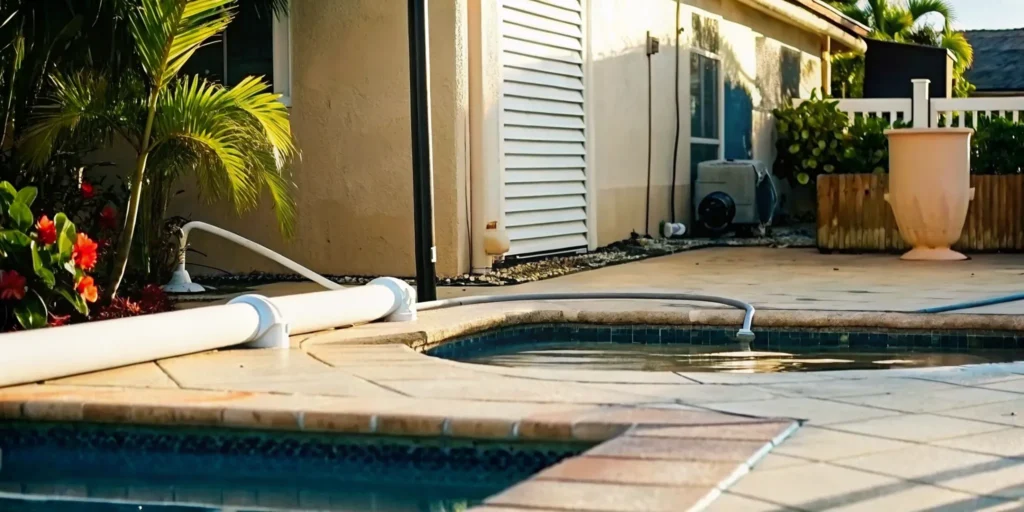
Effective pool leak detection Fort Myers homeowners can begin with careful observation. A falling waterline is not automatically a leak because heat, wind, splashing, and water features all affect water loss. However, repeated refilling, unexplained wet areas, equipment drips, or a bucket test that shows unequal loss are good reasons to investigate.
Concerned about steady pool water loss? Call Whiskey Creek Plumbing at (239) 785-9022.
The goal is not to guess at the cause. It is to separate normal evaporation from persistent loss, document what is happening, and bring in a qualified professional when the evidence points to a problem. The guide below explains safe homeowner checks, common leak locations, and what to expect from a professional evaluation.
Begin with a short observation window rather than reacting to a single low-water day. Keep normal pool care consistent, note significant weather changes, and record what you see. This measured approach gives you clearer evidence, helps rule out ordinary causes, and makes the eventual service conversation more efficient if professional testing is needed.
Pool leak detection Fort Myers warning signs
A possible pool leak usually reveals itself through a pattern rather than one isolated clue. Repeatedly adding water, a sudden change in the water bill, air entering return lines, damp ground, or water near the equipment pad all deserve attention. Combining several observations gives a professional more useful information than relying on one sign alone.
Start by tracking the waterline at the same time each day. Use a pencil mark on tape or another removable marker, then note recent weather, swimming activity, and whether waterfalls or fountains ran. A one-day change after a busy pool party means something different from steady loss during several quiet days.
Changes around the pool and yard
Walk around the deck and nearby landscaping. Look for an area that stays damp after surrounding ground has dried, unusually soft soil, erosion, or new gaps near the deck edge. These observations do not identify the source by themselves, but they help show where escaping water may be moving.
Also inspect the pool surface and fittings from a safe position. Note loose tile, visible separations around fittings, or a waterline that repeatedly settles at the same height. Do not drain the pool or attempt to open buried plumbing based only on a visual clue. That work requires proper evaluation.
Changes in operation and water use
A pump that repeatedly pulls air, bubbles at return fittings, or a need to refill more often can accompany a leak. Check the water bill for an unexplained change, especially if an automatic fill system can mask a falling waterline. Automatic filling may keep the pool looking normal while water use continues.
If a broader plumbing leak may be involved, Whiskey Creek Plumbing also offers leak detection services for the property. Share your notes rather than declaring a cause. Similar symptoms can come from different parts of a pool or plumbing system, so accurate diagnosis matters.
Is water loss a leak or normal evaporation?
Normal evaporation varies with temperature, humidity, wind, sun exposure, and pool activity. A leak is more likely when the pool consistently loses more water than a nearby container exposed to the same conditions. Comparing both under similar conditions is more reliable than using a universal daily-loss rule that ignores local weather.
Fort Myers pools face strong sun, warm temperatures, storms, and changing humidity. Wind can speed evaporation, while swimming and cleaning can send water over the edge. Water features also increase the exposed surface area. For these reasons, comparing the pool with its own recent pattern is more useful than assuming every drop is abnormal.
Use context before drawing conclusions
Review what happened during the observation period. Did rain add water? Did children splash for hours? Was a fountain running? Did someone backwash or clean the filter? Write these events beside each waterline reading. A simple log prevents normal maintenance or weather from being mistaken for a hidden leak.
The EPA WaterSense leak guidance explains why finding and fixing leaks helps conserve water. For a pool-specific concern, the best next step is a controlled comparison. The bucket test below gives homeowners a practical screening method without claiming to locate or diagnose the source.
How do you perform a pool bucket test?
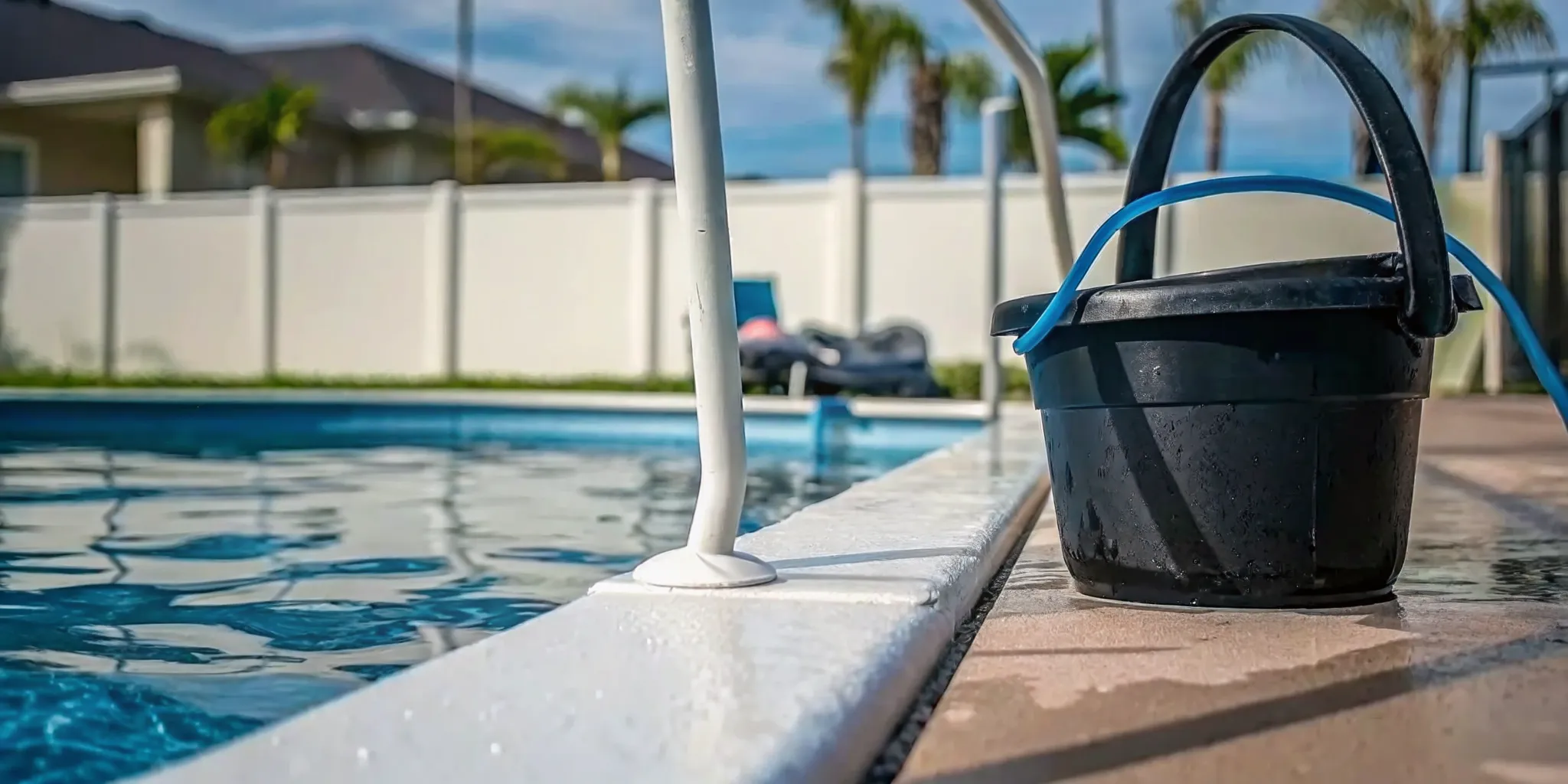
A bucket test compares water loss from the pool with evaporation from a container under nearly identical weather conditions. It can indicate whether the pool is losing water faster than evaporation, but it cannot locate the leak or identify a failed component. Run it once carefully, record the result, and avoid repeating it unnecessarily.
- Choose a 24-hour period without expected heavy rain or planned swimming.
- Turn off fountains and other water features, and follow the pool manufacturer’s normal operating guidance.
- Place a clean bucket securely on a pool step where it will not tip or create a hazard.
- Add pool water to the bucket so its water level is close to the pool level.
- Mark the water level inside the bucket and the pool water level outside the bucket.
- After about 24 hours, compare the change at both marks and record the result.
| Observation | What it may suggest | Next step |
|---|---|---|
| Pool and bucket levels fall similarly | Evaporation may explain the loss during that test | Keep observing under normal conditions |
| Pool falls farther than bucket | Persistent loss deserves investigation | Record results and request professional evaluation |
| Rain, splashing, or unstable bucket affects test | The comparison is unreliable | Repeat once during a stable period |
If both levels fall by a similar amount, evaporation is a likely explanation for that test period. If the pool level falls noticeably farther than the bucket level, persistent loss deserves professional attention. Rain, splashing, an unstable bucket, or a changed operating schedule can invalidate the comparison, so note any disruption.
What the result can and cannot tell you
The test answers one narrow question: did the pool lose more water than the bucket during the observation period? It does not prove whether the source is a pipe, fitting, equipment component, skimmer, or pool shell. Avoid adding dye, sealing products, or making repairs without knowing the affected area.
Did the pool outpace the bucket? Call (239) 785-9022 to discuss professional leak detection.
Bring your written result when requesting service. Include the date, weather, pool operating schedule, approximate change at both marks, and any other symptoms. Whiskey Creek Plumbing’s pool leak repair service page provides more information about getting help with a suspected pool leak.
Common places where pool leaks can develop
Pool water can escape from visible equipment, plumbing lines, fittings, the skimmer area, or the pool structure. Each area can produce similar symptoms at the surface, and some leaks appear only while equipment operates. A systematic inspection narrows the search while avoiding assumptions about which component needs repair.
The equipment pad and visible connections
Look at the pump, filter, valves, heater connections, and visible pipe joints without removing covers or touching electrical components. Note drips, mineral deposits, corrosion, or a wet pad. Check once while the system is operating normally and again after it stops, since some visible leaks may appear only in one state.
A dry equipment pad does not rule out a leak. Water may escape underground or at the pool itself. If a component appears damaged, stop short of disassembly and request an assessment. Whiskey Creek Plumbing’s pool equipment services may be relevant when the concern involves visible pool plumbing or equipment.
Take special care around powered equipment. Do not touch wiring, open electrical enclosures, or stand in water near electrical components. If you see water where it may create an electrical hazard, keep people away and contact an appropriate professional promptly. A safe visual observation is useful; hands-on troubleshooting is not required.
Fittings, skimmers, lines, and the pool structure
Separations around return fittings, skimmers, lights, or other penetrations can allow water to escape. Buried suction and return lines may also leak without an obvious puddle. Structural cracks or damaged finishes require careful evaluation because a visible mark does not always show whether water is passing through it.
Pay attention if the waterline repeatedly stops near the same fitting or opening, but do not deliberately lower the water to test that theory. Improper draining can create additional risks. A professional can use the symptom history and suitable testing methods to isolate the affected area before recommending a repair.
What happens during professional pool leak detection?
Professional pool leak detection begins with questions, a visual review, and confirmation that abnormal loss is occurring. The technician then selects testing methods suited to the pool and observed symptoms. The objective is to narrow the source before repair decisions are made, reducing unnecessary disruption and avoiding a diagnosis based only on appearance.
Expect to discuss when the issue began, how often water is added, the bucket test result, recent work, and whether loss changes with equipment operation. Clear details help establish a useful starting point. Make the equipment area accessible, secure pets, and avoid changing the pool’s normal condition immediately before the visit unless instructed.
Testing should follow the evidence
Depending on the system and symptoms, a professional may evaluate visible connections, isolate portions of plumbing, or use specialized methods to narrow the search. Not every property requires the same process. Ask what was tested, what the results show, and what additional work is recommended before authorizing a repair.
For homeowners who need help beyond the pool, the company’s Fort Myers plumbing services cover a range of plumbing concerns. Whiskey Creek Plumbing uses fixed-price service and a guarantee, so ask the team to explain the applicable scope and terms for your specific job before work begins.
Why prompt investigation protects your property
Persistent pool water loss can waste water, disrupt water chemistry, strain equipment, and affect nearby soil or hardscaping. Prompt investigation does not mean rushing into a repair. It means documenting the pattern, limiting avoidable operation when advised, and arranging an accurate assessment before a small issue has more time to affect the property.
Continually topping off a pool can hide the waterline symptom while increasing water use. Fresh water may also change the pool’s chemical balance, requiring more attention from the person responsible for pool care. If low water causes equipment to draw air, continued operation may create additional concerns. Follow manufacturer guidance and seek help.
Protect the surrounding area without guessing
Escaping water may contribute to damp soil, erosion, or changes around nearby surfaces, but the route is not always obvious. Keep people away from unstable, sunken, or slippery areas. Photograph changes from a safe position and note whether they grow. Do not excavate near buried plumbing, utilities, or the pool deck.
Protect your pool and surrounding property. Call Whiskey Creek Plumbing at (239) 785-9022.
Timely documentation also makes the service conversation more productive. A technician can compare your observations with testing rather than starting from a vague report of water loss. To learn more about the family-run local company serving the area since 2006, visit Whiskey Creek Plumbing.
Keep your notes together until the issue is resolved. Record dates of service visits, what areas were tested, and any changes observed afterward. This creates a clear history for follow-up questions and helps confirm whether the original pattern has stopped. It also reduces the chance that normal weather-related changes will be confused with a recurring concern.
When should you call a Fort Myers professional?
Call a professional when a careful bucket test shows the pool losing more water than evaporation, the waterline keeps falling without a clear reason, or you see recurring wet areas, equipment drips, air in the system, or unexplained water use. Urgent help is appropriate when conditions appear unsafe or damage is progressing.
You do not need to identify the failed part before calling. In fact, presenting your observations without a self-diagnosis helps the technician evaluate the full system. Mention any active flooding, electrical concern, unstable ground, or rapidly falling water level when scheduling so the service provider can advise you on immediate precautions.
Prepare useful details for the call
Have the property address, pool type if known, recent waterline notes, bucket test result, and a list of visible symptoms ready. Explain whether the system was running when each symptom appeared. If safe, photographs of wet areas or visible drips can provide context, but they do not replace an on-site assessment.
Whiskey Creek Plumbing serves Fort Myers and surrounding Southwest Florida communities with local plumbing support. For a suspected pool leak, request an evaluation rather than waiting through repeated refills. The team can explain the next steps, the proposed scope, and any applicable guarantee before approved work begins.
Before the appointment, avoid making unplanned changes that could hide the symptoms. Unless the service team gives different instructions, do not drain the pool, add a sealing product, excavate, or dismantle equipment. Keep the area accessible and share any safety concerns when booking. That preparation helps the visit focus on confirming the source and discussing suitable next steps.
Frequently asked questions about pool leaks
How can I tell if my pool is leaking or evaporating?
Track the waterline and perform one careful bucket test during a stable 24-hour period. If the pool loses noticeably more water than the bucket under the same conditions, request a professional evaluation. Consider rain, splashing, cleaning, and water-feature use when reviewing the result.
Can a bucket test locate the source of a pool leak?
No. A bucket test can indicate that the pool is losing water faster than evaporation, but it cannot identify the source. The leak could involve visible equipment, plumbing, fittings, the skimmer area, or the pool structure. Professional testing is needed to narrow the location.
Should I keep adding water to a leaking pool?
Do not let the water fall below safe operating levels, but avoid using repeated refilling as a substitute for evaluation. Follow the pool and equipment manufacturer’s guidance, and ask a professional what to do while waiting for service. Report rapid loss or unsafe conditions immediately.
What details should I share when scheduling leak detection?
Share when the loss began, how often you add water, the bucket test result, recent weather or pool work, visible drips or wet areas, and whether symptoms change when equipment runs. These details help the technician plan an efficient, evidence-based evaluation.
Persistent water loss deserves a clear answer, not repeated guesswork. Document the pattern, run one careful bucket test, and let an experienced local professional investigate the source. Call Whiskey Creek Plumbing at (239) 785-9022 to request pool leak detection in Fort Myers.
