
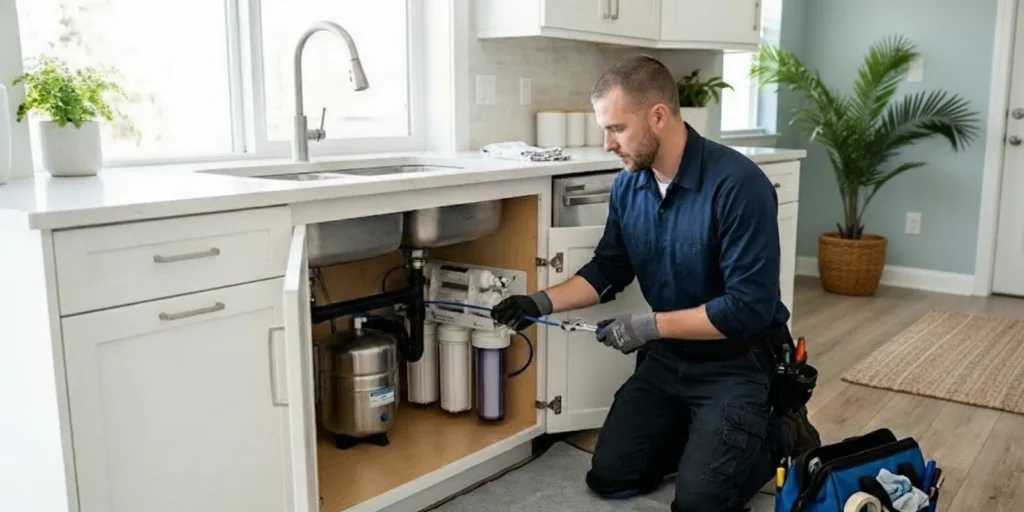
When you suspect a leak, pipe repair Sanibel homeowners can plan starts with two things: limiting water damage and finding the source before choosing a fix. A damp cabinet, unexplained water use, low pressure, or a wet spot outdoors may point to a plumbing issue, but the visible symptom does not always reveal which pipe or fitting has failed. Here is how to respond, what an assessment can clarify, and what to ask before authorizing work.
What should you do first when you suspect a pipe leak?
Act promptly, but do not start cutting into walls or digging based on a guess. If water is actively escaping, shut off the nearest fixture valve if it operates easily. If you cannot isolate the leak, use the home’s main water shutoff if you know where it is and can reach it safely. Do not force a stuck or damaged valve. If water is near electrical equipment, keep clear and contact the appropriate emergency professional.
- Move belongings. Clear items from wet cabinets, floors, and the area beneath a leak.
- Contain water where safe. Use a bucket or towels for a small, accessible drip. Avoid standing water near outlets or appliances.
- Note what changed. Record when you first noticed the issue, whether it worsens when water is running, and which fixtures are affected.
- Take photographs. Images of the damp area and visible pipework can help explain the symptoms. Do not remove finishes to get a better view.
- Call for help when the leak is active or hidden. A leak inside a wall, beneath a floor, or underground may need professional locating and a controlled repair.
A leak that appears to stop may still need attention. Water can travel along framing or flooring before becoming visible, so the wettest spot is not necessarily directly below the source. For more general ways to distinguish visible clues from hidden ones, see our guide to finding a hidden water leak.
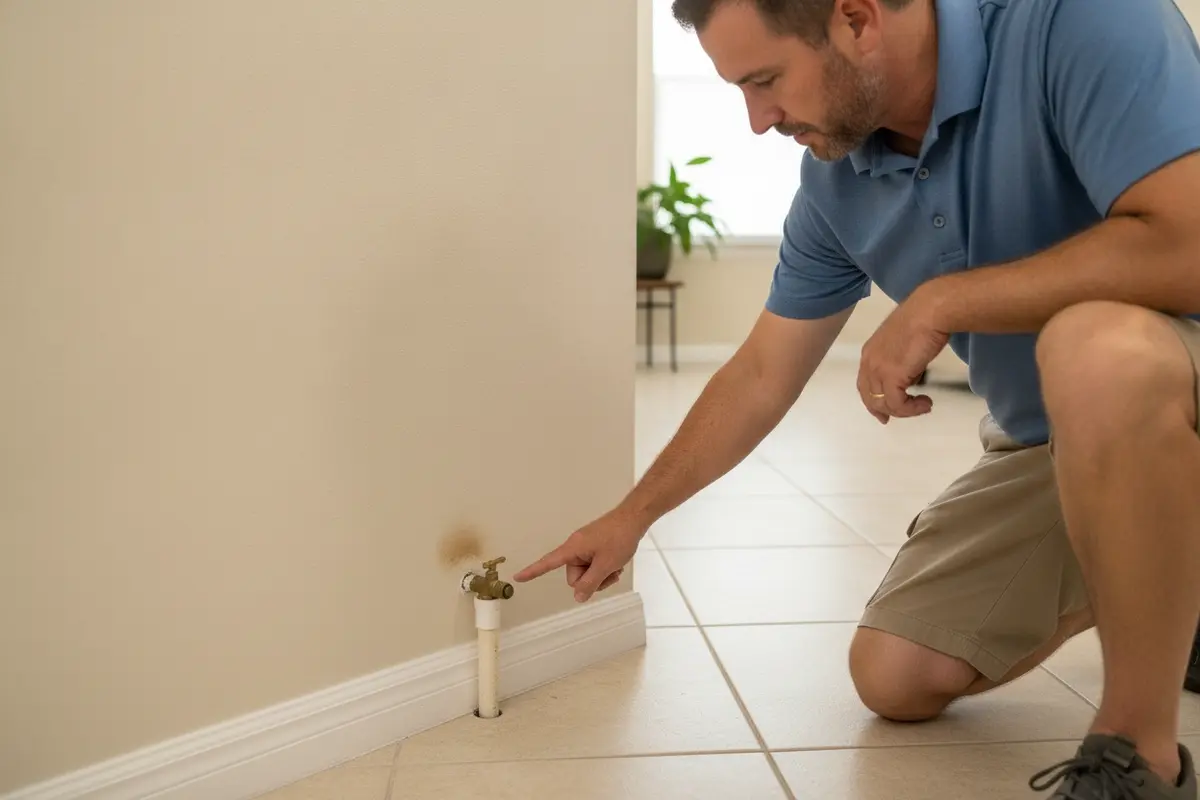
What can make a Sanibel pipe problem harder to diagnose?
The island setting does not mean every leak has the same cause. Pipe material, installation history, water pressure, age, movement, fittings, and the location of the line can all matter. A plumber should identify the actual problem rather than assume that a local condition explains it.
Some plumbing is easy to see beneath a sink or near a water heater. Other lines run through walls, under slabs, or underground. A small stain may come from a supply line, a drain, a fixture connection, or water entering from outside the plumbing system. The right next step depends on where the water originates and whether it appears only when a fixture is used.
In coastal locations, homeowners may also wonder whether the environment affects piping. Exposure, materials, and location can influence wear, but an island address by itself does not prove corrosion or establish that a whole system needs replacement. Ask the plumber to show the evidence: the failed section, a test result, or another specific finding that supports the proposed scope.
Access can affect the work as much as the pipe itself. A line behind tile, inside a cabinet, under a finished floor, or in a buried route may require a plan to reach it and restore the area. Ask what access is necessary and what is included in the plumbing work, rather than assuming that opening and repairing walls or landscaping is part of the same scope.
It can help to sort observations into three categories before a visit: where water is visible, what was happening when it appeared, and which nearby fixtures or surfaces are affected. For example, moisture that appears only after a shower differs from a cabinet that stays wet while the fixtures are unused. These patterns do not prove the cause, but they give the plumber a practical starting point and can prevent unrelated symptoms from being treated as one problem.
What might a plumber inspect before recommending pipe repair?
A useful assessment connects your observations to a specific source. The plumber may ask when the symptoms began, whether water use affects them, and if the problem has happened before. They can inspect accessible piping and fixtures, test relevant parts of the system, and decide whether additional leak locating is appropriate.
- Visible supply piping and joints: Look for active drips, staining, mineral deposits, corrosion, loose connections, or signs of an earlier repair.
- Fixture connections: Check whether the issue is limited to a faucet, toilet, appliance, or shutoff connection instead of a line in the wall.
- Water-pressure clues: Ask whether pressure changes affect multiple fixtures or only one. A symptom can help narrow the investigation but does not, alone, identify a failed pipe.
- Water-meter behavior: If all water is off and the meter continues to register use, that may be a clue to discuss with a plumber. Follow the water provider’s instructions for using or reading its meter.
- Hidden or buried lines: The plumber may recommend a suitable locating or inspection method before opening a finished surface or excavating.
- Prior work and material: Share invoices, permits, or notes about past plumbing repairs if you have them. They may help establish what has already been changed.
When a leak location is uncertain, ask whether a separate locating step is needed before repair. Our overview of plumbing water leak detection explains why pinpointing a source can matter. A diagnosis should distinguish what is confirmed from what remains a possibility.
You can also ask the plumber to walk through the investigation in sequence. First, what observations point to the suspected line? Next, what test or inspection can confirm that location? Finally, what would change the recommendation if the result is different than expected? This helps you understand why an opening, locating step, or additional test is being proposed before any larger repair begins.
Should you repair one section or replace more pipe?
A focused repair can make sense when the damaged area is identifiable and the surrounding pipe appears serviceable. Broader replacement may be worth discussing if an inspection finds multiple failures, repeated leaks, or deterioration extending beyond one isolated spot. Neither choice should be based on a single symptom alone.
Use the comparison below to frame the conversation. It is not a substitute for inspecting the pipe, and it does not predict what any particular home will need.
Focused pipe repair
- May fit when
- The leak is located and damage appears limited to a specific section or fitting.
- Ask about
- What failed, how the repair will be tested, and whether nearby pipe was checked.
Repair with added investigation
- May fit when
- The source is hidden, symptoms recur, or more than one location may be involved.
- Ask about
- What diagnostic step is proposed and how its result changes the repair plan.
Wider pipe replacement
- May fit when
- Inspection shows broader deterioration, repeated failures, or a pattern that makes isolated fixes uncertain.
- Ask about
- Evidence for the expanded scope, access needs, disruption, and alternatives.
Replacing a longer section is not automatically better, and repairing one spot is not automatically enough. Ask the plumber to explain the condition of the surrounding line and the tradeoffs of each viable option. If a recommendation involves replacing a substantial portion of the system, our article on pipe repair versus repiping can help you prepare questions about scope.
Think through the decision in terms of evidence, disruption, and uncertainty. A confirmed, accessible leak with sound-looking pipe around it may support a limited repair. If similar failures have occurred in separate places, ask whether those are connected by a broader condition or are independent issues. If the condition of concealed piping is unknown, discuss the limits of what can be concluded without further access. The aim is not to choose the largest or smallest job by default; it is to match the repair plan to what inspection actually shows.
What should you compare in a pipe repair estimate?
Before approving a repair, make sure the estimate describes the work in plain language. A useful estimate should connect the proposed task to the diagnosed issue and make clear what the quoted price covers. Whiskey Creek Plumbing uses a fixed-price service model; ask for the upfront price and included work before authorizing a job.
- Location and scope: Which line or fitting will be repaired? Is the estimate for one visible section, a concealed line, or a broader area?
- Access: Does the work require opening a wall, floor, cabinet, or ground surface? Who handles any finish restoration or landscape repair?
- Materials and method: What pipe or fittings will be used, and why are they appropriate for this repair?
- Testing: How will the plumber check the work before leaving? Will the affected fixture or system be operated?
- Price boundaries: What is included in the fixed price? What condition, if discovered, would require a changed scope and your approval?
- Next steps: If the repair reveals another concern, will the plumber explain it and provide a separate option rather than proceeding without your agreement?
Price comparisons are most useful when the scopes match. A lower estimate may exclude locating, access, testing, or restoration that another estimate includes. Request clarification in writing and compare the same diagnosed problem rather than choosing by a headline number.
For a practical comparison, write each estimate under the same headings: diagnostic work, repair location, materials, access, testing, cleanup, restoration, and conditions that could change the plan. If one estimate includes locating a concealed leak and another assumes the location is already known, those are not identical jobs. Ask each provider to identify exclusions and to explain how approval works if the findings require a different scope. This makes a price discussion more useful without assuming that the lowest or highest number predicts quality.
You can review our plumbing services in Lee County or visit the water line service page to see related service information. If you are checking a contractor’s license, the Florida Department of Business and Professional Regulation provides state licensing information at its official website. Confirm details that apply to your specific project directly with the appropriate authority.
How can you prepare for a pipe repair visit?
A few details can help make the assessment more efficient. Before the appointment, write down where you first saw water, whether the area dries and returns, and what was running at the time. Tell the plumber if shutting off a valve changes the symptoms or if another contractor has already worked on the area.
- Clear access to the affected sink, fixture, utility area, or visible pipe. Keep pets and children away from tools and wet areas.
- Do not conceal the leak or apply a patch that could prevent inspection. If you used a temporary measure, explain exactly what you did.
- Gather any records for earlier leak repairs or pipe replacement in the same area.
- Ask whether the plumber needs access to a shutoff, water meter, or specific room before arrival.
- Request a written explanation of the diagnosis, the proposed repair, the fixed price, and the testing plan.
When the issue appears to involve a supply line, describe which fixtures are affected and whether the symptoms change when water is used. If the evidence points to a leak rather than a fixture fault, a professional can discuss whether leak detection and repair is the right next step.
If the home will be occupied during the work, ask what areas need to stay clear and whether water will need to be shut off during testing. For an outdoor line, note the visible route and any nearby wet ground, but do not dig to trace it yourself. Keep a short list of questions ready so you can cover access, timing, and what happens after the repair is checked. A few minutes of preparation can make the conversation clearer without requiring you to diagnose the pipe in advance.
When should you call a plumber?
Call for professional help when water is actively leaking, a leak is hidden, the same area has failed more than once, or you cannot safely isolate the supply. A professional assessment is also sensible if water damage keeps returning, several fixtures show an unexplained change, or you are unsure whether the source is plumbing or another issue.
For a small, accessible drip, you can shut off an easy-to-reach fixture valve and protect nearby belongings while arranging service. Avoid risky work in wet electrical areas, forcing valves, or opening walls and floors without knowing what is behind them. If the leak is severe, prioritize safety and contact emergency services where appropriate.
Sanibel homeowners can find local service information through our Sanibel service-area page. A clear description of the symptoms and the location can help determine what kind of visit is needed.
Call (239) 785-9022 to discuss the leak
Frequently asked questions
Can I patch a leaking pipe myself?
A temporary measure may slow a minor drip, but it does not confirm the source or establish that the pipe is sound. Avoid relying on a patch for a hidden, pressurized, recurring, or substantial leak. Shut off water if you can do so safely and arrange an assessment.
Does one leak mean the whole home needs new pipes?
No. One leak can be an isolated failure. A plumber should inspect the affected area and consider any pattern of repeat problems before recommending wider replacement. Ask what condition supports the proposed scope and what alternatives are reasonable.
Will a plumber need to open a wall or dig?
Not always. Some leaks are accessible at a fixture or exposed pipe. A hidden or buried line may require locating and access work. Ask what the plumber knows before opening a finished surface and whether restoration is part of the estimate.
How can I tell if a leak is from plumbing?
Timing can offer clues. Water that appears when a fixture runs may relate to that fixture or its drain, while continuous moisture may have another source. These clues are not a diagnosis. A plumber can inspect the area and use appropriate testing to identify the source.
What should I ask before approving the work?
Ask what failed, what will be repaired, what the fixed price includes, how the work will be tested, and what would cause the scope to change. Get a clear answer before authorizing additional work.
Plan the next step for your Sanibel home
Good pipe repair begins with a clear diagnosis, a defined scope, and a price you understand before work starts. Share what you have observed, ask how the plumber will verify the repair, and compare options based on the pipe’s actual condition.
Contact Whiskey Creek Plumbing to discuss your pipe repair
With the source identified and the work explained, you can make a more confident decision about the repair and protect your home from further water damage.