
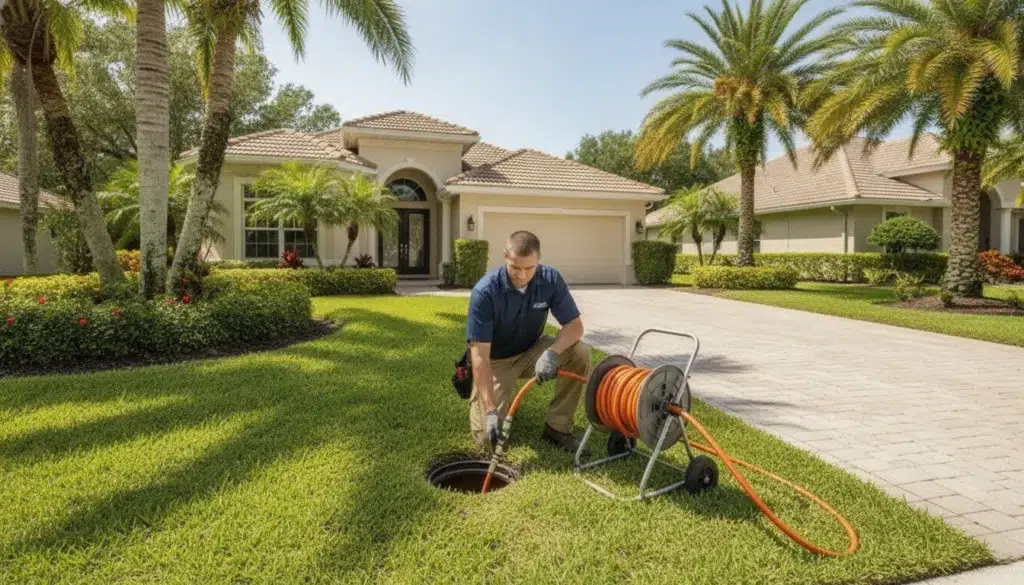
Hydro jetting services Lee County homeowners and small businesses book are a cleaning visit, not a pipe replacement. A technician uses a hose and a shaped nozzle to wash grease, sludge, and loose debris off the inside of a drain or sewer line, then checks that water moves again. From Cape Coral to Bonita Springs, the order stays the same. Find a safe access point, look inside the pipe, match the water stream to the line, make the cleaning pass, and confirm the result.
Call (239) 785-9022 to schedule a Lee County hydro jetting visit
The steps below are what that visit includes. Prices, a full comparison with snaking, and the older-pipe safety decision live on other pages, and this guide points to them instead of repeating them.
What hydro jetting services Lee County visits cover
Hydro jetting cleans the inside of a drain or sewer line with water. The EPA description of sewer cleaning calls jetting a high-pressure stream aimed at blockage or debris, with the nozzle shape changed for the surface being cleaned. On a house or small commercial line, that usually means grease film, soap residue, sand, or soft sludge that has narrowed the pipe.
It is the right conversation when one of these is true:
- The same fixture slows down again after a basic clearing.
- Several fixtures on one side of the building drain slowly together.
- A kitchen line in a restaurant, rental, or busy household keeps collecting grease.
- A camera already showed soft buildup, and the pipe wall still looks intact.
Jetting does not patch a crack, reset a separated joint, or remove a collapsed section. If the line is broken, the visit stops at cleaning and the next step is repair. Whiskey Creek Plumbing’s hydro jetting service is the place to book the work. This page only explains the sequence.
Lee County properties add a few local wrinkles. Slab homes often hide the building drain, coastal lots can have shallow cleanouts, and hard water leaves mineral film that a single cable pass does not wipe off. None of that changes the order of the visit. It changes how long access and the camera check take.
How the visit starts
The first minutes are questions and a walk to the access point. A useful call tells us which fixture is slow, whether the problem is one drain or several, and whether a cleanout is in the yard, garage, or an exterior wall.
On site, the technician confirms three things before any hose comes off the reel:
- Which line is affected, so a kitchen branch is not treated like the building sewer.
- Where the hose can enter without opening a finished floor or a wall.
- Whether the cleanout cap comes off cleanly and the opening is large enough for the nozzle.
If the only opening is a toilet flange or a sink trap, the visit may start with a smaller access step. That is still part of the process. For a county-wide booking, say whether the property is a house, a condo, or a small business, and name the city. Cape Coral canal lots, Lehigh Acres acreage, and downtown Fort Myers buildings do not share the same cleanout locations.
We do not ask you to take a trap apart or run a consumer drain machine before we arrive. If water is standing in a shower or a floor drain, leave it. That water tells us which way the line is holding.
Why the camera check comes before the water
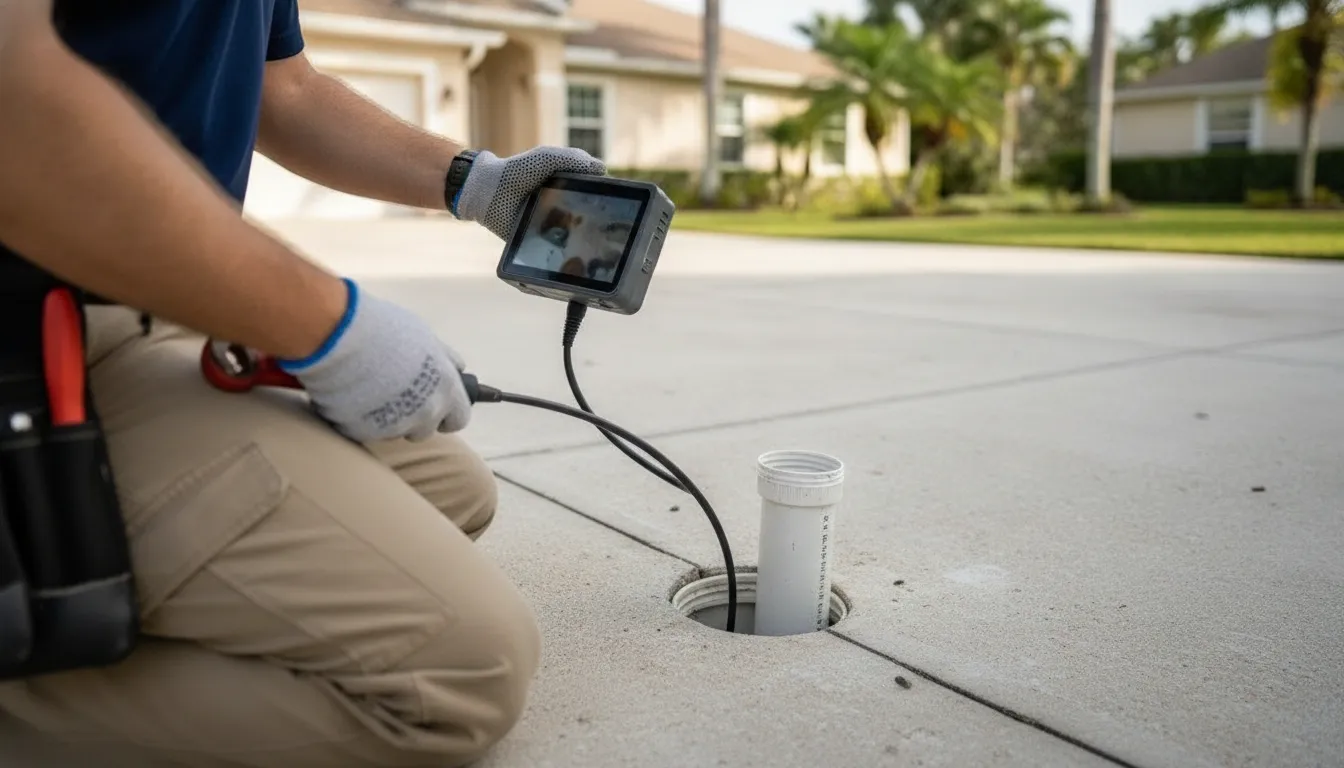
A camera inspection is how the visit decides whether jetting is even appropriate. Closed-circuit television is the common way to see the inside of a sewer. The same EPA sewer-inspection guidance says inspection is used to find grease, debris, and roots before they become a blockage. On a residential visit the camera is usually pushed from the same cleanout the hose will use.
The check is looking for a short list:
- Soft buildup, grease, or scale that water can wash.
- An offset, crack, or belly that high pressure could make worse.
- Roots that may need a different nozzle, or a repair if the pipe is already open.
- A blockage location, so the hose is not run past the problem into a damaged section.
If the picture shows a pipe that should not be pressurized, the visit ends as an inspection and we talk about repair. Our sewer line inspection guide covers what the camera visit itself includes. The hydro jetting process uses that look as a gate, not as a separate product pitch.
Older lines get this gate every time. The separate guide on hydro jetting for older drain pipes is where that safety decision is explained. This process article assumes the camera has already cleared the line for cleaning.
What happens during the cleaning pass
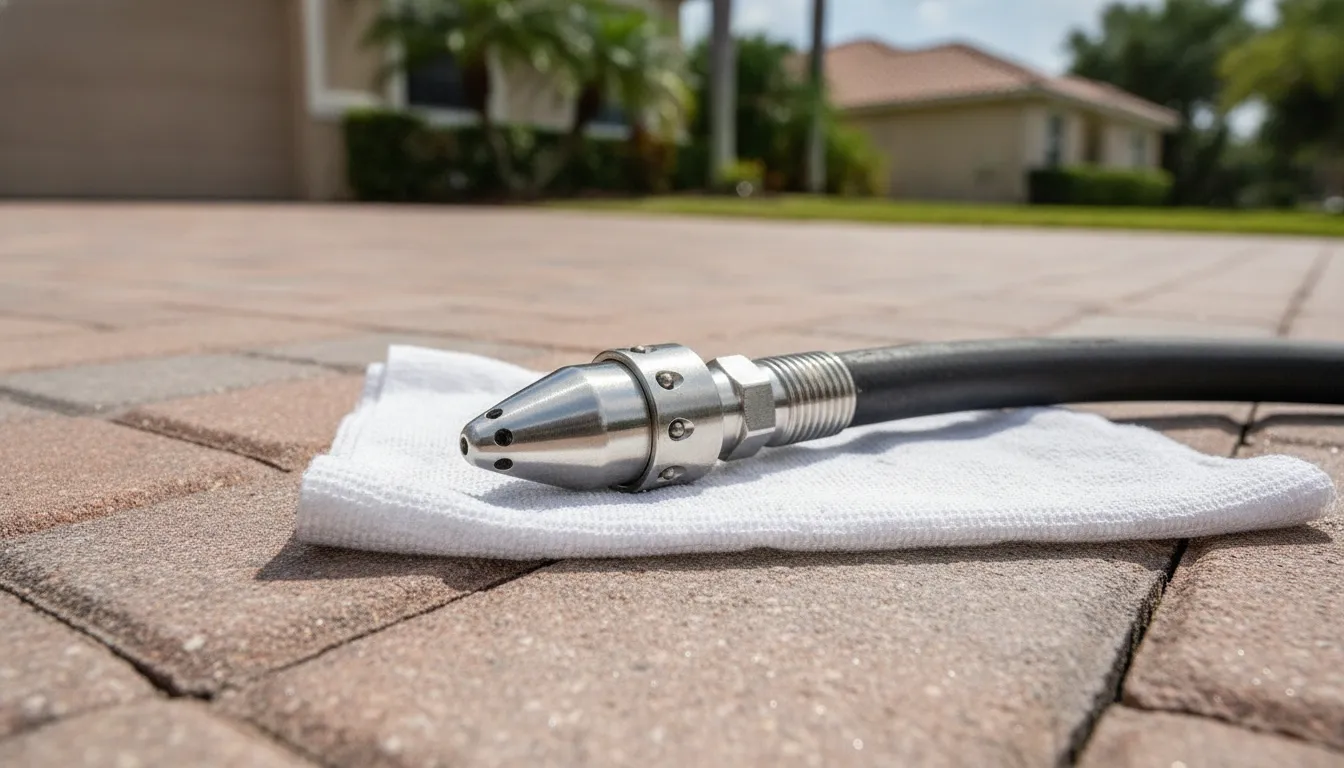
Once the line is cleared for cleaning, the technician chooses a nozzle and a pressure that match the pipe, then feeds the hose from the cleanout. Rear-facing jets pull the hose into the line. Forward-facing jets break up the pile of debris. The EPA description of jetting says the nozzle shape changes for the surface being cleaned. The method works best in smaller, slower lines, where the stream can still reach the pipe wall.
A normal residential pass looks like this:
- The hose goes in to the distance the camera marked.
- The technician retrieves it slowly so the jets can scrub the wall on the way back.
- Debris washes toward the cleanout or downstream toward the city main, depending on the setup.
- A second pass is made only if the first pass left visible film or the flow test is still weak.
You may hear the machine and see dirty water at the cleanout. Fixtures on that line should not be used during the pass. The technician stays at the access point for the whole run. Pressure is not a single setting for every Lee County house. A short PVC kitchen branch and a longer building sewer are not cleaned the same way, which is why the camera result drives the setup.
Jetting is a poor match for a crushed pipe, a dropped joint, or a line full of construction debris that water cannot carry. In those cases the pass is stopped and the finding is documented for repair.
How the visit confirms the line is open
Cleaning is not finished when the hose comes out. The technician runs water from the fixture that was slow, watches the cleanout, and often sends the camera back through the same section. The goal is a clear path and a pipe wall that no longer shows the soft buildup the first picture found.
A completed cleaning visit includes:
- The access point closed and the work area rinsed.
- A plain description of what the camera showed before and after.
- A note if a spot still looks damaged, belled, or root-bound.
- Guidance on what not to put down that line, especially grease and wipes.
It does not include a promise that the drain will never slow again. Grease returns if the kitchen habit returns. Roots return if they still have a path into the pipe. The honest result is a line that is clean today and a clear statement of anything the water could not fix.
If the after-picture shows a break, the next conversation is repair or replacement, not another cleaning. The sewer line installation service is the page for that work. Hydro jetting services across Lee County stay in their lane: wash the intact pipe, prove the flow, and stop when the pipe itself is the problem.
What changes across Lee County properties
The sequence does not change by city. Access, pipe length, and what is in the line do.
Use this as a field guide for the visit, not as a price sheet.
| Property situation. | Where the time goes. | How the visit usually ends. |
|---|---|---|
| One slow kitchen line. | Find a cleanout and wash grease film. | One or two passes, then a flow test. |
| Several fixtures slowing. | Camera the building drain first. | Clean only if the wall is intact. |
| Rental or small kitchen. | Longer grease scrub on the return. | Clean wall plus a use note. |
| Roots or a visible crack. | Document the pipe. Do not blast harder. | Stop and plan repair. |
| No usable cleanout. | Locate a safe entry first. | Clean only after the pipe is seen. |
Cape Coral, Fort Myers, Bonita Springs, Estero, and Lehigh Acres all fall under the same gate. We do not jet a line we have not looked at, and we do not treat a cleaning visit as a repair. Standard drain cleaning is the broader service when the problem is still a simple fixture clog rather than wall buildup.
What to have ready and what the visit will not do
A smoother visit starts with a short list. Know which fixtures are slow, keep pets off the cleanout area, and leave a path to the exterior cap or the garage. If a previous plumber left a camera clip or a written note about the line, have it available. Mention a septic tank if the property is not on city sewer, because the hose must not be run into equipment that is not part of the drain being cleaned.
During the visit, stay off the fixtures on that line. Do not pour chemical drain opener ahead of the appointment. Those products do not help the camera image, and they are not part of how we clean the pipe.
The visit will not:
- Quote a county-wide flat price from the curb. Scope follows the camera.
- Open a slab or a wall just to make jetting possible when a sound access point is not there.
- Certificate a damaged pipe as healthy because water happened to move.
- Replace snaking, spot repair, or full sewer replacement when the finding calls for one of those.
Whiskey Creek Plumbing is family-run, licensed in Florida as CFC1431877, and works on a fixed price once the scope is known. We have served Lee County and the surrounding area since 2022, with about 25 years of plumbing experience behind the work. The phone number for a visit is (239) 785-9022.
Call (239) 785-9022 before the cleaning visit
Frequently asked questions
How long does a hydro jetting visit take?
Many single-line cleanings finish in a few hours, including setup and the flow check. A missing cleanout, a long building sewer, or a camera finding that stops the job will change the clock. Time follows access and pipe condition, not the city name.
Do you jet the line without a camera?
No. The process puts a camera in the line first so we can see cracks, offsets, and the debris we are actually washing. If the picture says the pipe should not be pressurized, we do not run the hose.
Can hydro jetting clear every Lee County clog?
It clears soft buildup that water can reach and carry, including a lot of grease and sludge. It does not fix a collapsed pipe, a separated joint, or a line that needs repair. Those visits stop at the finding.
Will the same process be used in Cape Coral and Bonita Springs?
Yes. Access and pipe length change. The order does not: locate the line, camera it, choose the nozzle, make the pass, and test the flow. Hiring the service still starts on the hydro jetting service page.
What should I do with the fixtures during the visit?
Leave them unused on the line being cleaned. You can run other bathrooms that are not on that line if the technician says they are clear. Keep people away from the cleanout while the hose is in the pipe.
Book the visit with the scope in view
If a Lee County drain keeps slowing and you want the line washed rather than guessed at, start with the camera and a defined cleaning pass. We will say so if the pipe needs repair instead. Call (239) 785-9022 or use the contact page to set the visit.