
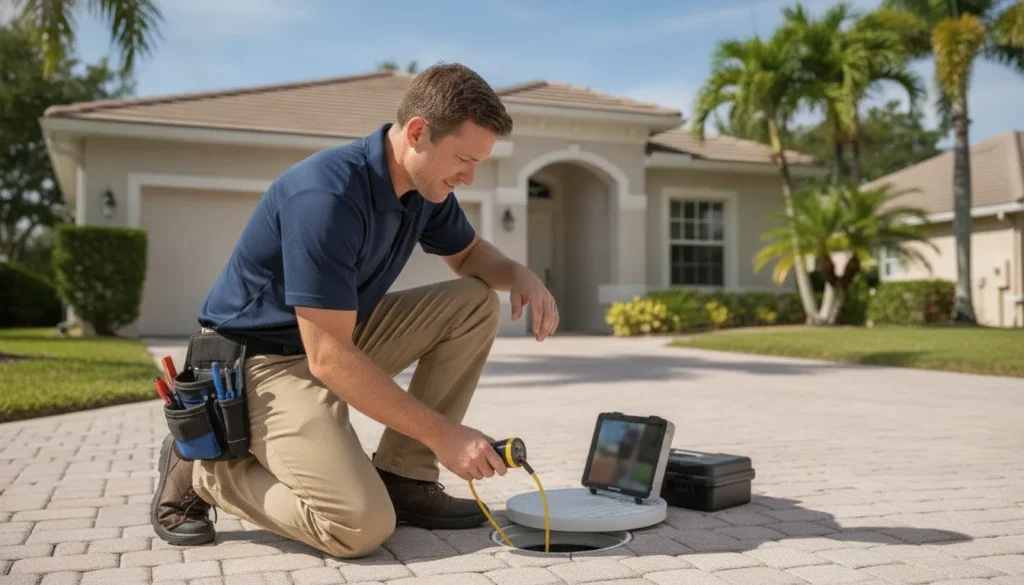
A sewer line runs out of sight, so recurring concerns can leave homeowners unsure what is happening below ground. A camera view can help replace guesswork with a look at the pipe’s interior, while keeping the next decision grounded in what is actually visible.
A sewer line inspection uses video to help assess the pipe’s interior condition. The U.S. Environmental Protection Agency describes closed-circuit television, or CCTV, as the most commonly used technique for inspecting a sewer’s interior (EPA guidance). Whiskey Creek Plumbing offers sewer video inspection and diagnosis for residential and commercial customers in the Fort Myers and Lee County area.
Seeing the inside of a line can help clarify whether the concern is an obstruction, a visible change in the pipe, or something that needs a closer explanation. The camera view is useful evidence, but it cannot confirm every part of the system or every possible cause. Understanding what the inspection can show, and what it cannot, makes the findings easier to interpret.
What a Sewer Line Inspection Can Tell You
A sewer line inspection uses a camera to view the inside of a pipe and assess its condition. The video may identify potential trouble spots in visible sections, but it cannot guarantee that every problem has been found. The U.S. Environmental Protection Agency describes CCTV as a commonly used technique for assessing sewer condition and identifying potential problems (EPA guidance on sewer inspection).
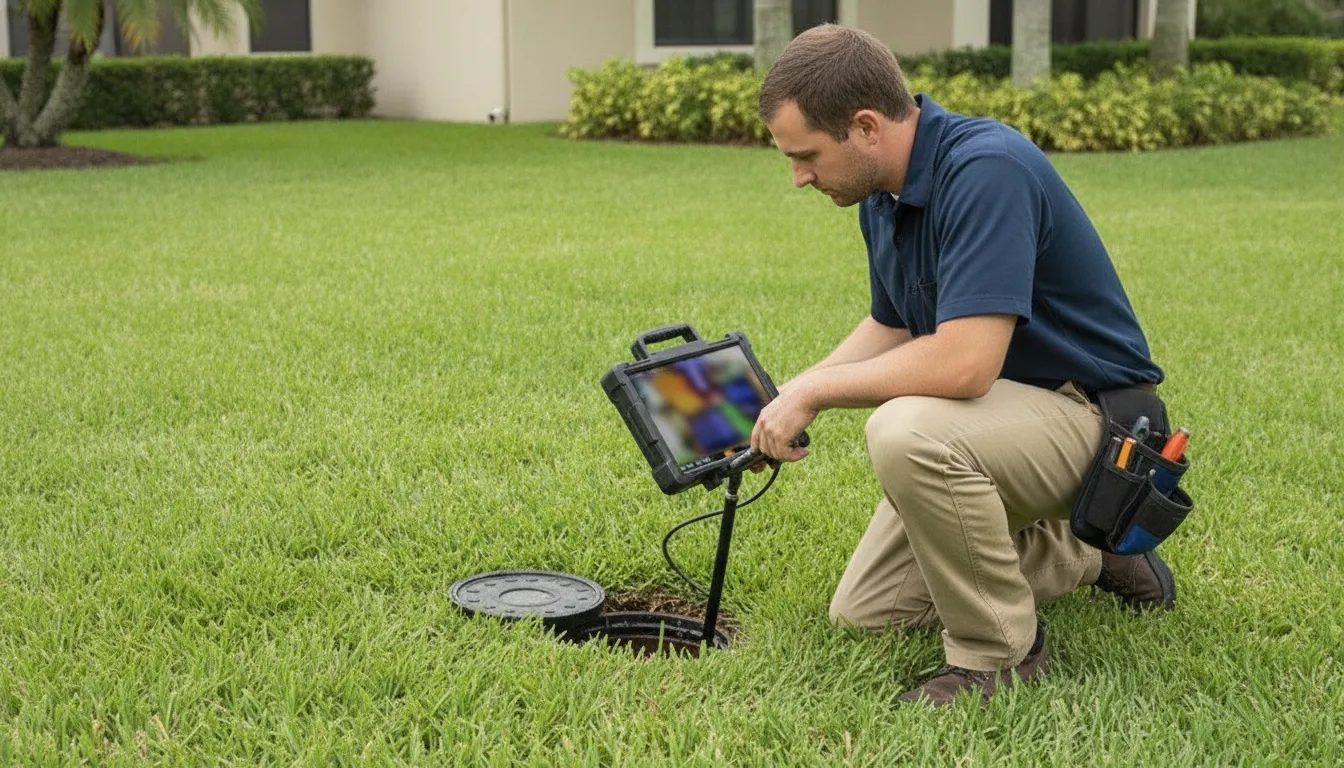
What the camera shows depends on the portion of the line it can reach and what is visible during the inspection. A video image may show an obstruction or visible pipe damage. It cannot establish a condition beyond the camera’s view or predict how the pipe will perform over time. If debris or another obstruction limits the view, ask whether the camera could see past it or if part of the line remains unassessed. A limited view should not be presented as a clear result for sections the camera did not show.
We offer sewer video inspection and diagnosis for residential and commercial customers in the Fort Myers and Lee County area. The purpose is to assess the line’s visible interior and identify potential concerns, not to promise that every issue will be found. A camera image documents what appears in the pipe at that time. By itself, it does not confirm why a condition developed, its extent beyond the visible area, or what work is necessary. We can explain what the image supports and what remains uncertain so you have a clearer basis for discussing next steps.
| What the camera may show. | What it cannot confirm alone. |
|---|---|
| Visible obstruction or pipe damage in a reached section. | Conditions beyond the camera’s view. |
| A view of the accessible pipe interior. | Why damage developed or which repair is right. |
A sewer lateral is the pipe connecting a house or building to a public sewer main. That definition does not determine who owns or maintains every part of the pipe. Responsibility can depend on local rules and the specific property. If a finding appears close to a connection or public main, ask the appropriate utility or local authority where responsibility changes. The City of Santa Barbara uses the term “sewer lateral” for this connecting pipe, but its local program rules do not necessarily apply in Southwest Florida (lateral definition).
Treat a camera view as evidence to discuss, not a stand-alone promise about the repair needed. Ask which section was visible, where any concern appeared, and whether the inspection left an area unobserved. Those details help you understand what the video supports before deciding on next steps.
How a Sewer Camera Inspection Works
A camera scope gives a plumber a view inside a sewer pipe without opening its full length. The exact access point and equipment depend on the property and the line, so the process can vary. Closed-circuit television (CCTV) is widely used to assess sewer conditions; in this approach, a camera records the pipe interior as it moves through the line.
- Identify a suitable access point. The plumber first determines where the line can be reached. An exterior cleanout is a common access point for some sewer scopes, but it is not universal. Access options depend on the plumbing layout and the part of the line being inspected. A camera can only assess portions it can safely reach.
- Guide the camera through the pipe. In a typical CCTV inspection, the camera is moved or pulled through the accessible line while its light and video feed show the interior. The operator watches the view as the camera advances. This is a visual assessment, not a guarantee that every part of the system can be seen or that every hidden condition will be identified.
- Record and review what is visible. The camera records the pipe interior. Some CCTV systems also track how far the camera has traveled, which can help note the approximate location of an irregularity. That capability is described by the U.S. Environmental Protection Agency, but equipment and reporting practices vary, so homeowners should ask what the specific inspection includes. EPA overview of sewer inspection methods.
- Discuss the observations and any limits. The video can help show the line’s visible condition and areas that may need attention. The plumber should explain what the images show, where a concern appears to be, and whether access or visibility limited the assessment. A camera view is one tool for evaluating sewer condition, not a complete assessment of every component connected to the system.
Whiskey Creek Plumbing offers sewer video inspection and diagnosis for residential and commercial customers in the Fort Myers and Lee County area. Its documented service information does not specify a single access route, camera setup, distance readout, or inspection duration, so those details should be confirmed for the property rather than assumed.
What Problems May Show Up on Camera?
A sewer camera may show material inside the pipe, changes in the pipe wall, or a joint that no longer appears aligned. Those images are useful evidence, but they are observations to interpret, not a diagnosis by themselves. What is visible depends on the section of line the camera can reach and the view it captures during the inspection.
Roots are one possible finding. They may enter where a joint has failed or a crack has opened, and can appear as strands or a mass extending into the pipe. The U.S. Environmental Protection Agency notes that sewer inspection techniques can help identify root intrusion as well as places where grease and debris accumulate. EPA guidance on sewer inspection describes these as conditions inspection methods may locate, not proof that every line has them.
The camera may also reveal a crack, a broken or separated joint, or other visible damage. Some problems appear as a distinct opening or shift; others may be difficult to judge from one frame. A municipal sewer-lateral program lists roots entering at failed joints or cracks, broken or separated joints, and collapses among issues that may occur. That guidance is general context, not a prediction about any particular property’s pipe.
Debris, grease, or another obstruction may partly or fully block the camera’s view or the flow path. A blockage does not automatically mean the pipe is broken: a line can be obstructed by material inside it, while a structural defect is a different kind of finding. The City of Santa Barbara describes video inspection as a way to help distinguish a line damaged by a defect from one clogged by grease or debris. Its sewer-lateral inspection information offers one example of that distinction.
Other visible concerns may include a collapse or damage that changes the pipe’s shape, but an image alone does not establish how extensive a problem is or what repair is appropriate. An experienced professional should interpret the footage in context, explain what can and cannot be seen, and clarify whether further inspection or cleaning would help. Camera findings vary, and no single visual detail should be treated as a certain forecast of failure. For a general overview, InterNACHI explains what a sewer scope may reveal, including blockages and pipe damage.
What Happens After the Inspection?
Once the camera view has been reviewed, the next step is to understand what it shows and what it does not. Ask the plumber to explain any concern in plain language, including where it appears in the line and whether the footage points to a blockage, damage, or another condition. A camera view helps assess the pipe interior, but it does not mean every possible issue or cause has been confirmed.
Ask what documentation is included, too. Some inspection providers offer a written report, but that is not something to assume for every service. You can ask whether video, images, or a written summary will be available, and whether the findings can be reviewed with you. If a specific area could not be viewed, ask what limited visibility and whether another step may be useful.
Useful questions to ask include:
- What did you see, and where in the line is it?
- Does the finding suggest cleaning, a repair, or further evaluation?
- What are the reasonable options, and what would each involve?
- Can I review the relevant video or notes before deciding?
The right next step depends on the findings. A buildup or blockage may call for cleaning; damaged pipe may lead to a discussion about repair or replacement. Whiskey Creek Plumbing offers sewer line cleaning, blockage removal, repair, and replacement, but an inspection does not automatically mean that major work is needed. Ask the plumber to connect any recommendation to what was actually observed.
Before repair work begins, Whiskey Creek Plumbing provides a fixed-price quote. Review what the proposed work includes, ask about anything unclear, and decide how you want to proceed before authorizing it. The U.S. Environmental Protection Agency describes identifying a problem, correcting it, and evaluating the corrective measure as parts of an inspection program. EPA sewer inspection guidance.
If you have questions about a sewer video inspection in Fort Myers or Lee County, we can explain the service and discuss next steps without pressure.
Call Whiskey Creek Plumbing at (239) 785-9022
Preparing for a Sewer Line Inspection
A little preparation can help the visit start smoothly. The right steps depend on the home’s plumbing layout and where the line can be accessed. When you schedule, ask whether the plumber needs access to an indoor or outdoor cleanout, whether an adult should be present, and if there are any property-specific instructions to follow.
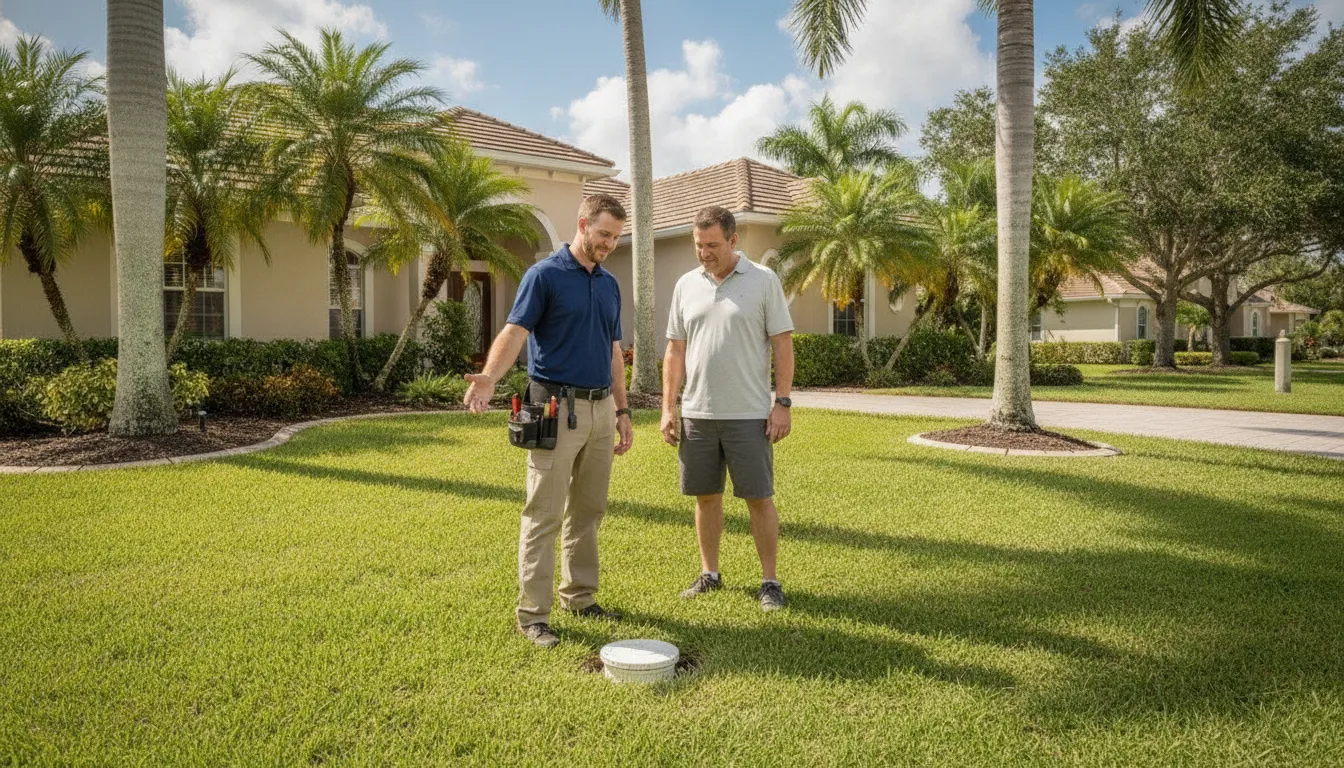
Before the appointment, make sure the agreed access area is reachable. If you are unsure which cap or opening is the sewer cleanout, do not remove it yourself. Some access points can be inside a home, while others may be outside; the appropriate location varies by property. Let the plumber identify the correct point and explain what preparation, if any, is needed.
Industry guidance for inspectors recommends identifying the access location and planning for the tools needed before a scope begins. It also advises that occupants avoid running household water during the inspection in some situations. That is not a universal instruction for every appointment, so ask your plumber whether it applies to your visit rather than shutting off water on your own. InterNACHI’s sewer-scope overview discusses access and preparation from the inspector’s perspective.
If you have prior inspection notes, photos of a recurring backup, or details about earlier sewer work, have them available to discuss. They do not replace the camera view, but they can help explain why the appointment was scheduled and what questions you want answered. You can also ask ahead of time what portions of the line may be reachable and whether the plumber will review any limits in the view with you.
When Is a Sewer Line Inspection Useful?
A video inspection can be useful when you need a clearer view of a sewer line before choosing what to do next. It is not automatically necessary for every property or plumbing concern. The value depends on the question you are trying to answer and whether the line can be accessed and viewed.
For example, a buyer or current owner may want more information about the line’s condition before making a property decision or planning future maintenance. An inspection can provide visual evidence to discuss, but it should not be treated as a guarantee that every part of the system has been assessed or that no hidden issue exists.
Before approving a major repair
If a substantial repair or replacement has been proposed, asking whether a camera inspection could clarify the line’s condition may help you understand the recommendation. The footage may offer useful context about the area being discussed. It does not determine the right repair in every case. Ask the plumbing professional what is visible, what remains uncertain, and how those findings relate to the proposed work.
When the line’s condition is unclear
A professional may recommend a camera when the available information does not explain what is happening inside the pipe. EPA describes sewer inspections as a way to assess line condition and identify potential problems (EPA sewer inspection guidance). An inspection can help replace guesswork with a view of accessible sections, while still leaving room for limitations based on access or visibility.
Whiskey Creek Plumbing offers sewer video inspection and diagnosis for residential and commercial customers in the Fort Myers and Lee County area. If a professional recommends an inspection, ask what question it is meant to answer and what you will be able to review afterward. That conversation can help you decide whether the inspection is relevant to your situation, without assuming it is required or that it will lead to a particular finding.
Frequently Asked Questions
What happens during a sewer line inspection?
A plumber accesses the line and guides a camera through the section that can be reached, viewing the pipe interior for its condition. The camera view can help show where an irregularity appears. The EPA describes closed-circuit television as a commonly used method for inspecting sewer interiors (EPA guidance). Ask what portion of the line was inspected and what the findings mean for your property.
How long does the inspection take?
There is no single timeframe that fits every property. Access to the line, the layout and length of the system, and what the camera encounters can affect the visit. Whiskey Creek Plumbing’s published service information does not give a standard duration, so we recommend asking when scheduling rather than relying on a generic estimate.
What problems might the camera find?
The view may reveal roots entering the pipe, cracks or separated joints, or accumulated grease and debris. These are possible observations, not guaranteed findings, and what can be seen depends on the accessible portion and viewing conditions. The EPA’s sewer inspection guidance describes inspections as a way to identify potential problems and notes roots and debris among conditions they can help locate.
Is a sewer scope worth getting, and is it part of a home inspection?
It can be useful when you are buying a property, dealing with recurring blockages, or weighing significant sewer work because it provides a view of pipe condition before you decide on next steps. Do not assume a general home inspection includes a sewer camera scope; ask the inspector exactly what is included. An inspection can inform a decision, but it does not guarantee that every problem will be visible.
Ready to Ask About a Sewer Line Inspection?
A clear explanation of what a camera inspection shows can help you understand the next steps before deciding whether repair work is needed. Call us at (239) 785-9022 to ask about sewer video inspection in Southwest Florida, and we can talk through your questions.