
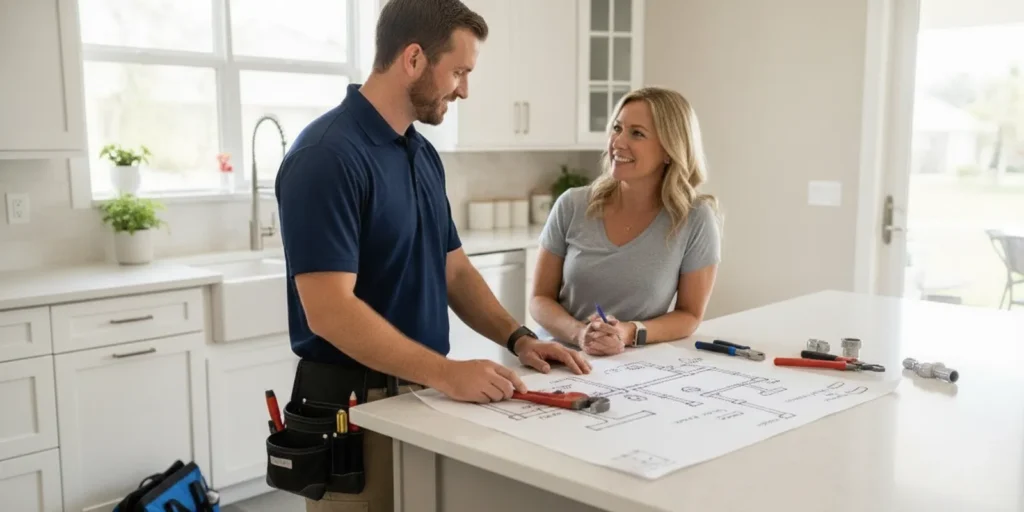
If you are trying to get a quote for whole house repipe work, the most useful proposal is more than a number at the bottom of a page. It should explain what piping will be replaced, what material is proposed, how the crew will reach concealed lines, what areas may need opening and repair, and what is excluded. A little preparation helps you compare proposals on the same basis and spot unanswered questions before work begins.
Request a plumbing assessment and quote
What information should you gather before requesting a quote?
You do not need to diagnose the plumbing system yourself. Give the plumber a clear picture of what you have noticed and what you know about the home. This helps the professional decide what to inspect and what details the estimate needs to address.
- Describe the symptoms. Note recurring leaks, discolored water, changes in pressure, repairs that keep returning, or which fixtures are affected. Include when the issue began and whether it happens throughout the house or in one area.
- Share the home basics. Provide the approximate age of the home if known, number of stories, number of bathrooms, and any additions or remodels. Mention if parts of the house have been repiped before.
- Identify pipe information you already have. If you can safely see an exposed pipe label or material, take a photo. Do not cut into walls or remove fixtures to find it. Tell the plumber if you are unsure.
- Point out access concerns. Mention finished ceilings, tile, cabinets, built-ins, tight utility spaces, or areas that are difficult to reach. Share any known plans or photos of previous plumbing work.
- Explain your priorities. Let the plumber know whether you are trying to address repeated failures, planning a remodel, or evaluating a property. Ask about scheduling constraints and how water service interruptions are handled.
Photos can be useful, but they do not replace an onsite inspection when concealed routes or conditions affect the work. A quote based on limited information should make clear what assumptions it uses and whether inspection could change the scope.

What should a whole-house repiping quote spell out?
Ask for a written description of the work, not only a verbal total. The wording should let you understand what the plumber intends to replace and how the work will be completed. If something is described as “whole-house” or “complete,” ask what that means for your particular layout.
- Which lines are included? Ask whether the proposal covers the hot and cold water distribution lines throughout the home, and how it treats branches serving individual fixtures. Ask whether the service line, drains, sewer piping, or other systems are excluded. Do not assume that “repiping” includes every pipe in the property.
- Where will new piping run? Ask whether the new route follows existing paths or uses an alternate route. The approach can affect access points, visible piping, and restoration work. Request an explanation if the route is not obvious.
- What pipe material and fittings are specified? The proposal should identify the proposed material and relevant connection approach. Ask why it is suitable for the home, what factors could lead to a different choice, and whether the material will be used consistently across the listed scope.
- What access and opening work is expected? Clarify whether walls, ceilings, cabinetry, or other finishes may need openings. Ask who is responsible for making those openings and for closing or refinishing them. Plumbing work and finish restoration may be separate responsibilities.
- What fixtures or equipment will be disconnected and reconnected? Ask which fixtures are included, whether existing valves or connectors are being reused or replaced, and how the plumber will check each connection after installation.
- How will the system be tested? Ask what checks are planned before the work is considered complete and whether the crew will explain any remaining limitations or recommended follow-up.
- What is excluded or conditional? Ask about concealed damage, inaccessible areas, pre-existing code or installation concerns, and conditions that could require an approved change. A clear quote distinguishes included work from items that need separate evaluation.
If you have noticed signs that may point to broader pipe problems, this guide to repiping signs can help you organize your observations before an assessment. It is not a substitute for an inspection, but it gives you a useful starting point for the conversation.
How can you compare quotes without focusing only on price?
Two totals are not directly comparable if one includes more piping, access work, or fixture reconnections than the other. Put the proposals side by side and look for the same scope, assumptions, and exclusions. Ask each plumber to clarify any blank or vague line rather than filling in the gap yourself.
| Quote detail | What to look for | Question to ask |
|---|---|---|
| Work area | Specific description of which water lines and locations are included | Which pipes and branches are outside this scope? |
| Pipe material | Material and connection details are identified | Why is this material proposed for my home? |
| Access | Expected openings and access assumptions are stated | Who handles openings and finish repairs? |
| Fixtures and testing | Disconnections, reconnections, and completion checks are described | How will you verify the work is operating as intended? |
| Price and changes | Written total, included work, exclusions, and change approval process | What circumstances could change the quoted amount? |
| Timing and service | Expected work sequence and water shutoff expectations are discussed | When will water be unavailable, and for how long? |
| Warranty and closeout | Applicable workmanship or product terms are provided in writing | Where can I review the terms and who handles questions? |
For example, imagine one proposal lists new hot and cold water lines to each fixture, includes reconnection and testing, and states that finish repair is separate. A second proposal has a lower total but says only “replace accessible piping” and does not mention fixture connections. The lower number may reflect a narrower or less defined scope, not better value. Ask the second contractor to specify which lines are accessible, what work is included at each fixture, and what happens if access requires an opening. Then compare the written answers, not assumptions about what each total means.
A simple comparison sheet can make this easier. Copy the same headings from the table into a note for each estimate. Mark each item “included,” “excluded,” “allowance or conditional,” or “not stated.” Treat “not stated” as a question to resolve before deciding. If two proposals use different terms, ask the contractors to explain them in plain language and revise the documents so the scope is clear.
Ask whether the quoted amount is fixed for the scope described, and what happens if inspection reveals a condition that was not visible when the quote was prepared. Get the process for proposed changes in writing: who will explain the issue, how the price or scope will be documented, and whether your approval is needed before additional work begins. Whiskey Creek Plumbing describes its service pricing as fixed-price; confirm the specific written scope and terms for your project before authorizing work.
For context on the company’s plumbing offerings, see the plumbing services overview and its information about water line plumbing. Those pages can help you identify the right conversation, but the proposal should still define exactly what your home needs.
What should you ask about access, cleanup, and daily disruption?
Repiping is work inside an occupied home, so ask how the crew expects to move through the property and what you should prepare. The answer depends on the layout and planned route. A useful discussion covers practical details rather than promising that every home will follow the same schedule.
- Which rooms or areas need to be accessible, and should furniture or stored items be moved?
- Will the work require openings in finished surfaces? If so, where are they anticipated, and how are unforeseen openings handled?
- How will dust and debris be contained, and what cleanup is included at the end of each workday?
- When should you expect the water to be shut off? Will there be more than one interruption?
- What should household members know about using sinks, toilets, showers, or appliances during the work?
- Who should you contact if you notice a concern during the project?
Do not rely on a generic duration estimate when the crew has not reviewed the property. Ask what conditions affect timing, whether the proposed schedule includes testing and closeout, and how you will be updated if the plan changes. If you need to coordinate with tenants, a remodel, or other contractors, explain that before accepting the schedule.
Ask for a walk-through of the expected route when possible. For instance, a crew may need access to a utility area, a bathroom wall, and a ceiling below an upstairs fixture. Confirm whether those areas are only inspection points or likely work zones, and ask whether the proposed route could leave visible piping in any finished room. You do not need to choose the technical route yourself; the aim is to understand the trade-offs and make sure the estimate reflects the plan being discussed.
Before work begins, move small belongings from the agreed work areas and secure pets if needed. Keep hallways clear for equipment and ask what should remain accessible, such as the main shutoff or electrical panel. These simple preparations help avoid delays, but wait for the plumber’s instructions before moving heavy furniture or disconnecting household equipment.
How should you evaluate materials and warranty terms?
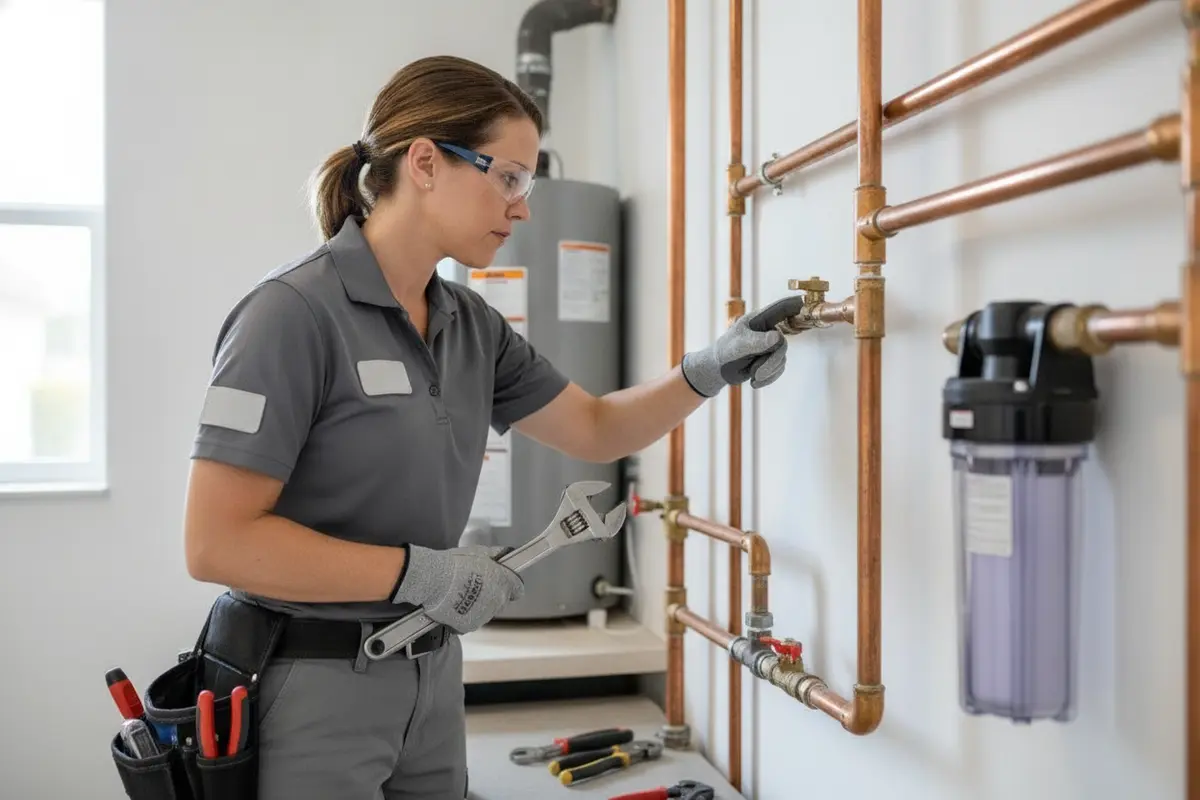
There is no one material choice that should be accepted without considering the home, installation route, local requirements, and the plumber’s proposed design. Ask the contractor to explain the selection in plain language. You can ask how the material will be supported and protected, what fittings are planned, and whether any transitions to existing piping remain.
For general background on drinking water protections and lead-related plumbing concerns, homeowners can consult the U.S. Environmental Protection Agency. This broad resource is not a substitute for project-specific advice or local requirements.
Request the warranty terms in writing and distinguish product coverage from workmanship coverage. Ask what the warranty covers, how long it applies, what conditions or exclusions matter, and how to request service if a covered concern arises. Avoid assuming that a manufacturer’s product warranty automatically covers labor, access, or damage to finishes. If the quote refers to a separate document, ask to review it before you approve the work.
Also ask what records you will receive at completion. Useful closeout information may include the final scope, any changes approved during the work, applicable warranty documents, and notes about the installed system. Keep those records with your home maintenance documents.
What are common warning signs in a repiping quote?
A low total is not automatically a problem, and a high total is not automatically more complete. The concern is not being able to tell what each price covers. Pause and ask for clarification if the proposal:
- uses broad wording such as “repipe house” without identifying the included lines;
- does not name the proposed pipe material or explain the route;
- leaves access openings, fixture reconnections, testing, or cleanup unclear;
- does not identify exclusions or explain how unexpected conditions are handled;
- pressures you to approve before you can review the scope and written terms; or
- promises a schedule without accounting for an onsite assessment or access constraints.
A responsible next step is to request a revised written proposal that answers your questions. If a contractor cannot explain what the quote includes, you do not have enough information to make a fair comparison. You can also review general guidance on pipe repair versus repiping if you are still sorting out the type of work to discuss.
What steps can you take to prepare for the quote visit?
Before the appointment, write down the symptoms and dates, collect any previous plumbing invoices or inspection notes, and make a list of questions. Identify the areas where you have seen leaks or repairs. If you have photos of prior work or visible piping, keep them handy. Clear safe access to the water shutoff and visible plumbing areas, but do not move heavy equipment or dismantle anything to prepare.
During the visit, ask the plumber to explain what they inspect and what remains concealed. Confirm whether the estimate will be completed after the visit or whether additional information is needed. Before signing, read the whole proposal, including exclusions and change terms. Ask for a copy you can keep.
It can help to organize the appointment in three parts. First, describe the symptoms and show the areas where they occur. Next, ask the plumber to explain the proposed scope and any limits of the inspection. Finally, review the written estimate together and identify every line you do not understand. If a detail cannot be confirmed during the visit, ask whether it will be listed as an assumption or handled through a later written change. This sequence keeps the conversation focused without asking you to make a technical diagnosis.
If you are comparing multiple proposals, use the same checklist for each: included lines, materials, access, reconnections, testing, restoration responsibilities, schedule, warranty, and change process. Keep notes on the answers. This makes it easier to compare what each contractor is actually offering, not just the order in which the prices appear.
Frequently asked questions
Does a whole-house repiping quote include drain or sewer pipes?
Not necessarily. Repiping often refers to water distribution piping, while drain and sewer work is a different scope. Ask the plumber to list the systems included and excluded in writing.
Can a plumber give an accurate quote from photos alone?
Photos may help explain visible conditions, but they usually cannot show every concealed route or access issue. Ask whether the estimate is preliminary or based on an onsite review, and what assumptions could affect the final scope.
Should I choose the lowest repiping quote?
Compare scope, materials, access work, reconnections, testing, exclusions, warranty, and change terms before comparing totals. If proposals differ, ask each contractor to clarify the difference in writing.
What if the plumber finds additional work after starting?
Ask beforehand how newly discovered conditions will be documented and priced. Understand whether work pauses for your review and written approval before the scope or amount changes.
Plan your repiping quote conversation
A thorough quote conversation gives you a clearer view of the work, the parts of your home that may be affected, and the questions that still need answers. Bring your notes, ask for a written scope, and take time to review it before deciding.
Schedule a plumbing assessment
For a local assessment in the Fort Myers area, contact Whiskey Creek Plumbing and ask the team to explain the proposed scope and pricing in writing before you approve the work.