
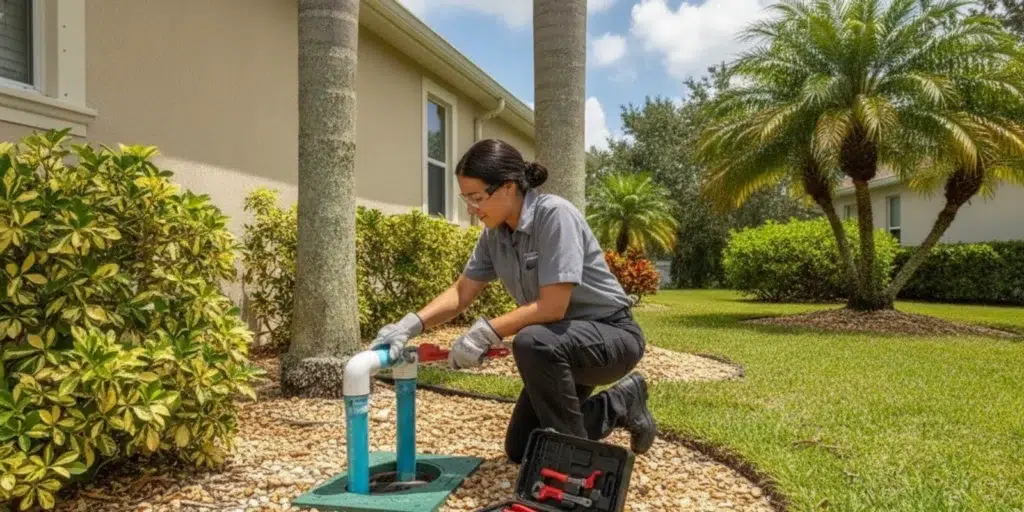
The cost to replace a main water line can vary widely because every property has a different distance, pipe material, access condition, and connection point. In Southwest Florida, a reliable quote should explain what is failing, how the line will be reached, which replacement method fits the property, and what is included in the fixed price. This guide walks Fort Myers-area homeowners through those decisions so you can compare options without guessing.
Call (239) 785-9022 to discuss your water line
What does the cost to replace a main water line include?
A main water line is the pipe that carries water from the utility connection, meter, well system, or other supply point to the building. It is different from a fixture supply line inside a wall and different from a branch line serving one bathroom or appliance. Because it serves the whole property, a failure can affect pressure, water quality, landscaping, and the ability to use the home.
The replacement price commonly reflects several pieces of work rather than the pipe alone:
- Diagnosis: Locating the leak, restriction, break, or pressure problem and confirming whether the main line is the source.
- Planning: Tracing the route, identifying utility connections, checking access, and determining whether permits or inspections apply.
- Excavation or access: Opening soil, concrete, landscaping, flooring, or another surface when necessary.
- Materials: Supplying the approved pipe, fittings, valves, protective components, and connection hardware.
- Installation: Removing the failed section or old line, placing the new line, making connections, and testing it.
- Restoration: Backfilling or making the work area safe and explaining what is and is not included for surface repair.
A low initial number may not be comparable to a complete replacement quote if it excludes digging, difficult access, connection work, testing, permit handling, or restoration. Ask for a written scope before comparing prices.
Also separate the one-time plumbing project from your recurring water bill. A utility rate study, such as the South Florida Water Management District utility rate study, addresses how ongoing water charges are structured; it does not set the price for a private contractor’s replacement work.
Which factors change the replacement price?
The most useful way to evaluate a quote is to understand the variables behind it. Two homes on the same street can need different work if one has a short, accessible run and the other has a long line beneath a driveway or mature landscaping.
How long is the water line?
More distance generally means more pipe, fittings, labor, and time. A line from a meter near the front of a small home may be much simpler than a line that crosses a large lot or serves a detached structure. The route should be measured or reasonably established rather than assumed from the home’s square footage. Ask the estimator to show where the run begins and ends and how the route was determined. A longer route can also mean more turns or connection points, so length alone may not tell the whole story.
What material is being replaced?
The existing material can affect removal, compatibility, connection methods, and the recommended replacement. A plumber may find older metal, plastic, or a mixed-material installation. The new pipe should be appropriate for the application and local requirements. Ask why a proposed material was selected and how it will connect to the existing system. If different materials meet along the route, the estimate should identify the transition fittings and explain whether any additional access is needed to make those connections.
How difficult is access?
Open soil is usually easier to reach than a line beneath a concrete walkway, driveway, patio, pool deck, dense landscaping, or other finished surface. Narrow side yards can also limit equipment access. Access planning matters because labor and restoration can be a significant part of the project. Consider a home where the pipe crosses a paver path: the crew may need to lift and protect pavers, open the trench, then reset or exclude the surface restoration. A quote should name the surface and clarify who is responsible for putting it back.
Is the problem localized or does the full line need replacement?
A single break does not automatically mean the entire main line must be replaced. A repair may be reasonable when the rest of the line is sound and the failure is clearly isolated. Replacement may make more sense when the pipe has repeated failures, widespread deterioration, severe restriction, or defects across much of its route. A careful inspection should support the recommendation. Ask what was observed beyond the failure point and whether the recommendation changes if further inspection shows the rest of the pipe is in good condition.
Does the property use a well or another private water system?
A property connected to a well may have different equipment, pressure controls, and connection points than a home supplied by a public utility. The main line may also interact with a pump, pressure tank, or valve assembly. Those details should be identified before the scope is finalized. For example, a pressure problem could arise from the well equipment rather than the buried line, so the diagnosis should distinguish between them before replacement is recommended.
Are permits, inspections, or utility coordination required?
Requirements can depend on the location, scope, and connection to the public or private system. A quote should state whether permit-related work and inspections are included, excluded, or the homeowner’s responsibility. Do not assume that a line is exempt simply because much of it is underground. Ask who will contact the utility if a meter or service connection must be coordinated and whether the work schedule depends on an inspection.
How do repair, partial replacement, and full replacement compare?
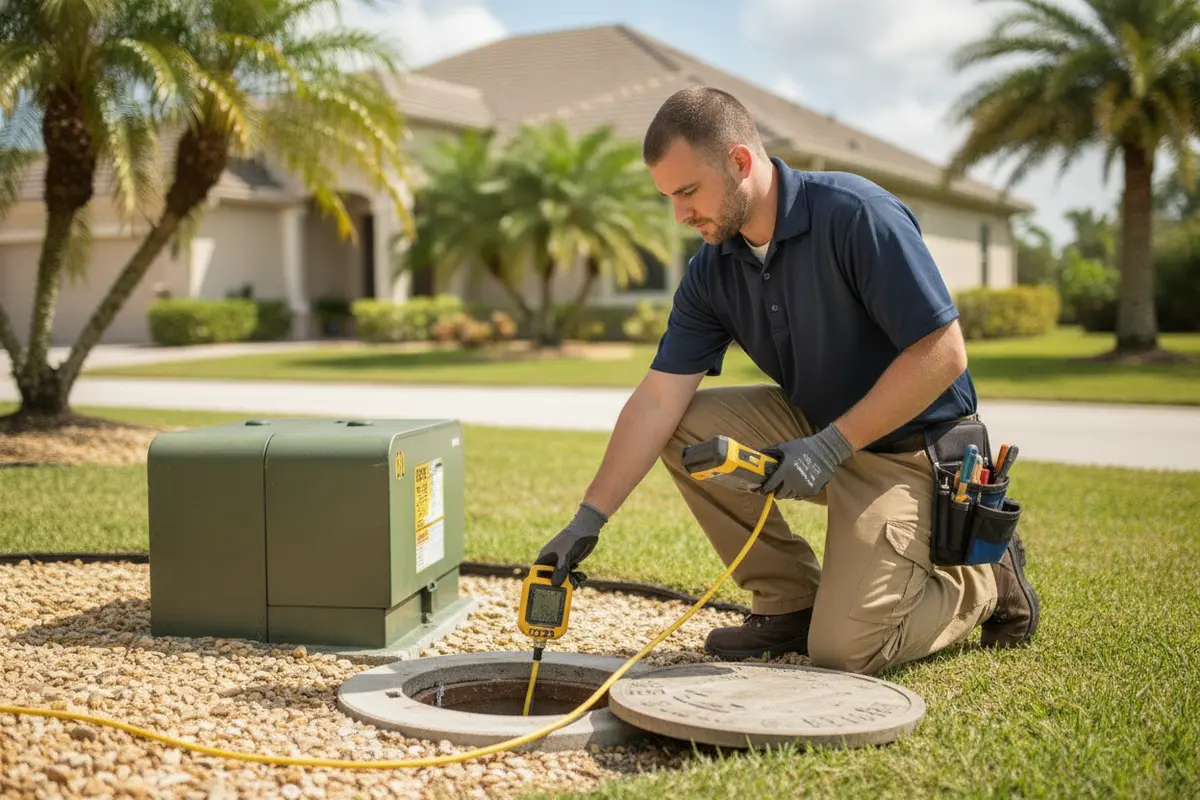
There is no single best method for every water line. The right choice depends on the location of the failure, the condition of the remaining pipe, the risk of another failure, and the cost and disruption of reaching it.
| Option | When it may fit | What to confirm | Potential disruption |
|---|---|---|---|
| Localized repair | A confirmed, isolated failure with otherwise sound pipe | How the failed area was located and whether nearby pipe was inspected | Usually limited to the access area |
| Partial replacement | A damaged section or known weak portion of the route | Why the replacement begins and ends at those points | More access than a small repair, less than a full route |
| Full replacement | Repeated failures, broad deterioration, or an unsuitable existing line | Route length, material, connections, testing, and restoration | May involve several access points or a longer work area |
| Lower-disruption installation method | The route and soil conditions permit an alternative to open excavation | Whether the method is appropriate for this line and what access remains | Can reduce surface opening, but is not suitable for every property |
Be cautious of any recommendation that is based only on age, a single symptom, or a desire to sell the largest project. At the same time, choosing a small repair solely because it has the lowest immediate price can be frustrating if the line has already shown broader problems. The quote should connect the recommended scope to inspection findings.
What should a main water line replacement estimate show?
A useful estimate lets you see what you are paying for and makes competing proposals easier to compare. Look for these details:
- Problem description: The observed symptoms and the diagnosis supporting the proposed work.
- Defined route and length: The area of pipe included, along with any assumptions about the route.
- Pipe and fitting specifications: The material, size, connection method, valves, and other major components.
- Access plan: Where excavation or other access will occur and how the crew expects to reach the line.
- Testing and commissioning: How the new line will be checked for leaks, pressure, flow, and proper operation.
- Permit responsibilities: Who handles applications, inspections, utility coordination, and related charges.
- Restoration limits: What happens to soil, sod, concrete, pavers, landscaping, or other surfaces after plumbing work.
- Price structure: Whether the amount is fixed for the stated scope or can change when conditions differ.
- Warranty or service terms: The written terms that apply to the installed work and materials.
Whiskey Creek Plumbing uses a fixed-price service model. That means the customer should receive a clear price for the agreed scope instead of an open-ended hourly bill. A fixed price is only useful when the scope is also clear, so ask what conditions would require a change and how you would approve it.
To make two estimates easier to compare, copy each scope into a simple checklist. Mark each line item as included, excluded, or unclear. If one proposal says “replace service line” but gives no route or length, ask for the limits before treating it as equivalent to a quote with a defined run. If one includes backfill but not sod or paver work, record that difference. This approach does not require you to judge the technical details yourself; it helps you ask the same questions of each contractor.
What can homeowners do before the plumber arrives?
A little preparation can make diagnosis and estimating more efficient:
- Note when the pressure, wet area, discoloration, or unusual water use began.
- Write down whether the issue affects the whole home, only outside fixtures, or one area.
- Take photos of visible pooling, erosion, damaged landscaping, or meter movement when safe.
- Identify the water shutoff and keep the area accessible.
- Move vehicles, furniture, or stored items that block likely access points.
- Tell the plumber about previous repairs, unusual pressure equipment, a well, or recent landscaping.
- Gather any prior estimates, permits, plans, or records that show the line route.
It can help to make a quick timeline. Write down when symptoms started, whether they changed after a fixture was used, and whether the issue is constant or intermittent. If there is an outdoor wet spot, note its location relative to the meter, driveway, and house rather than digging to find the pipe. Keep children and pets away from a soft or pooling area. These observations can help the plumber narrow the inspection without assuming that every symptom points to a buried line.
If water is actively escaping, shut off the main supply when you can do so safely and call for help. Avoid digging around buried utilities yourself. If the problem is inside the home, our water leak detection guide explains why locating the source matters before opening walls, floors, or soil.
How can you compare a water line quote fairly?
Start with scope, not the bottom line. Put each estimate into the same categories: diagnosis, route and length, materials, access, labor, permits, testing, restoration, and warranty terms. If one quote omits a category, ask whether it is excluded or simply described elsewhere.
Then ask practical questions:
- What evidence shows that the main line is the source of the problem?
- Is a repair reasonable, or does the condition suggest broader replacement?
- How much of the line will be exposed or replaced?
- Will the crew need to work under a driveway, walkway, pool area, or landscaping?
- What happens if the actual route differs from the expected route?
- Who handles permits and inspections?
- Will the new line be pressure-tested before the work area is closed?
- What cleanup and surface restoration are included?
- Is the quoted price fixed for the described work?
For broader plumbing planning, you can also review our plumbing services in Lee County page. If you are comparing pipe materials or considering a larger project, our pipe repair versus repipe guide offers related questions to bring to the inspection.
What warning signs mean you should schedule an inspection?
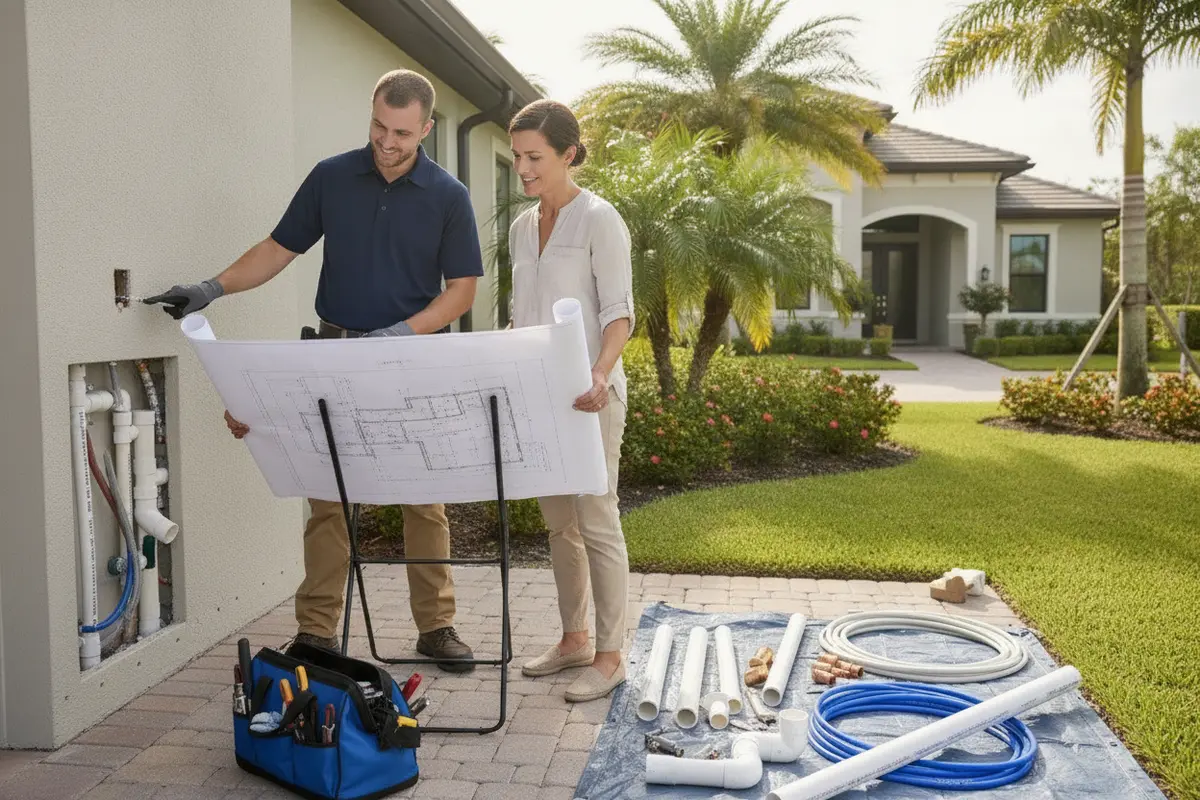
A visible leak is not the only reason to investigate a main water line. Schedule an evaluation when you notice a persistent unexplained increase in water use, wet ground without recent rain, a soft or eroding area along the service route, repeated loss of pressure, discolored water after the system has been flushed, or a line that has needed multiple repairs.
Some symptoms can originate elsewhere, including a failing valve, pressure equipment, indoor plumbing, or a fixture. That is why a diagnosis is important before deciding that replacement is necessary. Our water line guide provides additional background on how these systems work and what to observe.
Frequently asked questions
Is there one standard price to replace a main water line?
No. The total depends on the route length, pipe and connection details, access, surface restoration, permits, and whether the work is a repair, partial replacement, or full replacement. A site-specific inspection is more useful than a generic number.
Does a leak always require full replacement?
No. A localized repair may fit an isolated failure in an otherwise sound line. Full replacement can be more appropriate when failures repeat or the remaining pipe has widespread deterioration. The recommendation should be tied to inspection findings.
Can a main water line be replaced without digging up the whole yard?
Sometimes. The available approach depends on the route, soil, access points, existing pipe, and local requirements. Some properties may support a lower-disruption method, while others require open access. Ask what access the proposed method still needs and what surfaces are included in restoration.
What should I do if I need service quickly?
Turn off the main water supply if it is safe, keep people away from unstable or flooded areas, and contact a plumber. Do not excavate near buried utilities or attempt a complex connection without the proper equipment and knowledge.
How can I avoid an unexpected bill?
Request a written scope and ask whether the quote is fixed for that scope. Confirm assumptions about route, access, permits, testing, restoration, and unexpected conditions before authorizing work.
Call (239) 785-9022 for a fixed-price water line conversation
Plan the next step for your Southwest Florida home
When you know what the quote includes, you can make a more confident decision about repair or replacement. Whiskey Creek Plumbing serves homeowners and businesses in Fort Myers and surrounding Southwest Florida communities with a family-run approach, clear options, and fixed-price service for the agreed work.
Call (239) 785-9022 to schedule an evaluation
Start with the symptoms, the likely route, and the questions above so the inspection can lead to a practical next step for your property.