
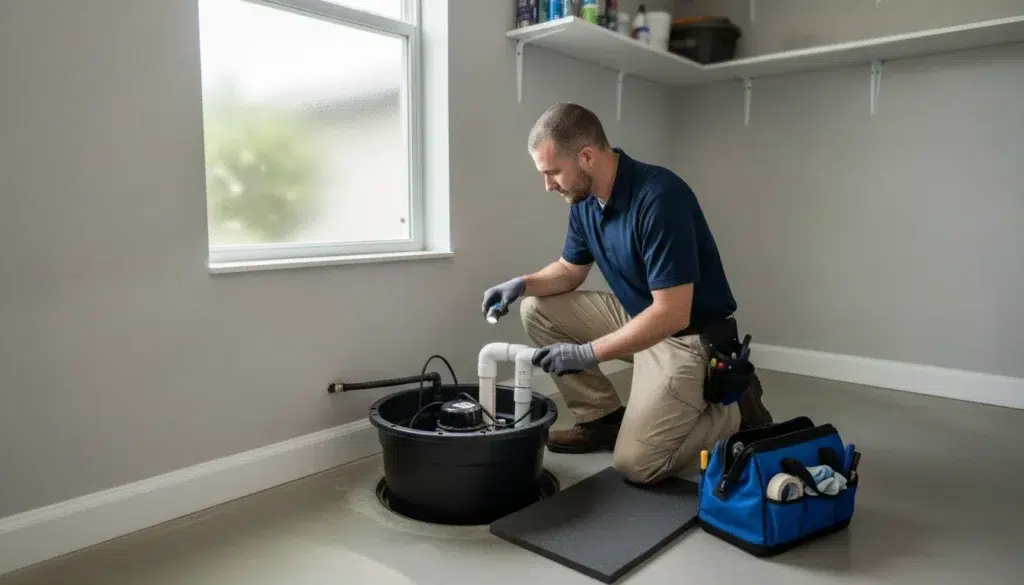
Planning a sump pump installation is easier when you separate the pump itself from the site work around it. A replacement may be relatively straightforward when a usable basin, discharge route, and electrical connection are already in place. A new installation can involve excavation, drainage, wiring, and backup protection.
Call Whiskey Creek Plumbing at (239) 785-9022 for a fixed-price quote.
The cost to install sump pump systems varies mainly by whether you are replacing an existing unit or building a new system. Plus the pump type, basin, discharge piping, power supply, and access conditions. Published third-party estimates commonly span several hundred to several thousand dollars, but they are market context, not a Whiskey Creek Plumbing price.
For homeowners and businesses in Fort Myers, Lee County, and throughout Southwest Florida. The most useful first step is identifying which parts of the installation your property already supports. That makes it easier to understand what an estimate includes and why two projects with similar pumps can have very different totals.
How Much Does It Cost to Install a Sump Pump?
Published estimates suggest that the cost to install a sump pump can range from roughly 500 to 4,000 dollars, depending on the scope of the work. This Old House reports a national range of 500 to 4,000 dollars, with an average of about 1,400 dollars. That range is useful for early planning, but it is not a Whiskey Creek Plumbing price or quote.
National estimate: 500 to 4,000 dollars
The broad national range usually reflects very different installation conditions. A straightforward installation may involve an existing basin, accessible drainage, and a suitable electrical outlet. A more involved project may require a new pit, concrete work, longer discharge piping, or additional drainage improvements. The same source estimates that a new submersible pump and pit with above-ground drainage average about 1,400 dollars. An existing basin and drainage piping can make the work cost as little as 500 dollars.
Second national estimate: 600 to 3,000 dollars
Another third-party guide, CostWhale, lists a national installation range of 600 to 3,000 dollars and an average of 1,500 dollars. Its more specific estimate for a new installation that includes digging the pit, plumbing, and electrical work is 1,500 to 3,500 dollars. These figures reinforce an important point: the equipment itself is only one part of the total. Labor, access, drainage, and site preparation can change the estimate substantially.
Florida estimate: 588 to 2,940 dollars
For Florida, the same CostWhale guide lists a third-party estimate of 588 to 2,940 dollars, with an average of 1,470 dollars. Treat that figure as regional market context rather than a guaranteed Southwest Florida rate. Fort Myers and Lee County properties can have different drainage layouts, access conditions, electrical needs, and permitting considerations. A published Florida average cannot account for those details at an individual home or commercial property.
Whiskey Creek Plumbing does not publish a standard sump pump installation price in this article. We use fixed-price quotes rather than hourly pricing, so the useful next step is an evaluation of the specific installation conditions and a clear quote before work begins. That approach lets you compare the actual scope, not just a national average.
New Installation and Pump Replacement Have Different Cost Profiles
Replacing a failed sump pump is usually a narrower project than installing a complete system where no pit exists. In a replacement, the basin, discharge route, and much of the plumbing may already be in place. The technician typically disconnects the old unit, installs the new pump, reconnects the discharge line, and tests the float or sensor. That is why published third-party estimates for replacement are generally lower than estimates for a new installation.
What a replacement includes
One national home-improvement guide places sump pump replacement at approximately 350 to 1,000 dollars, including materials and labor. Another third-party cost guide lists replacement at 400 to 1,000 dollars. These figures are market estimates, not Whiskey Creek Plumbing prices, and the actual scope still depends on the condition of the existing equipment and connections. Sources: This Old House and CostWhale.
A replacement can become more involved if the basin is damaged, the discharge piping is restricted, the check valve needs attention, or the electrical supply is not suitable. The pump may also be in a difficult-to-access location. A professional should verify that the replacement unit is compatible with the pit, discharge route, and expected water volume rather than choosing a pump based only on horsepower.
Why new installations cost more
A new system may require locating and excavating a pit, installing a liner or basin. Drilling or cutting through concrete, routing discharge piping, and confirming a safe electrical connection. One third-party estimate places a new installation that includes pit excavation, plumbing, and electrical work at 1,500 to 3,500 dollars. Another source estimates basin installation labor alone at 500 to 1,200 dollars, before concrete drilling. These are third-party estimates, not a Whiskey Creek Plumbing quote. Sources: CostWhale and This Old House.
Drainage can add another layer of work. Above-ground discharge piping is estimated by This Old House at 150 to 400 dollars, while buried piping may range from 250 to 2,000 dollars. The route, distance, surface material, and local requirements determine what is practical. Ask for the estimate to identify whether it covers the pit, concrete work, plumbing, electrical work, discharge route, testing, and cleanup. That itemized scope makes it easier to compare a replacement quote with a genuinely new installation.
Which Parts of a Sump Pump System Affect the Estimate?
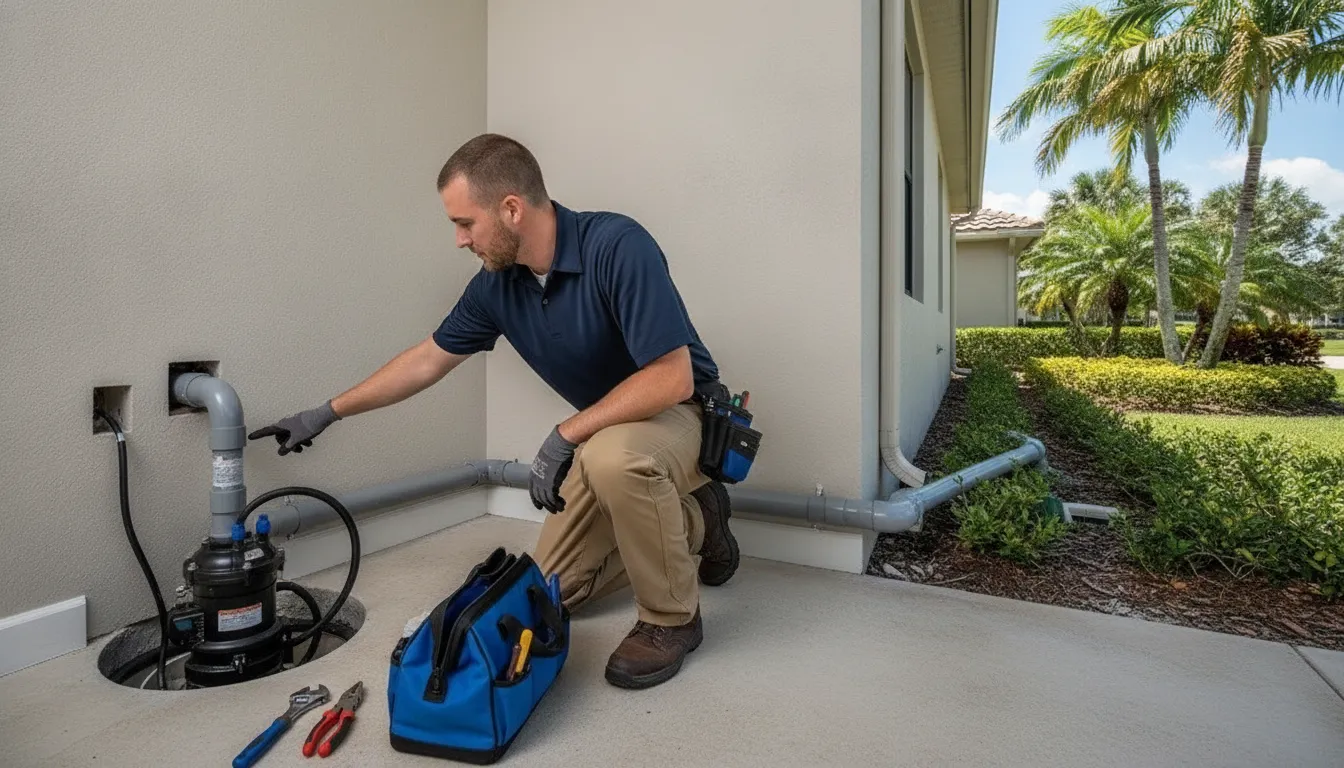
The equipment is only one part of the cost to install a sump pump. A plumber also evaluates how water reaches the pit, where discharge water can go. Whether the electrical supply is suitable, and how easily the work area can be reached. These details determine whether the job is a straightforward pump installation or a larger drainage project.
| Factor | What is evaluated | Why it can change the estimate |
|---|---|---|
| Pump type | Submersible, pedestal, or backup equipment | Different designs and features suit different pits and water conditions. |
| Horsepower | Pump capacity matched to the water volume and lift height | An improperly sized pump may not move water effectively or may add unnecessary cost. |
| Discharge route | Above-ground piping, an extended line, or buried piping | Longer runs, excavation, fittings, and a suitable discharge point add work. |
| Battery backup | Secondary pump or battery system for power interruptions | Backup protection is an additional system that requires equipment and testing. |
| Access and basin | Existing pit, available workspace, concrete, and connections | A new basin or difficult access can require demolition, excavation, and restoration. |
| Drainage conditions | How water enters the pit and where it can safely drain | Additional drains or a more complex discharge plan expand the installation scope. |
Pump type and horsepower
Submersible pumps sit in the basin, while pedestal pumps place the motor above it. Backup options can include battery-operated or water-powered equipment. The right choice depends on the pit, expected water volume, available power, and the consequences of an outage. Horsepower should be matched to the lift height and drainage demand rather than selected by the largest number on the box.
Discharge routing and drainage
Discharge routing often creates a larger cost difference than the pump itself. Published installation estimates place above-ground discharge piping at roughly 150 to 400 dollars, while buried piping may range from 250 to 2,000 dollars. Those figures are third-party market context, not a Whiskey Creek Plumbing price. The plumber must confirm that the route moves water away from the structure and complies with applicable local requirements.
Access, power, and backup protection
An existing, accessible basin may require less work than a new pit in concrete. The estimate should identify any basin installation, drilling, electrical adjustments, check valves, or difficult access before work begins. A separate cost guide lists battery backup systems at approximately 300 to 800 dollars installed, but the final choice depends on the system and site. We recommend asking for a written, fixed-price scope that separates the pump, discharge work, backup equipment, and any drainage improvements so you can compare options clearly.
Why Can Sump Pump Costs Vary in Southwest Florida?
The cost of a sump pump project in Fort Myers, Lee County. Or elsewhere in Southwest Florida depends on the property and the drainage plan, not simply the pump itself. A technician may need to evaluate where water collects, whether a basin already exists. How the discharge line can leave the building, and whether the installation area is easy to reach. Those conditions determine the labor, materials, and preparation required for the work.
Drainage is especially important when heavy rain moves water toward a home or commercial building. FEMA explains that sump pumps direct groundwater away through drainage pipes and are best suited to rain-related flooding. They are not a universal answer for every water problem, so the proposed system should match the source and path of the water. A discharge route that is short and accessible may require less work than one that must run a longer distance. Pass around obstructions, or be buried to protect the property.
Site conditions can change the scope
Access also affects the estimate. A pump located near an existing basin and suitable electrical connection may be more straightforward to replace or install. By contrast, creating a new pit, working through concrete, correcting inadequate drainage, or routing water away from the structure can add steps. In Southwest Florida, the assessment should also account for how the property handles intense seasonal rainfall, surface runoff, and low-lying areas. Those factors are specific to the site, so a national cost range cannot serve as a local quote.
For practical planning, review our guide to Southwest Florida flood preparation alongside the pump discussion. Before approving work, ask what the quote includes: the pump, basin, discharge piping, electrical requirements, testing, and any drainage changes. We use fixed-price quotes so customers can review the defined scope before work begins, rather than trying to guess the cost from the equipment alone.
Is Installing a Sump Pump Worth It?
A sump pump can be worthwhile when your property regularly receives groundwater or stormwater that needs to be directed away from the structure. It is not a universal answer to every flooding problem, though. The right decision depends on where water is entering, how often it appears, whether a suitable discharge route exists, and whether the system can be maintained reliably.
- Start with the water problem. Sump pumps direct groundwater away through drainage pipes and work best for rain-related flooding. That makes a pump more relevant when water collects around a foundation after heavy rain. It may not solve flooding caused by a damaged supply line, sewer backup, poor grading, or another source. Identify the source before treating the pump as the solution.
- Assess how often the risk occurs. Consider the pattern rather than relying on one dry inspection. Note water marks, damp areas, standing water, and whether problems follow heavy rainfall. If a lower level or foundation area repeatedly takes on water, preventing another incident may be a more practical priority than waiting for the next storm. Avoid treating that judgment as a guaranteed return on investment. The value is specific to the property’s exposure and the consequences of water damage.
- Choose a system that fits the site. Pedestal and submersible pumps can both be appropriate when properly selected and maintained. A check valve helps keep discharged water from flowing back into the pit. The basin, pump type, power supply, discharge route, and access for service all affect whether the installation will perform as intended. Review the manufacturer’s requirements and local permitting rules before work begins.
- Plan for testing and maintenance. FEMA recommends assessing the system annually and replacing a pump that is more than 10 years old. Its bucket test is simple: add water to the pit and confirm that the pump turns on and removes the water. Keep the pit and inlet clear, inspect the discharge path, and follow the manufacturer’s maintenance instructions. If the pump does not activate, cycles continuously, or cannot discharge water properly, arrange an evaluation before severe weather arrives.
If the assessment points to a real drainage need and the system can be installed, tested, and maintained correctly, installation may be worthwhile. A professional can evaluate the site conditions and explain the work involved before you decide.
How to Request a Clear, Fixed-Price Installation Quote
A useful quote should explain what work is included, which site conditions could change the scope, and what you will pay before installation begins. When you contact a plumber in Fort Myers or elsewhere in Lee County, describe the problem as specifically as possible. Mention whether you are replacing an existing pump, adding a new basin, dealing with standing water, or planning for seasonal flooding.
Ask these questions before approving the work:
- Is this a replacement, or will the installation require a new pit, discharge line, electrical connection, or other site preparation?
- Which pump type and capacity are you recommending, and why does it fit the space and water conditions?
- Does the estimate include testing, removal of old equipment, drainage connections, and cleanup?
- What backup or shutoff considerations should we discuss if the property loses power or receives heavy rain?
- Is the quoted amount fixed for the stated scope, and will you explain any additional work before proceeding?
At Whiskey Creek Plumbing, we use fixed-price quotes rather than hourly pricing. We review the job requirements, explain the recommended work, and provide the price before work begins. Specific sump pump pricing is not published because the cost to install sump pump equipment depends on the property, access, drainage route, and installation scope. We will need to confirm service availability and job details before providing an exact quote.
For an overview of related equipment and installation options, visit our sump pump installation services page. If the project involves broader plumbing work, our professional plumbing installation information may also help you prepare.
Frequently Asked Questions
How much would a plumber charge to install a sump pump?
There is no single installation price. The estimate depends on whether a basin already exists, how the discharge line is routed, and whether electrical or backup equipment is needed. Published third-party estimates range from about 500 to 4,000 dollars nationally. Those figures are market context, not a Whiskey Creek Plumbing quote. We provide fixed-price quotes after reviewing the actual job.
How much does sump pump installation cost in 2026?
Current published estimates vary by project scope and location. One guide lists approximately 600 to 3,000 dollars. Its average is near 1,500 dollars. A Florida estimate lists about 588 to 2,940 dollars, with an average near 1,470 dollars (CostWhale, sump pump installation cost guide). Use these numbers only for preliminary planning, not as a guaranteed local price.
Is installing a sump pump worth it?
It can be worthwhile when groundwater or rain-related flooding threatens a basement, crawlspace, or other low area. Sump pumps move groundwater away through drainage pipes and work best for rain-related flooding (FEMA guidance). A professional assessment can help determine whether a pump fits your property’s drainage conditions.
How often should a sump pump be checked?
Test the pump periodically by adding water to the basin and confirming that it starts and removes the water. Annual inspection and maintenance can help identify sediment, debris, float-switch problems, or blocked intakes before failure (flood-risk guidance). A check valve and routine maintenance can also help support dependable operation.
Ready to Request a Clear Sump Pump Installation Quote?
Every installation has different site conditions, equipment needs, and drainage requirements. We can help you discuss availability and the work involved before you make a decision, with a clear fixed-price quote rather than an unexpected hourly bill.
Call Whiskey Creek Plumbing at (239) 785-9022 to ask about sump pump installation availability and request your quote.