
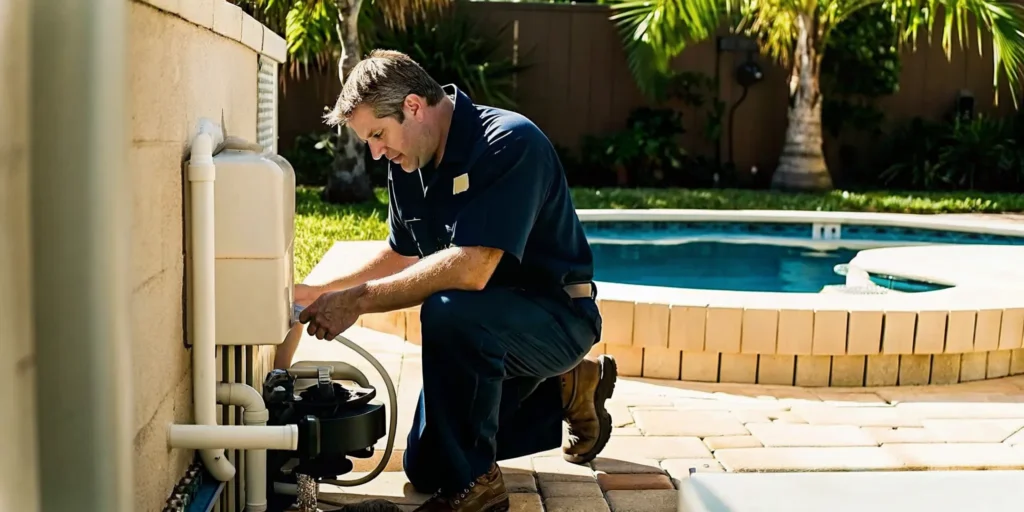
A pool pump can look like a pool-only problem, but it moves water through plumbing, valves, fittings, and filtration equipment. That overlap matters when a Fort Myers pool owner is deciding whether to repair a noisy, leaking, or weak pump or replace it altogether.
Whether a pool pump can be repaired depends on the failure. A qualified pool professional may assess water-flow, plumbing, fitting, valve, or pump problems. Whiskey Creek Plumbing does not provide pool-pump repair; its pool-related work is limited to pump and pool equipment installation and replacement.
Not sure whether your pump is worth repairing? Call (239) 785-9022 for a fixed-price estimate.
Warning signs can include restricted flow, worn connections, unusual sounds, or equipment issues. This guide explains common repair-versus-replacement considerations. For pool pump or equipment installation and replacement, see our service information.
Signs Your Pool Pump Needs Repair or Replacement
A pool pump rarely fails without warning. In Fort Myers, long hot seasons can keep equipment working hard, so changes in sound, water flow, or electrical behavior deserve attention. Consider the pump as part of the complete plumbing and water-flow system, not as an isolated motor; that can help distinguish a plumbing issue from equipment nearing the end of its useful service.
Listen for grinding, rattling, or unusual humming
A new grinding, squealing, rattling, or harsh humming sound can point to worn motor bearings, a damaged impeller, or debris restricting the pump. A pump that is louder than usual may still move water, but continuing to run it can turn a smaller repair into motor or housing damage. Shut it off if the noise is severe, especially if the motor is overheating or the breaker is tripping.
Check for leaks and loss of prime
Water around the pump housing, unions, valves, or pipe connections can have several causes. A pump that repeatedly loses prime or takes too long to maintain steady flow may have an air leak on the suction side. A blocked basket, faulty fitting, or another issue may also affect circulation. Pool leaks can be easy to miss; see our educational guide to pool leak signs and testing. Whiskey Creek Plumbing does not offer pool leak detection or repair.
Some pump repairs are straightforward when the underlying issue is a worn seal, loose connection, clogged line, or damaged fitting. The correct replacement fitting must match the existing plumbing, commonly 1.5 or 2 inches. Do not guess at the size or force a connection that does not seat properly, because a small suction-side air leak can affect circulation and make the pump appear to be failing.
Pay attention to age and electrical oddities
An older pump with repeated leaks, declining flow, overheating, or frequent repairs may cost less to replace than to keep chasing one failure after another. Replacement becomes more compelling when the motor starts slowly, shuts down during operation, trips the breaker, shows voltage-related symptoms, or produces a burning smell. Electrical testing should be handled safely by a qualified professional. Turn the equipment off rather than opening the motor or control panel yourself.
We can test the plumbing connections, water flow, prime, motor behavior, and related controls before recommending repair or replacement. That assessment gives you a clear next step and a fixed-price quote instead of a guess based on one symptom.
Pool Pump Repair Cost vs. Replacement Cost in Southwest Florida
The lower-cost choice is not always the best value. A pump with a worn seal, failing motor, or damaged fitting may be a good repair candidate, while an older pump with repeated problems may justify replacement. The right decision depends on the component that failed, the pump’s condition, and how much energy the equipment uses every day.
Scroll horizontally to compare all four columns.
| Option. | What it may include. | When it can make sense. | Cost and efficiency considerations. |
|---|---|---|---|
| Repair | Replacing a worn seal, troubleshooting a motor, or correcting a leaking or faulty pipe fitting. | The pump housing is sound, the failure is isolated, and the equipment still meets the pool’s circulation needs. | Usually avoids the cost of a complete new pump. A professional inspection is needed to identify the failed part before quoting the work. |
| Replacement | Installing a properly sized replacement pump and connecting it to the existing plumbing and controls. | The pump is aging, repairs keep recurring, or the existing model wastes energy during routine filtration. | A variable-speed model can reduce operating costs. ENERGY STAR reports that replacing an aging pump with a variable-speed pump can pay for itself in less than two years: see its pool pump guidance. |
Why energy use belongs in the cost calculation
Purchase price is only one part of replacement cost. ENERGY STAR notes that a pool pump could be a home’s second largest energy user, costing as much as $310 per year in energy. Traditional single-speed pumps may run faster than necessary during basic filtration, which increases operating waste. A variable-speed pump can adjust output to the job, helping reduce the cost of daily circulation as well as the strain on related equipment.
How fixed-price quotes help you compare fairly
When comparing pump repair and replacement, consider the repair price, expected equipment life, parts availability, and installation requirements. A written estimate should describe the actual work so you can compare options without relying on a single symptom or part price.
How Long Do Pool Pumps Last in Florida?
Pool pumps in Florida work hard through heat, humidity, intense sun, and year-round swimming. Saltwater can accelerate corrosion when components are not maintained properly. Every pool and installation differs, so a qualified professional should consider the pump’s condition, operating schedule, plumbing connections, and filtration needs before recommending work.
Run time and pump speed have a direct effect on wear. A pump that runs at high speed for every task puts more stress on the motor than a system that uses lower speeds for routine circulation. ENERGY STAR explains that filtration requires only about half the flow rate needed to run a pool cleaner. Matching the speed to the job can reduce unnecessary strain and energy use. An energy-efficient pump can also prolong the life of the pool’s filtering system, according to ENERGY STAR guidance on pool pumps.
That efficiency matters in Southwest Florida. ENERGY STAR notes that a pool pump may be a home’s second-largest energy user, costing as much as $310 per year. A properly sized variable-speed pump may run more quietly and reduce operating stress, but replacement is not automatically the best answer. A pump with a sound motor and a repairable seal, fitting, or connection may provide more useful life after service.
Maintenance habits that help a pool pump last
- Keep the pump basket, filter, and skimmer clear so the motor does not work against restricted flow.
- Inspect seals, fittings, and exposed connections for drips, air leaks, corrosion, or unusual vibration.
- Use lower speeds for filtration when the system allows it, reserving higher flow for cleaning or other demanding tasks.
- Have saltwater equipment and plumbing connections checked regularly, especially when rust, noise, or reduced circulation appears.
When a pump is losing prime, leaking, making new noise, or struggling to circulate water, continued operation may cause further equipment damage. A qualified pool professional can assess whether repair or replacement is appropriate. Whiskey Creek Plumbing does not inspect or repair pool pumps; its pool-related work is limited to installation and replacement of pumps and equipment.
Variable Speed vs. Single Speed Pool Pumps: Which Should You Choose?
For most Southwest Florida pools, a variable-speed pump is the more efficient long-term choice. It can adjust its flow to match the job, while a single-speed pump runs at one fixed rate. That difference matters because filtration does not require the same flow as tasks such as operating a pool cleaner.
Why variable-speed pumps use less energy
ENERGY STAR reports that certified in-ground pool pumps use about 20% less energy than standard pumps and may save approximately $50 per year in energy costs. The savings can be greater when the pump runs at a lower speed for routine filtration. According to the same guidance, cutting pump speed in half can reduce energy use to one-eighth of the original consumption. That is why a variable-speed pump can run longer at a gentler setting without using the same power as a pump operating at full speed.
A single-speed pump often runs faster than necessary during ordinary filtration because its one speed may be set for the pool’s most demanding task. ENERGY STAR notes that this conventional design can waste energy during filtration. A pool pump may also be a home’s second-largest energy user. With annual energy costs reaching as much as $310, efficiency deserves attention when replacement is already necessary. ENERGY STAR’s pool pump guidance explains the relationship between pump speed and energy consumption.
When a single-speed pump may still make sense
A single-speed model can be a practical choice when the upfront budget is the main consideration. The pump is used infrequently, or the pool system is being repaired rather than redesigned. However, the lower purchase price does not necessarily mean lower ownership cost. The right decision depends on the pump’s condition, the pool’s plumbing and filtration requirements, and how often the system runs.
Match the pump to the whole pool system
Before installing a replacement pump, compare the pump, filter, valves, plumbing connections, and controls as a system. Proper sizing can help avoid a pump that is too powerful or poorly matched to the equipment. Whiskey Creek Plumbing provides pool pump and equipment installation and replacement only; it does not provide pool pump repair or maintenance.
Can a Plumber Fix a Pool Pump? (Yes, Here Is Why)
Yes. A qualified plumber can fix a pool pump when the problem involves water flow, pressurized plumbing, valves, fittings, or a leak around the equipment. A pool pump is not an isolated appliance. It is connected to the pool’s circulation system, and a repair may require understanding how water moves through suction lines, return lines, filters, drains, and shutoff valves.
That plumbing connection is why the right professional can often diagnose more than a noisy motor or a pump that will not start. The issue may be a leaking fitting, restricted flow, a failed valve, an air leak, or a damaged connection that is making the pump work harder than it should. Repairing the visible pump without finding the water-flow problem can leave the underlying issue unresolved.
What a plumber can repair around pool equipment
Pool pump work commonly overlaps with core plumbing skills. A plumber may inspect the pump connections, check the surrounding lines and valves, replace faulty fittings, correct leaks, and assess whether the existing equipment is properly matched to the system. The exact repair depends on the diagnosis. Some problems can be corrected with a connection or valve repair, while a severely worn pump may make replacement the more practical choice.
Pool leak detection is separate from pool pump replacement. Water loss may come from the pump area or another part of the pool system, and replacing a pump will not resolve every leak. This pool leak guide is educational. Whiskey Creek Plumbing does not offer pool leak detection or repair.
How plumbers differ from pool-maintenance technicians
Pool-maintenance technicians can help with routine cleaning, chemical balancing, and regular equipment checks. A plumbing company may address household water lines, valves, and fittings outside pool maintenance. For pool work, Whiskey Creek Plumbing’s scope is limited to pool pump and equipment installation and replacement.
Whiskey Creek Plumbing does not provide pool pump repair, maintenance, leak detection, or saltwater conversions. Its pool-related work is limited to pool pump and pool equipment installation and replacement. See the installation and replacement service information.
What to expect from a pool pump service visit
A careful evaluation by a qualified pool professional can identify symptoms, flow restrictions, or leaks before repair or replacement is chosen. Ask for a written scope and price that explains the diagnosis and the work proposed. Whiskey Creek Plumbing does not diagnose or repair pool pumps.
Ready to act on a firm answer? Call (239) 785-9022 to book your pool pump service visit.
Frequently Asked Questions
Can a plumber fix a pool pump?
A plumber may be able to address some water-flow or plumbing problems, but pool pump repair and maintenance are outside Whiskey Creek Plumbing’s pool service scope. The company’s pool-related work is limited to pump and equipment installation and replacement. For pool water loss, consult a qualified pool-leak professional; this guide is for general information.
How do I know whether my pool pump needs repair or replacement?
Repair may be worth considering when a fault is isolated and replacement parts are available. Replacement may make more sense when the motor has failed, the unit repeatedly breaks down, or an older pump uses more energy. Compare written repair and replacement estimates from qualified providers before choosing.
Is it worth replacing an older pool pump with a variable-speed model?
It can be, especially if your current pump runs at one high speed for every task. ENERGY STAR reports that certified in-ground pool pumps use 20% less energy than standard models, and variable-speed operation can use much less energy at lower speeds. The right choice depends on your pool, plumbing, operating schedule, and current pump condition. Source: ENERGY STAR.
Should I repair or replace a pool pump myself?
Pool pump replacement may involve electrical connections, pressurized water, plumbing, and system testing. Turn off power and avoid using damaged equipment; have diagnosis and repair handled by a qualified pool professional. Whiskey Creek Plumbing provides pool pump and equipment installation and replacement only.
Ready to Schedule Your Pool Pump Estimate?
If you are considering pool pump or pool equipment installation or replacement, Whiskey Creek Plumbing can confirm whether the project fits its service scope. It does not provide pump repair, maintenance, diagnosis, or pool leak service. Call (239) 785-9022 to discuss an eligible installation or replacement inquiry.