
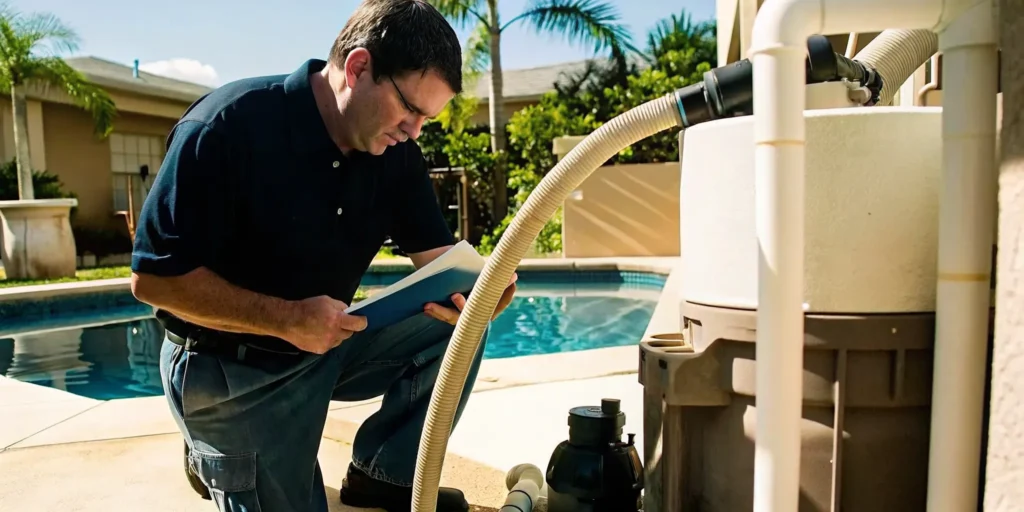
A pool that needs frequent refilling is not always leaking. Southwest Florida heat and intense sunlight can drive substantial evaporation, but water loss can also signal a problem in the shell, plumbing, or equipment. Checking the difference early can protect your pool deck, landscaping, pump, and water budget.
Pool leak detection fort myers is the process of determining whether water is leaving your pool faster than evaporation can explain. Then locating the source with visual inspection, dye testing, pressure testing, or other targeted methods. A drop of more than 1/4 inch per day, unexplained wet spots near the equipment, or sinking soil deserves closer attention.
If your pool may be losing water, record the waterline at the same time on two days and compare it with a protected bucket. Whiskey Creek Plumbing does not offer pool leak detection or repair. Its pool-related work is limited to pool pump and pool equipment installation and replacement.
EPA estimates that an uncovered 500-square-foot pool can lose 12,000 to 31,000 gallons annually through evaporation, depending on climate. That makes a simple comparison test useful before assuming the worst. If the evidence still points to a leak, consult a qualified pool professional; Whiskey Creek Plumbing does not provide pool leak testing or repair. First, distinguish normal evaporation from a possible leak. For the broader picture on diagnosing sewer, leak detection, and repiping problems across Southwest Florida, our sewer, leak detection, and repiping guide covers the full range of water-loss issues.
How to Tell If Your Pool Is Leaking vs. Evaporating
Evaporation is normal water loss caused by heat, sunlight, wind, and air movement. A leak is water leaving through the pool shell, plumbing, or equipment faster than normal evaporation can explain. In Southwest Florida, intense sun and heat make the distinction less obvious. So homeowners should watch both the rate of water loss and the condition of the area around the pool.
Evaporation may be higher during Fort Myers’ hottest, sunniest stretches. But a healthy inground pool typically loses under about 1 inch per week as a practical rule of thumb. A faster or steadily increasing loss deserves a closer look, and the EPA’s outdoor pool water-efficiency guide is a helpful reference on evaporation.
Watch for these warning signs that point more strongly to a leak:
- The water level drops more than 1/4 inch per day. A consistent drop at this rate is more concerning than a small change after a hot, windy day.
- Wet spots or sinking soil appear near the equipment or deck. Unexplained dampness, soil subsidence, or a soft area can indicate water escaping below the surface.
- You can see cracks at the plaster or tile line. Cracks in the pool shell can allow water to leave even when the plumbing appears to be operating normally.
- Air bubbles return through the jets. Persistent bubbles may indicate that air is entering the circulation system through a low-water condition or a plumbing-side problem.
- Chemical use suddenly rises. Fresh water can dilute chlorine and other chemicals, forcing you to add more than usual to maintain the same balance.
One sign by itself does not prove the source. For example, a hot week can increase evaporation without a plumbing failure, while an automatic leveler can hide a smaller leak by continually adding water. Start with a controlled bucket test to compare the pool’s loss with evaporation under the same weather conditions.
The Bucket Test: How to Check for a Pool Leak Yourself
The bucket test helps separate normal evaporation from a true leak by comparing water loss inside a protected container with water loss from the pool. It cannot identify the exact location of a leak, but it can show whether further pool leak detection is warranted.
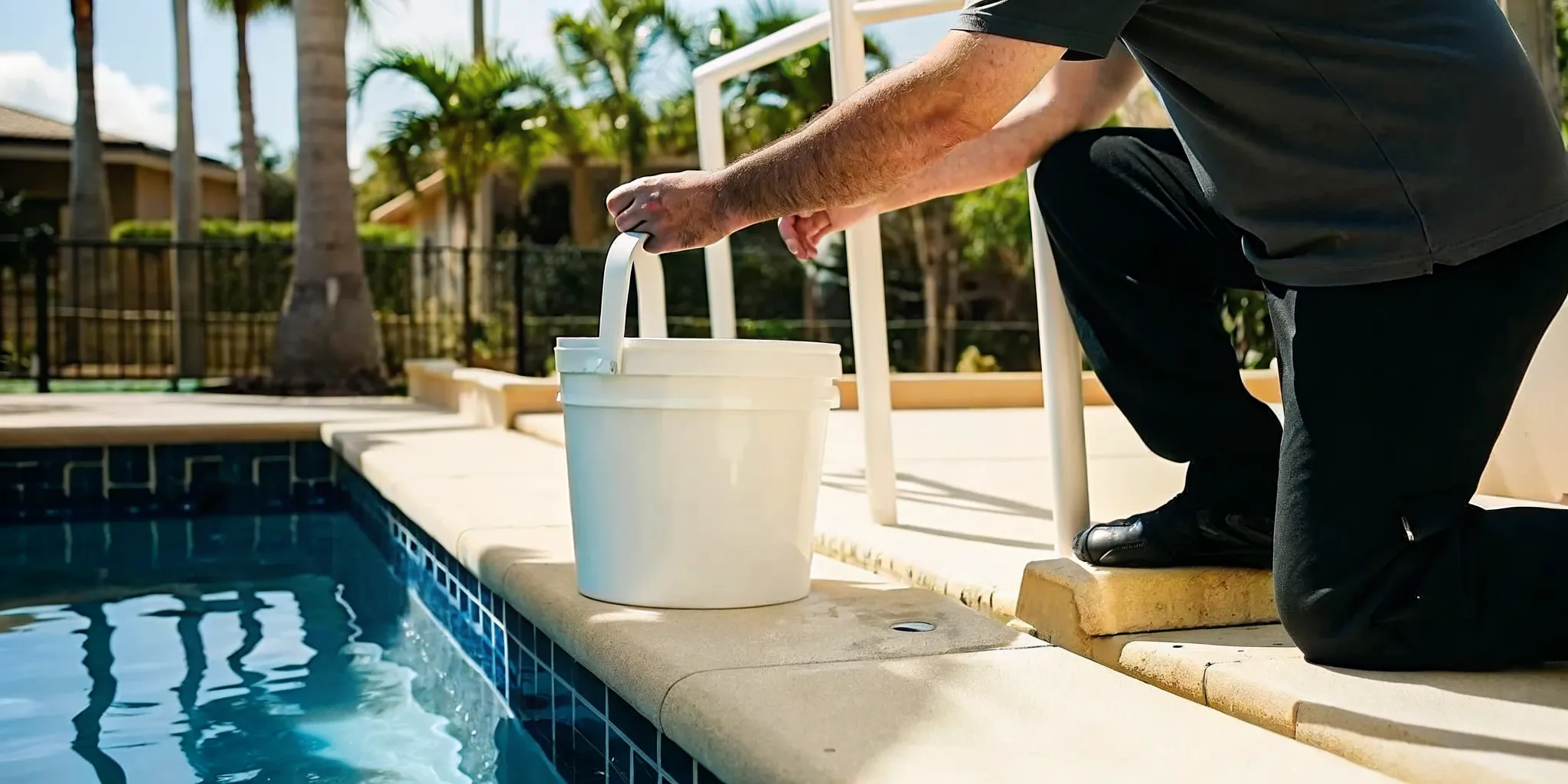
- Fill a bucket and place it on a pool step. Fill a sturdy bucket about three-quarters full. Set it on a submerged pool step so it is stable and will not float away. Position the bucket so its rim sits just below the surrounding pool water surface. The bucket should be exposed to the same outdoor conditions as the pool, while its interior remains protected from splashing and normal pool movement.
- Mark both water levels. Use a pencil, waterproof marker, or small piece of tape to mark the water line inside the bucket. Make a second mark at the pool water level, using the tile line or another fixed reference point. Label the marks if needed so you can compare them accurately at the end of the test.
- Leave the pool undisturbed for 24 to 72 hours. Do not swim, run features that create substantial splashing, add water, or change the test setup during this period. Avoid starting the test immediately before heavy rain, since rainfall can raise the pool level and make the comparison unreliable. If possible, turn off automatic water-leveling equipment for the test, because it can hide ongoing water loss by adding water automatically.
- Compare the two marks. Measure how far the water dropped inside the bucket and how far it dropped in the pool. If both levels fell by roughly the same amount, evaporation is the more likely explanation. If the pool level dropped clearly farther than the bucket level, a leak is likely. Take a photo of both marks before moving the bucket if you want a record for a technician.
As a general Florida benchmark, a healthy pool typically loses under about 1 inch of water per week. Although heat, sunlight, wind, pool temperature, and whether the pool is covered can change evaporation. The EPA notes that evaporation is a leading cause of residential pool water loss. A clear difference between the bucket and pool results confirms that water is leaving the pool faster than evaporation explains, but the test does not locate the leak. A professional inspection, dye testing, or pressure testing may be needed to determine whether the source is in the shell, equipment, or underground plumbing.
Where Pool Leaks Most Often Occur
A pool can lose water from the shell, the fixtures around it, the underground plumbing, or the equipment pad. Finding the general area matters because each leak point calls for a different inspection and repair approach.
- Pool shell, plaster, or tile line: Visible cracks in an older shell can allow water to escape, particularly around the plaster or tile line. A crack may be small at first but still cause steady water loss.
- Skimmer and pool light housings: These openings rely on seals and connections that can dry out, shift, or crack over time. The skimmer box is also vulnerable where it connects to the pool wall.
- Return jets: A loose fitting, damaged seal, or cracked connection at a return jet can let water move behind the pool finish or into the surrounding structure.
- Underground plumbing lines: Pipes between the pool and equipment pad can develop leaks at joints, fittings, or other concealed connections. Because the line is buried, the first clue may be a damp area, soil movement, or unexplained water loss rather than a visible spray.
- Pump, filter, or heater connections: Equipment-side seals and fittings can leak while the system is running or after it shuts down. Keep the equipment area dry and inspect it regularly. If the pump itself is involved, our guide to servicing a pool pump explains why these connections deserve attention.
Southwest Florida conditions can make these problems harder to separate from normal water loss. Salt water and high heat can put additional stress on seals and plaster, while intense sun accelerates evaporation. Homes near canals or areas with high water tables may also have underground water movement that masks a plumbing leak. Unexplained wet spots around the equipment area are an important clue, especially when the pool level is dropping more than expected. If the loss appears tied to underground lines rather than the pool shell, our sewer, leak detection, and repiping guide explains how plumbers isolate buried water loss and when trenchless repair applies.
Because several leak points can produce similar symptoms, a visual inspection alone may not identify the source. A professional can use dye testing, pressure testing, and other targeted checks to determine whether the loss is in the shell, a fixture, underground plumbing, or the equipment connections.
How Professionals Detect Pool Leaks in Fort Myers (Pressure Testing, Dye Testing)
A professional inspection follows a methodical process rather than guessing from the water level alone. The goal is to confirm that water loss is real, identify whether it is coming from the pool shell, a fixture, equipment, or an underground plumbing line, and isolate the source before recommending a repair.
- Visual inspection: The technician examines the pool shell, plaster and tile line, skimmers, lights, return fittings, pump, filter, heater, and exposed connections. Cracks, damp soil, wet equipment areas, and damaged joints can point toward the likely source. Skimmer boxes deserve particular attention because the connection between the box and pool wall can develop cracks.
- Evaporation check: A bucket-style test helps confirm that the water loss exceeds normal evaporation. The water level inside a bucket placed on a pool step is compared with the pool level over a measured period. If the pool drops noticeably more than the bucket, the result supports moving forward with leak testing.
- Dye testing: Non-toxic dye is placed near suspect fixtures, cracks, drains, lights, and skimmer openings. If the dye is pulled steadily toward a gap, it shows the direction of water movement and helps identify a structural leak without unnecessarily disturbing the pool.
- Pressure testing: Pressure gauges are used to test individual plumbing lines. A line that cannot hold pressure may indicate a breach in the circulation system. Stable plumbing pressure shifts the focus toward the shell, a fixture, or equipment. This is how professionals isolate a plumbing leak from a shell leak, rather than treating every water-loss problem the same way.
- Isolation and confirmation: The technician separates suspect sections, repeats the relevant test, and confirms the source before repair. Electronic listening equipment, including acoustic microphones, may help pinpoint the sound of water escaping from underground pipes.
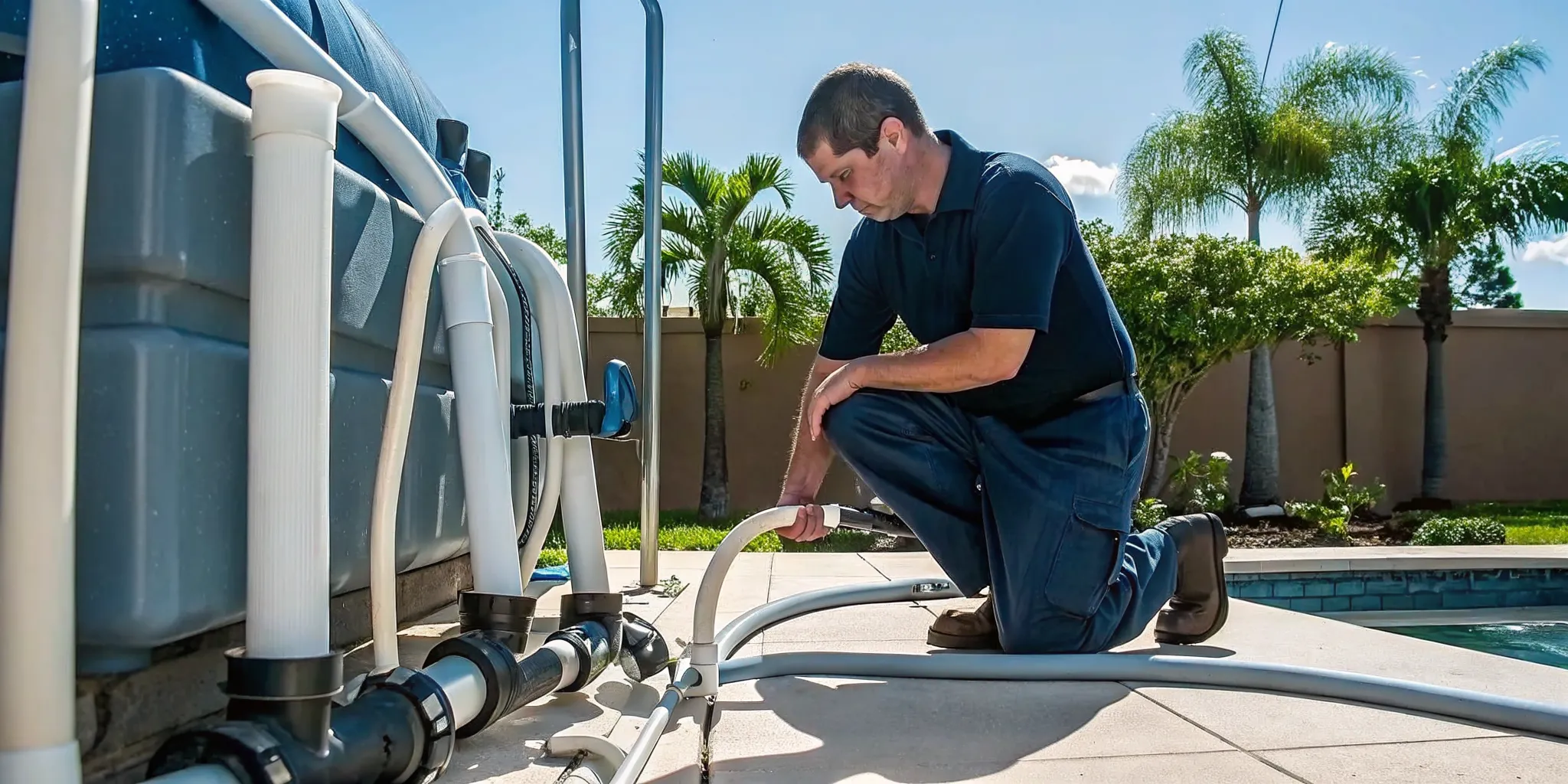
Modern pressure and listening tools can locate many leaks without draining the pool or tearing up the deck. When an underground pipe beneath the pool deck is involved, trenchless repair methods may sometimes address the leak with minimal excavation, avoiding extensive removal and replacement of pavers or tile.
Pool leak detection methods and results vary with the pool design and the suspected source. A qualified pool professional can explain the tests involved and whether the concern is in the shell, connected plumbing, or equipment. This article is informational; Whiskey Creek Plumbing does not provide pool leak detection or repair.
Pool Leak Repair Cost in Fort Myers
Pool leak detection typically costs between $100 and $1,000 nationally, with the final price shaped by the extent of the leak, the testing method, its location, and whether the pool is inground or above ground. An inground pool with an underground plumbing leak usually takes more time to isolate than an accessible equipment or liner issue. The figures below are national ranges, not a guaranteed quote for a specific Fort Myers property.
| Service | Typical national range | Notes |
|---|---|---|
| Pool leak detection (inground) | $400-$1,000 | Most Fort Myers inground pools; depends on difficulty. |
| Above-ground pool leak detection | $100-$500 | Components are generally more visible and accessible. |
| Pressure test of plumbing lines | $150-$500 | Usually part of a full detection visit. |
| Pool leak repair after detection | $500-$1,500 | Depends on the leak location and repair method. |
These ranges are reported in HomeGuide’s pool leak detection cost guide. In Southwest Florida, pricing can also vary with the season, the pool’s age, and how difficult the leak is to reach. A leak in an exposed pump connection may be simpler to address than a breach beneath a deck or in an underground line. The cost of pool leak repair therefore cannot be determined responsibly from water loss alone.
When comparing estimates, ask what testing is included, whether the scope covers the pool shell, fittings, or buried lines, and how any repair work would be priced. A written estimate should describe the exact work and any limits. Pool leak detection and repair are outside Whiskey Creek Plumbing’s pool service scope.
When to Call a Plumber vs. a Pool Company
The right professional depends on where the water is escaping. Pool companies are usually best equipped for damage to the pool’s visible shell and finish. While a licensed plumber is the better choice when the problem involves buried plumbing, pressure, or a connection to your home’s water system.
- Call a plumber for underground circulation-line leaks. If water is escaping beneath the deck or yard, a plumbing team can isolate the affected line and determine whether digging, trenchless repair, or repiping is needed.
- Call a plumber for pressure-test failures. A failed pressure test points toward a leak in the plumbing system rather than normal evaporation or a cosmetic surface issue.
- Call a plumber for pipe and fitting leaks. Cracked pipes, loose fittings, and leaking connections around pool equipment require plumbing expertise to repair correctly and protect the rest of the system.
- Call a plumber for connections to the home’s water supply. Any pool plumbing that ties into household supply lines should be evaluated and repaired by a licensed plumbing professional.
- Call a pool company for a vinyl liner tear. Liner replacement and patching are pool-surface specialties.
- Call a pool company for tile, plaster, or cosmetic work. Surface finishes and visible shell repairs are generally best handled by a pool renovation or maintenance company.
- Call a pool company for major shell repair. Structural damage to the pool basin may require specialized shell, plaster, or concrete work beyond plumbing repair.
Pool water loss can come from the shell, liner, underground plumbing, or equipment connections, and each source calls for a different evaluation. A qualified pool-leak professional can explain which tests are appropriate and whether pool or plumbing work is involved. Whiskey Creek Plumbing does not offer pool leak detection, pressure testing, excavation, or repair; its pool-related work is limited to pump and equipment installation and replacement.
For household plumbing leaks outside a pool, Whiskey Creek Plumbing lists general leak-detection services. That service does not include pool leak detection or repair. Pool-related work is limited to pool pump and pool equipment installation and replacement; confirm the scope before scheduling.
Frequently Asked Questions
How do I know if my pool in Fort Myers has a leak?
Start by watching the water level when the pool is not being used. A drop of more than 1/4 inch per day, unexplained wet spots near the deck or equipment, air bubbles in return lines, or cracks near the tile line can point to a leak. A bucket test helps separate normal evaporation from water loss that needs further testing.
What is the process for pool leak detection and repair?
A pool-leak evaluation may include a visual review of the water-loss pattern, dye testing around suspected fixtures, or pressure testing of plumbing lines. The methods depend on whether signs point to the shell, underground piping, or equipment connections. Ask the qualified pool professional to explain the findings, limitations, and available repair options.
How much does pool leak detection cost in Southwest Florida?
Pool-leak costs depend on whether the issue involves an accessible fixture, underground plumbing, the pool shell, or connected equipment. Testing methods and access conditions can change the total. Request a written estimate that explains what is included before authorizing work.
How fast can you detect a pool leak?
The time needed to investigate a pool leak depends on the pool’s plumbing layout, the amount of water loss, and whether testing beneath the deck is necessary. Ask the professional to explain what has been confirmed, what remains unknown, and the next practical step.
Can I fix a swimming pool leak myself?
You can perform a bucket test and inspect visible fittings yourself, but underground plumbing leaks and pressure-loss problems may require specialized testing. A temporary patch can hide a symptom without correcting its source. For a suspected pool leak, contact a qualified pool-leak professional; Whiskey Creek Plumbing does not provide pool-side diagnosis or repair.
Planning Pool Pump or Equipment Replacement?
Once a leak is confirmed, identifying whether it involves the pool shell, plumbing, or equipment can help homeowners compare appropriate next steps. Ask each provider to explain the evidence, proposed scope, and cost before work begins.
If you are planning pool pump or pool equipment installation or replacement, Whiskey Creek Plumbing can confirm whether the project fits that limited service scope. For pool leak detection or repair, contact a qualified pool-leak professional.