
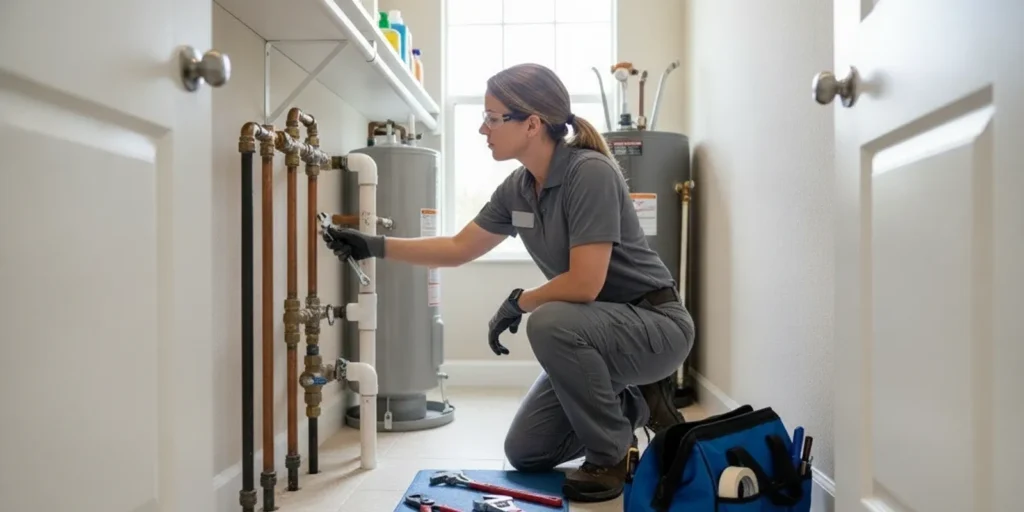
One leak does not automatically mean your home needs new plumbing. But repeated leaks, aging pipe materials and visible corrosion can signal that a whole house repipe deserves a closer look. Knowing which clues matter—and which need a professional diagnosis—can help you avoid both unnecessary replacement and a cycle of repairs.
What does a whole house repipe mean?
A whole house repipe replaces some or most of the water-supply piping inside a home, rather than repairing one isolated section. The exact scope depends on the existing layout, pipe material, access, condition and the parts of the system that are failing. It may include supply lines serving fixtures throughout the home, while other plumbing components may remain in place if they are sound and outside the project scope.
Repiping is different from replacing a single damaged water line or fixing one fitting. It is also different from sewer work: a home’s drain and sewer piping carries wastewater away, while supply pipes bring water to fixtures. The terms can sound similar, so ask the plumber to state which pipes are included in a proposed job.
A repipe project is a substantial decision. It should follow an inspection and a clear explanation of why repeated spot repairs are no longer the practical choice. A plumber can assess your home’s water lines and discuss the options through available plumbing services.
Which signs may point to a whole house repipe?
No single symptom proves that every supply pipe must be replaced. Look for patterns: the same type of problem recurring in different rooms, repairs becoming more frequent, or several visible sections showing similar deterioration. These clues are most useful when you note where and when they occur.
Are leaks appearing in more than one place?
A leak at one fixture or fitting can be a local problem. Several leaks at different locations, especially over a short period, may indicate broader wear in the piping system. Keep a simple record of each incident: the room, date, pipe or fixture involved, what repair was made and whether the problem returned.
Repeated leaks do not automatically require a complete repipe. The cause could be a specific connection, fixture, appliance line or other isolated issue. But if the same pattern continues after repairs—or if new leaks show up in separate areas—ask for an evaluation of the overall water piping rather than treating each event as unrelated.
Do exposed pipes show rust, scaling or damage?
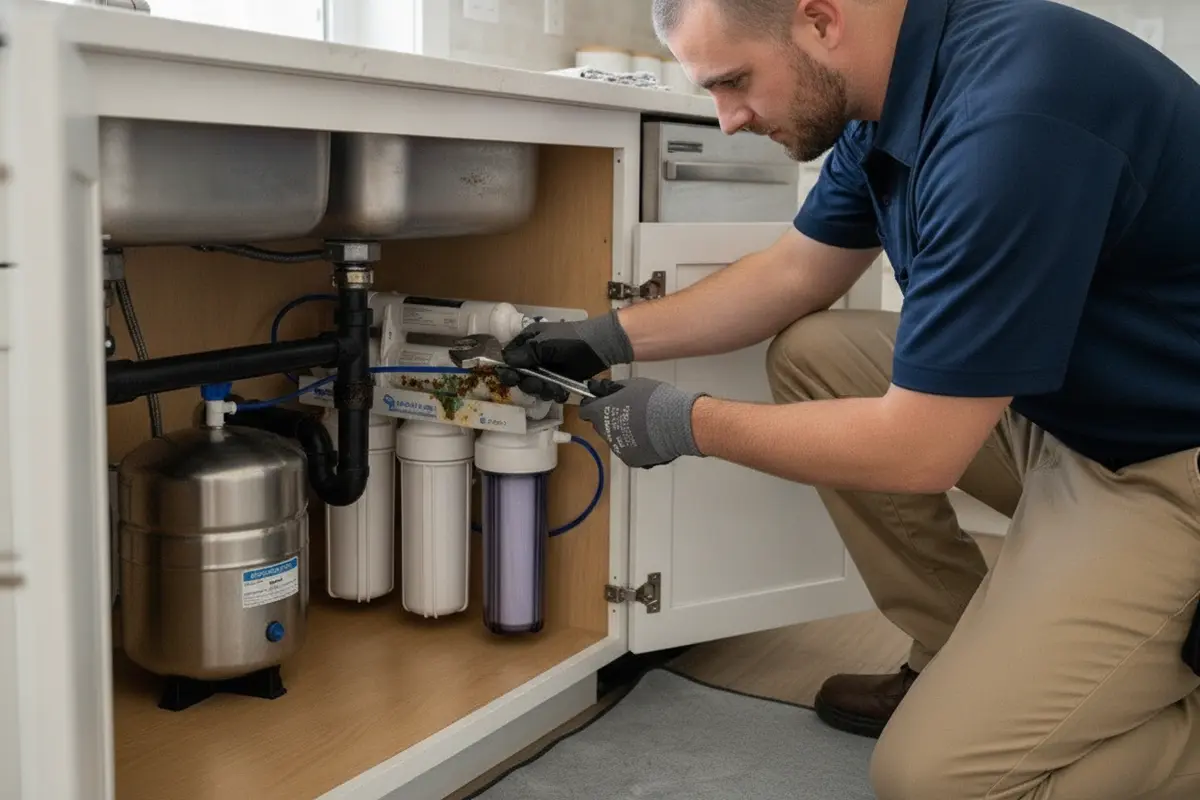
Look only at pipe sections that are safely visible, such as in an accessible utility space or beneath a sink. Rust-colored patches, flaking, pitting, heavy mineral buildup, bulges, or dampness around joints can be reasons to investigate. Do not cut into walls or disturb a pipe to inspect it.
Surface appearance is a clue, not a full diagnosis. A small corroded fitting may be replaceable without changing every line. Conversely, a pipe can have problems in concealed areas that are not visible from a quick look. A plumber can assess the material and condition of accessible piping and decide whether further inspection is needed.
Is the home’s piping material prone to deterioration?
The material and condition of the existing lines matter. Galvanized steel pipes, for example, can corrode internally over time. Older copper or other pipe systems can also develop localized problems depending on their condition, installation and water chemistry. Plastic piping has its own requirements and should be assessed based on its type and condition rather than age alone.
Do not assume that a particular material means replacement is immediately necessary. Find out what material is present, whether it is original or has been partially updated, and what evidence points to failure. A mix of newer and older materials can also make the history difficult to interpret without a careful look.
Has water changed color or carried visible particles?
Brown, reddish or cloudy water can have several causes, including work on a water system, a problem at a fixture, or corrosion in piping. If the change is limited to one faucet, compare it with another cold-water tap and note whether it clears. If discoloration persists, occurs at several fixtures, or returns repeatedly, contact a plumbing professional to help identify the source.
Do not diagnose the whole house based on color alone. Water appearance can change for reasons unrelated to a failing supply line, and appearance cannot establish whether water is safe to drink. If you have a concern about water safety, use appropriate local public-health or water-utility guidance rather than relying on a visual check.
Are repairs becoming a recurring pattern?
One repair may solve one problem. A series of repairs in separate areas can become a sign that the system as a whole needs review. Look at the repair history and ask whether the work has addressed independent failures or a shared issue. Compare the scope and likely disruption of continued spot repairs with the proposed repipe scope.
There is no universal number of leaks that makes replacement the right answer. A well-documented assessment should connect the observed problems to the recommended work. If the explanation is unclear, ask what other options exist and what evidence would change the recommendation.
What signs are not enough to confirm a repipe?
Some common plumbing complaints deserve attention but do not, by themselves, prove that a home needs new supply piping. A single dripping faucet, one failed shutoff valve, a fixture that needs maintenance, or one leak at an appliance connection may have a targeted fix.
Changes in flow or pressure can also come from more than one source. A clogged aerator, a partially closed valve, a pressure regulator, the water service, or a problem affecting only one branch may need to be checked. If pressure concerns are your main symptom, start with a focused diagnosis instead of assuming a whole-house project.
Likewise, an older home is not automatically due for repiping. Age can make an inspection sensible, especially when the pipe material is known to have deteriorated, but condition and evidence matter. Ask the plumber to distinguish observed facts from possibilities and to explain what areas were inspected.
How can you compare repair and repiping options?
Ask for a comparison that explains the problem, proposed work, what remains unchanged, and the likely consequences of each option. A repair may be appropriate when damage is isolated and surrounding piping is in sound condition. A repipe may be worth discussing when failures are widespread, repairs keep recurring, or the condition of the lines makes localized fixes unlikely to address the pattern.
Targeted repair
- May fit when
- A problem is isolated to one accessible section, fitting or fixture connection.
- Questions to ask
- What caused this failure? Is nearby piping in good condition? What could make another repair necessary?
Additional inspection
- May fit when
- The source or extent of the problem is uncertain, or symptoms appear in multiple places.
- Questions to ask
- Which sections can be checked? What findings would support repair versus replacement?
Partial replacement
- May fit when
- A particular branch or area has a documented issue, while other lines appear serviceable.
- Questions to ask
- Which exact lines are included? How will the new section connect to existing pipe?
Whole house repipe
- May fit when
- Widespread deterioration or repeated failures point to a system-level concern.
- Questions to ask
- Which supply lines will be replaced? What access, restoration, testing and permits are part of the plan?
This is a discussion guide, not a substitute for an inspection. The best choice depends on what is actually happening in your home. Request a written scope that identifies the work area and any exclusions, so estimates can be compared on the same basis.
What should a repipe inspection check?
A useful assessment starts with the symptoms and the home’s plumbing history. Be ready to describe where leaks occurred, any repairs already completed, whether the water change affects one or multiple fixtures, and whether the problem is ongoing. If you have invoices, photos or a record of repairs, share them.
The plumber may review accessible piping, identify visible materials, check the locations of known leaks, and look at how the affected lines serve fixtures. The extent of inspection can vary with access and the suspected problem. A concealed pipe cannot always be judged from the exterior of a wall; ask what the inspection did and did not establish.
Request answers to practical questions before agreeing to work:
- What evidence suggests the issue is limited to one area or affects more of the system?
- Which existing pipes will be replaced, and which will remain?
- What material is proposed for the new supply lines, and why is it suitable for this installation?
- Where will the plumber need access, and what openings or restoration work are included or excluded?
- How will the system be tested when the work is finished?
- Will permits or inspections apply, and who is responsible for confirming them?
- What is the quoted price, what work does it include, and what conditions could change the scope?
Permit requirements depend on the local authority and the project. For example, the City of San José’s repipe and water-service information describes permits for that jurisdiction; it is not a guide to requirements in Lee County. The City of Fremont’s permit overview likewise explains its local process. Use these as reminders to verify local rules, not as substitutes for checking with the authority that has jurisdiction over your property.
What can affect the scope and disruption?
Every home has a different layout. The length and routing of the supply lines, where pipes are accessible, the number of fixtures served, and the condition of existing connections can affect the work plan. Prior renovations or partial pipe replacements may also change which sections need attention.
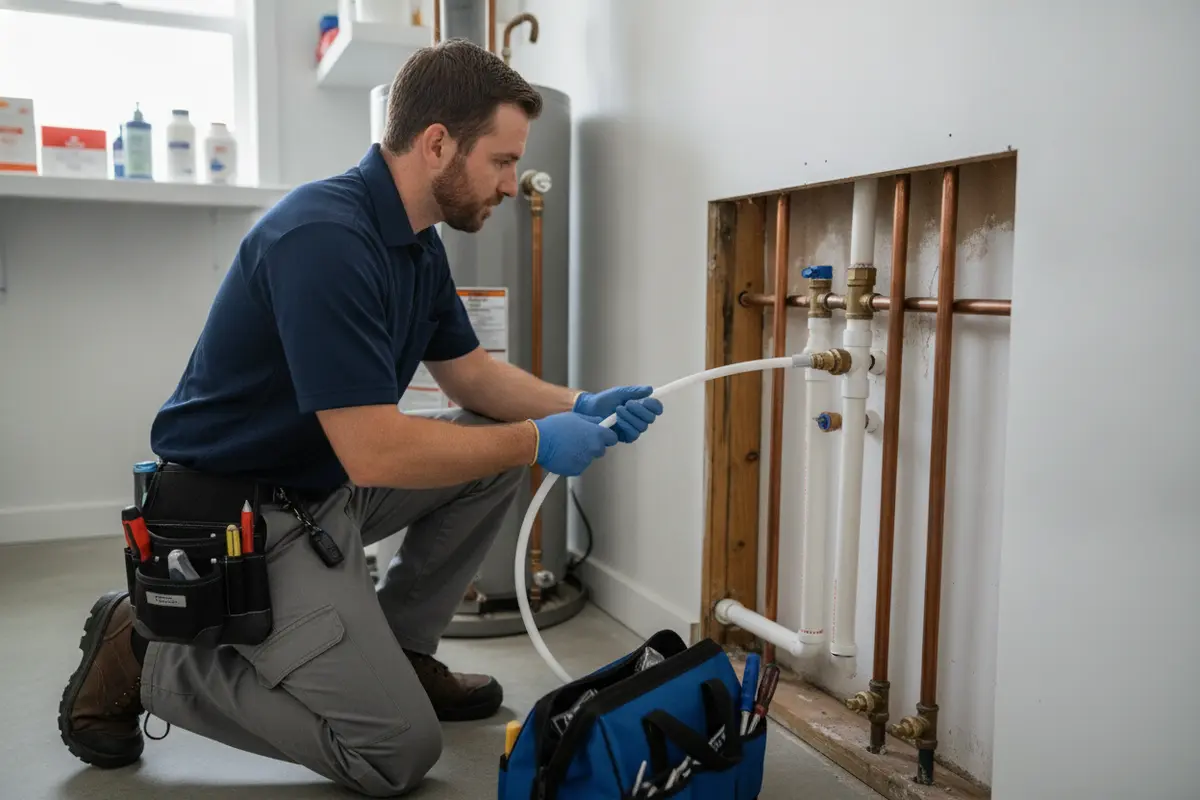
Access is an important part of planning. Some piping may be reachable through an attic, crawl space or utility area; other routes may require openings in finished surfaces. Ask which areas the plumber expects to access and whether patching, painting or other restoration is included. Do not assume that plumbing work automatically includes finish repairs unless the written scope says so.
Material selection should be discussed in the context of the home and the project. Ask what product is proposed, how it will be routed and supported, and whether it is compatible with the existing system at connection points. A recommendation should be explained in plain language rather than presented as a one-size-fits-all answer.
Price should be tied to a defined scope. A useful estimate spells out the included labor and materials, areas covered, access assumptions, testing, permit responsibilities if applicable, and items that are excluded. Avoid comparing a limited repair quote with a full replacement quote as if they covered the same work. Whiskey Creek Plumbing describes its service model as fixed-price with upfront quotes; ask for the specific written scope and price for your project.
How do you compare repipe estimates?
Start by checking that each estimate addresses the same problem and describes a comparable scope. One proposal may cover every interior supply line, while another may replace only a particular branch. A lower total does not tell you whether the same work is included. Put the scope, exclusions and assumptions side by side before making a decision.
Look for detail about the route and extent of the new lines, the fixtures or areas served, the materials, access openings, testing and any permit or inspection responsibilities. Ask whether moving or reconnecting fixtures is included and what happens if the plumber finds a concealed condition that changes the plan. The estimate should explain how a change will be discussed and priced before additional work proceeds.
Also ask what the quoted amount does not cover. Wall or ceiling patching, painting, cabinetry work and other finish restoration may be outside a plumbing scope. Clarifying this early can help you plan for the full project rather than focusing only on the pipe installation. If a proposal uses broad wording, ask for the work to be described more specifically in writing.
A clear estimate helps you compare value, not just the bottom line. You should be able to explain what is being replaced, why that scope is recommended and what remains in place. If two plumbers reach different conclusions, ask each to point to the findings behind the recommendation. A second opinion can be useful when the work is extensive or the explanation does not match the evidence you have seen.
What might happen during a repipe project?
The work sequence varies with the home and agreed scope, so ask the plumber to walk you through the specific plan. In general, a project involves preparing access to the selected lines, removing or bypassing piping within the scope, installing replacement supply lines, making connections, and checking the system. The plumber should explain how water service will be affected and when fixtures are expected to be available again; do not assume a particular schedule without confirming it for your home.
Before work begins, move stored items away from planned access areas and protect valuables as appropriate. Confirm who will move appliances or belongings if access is needed, and whether that is included. Keep children and pets away from active work areas. Ask how the crew will protect nearby surfaces and what cleanup is part of the work. These arrangements depend on the project, so record the agreed details rather than relying on assumptions.
At completion, ask what was replaced, whether any lines were left in place, how the system was tested and whether permits or inspections were required. Keep the written estimate, any change approvals and completion information with your home records. These details can be helpful if a future repair is needed or another plumber evaluates the system.
How should you prepare before calling a plumber?
A few notes can make a conversation more useful. List past leaks and repairs by room, take photos of visible damage, and write down when discolored water or other changes occur. Note whether the issue affects hot water, cold water, one fixture or several. Do not open walls, handle corroded pipe, or attempt a repair that could cause more damage.
Locate the main water shutoff if you can do so safely. If an active leak is causing damage, shut off the water only if the valve is accessible and safe to operate, and take reasonable steps to protect belongings. If water is near electrical equipment or the leak cannot be controlled, prioritize safety and contact appropriate emergency help. For plumbing help, use the company’s service scheduling page or call the number listed below.
It can also help to gather the home’s renovation records, prior plumbing invoices, and any available information about pipe material. You do not need to identify every pipe yourself. The purpose is to give the plumber a clear account of what you have observed so the evaluation can focus on the right areas.
When should you call a plumbing professional?
Arrange an assessment if leaks recur, appear in separate areas, or occur alongside visible pipe deterioration or repeated water discoloration. A prompt call is also sensible when you cannot find or control an active leak. You can review Whiskey Creek Plumbing’s service areas to confirm coverage, or read about how pipe repair and repiping differ before discussing a project.
For a single, clearly localized issue, a targeted repair may be all that is needed. If there is a broader pattern, ask for an assessment of the supply piping and a comparison of reasonable options. A recommendation should describe the evidence, scope and next steps—not just rely on the age of the home or one symptom.
Contact Whiskey Creek Plumbing to discuss your home’s pipes
Frequently asked questions
Does one burst pipe mean I need a whole house repipe?
Not necessarily. A burst pipe may have a localized cause, and a repair may be appropriate. If the home has had repeated failures or the inspection finds deterioration in multiple areas, ask whether a broader replacement should be considered.
How old do pipes have to be before they should be replaced?
There is no single age that makes replacement necessary in every home. Pipe material, installation, condition, repair history and the extent of any damage all matter. Have the specific system assessed rather than deciding from age alone.
Can a plumber repipe only part of a house?
Sometimes. A partial replacement may address a documented problem in one area while other piping remains in service. Ask which sections are included, how they connect to existing lines and what signs would lead to replacing additional piping later.
Will a repipe fix every water pressure or water quality issue?
No. Pressure and water appearance can have causes outside the home’s supply piping, and a repipe cannot be assumed to resolve every issue. Ask the plumber to identify the likely source before choosing a project.
What should I get in writing before work begins?
Ask for the work area, included and excluded tasks, proposed materials, access plan, testing, permit responsibilities if applicable, price and any conditions that could change the scope. Clear details help you understand what is being recommended and compare options fairly.
Repeated leaks or visible deterioration are reasons to investigate, not automatic proof that every pipe must go. A careful inspection and a clearly defined scope can help you decide whether a targeted repair, partial replacement or whole house repipe is the right next step for your home.