
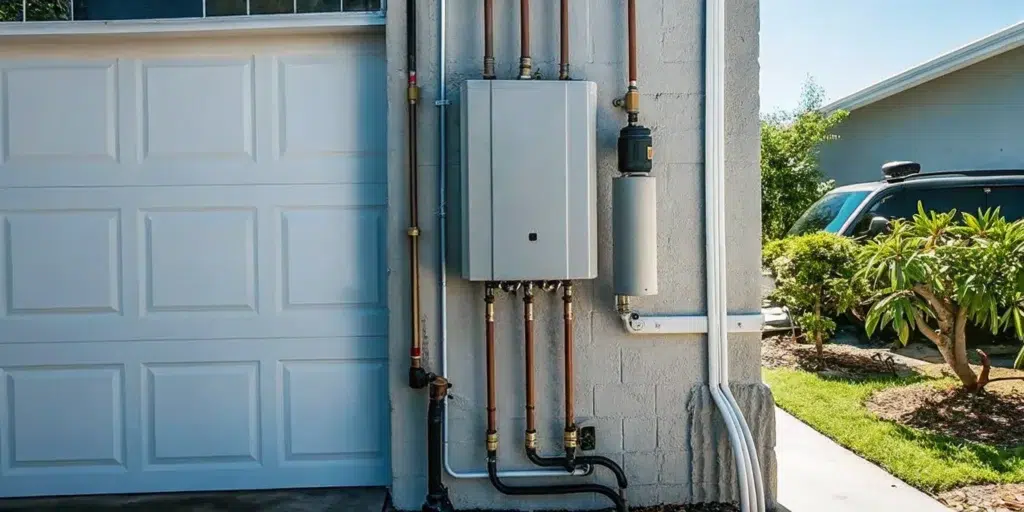
Choosing tankless water heater installation cape coral fl homeowners can rely on starts with a practical question: will the system match the way your household actually uses hot water? A tankless unit can free floor space and avoid storing heated water, but proper sizing, utility capacity, venting, location, and maintenance all affect whether it is a sensible choice for your home.
Want a site-specific answer? Call Whiskey Creek Plumbing at (239) 785-9022 to discuss a professional water heater assessment.
This guide explains the decisions to make before installation, the questions to ask, and the tradeoffs to compare. It does not assume tankless is right for every household. Instead, it gives Cape Coral homeowners a clear way to prepare for an informed conversation with a licensed plumbing professional.
Is tankless water heater installation Cape Coral FL right for your home?
A tankless unit may suit a home that values wall-mounted equipment and on-demand heating, provided the selected model can serve the household’s peak use. It may be less practical when utility upgrades are extensive or several high-flow fixtures regularly run together. The right answer comes from comparing demand, site conditions, and budget.
Start with simultaneous hot-water use
A tankless heater does not rely on a stored reserve. It heats water as it passes through the unit, and every model has a maximum output at a given temperature rise. That makes simultaneous use more important than the household’s total daily use. A morning routine with two showers, a kitchen faucet, and a washing machine running together creates a different requirement than the same fixtures used one at a time.
Write down the hot-water fixtures your household realistically uses at the same time. Include showers, tubs, sinks, dishwashers, and clothes washers. A professional can use those fixtures and their actual flow rates to estimate peak demand. If demand exceeds one unit’s output, options may include changing usage patterns, selecting another system, or considering a different configuration.
Consider the home, not just the appliance
The heater is only one part of the decision. The available fuel source, electrical panel, gas line, vent path, mounting wall, service access, and existing plumbing can change the scope significantly. A compact appliance may still require meaningful work elsewhere in the home. That is why an online model recommendation cannot replace an on-site review.
Homeowners still comparing equipment types can review Whiskey Creek Plumbing’s guide on what to consider before buying a water heater. Use it to organize priorities, then confirm the details for your property before ordering equipment.
Set realistic expectations
A correctly selected tankless system can deliver hot water continuously within its rated flow capacity, but that does not mean unlimited output. If demand rises above the unit’s capacity, performance can change. Energy costs also depend on household behavior, fuel rates, incoming water temperature, equipment efficiency, and the installation. Avoid treating savings estimates as guarantees.
What must be checked before installation?
Before installation, a professional should verify peak flow demand, required temperature rise, fuel or electrical capacity, venting, mounting space, drainage, water-line condition, service access, and applicable permits. These checks reveal whether a proposed unit can perform as expected and whether upgrades are needed before the old heater is removed.
Fuel source and utility capacity
Gas-fired tankless units can require a different gas supply than an existing storage-tank heater. The line must be evaluated for the selected unit and other gas appliances it serves. A plumber should confirm pipe sizing and pressure rather than assuming the existing connection is adequate. Gas units also require an approved exhaust route and, depending on the model, a suitable combustion-air arrangement.
Whole-home electric tankless heaters can place a substantial load on an electrical system while operating. The service size, panel capacity, breaker spaces, wiring, and manufacturer requirements must be checked. If electrical upgrades are necessary, they should be identified before equipment is purchased. Whiskey Creek Plumbing can explain the plumbing scope and coordinate the installation questions that apply to the property.
Location, venting, and drainage
A tankless unit needs a secure mounting location with required clearances and enough access for future maintenance. A gas model’s vent termination must comply with the manufacturer’s instructions and applicable code. Condensing models may also need a suitable drain route for condensate. These details can determine whether the existing heater location remains practical.
Cape Coral’s coastal environment also makes careful placement and material selection important. Outdoor-rated equipment must still be installed according to its listing and protected as the manufacturer requires. Indoor equipment needs proper venting and should not be placed where leaks, service work, or exhaust routing create avoidable problems.
Permits, inspections, and complete scope
Permit and inspection requirements depend on the job and local authority. Ask the installer which requirements apply, who obtains the permit, and whether the quote includes the related work. The scope should also state whether removal of the existing heater, new shutoffs, service valves, venting, utility changes, drainage, and startup testing are included.
For work that involves more than a simple appliance connection, review Whiskey Creek Plumbing’s plumbing installation services and ask how the proposed scope addresses your home’s existing system.
How should a tankless water heater be sized?
Tankless sizing depends on two connected numbers: the gallons per minute needed when fixtures run together and the temperature rise from incoming water to the desired outlet temperature. A model must provide the required flow at that rise. Nameplate maximum flow alone is not enough because output changes with operating conditions.
Calculate realistic peak flow
Flow rate is measured in gallons per minute, commonly shortened to GPM. Each fixture contributes to the total when it uses hot water. Fixture labels, product specifications, or field measurements can help establish realistic rates. The goal is not to add every fixture in the house unless they truly run together. It is to model the household’s busiest likely period.
- List simultaneous fixtures: Identify the showers, faucets, tubs, and appliances likely to use hot water at the same time.
- Confirm fixture flow: Use product data or measurements rather than relying on a generic estimate when possible.
- Add the active flows: Total the fixtures in the realistic peak-use scenario.
- Discuss future needs: Mention planned bathroom changes, new appliances, or changing household occupancy.
Determine the required temperature rise
Temperature rise is the difference between incoming cold-water temperature and the desired hot-water setting. For example, colder incoming water requires the heater to do more work to reach the same outlet temperature. Because manufacturer output charts are tied to temperature rise, a useful sizing review should rely on appropriate local assumptions or measurements, not a broad claim about Florida weather.
The installer should compare the calculated demand and temperature rise with the selected model’s performance data. Ask to see that relationship explained. If the unit only meets the household’s needs under ideal assumptions, discuss whether a different model or system type would provide a more comfortable margin.
Avoid common sizing shortcuts
- Do not size by bedrooms alone: Occupancy helps provide context, but simultaneous fixtures determine peak flow.
- Do not rely only on advertised maximum GPM: Confirm output at the temperature rise expected for the home.
- Do not ignore high-flow fixtures: Large tubs and some shower arrangements can materially change demand.
- Do not assume bigger always solves the problem: Utility capacity, minimum flow, installation requirements, and manufacturer specifications still matter.
How do tankless and storage-tank heaters compare?
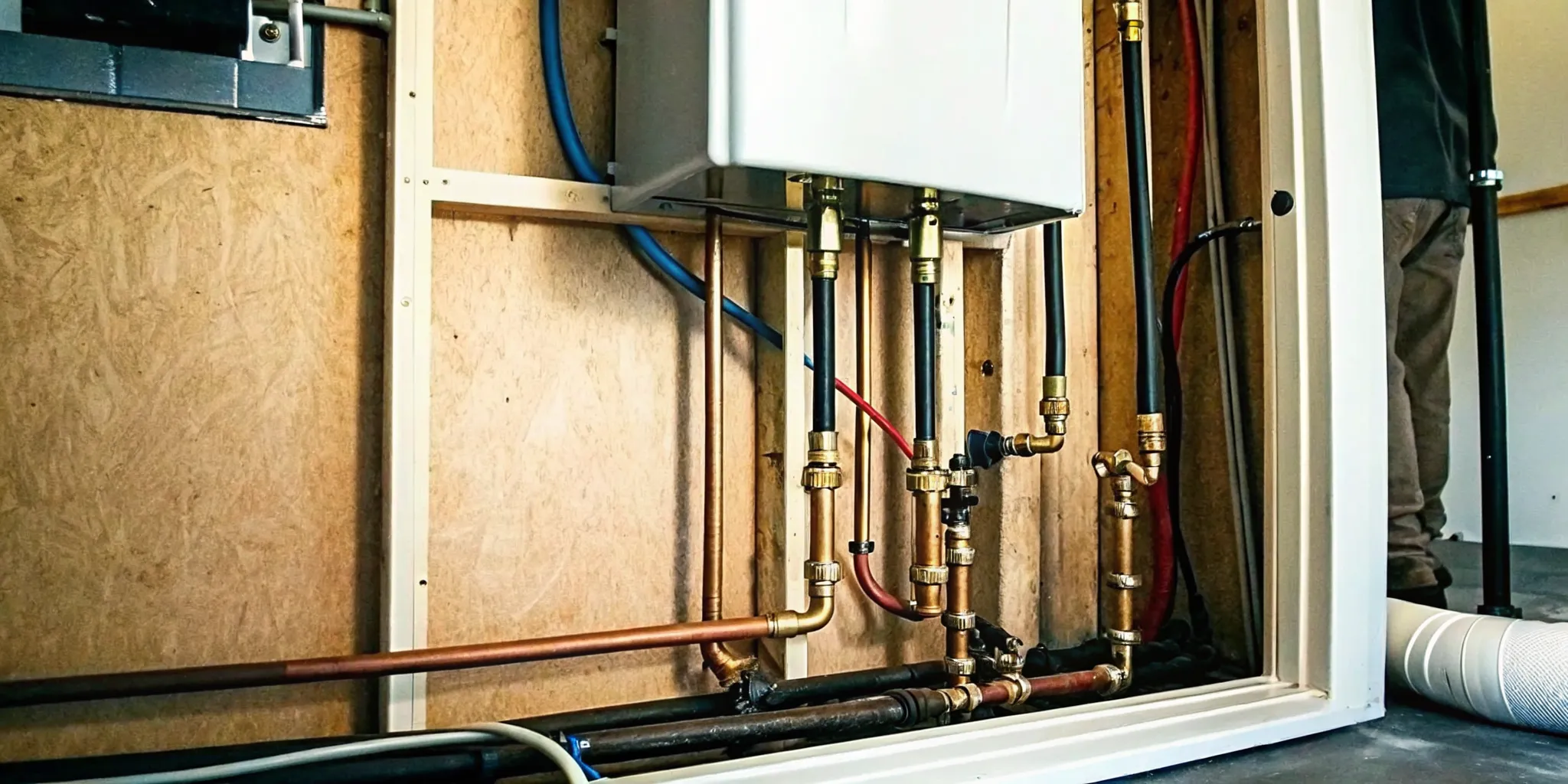
A storage-tank heater keeps a set volume ready, while a tankless unit heats water as it flows. Tank models often have simpler replacement requirements, whereas tankless systems save floor space but may need utility or venting changes. Neither is universally best. Compare peak demand, installation scope, maintenance, available space, and ownership plans.
| Consideration | Storage-Tank Heater | Tankless Heater |
|---|---|---|
| Hot-water delivery | Draws from a stored volume, then recovers | Heats on demand within the unit’s rated flow |
| Space | Requires floor area for the tank | Usually wall-mounted and compact |
| Replacement scope | May be more similar to the existing setup | May require gas, electrical, venting, or drainage changes |
| Peak demand | Limited by stored volume and recovery rate | Limited by flow capacity at the required temperature rise |
| Maintenance | Needs manufacturer-recommended inspection and care | Needs manufacturer-recommended service, often including scale management |
| Decision priority | Useful when straightforward replacement and stored capacity fit the home | Useful when on-demand heating, wall space, and site conditions align |
Compare complete project scope
Equipment price does not show the whole project. A fair comparison should include required modifications, removal, permits, valves, vent components, drainage, electrical or gas work, startup, and anticipated maintenance. Ask for a written scope so that two options are being compared on the same basis. Do not assume future energy savings will automatically offset added installation work.
Think about daily experience
A storage tank has a fixed reserve and recovery period. A tankless unit avoids that stored reserve but can only serve demand within its operating capacity. Some households value the space gained from removing a tank. Others prefer a familiar replacement with fewer site changes. The better choice is the one that matches actual routines and property constraints.
Need help comparing both options? Call Whiskey Creek Plumbing at (239) 785-9022 or review its water heater services before choosing equipment.
What happens during professional tankless installation?
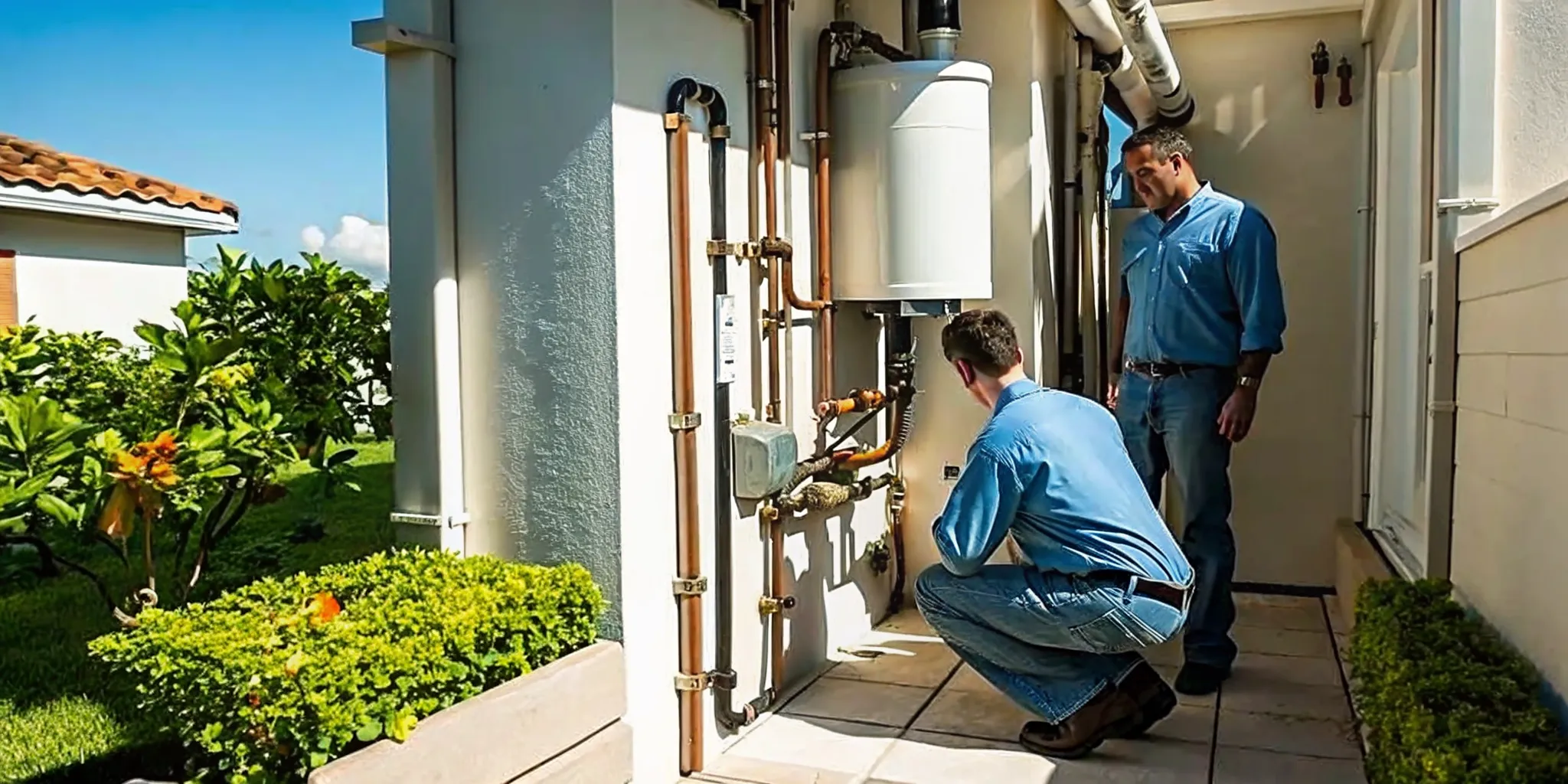
Professional installation begins with confirming the design, scope, and applicable requirements. The work then typically includes removing or isolating old equipment, preparing the mounting area, making approved water and utility connections, installing required venting or drainage, and completing startup tests. The exact sequence varies with the unit, fuel source, and home.
Assessment and written plan
Before work starts, the installer should confirm the chosen unit, location, demand calculation, utility needs, and project scope. This is the time to resolve who handles permits, related trades, old-equipment disposal, and unexpected conditions. Whiskey Creek Plumbing uses fixed-price service, which helps homeowners understand the approved scope before installation begins.
Connections and commissioning
The unit must be mounted and connected according to manufacturer instructions and code. Water connections, service valves, gas or electrical supply, venting, condensate handling, and other required components vary by model. Once connected, the installer should test for leaks, confirm safe operation, check settings, and verify hot-water performance at representative fixtures.
Homeowner handoff
A useful handoff explains the temperature controls, normal operating behavior, maintenance instructions, shutoff locations, warranty documentation, and whom to call with concerns. Ask for model and serial information as well as copies of relevant records. Keep the manual accessible so future service can follow the manufacturer’s instructions.
If you are ready to move from research to a property-specific conversation, use Whiskey Creek Plumbing’s contact page to request an assessment.
What maintenance should Cape Coral homeowners plan for?
Tankless heaters require ongoing care based on the manufacturer’s instructions, water conditions, installation, and usage. Scale management is an important local consideration, but maintenance can also include filter cleaning, vent inspection, connection checks, and performance testing. Ask for a recommended schedule at installation and update it if operating conditions change.
Scale and water quality
Minerals can collect inside a heat exchanger and affect performance. The appropriate service interval is not identical for every home because water quality, use, temperature setting, and equipment design differ. Ask the installer how local conditions affect the chosen unit, what maintenance preserves warranty coverage, and whether service valves are included to make future flushing practical.
Filters, vents, and visible checks
Some owner maintenance may be permitted by the manufacturer, such as checking an inlet filter, while other work belongs with a qualified professional. Follow the manual. Keep the area around the unit accessible, do not block vent terminations, and call for service if you notice leaks, unusual noises, error codes, unstable temperature, or changes in performance.
Plan before installation
Maintenance should be part of the buying decision rather than an afterthought. Ask who can service the model, how to schedule recommended care, and what records to keep. A model with suitable local support and an accessible installation location may be more practical than one chosen only from an online feature list.
What questions should you ask an installer?
Ask an installer to explain sizing, site requirements, complete scope, permits, startup testing, maintenance, warranty terms, and alternatives. Clear answers should connect the proposed model to your home’s measured or verified conditions. The goal is not simply to receive a product recommendation, but to understand why the complete installation plan fits the household.
Questions about design and performance
- How was this unit sized? Ask for the peak-flow scenario and temperature-rise assumption used.
- What happens at peak demand? Confirm which fixtures can run together within the proposed capacity.
- What alternatives were considered? Compare tankless with an appropriate storage-tank option rather than assuming one answer.
- Which site upgrades are necessary? Request an explanation of gas, electrical, venting, drainage, mounting, or plumbing changes.
Questions about the work and ownership
- What does the written scope include? Confirm equipment, labor, removal, related modifications, permit handling, and startup.
- What maintenance is recommended? Ask for a schedule based on the model and local conditions.
- Which warranties apply? Understand equipment, parts, and workmanship coverage without assuming all terms are identical.
- How will operation be verified? Ask what tests and homeowner instructions are provided after installation.
Whiskey Creek Plumbing can assess the existing setup and explain practical options without treating tankless as the automatic answer. For additional background before that conversation, visit the company’s water heater service page.
Frequently asked questions
These concise answers address the questions Cape Coral homeowners most often need to resolve before selecting a tankless system. They are general planning guidance, not a substitute for inspecting the property. Equipment specifications, manufacturer instructions, utility capacity, household demand, and applicable requirements should all be confirmed for the proposed installation.
Is a tankless water heater a good fit for every Cape Coral home?
No. The right choice depends on peak hot-water demand, available gas or electrical capacity, installation conditions, maintenance expectations, and budget. A site assessment can identify whether a tankless or storage-tank model is the more practical fit.
How is a tankless water heater sized?
Sizing is based mainly on the combined flow rate of fixtures used at the same time and the temperature rise required to reach the desired outlet temperature. A plumber should confirm both values for the home and selected unit.
Does a tankless water heater need maintenance in Cape Coral?
Yes. Scale can collect inside a tankless unit, so maintenance should follow the manufacturer’s instructions and local water conditions. Service may include flushing the heat exchanger, cleaning filters, inspecting vents, and checking connections.
Can an old tank water heater be replaced with a tankless unit in the same location?
Sometimes, but not automatically. The location must meet the new unit’s requirements for mounting, venting, combustion air, drainage, water connections, gas supply or electrical capacity, access, and applicable code.
What should I ask before scheduling installation?
Ask how the unit will be sized, whether utility or venting upgrades are needed, what permits and inspections apply, what the complete scope includes, how maintenance should be handled, and which warranty terms apply.
Get a clear recommendation for your home. Call Whiskey Creek Plumbing at (239) 785-9022 or contact Whiskey Creek Plumbing to discuss a professional assessment.
