
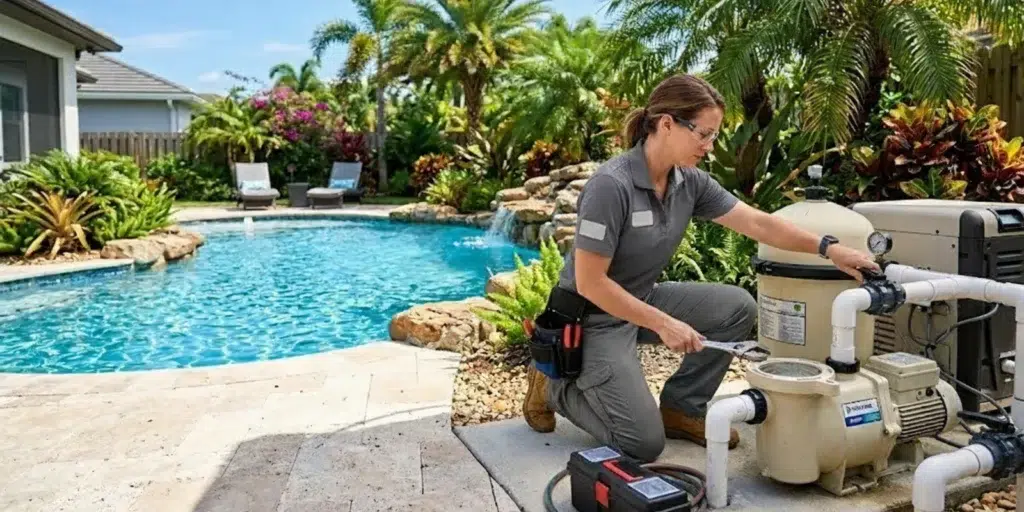
Pool pump motor replacement cost in Fort Myers depends on more than the motor itself. The pump model, motor type, condition of the wet end, electrical setup, and labor all affect the scope. Before choosing a repair, compare the full installed price with the cost and condition of replacing the complete pump, and ask what the written quote includes.
Call us to discuss your pool pump
What does pool pump motor replacement cost include?
A motor replacement quote usually includes the replacement motor, labor to remove the old motor and install the new one, reconnection, and a test of the equipment. The exact work varies by pump and site. Some estimates also include a seal or other small parts; others list them separately. Ask for a clear scope rather than comparing one total number with another.
There is no dependable single price that applies to every Fort Myers pool. Motors vary by manufacturer, horsepower, speed configuration, frame, and electrical requirements. Access, corrosion, the state of the pump, and whether additional parts are needed can change the work. Whiskey Creek Plumbing uses fixed-price service, so ask for the specific price and scope before approving work instead of relying on an hourly estimate or a generic online figure.
It also matters whether the estimate is for a motor only or a complete pump assembly. A pump moves water through the system; the motor powers it. When the motor fails, the pump housing, impeller, seal, and connections may still be serviceable. If other components are worn or damaged, replacing just the motor may not be the most sensible long-term option.
Which factors change the estimate?
- Motor type and configuration. Single-speed, dual-speed, and variable-speed systems differ in design and compatibility. The replacement must match the pool system and its controls.
- Horsepower and frame. The motor has to be suitable for the pump and plumbing arrangement. A bigger motor is not automatically a better choice; have the equipment checked for compatibility.
- Pump condition. A worn seal, damaged impeller, cracked housing, or corrosion at the connections can add work or make full pump replacement worth comparing.
- Electrical requirements. Voltage, wiring, disconnects, and controls must be suitable for the motor. If an electrical issue is suspected, identify who is qualified to evaluate it and what the quoted work covers.
- Access and installation conditions. Tight equipment areas, difficult connections, or old hardware may take more time to address than an accessible, straightforward installation.
- Parts and warranty terms. Ask which parts are included, whether the quote covers a new seal, and what manufacturer and workmanship coverage applies.
Bring a clear photo of the pump and motor label when requesting an estimate. The label can help identify the model and electrical specifications, though an on-site inspection may still be needed to confirm condition and fit.
How do you read the pump and motor details?
The equipment label is a useful starting point, but it is not a complete diagnosis. The pump and motor may have separate labels, and the details on both can matter. A technician may use the manufacturer, model number, horsepower, voltage, speed type, and frame information to identify compatible parts. Do not choose a replacement based on horsepower alone. Two motors with similar power ratings can still differ in fit, electrical needs, or controls.
Take a legible photo of each label without removing any cover or touching wiring. If a label is faded, photograph the pump from a few angles and note any numbers you can read. Share whether the system uses a timer or a separate controller. This makes the first conversation more useful and may help identify what information still needs an in-person check.
The label does not tell you whether the motor has failed or whether the pump body is sound. That requires evaluating symptoms and equipment condition. A professional should explain how the model details relate to the recommendation, especially if the proposed replacement changes the motor type or control setup.
What can make a pool pump quote hard to compare?
Two estimates may both say “motor replacement” while describing different work. One may include only the motor and basic installation. Another may include a seal, replacement hardware, reconnection, and a full operational check. An estimate may also assume that the pump housing and existing controls are in usable condition. If that assumption proves wrong, the scope could need to change.
Ask each provider to state what is included and what is excluded, in plain terms. Confirm whether diagnosis or a service visit is billed separately, whether taxes or disposal are included if applicable, and how extra work is approved. Do not assume one contractor’s listed price covers the same parts and labor as another contractor’s price. Compare the written scope side by side.
It is reasonable to ask what happens if the technician finds another issue after opening or disconnecting equipment. A clear process helps prevent surprises: the provider should explain the finding, give you the revised scope and price, and get your approval before moving ahead with added work. If you are not sure why an added item is needed, ask what it does and whether the equipment can safely wait for a decision.
When might a full pump replacement be a better comparison?
A motor-only repair is not automatically the lowest-cost choice over time if other pump parts are also failing. Consider a complete pump estimate when inspection shows a damaged housing, repeated seal or impeller issues, significant corrosion, or compatibility concerns. These conditions do not by themselves prove that a new pump is required; they are reasons to compare options with the actual condition and total price in view.
Ask the technician to separate immediate repair needs from optional upgrades. If a new pump is recommended, request the model and key specifications, what existing connections or controls will remain, and whether any changes are part of the price. If both options are workable, compare their installed cost, parts coverage, and scope. The choice should follow the pool’s needs and the condition of your equipment, not a general rule that every older motor needs a full system replacement.
Motor replacement or a complete pump: how do you compare?
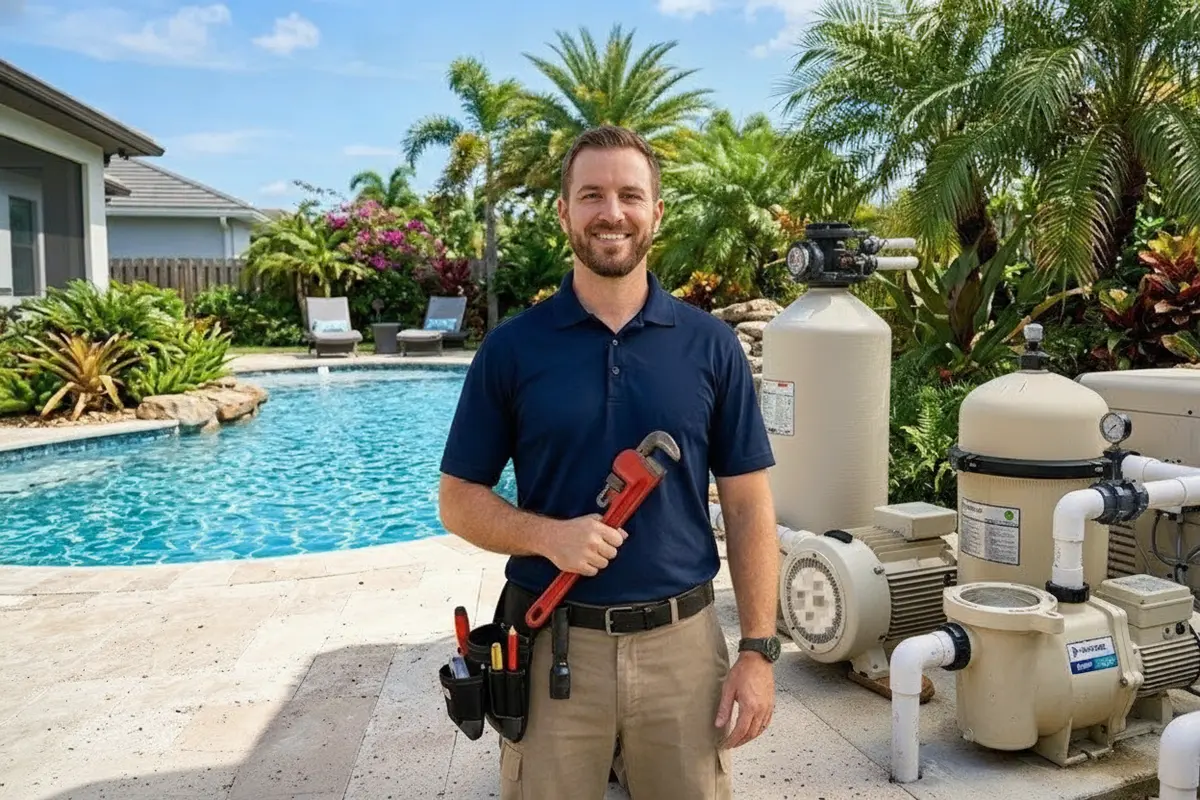
Ask the technician to explain both options when the pump itself may be worn. A motor-only job can make sense when the pump housing and internal components are in good condition and the correct replacement is available. A complete pump may be worth considering when several parts are deteriorated, the equipment is incompatible with a suitable motor, or the repair total approaches the cost of a new assembly.
There is no universal age or price threshold that decides this. Use the inspection findings, scope, warranty, and total installed amount. A written comparison is especially useful if one quote covers only a motor while another includes a pump, controls, or additional repairs.
| Option | Typically includes | Best fit when | Ask before approval |
|---|---|---|---|
| Motor replacement | Compatible motor, installation, reconnection, and operational test | The pump body and related components are in serviceable condition | Are seals, small parts, and testing included? |
| Motor repair | Diagnosis and repair of a specific motor fault, if repairable | The fault is identifiable and repair is appropriate for that motor | What failed, and what is not covered by the repair? |
| Complete pump replacement | Pump assembly and installation; scope varies by setup | The pump has other damage or a motor-only fix is not a sound fit | Does the quote include connections, controls, and startup checks? |
Ask for the motor model, pump model, parts included, labor, testing, and any exclusions to be shown in the estimate. If replacement options differ, ask the contractor to explain what condition or compatibility issue drives the recommendation. Learn more about our pool equipment services or browse our plumbing services in Lee County.
What should you check before calling?
A pump that will not start does not always have a failed motor. A tripped breaker, control setting, timer, or other equipment fault can look similar. You can collect useful information safely without opening electrical components or reaching into the pump.
- Note the symptoms. Record whether the pump is silent, humming, cycling, or running without normal water movement. Note when the issue began and whether anything changed beforehand.
- Check the timer and visible controls. Confirm that the pool schedule and accessible controls are set as intended. Do not remove covers or handle wiring.
- Look for visible leaks or damage. Check around the pump and connections from a safe distance. Do not touch wet electrical equipment.
- Photograph the labels. Capture the pump and motor nameplates, model details, and the general equipment layout if it is safe to do so.
- Share the equipment history. Tell the technician about prior repairs, noises, overheating, or recurring problems and whether the pump has recently been exposed to flooding or visible water intrusion.
If you notice smoke, a burning smell, sparks, or water around electrical parts, keep away and contact a qualified professional. Do not repeatedly reset a breaker or attempt to dismantle the motor. For background on home energy use, the U.S. Department of Energy provides general energy information; a technician can help determine whether a particular pool motor is compatible with your equipment and needs.
What should a clear replacement quote say?
A useful estimate should let you understand what will happen at your pool, not just present a total. Ask the plumber to identify the recommended option and the reason for it. The written scope should make the parts and work easy to compare.
- Is this a motor-only replacement, a motor repair, or a complete pump replacement?
- What manufacturer, model, horsepower, speed type, and electrical specifications are proposed?
- Does the price include removal, installation, seals or other parts, reconnection, and operational testing?
- Are any repairs to wiring, controls, plumbing, or the pump housing excluded?
- What warranty applies to the part and the installation?
- Will the technician explain any additional work and its price before proceeding?
These questions help you compare equivalent work. If a quote appears lower, check whether it leaves out parts, testing, or an issue already observed at the equipment. If it appears higher, ask what additional work or equipment is included. Whiskey Creek Plumbing emphasizes fixed pricing and upfront quotes; you can also review our approach to serving customers before scheduling.
How can you avoid paying for the wrong fix?
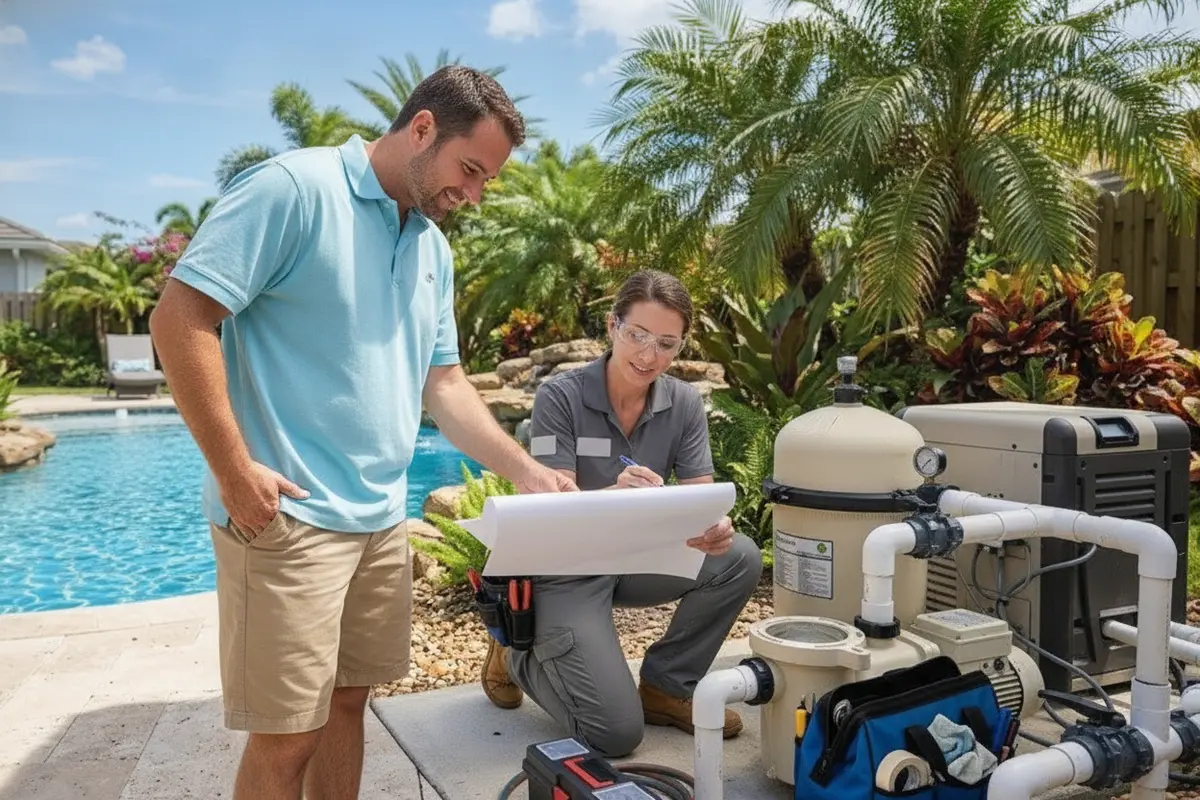
Start with diagnosis, not a guess based on a sound or a single symptom. A humming pump may point to a motor problem, but the symptom alone does not establish the cause. Confirm the source of the failure and whether the pump turns freely and its other components remain usable. A motor swap without addressing the cause of failure could leave the underlying problem in place.
Then compare total installed scope. A part advertised at a low price is not the same as a completed replacement. Make sure you know whether the estimate includes labor, compatible parts, reconnection, test operation, and any identified repairs. Request the final price before work begins and confirm how changes will be handled if inspection uncovers another issue.
Finally, consider the equipment you already have. A different motor type may have different control or electrical needs. Do not assume that a motor with similar horsepower is interchangeable. Have a qualified professional verify the fit and explain any changes that would be required.
How should you compare two motor replacement estimates?
Put the estimates beside each other and compare the same details, not just the bold total. First, check whether both recommendations are for a motor only or whether one includes the complete pump. Then compare the listed part specifications, included seals or hardware, removal and installation labor, reconnection, testing, and warranty terms. If one item is missing, ask whether it is included or excluded rather than assuming.
Next, compare the assumptions. One provider may be pricing the job on the condition that the housing and controls are reusable. Another may have identified a worn component or a compatibility concern. Ask each provider to explain the finding that supports the recommendation, and request the price for any added work before it is done. A higher total may reflect a broader scope, while a lower total may leave an important part of the work outside the estimate.
Finally, consider what happens if the inspection changes the scope. Ask whether the technician will pause, describe the issue, and get your approval before proceeding with additional work. Make sure you understand the expected payment terms and the warranty that applies. If one quote is still unclear, request a written clarification using the same questions for each provider. That gives you a more meaningful comparison than relying on a general online average that may describe a different motor, pump, or installation.
What can you do while waiting for service?
If the pump is not operating normally, avoid repeatedly switching it on and off or trying to force it to run. Follow any safety guidance from the equipment manufacturer, and keep clear of exposed wiring, wet electrical parts, or damaged equipment. If there is a burning odor, smoke, or visible electrical damage, do not touch the system; seek qualified help.
Before the visit, gather the model photos, describe the symptoms, and clear a safe path to the pool equipment if you can do so without handling the pump. Keep notes about when the problem occurs and any changes you have already made at the normal controls. Do not take apart the pump to prepare for the appointment. These small steps can make it easier to review the equipment and discuss a practical repair or replacement plan.
Call us for a fixed-price pool equipment estimate
Frequently asked questions
Can I replace only the pool pump motor?
Often, yes, if the pump housing and other components are in suitable condition and a compatible motor is available. An inspection can determine whether motor-only work is appropriate or whether the pump has additional wear.
How long does pool pump motor replacement take?
The time depends on access, equipment condition, parts availability, and whether additional work is needed. Ask the service provider for an expected timeframe after the equipment and scope are reviewed.
Does a variable-speed motor always cost less to run?
Energy use depends on the motor, settings, pool system, and how it is operated. Ask a professional whether a proposed motor is compatible and what changes to controls or installation may be needed. Do not assume a motor can be swapped without checking the system.
Should I repair or replace a noisy motor?
Noise can have more than one cause, so it is not enough on its own to choose a repair. Have the motor and pump checked, then compare the repair scope and price with a compatible replacement option.
What information helps get an estimate?
Share the pump and motor model numbers, clear photos of the labels, the symptoms, and any known service history. A technician may still need to inspect the equipment before providing a firm recommendation and price.
Get a clear next step for your pool pump
A careful inspection and written scope help you understand whether a motor repair, motor replacement, or complete pump is the right fit. We serve homeowners and businesses across Lee County and surrounding areas, and we treat customers like family. Contact us with the pump details and symptoms to discuss the next step.
Call Whiskey Creek Plumbing at (239) 785-9022
Have the pump and motor details ready, and we can help you work out a clear next step.