
Planning a water heater replacement, sewer line project, or major repipe in Southwest Florida? The permit question should be answered before work begins, not after an inspection or a home sale raises concerns.
Call Whiskey Creek Plumbing at (239) 785-9022 for project-specific permit guidance.
A plumbing permit Lee County FL project may require is a legal document that helps confirm regulated work follows current Florida Building Codes and is completed by licensed professionals. Major plumbing work commonly needs one, but the exact requirement depends on the project’s scope and jurisdiction. Check the City of Fort Myers Permits & Applications guidance or contact the appropriate building department before starting.
We will explain what a permit covers, which plumbing projects commonly trigger one, and how the process protects your home’s water and sewer systems. Understanding the definition first makes it easier to recognize when a repair is routine and when the work falls into a regulated project.
What Is a Plumbing Permit in Lee County?
A plumbing permit is a legal document issued through the appropriate local building authority before certain plumbing work begins. It gives the jurisdiction a way to review regulated work for compliance with building codes and safety standards. In practical terms, a permit helps protect the health and safety of the people using the plumbing system, while creating a record of what work was performed.
For a Fort Myers homeowner searching for a plumbing permit Lee County FL answer, the most important point is that the requirement depends on both location and project scope. Lee County has permitting requirements, but the correct authority and process can vary depending on whether the property is inside the City of Fort Myers or another municipality. The City of Fort Myers Permits & Applications page is a useful official starting point, but it is not a substitute for confirming the rules for your specific property.
What does a plumbing permit do?
A permit connects a plumbing project to a code and safety review. Lee County permits help ensure that installations, replacements, and repairs are completed by licensed professionals and follow the current Florida Building Codes. That oversight matters because plumbing is more than what is visible at a fixture. Changes can affect water supply, drainage, sewer connections, pressure, venting, and the long-term performance of the system.
The permit itself is not a guarantee that every possible problem has been eliminated. It is part of a broader process that may include approved plans, licensed work, and inspections. It also gives a homeowner documentation that can be useful when maintaining the property or explaining past improvements later.
Why jurisdiction and scope matter
Two homes in the same general Southwest Florida market may not follow identical permitting steps. A project inside Fort Myers may be handled through the city, while another property may fall under a different local building department. The work being proposed matters just as much. Replacing one visible component is not the same question as installing a new water heater, replacing a sewer line, or changing substantial portions of a home’s piping.
Before work starts, identify the property jurisdiction and describe the full scope rather than relying on a general online answer. If you are performing plumbing work in Fort Myers or Lee County, confirm with the applicable building department whether your specific project requires a permit. We also explain our transparent approach in this guide to fixed-price plumbing service, so you can evaluate the work and its cost clearly before making a decision.
What Plumbing Work Requires a Permit in Lee County?
In Lee County, the need for a plumbing permit usually depends on the project’s scope, not just how long the work takes. New installations, system replacements, and substantial alterations deserve a permit check before work begins. The City of Fort Myers notes that permits help ensure plumbing work follows current Florida Building Codes and is completed by licensed professionals. You can review the official Fort Myers permits and applications guidance for local direction.
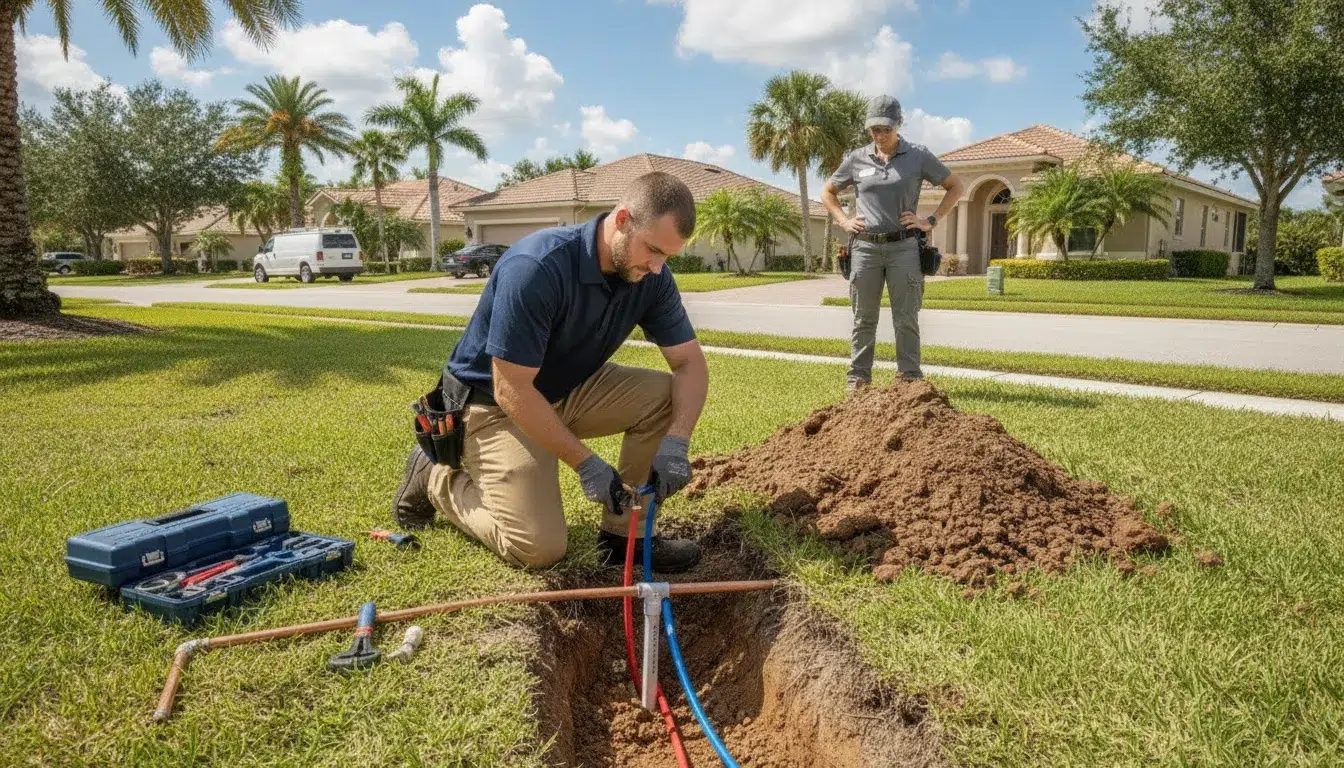
Water heater installations
A new water heater installation typically requires a permit. The work involves more than setting a tank or connecting a few pipes. The installation may affect water connections, discharge piping, temperature and pressure protection, fuel or electrical connections, and the placement of the equipment. Because the exact requirements can vary by equipment and jurisdiction, confirm the permit and inspection requirements before replacing the unit, especially when changing fuel type, location, or capacity.
Sewer line replacement
Sewer line replacement is another type of work that typically requires a permit. A sewer project can affect connections, slopes, cleanouts, property drainage, and the public or private portion of the system. It may also involve excavation and inspection before the trench is covered. Our sewer line replacement guide explains the service itself, but the permitting decision still needs to be confirmed for the specific property and project.
Major repiping and plumbing alterations
Major repiping projects typically require a permit because they replace or substantially alter the water distribution system. Moving multiple fixtures, adding new supply lines, changing a building’s plumbing layout, or installing plumbing as part of an addition can also trigger a review. If you are comparing localized repairs with a whole-home project, our guide to pipe repair versus repiping can help you understand the scope questions to discuss with a professional.
What about minor repairs?
Do not assume that every small repair is automatically exempt. Some limited work may be treated differently under applicable rules. The Florida Building Code’s Section 105.2 exemptions include limits and exceptions, including provisions that do not make plumbing work automatically exempt. That does not answer every project-specific question, and a simple-looking repair can become more substantial if walls are opened, lines are relocated, or a system is altered. Confirm the current rule with the applicable Lee County or municipal building department.
For a plumbing permit in Lee County FL, contact the appropriate building department before scheduling the work and describe exactly what will be installed, replaced, or altered. The department can confirm whether your project requires a permit and identify any required documentation or inspections. For unincorporated Lee County, begin with the county’s Building and Permitting Services resources. Getting that answer in advance is safer than relying on a general rule or assuming the contractor, homeowner, or property type changes the requirement.
How to Pull a Plumbing Permit in Lee County, FL
The right process starts with the jurisdiction, not the application form. Lee County and its municipalities can have different building departments, portals, forms, and project rules. A plumbing permit Lee County FL project needs should be confirmed for the property and the exact scope of work before construction begins.
- Confirm which authority serves the property. Determine whether the address is in unincorporated Lee County or within a municipality such as Fort Myers, Cape Coral, or another local jurisdiction. If the work is in the City of Fort Myers, start with the City of Fort Myers Permits & Applications page. For an unincorporated Lee County project, use the county’s Building and Permitting Services resources. If you are unsure, contact the building department and ask which office should review the project. The official guidance recommends confirming requirements for the specific Fort Myers or Lee County job.
- Describe the work accurately. Write down what will be installed, replaced, repaired, relocated, or altered. Include the fixtures, water or sewer lines, water heater, repiping, and any related work. New water heater installations, sewer line replacements, and major repiping projects typically require permits. Do not assume that a small job is exempt. Section 105.2 of the Florida Building Code includes limits and exceptions, so plumbing work is not automatically exempt. The building department can make the project-specific determination.
- Gather the project information and documents. Prepare the property address, owner information, contractor information, a clear scope of work, and any plans, specifications, or supporting documents requested by the applicable building department. Fort Myers provides application checklists and forms on its permits page. The required documents can differ by jurisdiction and by the complexity of the work. So use the current checklist instead of relying on an older form or an internet summary.
- Use the official online application path when available. Lee County’s online permitting information may direct applicants to an eConnect or Accela-style portal. Begin from the official Lee County or municipal website, then follow its current link to the permitting system. Review the portal’s instructions for creating or accessing an application, uploading documents, and handling any required payment. Do not rely on an unofficial guide for exact fees, approval times, or portal steps because those details can change.
- Wait for the department’s review and respond to requests. Keep the application reference and watch for messages from the reviewing authority. If staff request clarification or revised documents, answer through the designated portal or contact method. A permit is not the same as approval to skip inspections. Ask which inspections apply to the scope before work is covered.
- Schedule and complete required inspections. Follow the instructions from the issuing authority to schedule inspections at the appropriate stages. Keep access available and avoid concealing work that must be inspected. The exact inspection sequence depends on the jurisdiction and project.
- Retain the permit record. Save the application, issued permit, inspection results, approvals, and related project documents with your home records. Permit records help document improvements for future maintenance and can support resale. If a licensed plumbing contractor handles the process, ask for copies of the permit and final inspection documentation for your files.
When the jurisdiction or scope is unclear, confirming it before work starts is the safest next step. It helps prevent an avoidable correction later and keeps the project record complete.
What Happens If You Skip the Plumbing Permit?
Skipping a permit is not simply a paperwork shortcut when the project requires one. It can leave questions about whether the work followed applicable code, whether the water and sewer systems remain protected, and how the improvement will be documented later. A missing permit or inspection record can create compliance and documentation questions that are best resolved through the appropriate local process. Review the local permit guidance or confirm your project’s requirements with the appropriate building department.
Code compliance and safety concerns
A permit process provides a way to verify that regulated plumbing work is completed appropriately. Without that process, unauthorized or potentially dangerous work may go unreviewed. That matters because an installation, repair, or alteration can affect the integrity of a home’s water and sewer systems. Problems may not be obvious on the day the work is finished. A connection that leaks slowly, a modification that strains existing piping. Or work that does not meet current requirements can create concerns for the property and the people using it.
This does not mean every unpermitted project automatically creates a hazard or triggers the same response. The outcome depends on the project, its location, and the applicable requirements. If you are unsure whether a plumbing permit was needed, gather the project details and ask the local building department what should happen next. That is safer than assuming the work is acceptable because it appears to function.
Future sale and missing records
Permit records create a documented history of home improvements. Those records can support future maintenance and resale. When a required permit is missing, a buyer, seller, inspector. Or professional working on the property may have less information about what was changed and how the work was reviewed. That documentation gap can lead to questions during a sale, even when the plumbing is currently operating.
Correction work may become part of the solution
If unpermitted work is questioned, the focus should be on understanding the project’s status and resolving the documentation or compliance issue through the proper local process. Avoid guessing about penalties or assuming that a new inspection alone will settle every situation. Start by confirming the jurisdiction and describing the work accurately. A licensed plumbing professional can also help clarify the scope and identify what information should be provided, while the building department remains the authority for project-specific permit requirements.
How a Licensed Plumber Handles Permits for You
Permit questions are easiest to manage before work begins. A licensed plumber can review what you want changed, identify the likely code and inspection requirements, and help you confirm the answer with the correct local building department. That support matters because the requirements for a plumbing project can depend on its scope and jurisdiction. It does not replace the jurisdiction’s decision or guarantee permit approval.
At Whiskey Creek Plumbing, we hold Florida Plumbing Contractor license CFC1431877. When a project involves regulated plumbing work, we can help homeowners understand the process and typically handle the permit-pulling work associated with the job. Our role is to keep the paperwork and field work aligned, while keeping you informed about what is being done and why.
1. Reviewing the project scope
We start by looking at the actual work, not just the name of the repair. Replacing a fixture may raise different questions than installing a new water heater, replacing a sewer line, or repiping a home. We discuss what will be removed, added, relocated, or altered, then identify which portions may require permitting. If the answer is unclear, we recommend confirming the requirement with the relevant City of Fort Myers or Lee County office before work proceeds.
This scope review also helps prevent a common communication problem: a homeowner assumes the permit covers one task, while the work expands into another. A clear description gives the permitting office, plumber, inspector, and property owner the same starting point.
2. Confirming jurisdiction and preparing paperwork
Lee County includes multiple municipalities, and the responsible office can depend on the property’s location. We help identify where the application should go and what project information may be needed. Local offices provide application checklists and forms, but the exact requirements should be confirmed for the specific address and scope. We do not promise an approval date or assume that one jurisdiction’s process applies everywhere.
For larger installation or replacement work, our plumbing installation services can include planning the work around the applicable permitting and inspection process. We can also explain the service cost in advance through our fixed-price plumbing service approach, without treating an unconfirmed permit fee as part of the plumbing price.
3. Coordinating inspections and keeping you informed
Once the project is underway, permit responsibilities do not end with the application. Required inspections may need to be coordinated at the appropriate stage, before walls or other access points are closed. We communicate what has been scheduled, what the inspector is checking, and whether any correction or follow-up is requested. The homeowner remains informed rather than having to guess where the project stands.
When the work is complete, keeping permit and inspection records with your home documents can support future maintenance and resale. A licensed professional cannot remove every permitting decision from the homeowner, but can provide a more organized path from project scope to documented completion.
Permitted vs. Unpermitted Plumbing Work: The Real Risks
The difference between permitted and unpermitted work is not only whether a form was filed. It is whether the project has a documented path through the appropriate authority, licensed work, and any required inspection. That record can matter later when you maintain the home, investigate a leak, or prepare to sell.
| Project consideration | Permitted work | Unpermitted work |
|---|---|---|
| Documentation | Creates a record of the improvement. | May leave no clear project history. |
| Code review | Can be reviewed under applicable requirements. | May not receive the same review. |
| Inspection | Required inspections can be scheduled at the proper stage. | Inspection status may be unclear. |
| Safety | Supports oversight of regulated plumbing work. | Potentially unsafe work may go unreviewed. |
| Future sale | Records can support maintenance and resale. | Missing records may create questions. |
The City of Fort Myers explains that permits help ensure plumbing installations, replacements, and repairs meet building codes and safety standards. The process also helps prevent unauthorized work that could affect the integrity of a home’s water and sewer systems. These are practical protections, not just administrative requirements.
If the work has already been completed
Do not guess about the next step or assume that the same response applies to every property. Gather the address, the work performed, available invoices, contractor information, and any photographs or plans. Then contact the building department with a clear description of what was installed or altered. The office can explain the appropriate way to address an undocumented project.
A licensed plumber can help clarify the plumbing scope and identify questions to ask, but the local authority decides the project-specific permit and inspection requirements. Keeping the final permit and inspection records with your home documents gives future homeowners and service professionals a clearer starting point.
For major sewer work, compare the service considerations in our sewer line replacement guide before approving a project.
What Homeowners Should Confirm About a Plumbing Permit in Lee County, FL
Before plumbing work begins, take a few minutes to confirm who has responsibility for the permit and what the project includes. Requirements can depend on the property’s jurisdiction and the scope of the work. So the safest approach is to verify the details with the appropriate building department rather than rely on a general rule. The City of Fort Myers directs property owners to contact the building department about whether a specific project requires a permit.
- Confirm the jurisdiction. Is the property inside the City of Fort Myers, unincorporated Lee County, or another local municipality? Start with the building department that governs the property. The correct office can confirm the applicable process and provide current forms or checklists. Review the City of Fort Myers permits and applications resources when that jurisdiction applies.
- Define the scope in writing. Ask the plumber to describe exactly what will be installed, replaced, repaired, or rerouted. New water heaters, sewer line replacements, and major repiping commonly require permits. A small repair may be treated differently, but do not assume an exemption applies to plumbing work without project-specific confirmation.
- Verify the contractor’s license. Ask for the plumbing contractor’s license information and make sure the person or company performing regulated work is properly qualified. Whiskey Creek Plumbing holds Florida Plumbing Contractor license CFC1431877. A licensed professional can also help identify whether the proposed work falls within permit requirements.
- Ask who will pull the permit. Get a clear answer before approving the job. Professional plumbers typically handle permit-pulling for regulated work. But the homeowner should know whether the contractor or property owner is submitting the application, responding to questions, and arranging inspections.
- Confirm inspection responsibilities. Ask what inspections may apply and who will schedule them. Do not cover walls, trenches, or other concealed work until the responsible party confirms that any required inspection steps are complete.
- Keep the records. Save the permit number, approved documents, inspection results, invoices, and final scope of work together. Permit records can support future maintenance and resale, especially when a buyer or inspector needs evidence of how a plumbing improvement was completed.
- Get the price and scope in writing. A written fixed-price proposal should identify included work, exclusions, materials, restoration, and any permit-related charges without inventing or assuming a fee. If the project involves a sewer replacement, review this sewer line replacement guide. For aging supply pipes, compare repair options with the pipe repair versus repiping guide.
This checklist will not replace confirmation from the governing building department, but it can prevent avoidable confusion. We explain the scope, pricing, and permit responsibilities clearly so homeowners know what happens before work starts and which records to keep afterward.
Frequently Asked Questions
When is a plumbing permit required in Lee County, FL?
A permit is commonly required for regulated plumbing installations, alterations, or replacements, including a new water heater, sewer line replacement, or major repiping project. Because requirements depend on the work and jurisdiction, confirm your project with the local building department. The City of Fort Myers explains the purpose of permits and provides related guidance.
Can a homeowner pull a plumbing permit?
In some situations, a homeowner may be able to apply directly, but the process and eligibility depend on the property, project scope, and jurisdiction. A licensed plumbing contractor typically handles permitting for regulated work, coordinates inspections, and helps ensure the application accurately describes the job.
Do minor plumbing repairs always need a permit?
Not always, but do not assume that a repair is exempt. Section 105.2 of the Florida Building Code includes limits and exceptions, so plumbing work is not automatically exempt. Review Lee County Building and Permitting Services resources and confirm the requirement before work begins.
How can I check whether my project needs a permit?
Describe the planned work, property location, and scope to the appropriate Lee County or city building department. Ask whether an application, inspection, or licensed contractor is required, and keep the response with your project records. Permit documentation can help with future maintenance and resale.
Call Whiskey Creek Plumbing at (239) 785-9022 for project-specific guidance.
Ready to Discuss Your Plumbing Project?
Permit requirements can depend on the work, property, and jurisdiction. We can help you review the project scope and identify the right questions to confirm before work begins, so you can plan the next step with clearer information.
Call Whiskey Creek Plumbing for project-specific plumbing and permit guidance in Fort Myers and Lee County.