
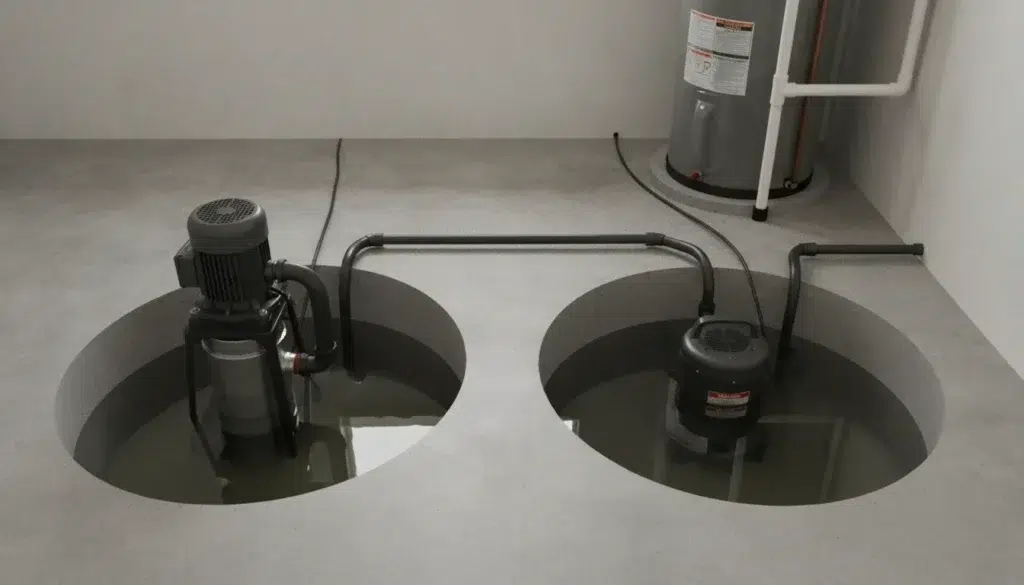
If you are comparing a pedestal sump pump with a submersible model, the right choice depends on your sump basin, available space, expected water flow, noise tolerance, and how accessible you want the pump to be. A pedestal pump keeps its motor above the water, while a submersible pump sits inside the basin. Both can protect a home when the pump, switch, pit, and discharge line are matched to the property.
Talk with Whiskey Creek Plumbing about sump pump installation and repair.
Quick answer: A pedestal sump pump may fit a narrow basin, a lower-water application, or a space where easy motor access matters. A submersible pump is often the better fit when you want a covered basin, less operating noise, and a compact installation inside the pit. Neither design is automatically best. The correct selection depends on pump capacity, basin dimensions, discharge height, and the way water reaches the collection point.
What is the difference between a pedestal and submersible sump pump?
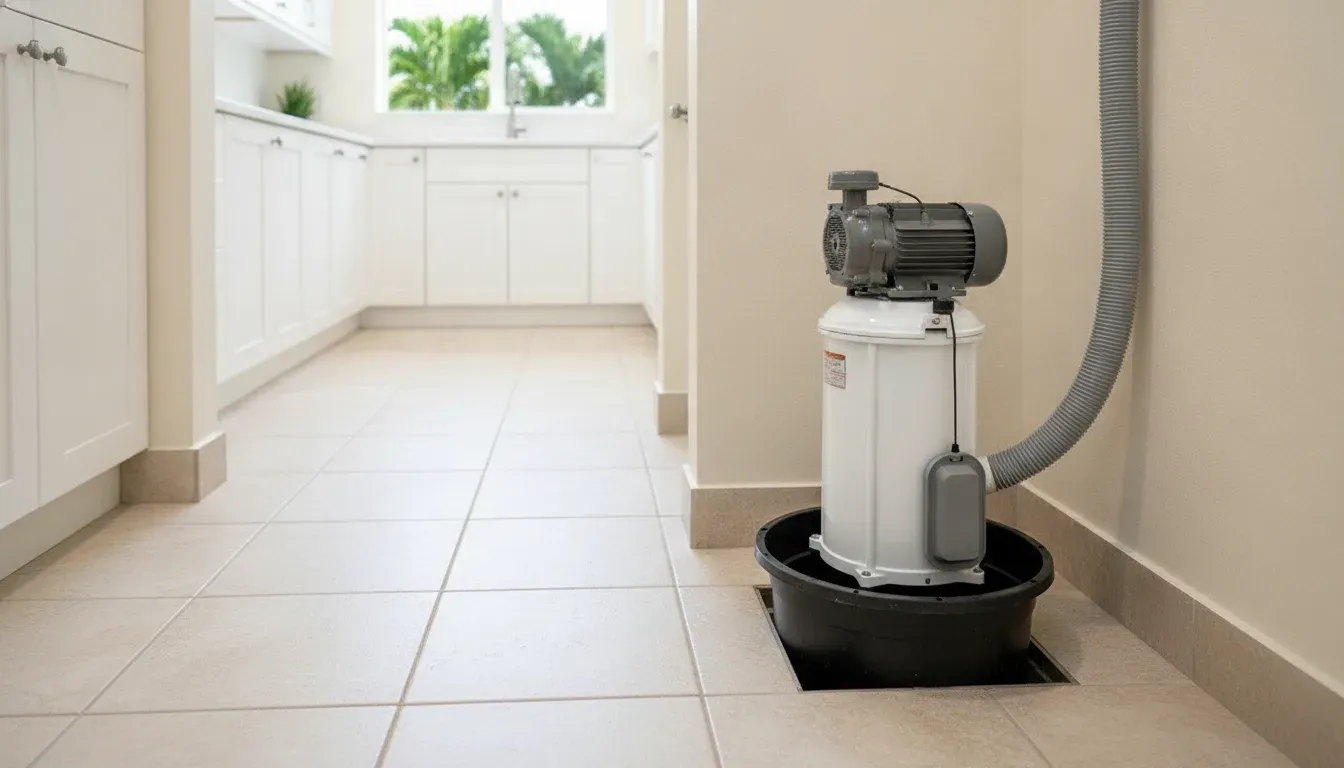
The main difference is where the motor operates. A pedestal pump has a long vertical shaft or column. Its impeller sits down in the basin, but the motor remains above the water. A submersible pump combines the motor and pump housing in one unit that operates at the bottom of the basin and is designed to be surrounded by water while running.
- Pedestal sump pump: Motor above the water, pump assembly in the basin, usually a taller visible profile.
- Submersible sump pump: Motor and pump assembly inside the basin, generally a lower-profile and more enclosed installation.
- Both types: Need a suitable basin, a working float or sensor, a check valve, a clear discharge route, and reliable power.
The pump style is only one part of a working sump system. A pump that is too small may not keep up with incoming water. A pump that is poorly matched to the basin or discharge height may cycle excessively, fail to move enough water, or create avoidable maintenance problems.
Pedestal sump pump advantages and limitations
A pedestal design can be practical when the basin is narrow or when the homeowner wants the motor and controls easy to see. Because the motor is above the water, routine inspection and some service work can be more accessible. Pedestal models can also be a useful option where the basin depth and surrounding layout provide enough clearance for the upright motor.
Advantages of a pedestal pump
- Easy access: The motor and much of the operating assembly remain above the basin.
- Useful in a narrow pit: The upright design can leave room for the float to move when the basin is not wide.
- Visible operation: It is easier to see the motor, switch, and surrounding area during an inspection.
- Potentially lower equipment cost: The motor is not built into a sealed underwater housing, although the total installation cost still depends on the property and plumbing work.
Limitations to consider
- More operating noise: The motor is exposed above the water, so its sound and vibration may be more noticeable.
- More clearance required: The motor needs room above the basin and should not be located where it can be hit or obstructed.
- Heat management matters: The motor does not receive the cooling effect of being submerged, so heavy or continuous operation deserves careful equipment selection.
- Float choice is limited: Pedestal pumps commonly use a vertical float, which needs to move freely without touching the pit wall or piping.
Submersible sump pump advantages and limitations
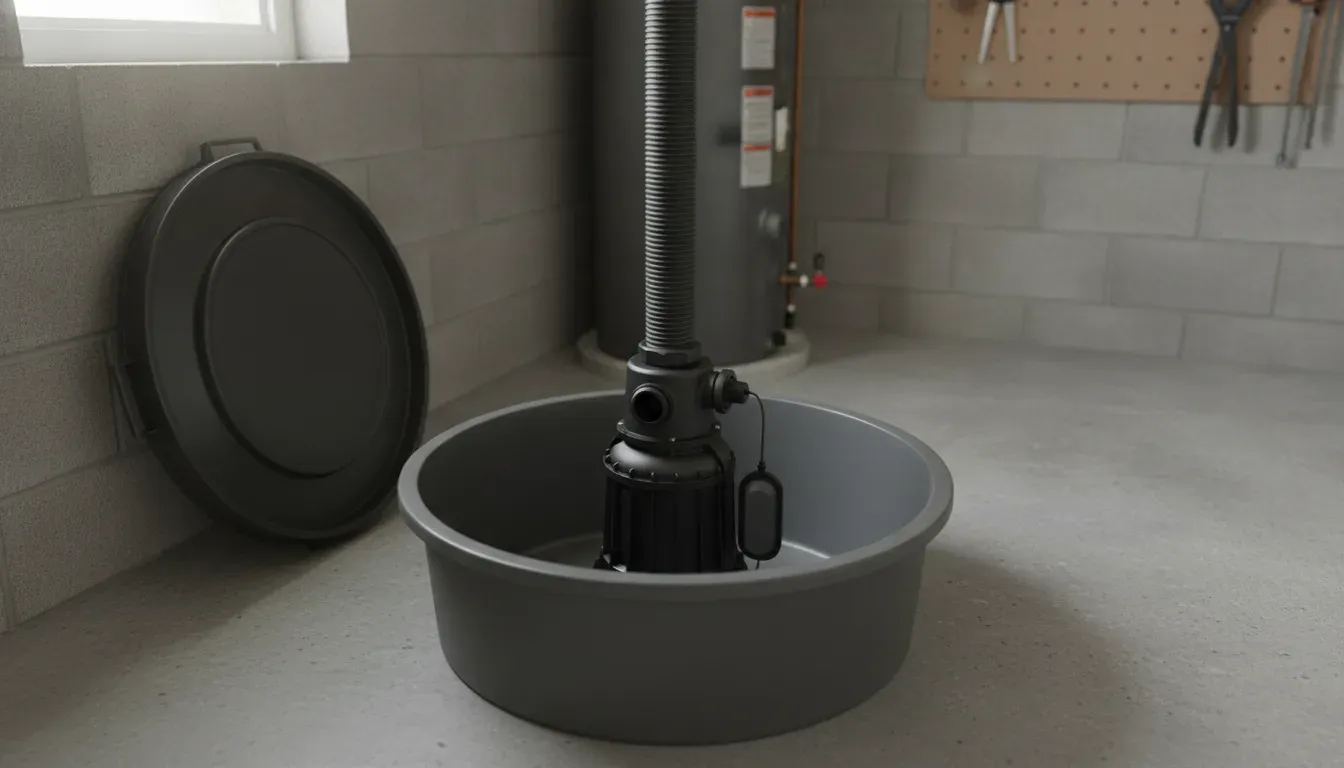
A submersible pump is placed at the bottom of the sump basin. The motor and pump are enclosed in a housing intended for this setting, and the surrounding water helps carry heat away during operation. Many submersible installations use a lid or cover over the basin, which can help reduce sound and keep objects from falling into the pit.
Advantages of a submersible pump
- Quieter operation: The basin and cover can reduce the sound heard in the surrounding room.
- Compact above-floor profile: There is no tall motor standing above the basin.
- Good fit for a covered basin: The motor remains inside the pit while the discharge piping exits through the cover or nearby connection.
- Cooling from the surrounding water: The submerged design can help manage motor heat during normal pump operation.
Limitations to consider
- Service access can be less convenient: The pump must be lifted from the basin for some inspections or repairs.
- Water-resistant construction is essential: A submersible pump must be designed for continuous exposure to the basin environment.
- Basin dimensions still matter: The pump and float need enough room to operate without binding or catching.
- A cover does not replace maintenance: The switch, discharge line, check valve, and pump inlet still need periodic inspection.
Which sump pump is quieter?
In most installations, a submersible pump is quieter because its motor is inside the basin and may be covered. A pedestal pump places the motor in the open air above the water, so vibration and operating sound can be easier to hear. The room, floor, discharge piping, basin cover, and pump condition also affect the final noise level.
A sudden change in noise is more important than a simple comparison between pump types. Grinding, rattling, buzzing, repeated short cycling, or a motor that runs without moving water can point to a switch, inlet, impeller, check valve, discharge, or pump problem. Turn off power safely if there is an electrical concern and arrange an inspection rather than reaching into an active basin.
Which pump is better for a narrow sump basin?
A pedestal sump pump can be a practical choice for a narrow basin because its motor is raised above the water and many models use a vertical float. However, a submersible pump can also work in a narrow basin when its dimensions and switch design are compatible. The important measurement is not just the basin opening. The pump needs enough space for water to enter, the float to move, and the discharge connection to remain clear.
Before replacing a pump, check the basin depth and width, the current pump location, the float movement, the discharge pipe size, and the vertical distance the pump must lift water. A replacement that fits the opening may still be a poor match for the system if it cannot handle the required lift or if its switch catches on the basin.
How do you choose between pedestal and submersible sump pumps?
Use these questions to narrow the choice:
- How much room is around the basin? A pedestal motor needs clear space above the pit. A submersible model uses more of the basin but keeps the floor area more open.
- How important is noise control? A submersible setup is often preferable near finished rooms or living areas where pump noise is disruptive.
- How easy should routine access be? A pedestal motor is visible above the basin. A submersible unit may need to be lifted out for some service.
- How does water enter the basin? The pump and float must work with the basin, drainage paths, and expected water level.
- What lift and discharge route are required? Pump capacity should be evaluated at the actual discharge height and pipe layout, not only by a number printed on a box.
- What happens during a power interruption? If flooding risk is meaningful, ask about a backup plan, high-water alarm, or other protection appropriate for the property.
In Southwest Florida, the home may not have a traditional basement, but a sump system can still serve a low area, crawlspace, drainage collection point, or other location where water needs a controlled path away from the structure. Local soil, rain, drainage layout, and the condition of the discharge route all matter.
Pedestal vs. submersible sump pump: side-by-side comparison
- Motor location: Pedestal above water. Submersible inside the basin.
- Typical sound profile: Pedestal is usually more noticeable. Submersible is often quieter when the basin is covered.
- Access: Pedestal motor is easy to see. Submersible requires removal from the basin for some work.
- Space: Pedestal needs vertical clearance. Submersible keeps the above-floor area more open but needs compatible basin space.
- Cooling: Pedestal motor is air-cooled. Submersible motor is surrounded by water during operation.
- Best choice: Depends on basin dimensions, water volume, lift, discharge routing, noise, access, and backup needs.
When should a plumber evaluate the sump pump?
Arrange a professional evaluation when the pump does not start, runs continuously, cannot keep up with incoming water, trips a breaker, vibrates, makes a new sound, or sends water back toward the home. An inspection is also worthwhile when replacing a pump with a different style, changing the basin, rerouting the discharge line, or adding protection for a property that has experienced water damage.
A plumber can assess the pump, float or sensor, basin, check valve, discharge piping, and visible plumbing connections as one system. That matters because installing a new pump will not solve a clogged discharge, restricted inlet, poor discharge location, damaged check valve, or basin that is not collecting water correctly.
Contact Whiskey Creek Plumbing at (239) 785-9022 for help choosing or servicing a sump pump.
Frequently asked questions
Is a pedestal sump pump better than a submersible pump?
Neither style is always better. A pedestal pump can suit a narrow basin and offers easy motor access. A submersible pump can be a better fit when quieter operation, a covered basin, and a compact above-floor installation are priorities. The correct choice depends on the complete sump system.
Do submersible sump pumps last longer?
Service life depends on pump quality, sizing, cycling, water conditions, installation, and maintenance. A submersible design benefits from the cooling effect of surrounding water, while a pedestal motor stays above the water and may be easier to inspect. A well-matched installation matters more than the label alone.
Can you replace a pedestal pump with a submersible pump?
Sometimes, but it is not always a direct swap. The basin must have enough room, the discharge connection must be compatible, the float must move freely, and the pump must provide the required flow at the system’s lift height. Have the complete setup checked before changing pump styles.
How often should a sump pump be tested?
Test the pump according to the manufacturer’s guidance and after any plumbing work, long period without operation, unusual noise, or heavy storm. A basic test should confirm that the switch starts the pump, water leaves through the discharge line, and the pump shuts off normally. Do not handle electrical connections or reach into a basin unsafely.
What should I do if my sump pump is running constantly?
Check for an obvious discharge obstruction only if it can be done safely, and do not disconnect a pump that is actively needed to control rising water. Constant operation can result from heavy inflow, a stuck float, restricted discharge, a failing check valve, an undersized pump, or a problem with the drainage system. Call a plumber for a complete diagnosis.