
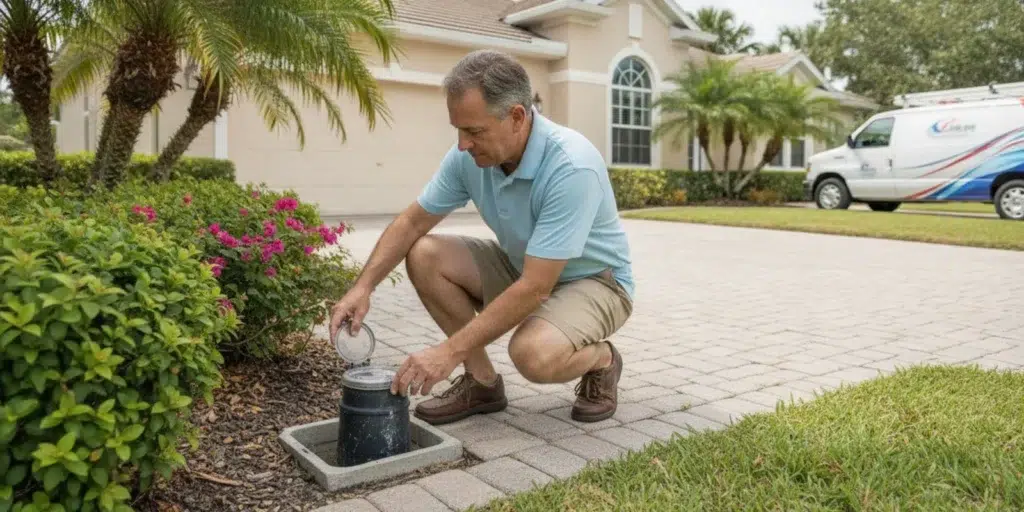
Knowing how to detect a water line leak begins with looking for more than one clue and checking whether water moves when every known use is off. A higher-than-usual bill, persistent damp ground, or unexpected meter movement can point to a problem, but none proves the source by itself. These safe checks can help you decide whether to monitor the situation, contact your water provider, or arrange a plumbing assessment.
Contact Whiskey Creek Plumbing for an assessment
What does a water line leak look like?
A water line carries pressurized water to fixtures and appliances. A leak may occur at an exposed connection, inside a wall, beneath a floor, or on a buried service line. Water can travel through soil or building materials before it becomes visible, so the first damp spot may not be directly over the source.
Look for a pattern. A single wet area after a storm is less conclusive than a spot that stays wet through dry weather and appears alongside unexplained meter movement. In Southwest Florida, rain, irrigation, pool equipment, and air-conditioning condensate can all leave water in places that look suspicious. Consider those sources before drawing a conclusion.
- Unexpected water use: A bill or usage reading rises without a clear change in household routine.
- Meter movement: The meter registers flow while known indoor and outdoor water use is stopped.
- Persistent dampness: Soil, a driveway edge, or an indoor surface remains wet without an obvious source.
- Running-water sound: You hear water when fixtures and appliances are not operating.
- Pressure change: Several fixtures seem weaker than usual, particularly when the change is sudden or sustained.
- New water damage: Discoloration, soft materials, or unexpected moisture appears indoors.
These observations are clues, not a diagnosis. A running toilet, irrigation valve, water treatment system, pool autofill, or appliance may use water without making an obvious puddle. Check the ordinary explanations first, unless water is actively damaging the building or creating a safety hazard.
How can you check the water meter safely?
A meter check answers a narrow question: is water moving through the meter while you believe the property is not using any? It cannot pinpoint a leak, and a short test may miss an intermittent or very small problem. Follow the meter or utility’s instructions. Do not force a lid, handle, or valve.
- Choose a time when nobody will use water. Tell household members, pause laundry and dishwashing, and account for scheduled irrigation.
- Turn off faucets and check that toilets are not refilling. Consider equipment that runs automatically, such as a treatment system or pool autofill.
- Locate the meter and note its reading or observe its flow indicator, if it has one. Keep clear of flooded or unsafe areas and do not touch electrical equipment.
- Wait a reasonable interval without using water, then compare the reading or indicator. If it moved, check that known uses really were stopped and repeat the test.
- Record the time and readings. If flow continues, contact the water provider or a plumber to help determine which part of the system should be checked.
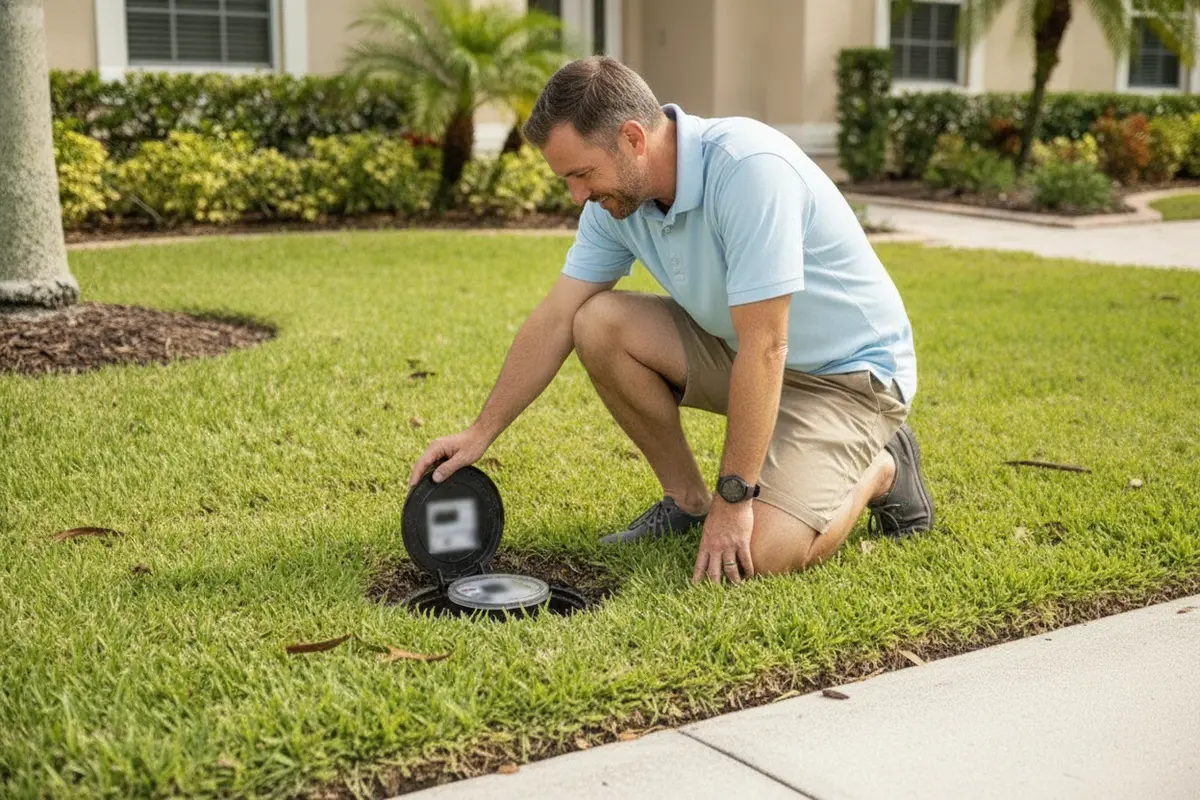
A moving meter does not automatically mean the buried service line is leaking. Water may be passing through a toilet, appliance, irrigation system, or a leak elsewhere on the customer side. Meter location and local utility rules determine who maintains each section. If you are unsure where the utility’s responsibility ends, ask the provider rather than adjusting its equipment.
How do you rule out other sources?
Use a simple process of elimination. Listen for a toilet that keeps refilling, and look for movement in the bowl when it should be idle. A worn flapper can allow water to pass without creating a visible puddle. Check whether a dishwasher, washing machine, ice maker, or water treatment system is running. Outside, review irrigation timing, sprinkler heads, and any pool equipment that adds water automatically.
Pause only equipment you understand, and follow its instructions. Do not disconnect pipes, bypass safety devices, or turn utility-owned valves. Once ordinary use is accounted for, repeat the meter check. If the indicator stops when a particular system is paused, that is useful evidence. If it continues, note the result and share it with the plumber.
Consider where and when moisture appears. A wet area beside a sprinkler head may relate to irrigation; dampness beneath a sink may come from a local connection. Condensation on a cold pipe, air-conditioner drainage, roof leaks, and surface runoff can resemble plumbing leakage. If a visible pipe is safely accessible, look for fresh moisture at joints, but do not remove insulation, open walls, or enter a hazardous space.
Which clues call for prompt attention?
Act promptly if water is entering the home, spreading quickly, damaging floors or belongings, or pooling near electrical equipment. If it is safe and you know how, use the home’s main shutoff to stop the flow while arranging help. Do not enter standing water where an electrical hazard may be present, and do not force a stuck valve.
For a suspected buried line issue, a persistent wet patch combined with unexplained meter movement is a reasonable basis for an inspection. A new pressure change across multiple fixtures or a sound of running water with all known uses off adds context. Do not excavate to search for a pipe. Buried utilities may be present, and the visible wet spot may be some distance from the source.
For general household leak and water-conservation information, see the U.S. Environmental Protection Agency. General guidance cannot identify the source of a particular leak or replace an inspection.
What should you do before a plumber arrives?
- Limit unnecessary water use: If the meter continues moving, reduce avoidable use until you understand why.
- Shut off water only when safe: For active leakage, use an accessible home shutoff if you know how. Keep away from electrical hazards.
- Protect belongings: Move items away from visible water only if the area is safe to enter. Avoid electrical devices in wet areas.
- Record what you observe: Note when the symptoms began, meter readings, pressure changes, weather, and recent irrigation or appliance use.
- Take photographs: A dated photo of a changing wet area can help show whether it persists or grows.
- Keep access clear: Make the meter, main shutoff, and affected area accessible without digging or removing panels.
- Prepare questions: Ask what the assessment covers, how findings will be explained, and when you will receive a price before work is approved.
Whiskey Creek Plumbing serves Southwest Florida and provides plumbing services for homes and businesses. You can review our plumbing services and share the observations you recorded. We use fixed-price service; ask for the price and scope before approving work.

What might a professional inspection determine?
An assessment starts with your description of the problem and a review of relevant visible plumbing, meter behavior, and affected areas. Depending on what the initial checks show and how the plumbing is laid out, further testing or leak-detection equipment may help narrow down the source. The right approach depends on access, the suspected location, and what evidence is available.
The purpose is to distinguish among possible causes before recommending a repair. A visible fitting or accessible pipe may call for a localized repair. A concealed or buried line may require additional diagnosis and a conversation about access, repair options, and disruption. No one can responsibly promise a particular repair before locating and assessing the problem.
Ask the plumber to explain the suspected location, the evidence supporting that conclusion, and what remains uncertain. If more testing is proposed, ask what question it is intended to answer and how different results would affect the next step. If excavation or opening a surface is discussed, clarify the area involved and whether restoration is included or handled separately.
How do the next steps compare?
Use the strength of the evidence and the urgency of the situation to choose a next step. The comparison below does not estimate repair cost; the scope cannot be determined until the source and access requirements are understood.
| Option | When it fits | What to do | Limit |
|---|---|---|---|
| Observe and document | One weak clue, such as damp ground after rain, with no damage or meter movement | Photograph the area; check weather, drainage, and irrigation; see whether it dries | Do not wait if water is actively entering the home |
| Check meter and ordinary uses | Unexplained use or a suspected leak without an immediate hazard | Pause known uses, inspect toilets and equipment, compare readings, and record results | Shows whether flow may be occurring, not where it originates |
| Arrange a plumbing assessment | Repeated meter movement, persistent unexplained dampness, or continuing pressure changes | Share readings, photos, and the timing of symptoms; ask what testing is proposed | Diagnosis and repair scope depend on the actual findings |
| Seek urgent help | Fast water intrusion, active flooding, or water near electrical hazards | Keep clear of unsafe areas and seek immediate help; shut off water only if safe | Personal safety comes before investigating the source |
How can you compare a repair proposal fairly?
Before approving work, understand what is included. Ask whether the proposal covers diagnosis, access to the pipe, the repair itself, and testing afterward. If a surface must be opened or soil excavated, ask what the work area may involve and whether cleanup or restoration is part of the price or a separate item.
Compare proposals by scope, not just by the total. One estimate may include locating and repairing a leak; another may cover only a limited repair after someone else has identified the source. Check whether materials, access, testing, cleanup, and exclusions are described. Ask what could change the scope and how you will be asked to approve any additional work.
Whiskey Creek Plumbing uses fixed-price service. Request an upfront price for the described work and confirm what it includes before authorizing it. For background on the company, read about our approach to serving customers. You can also review our Southwest Florida service areas.
What if the leak may be on the utility’s side?
Water-system boundaries vary. Meter placement and local utility rules affect which pipe section the utility maintains. If water appears close to the meter, if you suspect the problem is before the service line enters the property, or if you cannot tell which side is involved, contact the water provider for guidance. Do not adjust a meter or utility-owned valve.
If the provider confirms the concern is beyond its maintained section, share that information with the plumber. If responsibility is uncertain, ask the provider and plumber what each can inspect. Establishing the boundary can help direct attention to the right section and avoid unnecessary work.
When you call, give a concise account: when the issue began, what was running, what the meter did with known water use stopped, and where you saw moisture. Mention any active damage or safety concern first. This information helps the conversation focus on urgency and the next useful check.
How can you track an intermittent sign?
Not every leak produces a steady flow. A toilet may refill periodically, irrigation runs on a schedule, and some appliances use water only during a cycle. If a single meter check is negative but you still notice a bill change, sound, or damp patch, repeat observations at different times rather than assuming the concern is settled.
Keep a simple log with date, time, meter reading, weather, household activity, irrigation schedule, and what you observed. For instance, a wet strip along a yard edge that appears after sprinklers run points to a different set of possibilities than a patch that remains wet after several dry days. A meter that moves only overnight may coincide with an automatic system; note its cycle and compare a test when that system is paused according to its instructions.
Use consistent conditions when comparing readings. Record the display carefully, including any units or decimal places, and avoid comparing readings taken before and after normal household use as if they were a controlled test. Photos from the same viewpoint can show whether an area is expanding. These notes do not locate the leak, but they can help a plumber understand when it occurs and avoid repeating checks you already completed.
What might a careful check look like in practice?
Imagine a homeowner sees a damp patch beside the driveway and receives a higher bill. The patch appeared after rain, so neither clue confirms a water-line problem. First, the homeowner checks whether irrigation runs nearby and photographs the spot. After several dry days, the patch remains. They then choose a quiet period, pause known water uses, verify the toilet is not refilling, and compare the meter. It moves again on a second test.
That combination justifies asking for an assessment, but it still does not establish whether the source is the service line, an irrigation branch, or another system. The homeowner shares the dates, readings, rain history, and photos. If the water provider can clarify its maintenance boundary, that information helps direct the next conversation. This approach is more useful than digging at the visible wet spot or replacing a pipe based on one clue.
Now consider a different case: a meter indicator moves during the first test, but stops after the homeowner notices a toilet refilling. A toilet issue becomes a reasonable lead, and the meter test can be repeated after the ordinary source is addressed. The lesson is to use each check to narrow the question, not to treat it as a final diagnosis.
What should you ask during the assessment?
Clear questions make it easier to understand what a recommendation means. Ask the plumber to identify the evidence found, explain which section of plumbing is being considered, and separate confirmed observations from possibilities. If a test is proposed, ask what it will help determine, what access it needs, and whether it could disturb landscaping or finishes.
- What possible sources have been ruled out, and which remain?
- Where is the suspected problem in relation to the meter and the home?
- What does the proposed diagnostic step establish, and what would it not establish?
- Does the quoted scope include access, repair, testing, cleanup, and any restoration?
- Will you pause and explain any scope change before proceeding?
Write down the answers, especially if the issue involves several possible systems or the work may require access through a finished surface. A useful proposal connects the observed evidence to the recommended work. If you do not understand why a repair is suggested, ask for the explanation before authorizing it.
Call (239) 785-9022 to discuss the signs
Frequently asked questions
Can a water line leak happen without a visible puddle?
Yes. A leak may be concealed beneath a floor, inside a wall, or underground. Unexpected meter movement or water use can be a clue even before moisture becomes visible.
Does a moving meter prove the main water line is leaking?
No. Toilets, appliances, irrigation, and other equipment can use water unnoticed. Stop known uses and repeat the check; continued movement is a reason to ask for help determining the source.
Should I dig up a wet spot to find the pipe?
No. Buried utilities may be present, and water can travel away from its source. Photograph the area and let a professional assess how to locate the problem safely.
Should I shut off my home’s water?
If water is actively leaking and the shutoff is safe and accessible, turning it off may limit damage. Do not enter standing water near electrical equipment or force a valve; seek help if uncertain.
What information should I give the plumber?
Share when symptoms started, what water-using equipment was operating, whether the meter moved with known uses stopped, and where you noticed moisture or pressure changes. Photos and readings can help describe the pattern.
Plan the next step for your home
Check ordinary sources, observe the meter safely, and take persistent or worsening clues seriously. When unexplained water use continues or damage appears, share your notes with a plumber so the cause can be assessed before a repair is chosen.
Contact Whiskey Creek Plumbing to arrange an assessment
Careful observations can make the next conversation clearer, while a professional assessment is needed to identify the actual source and suitable repair.