
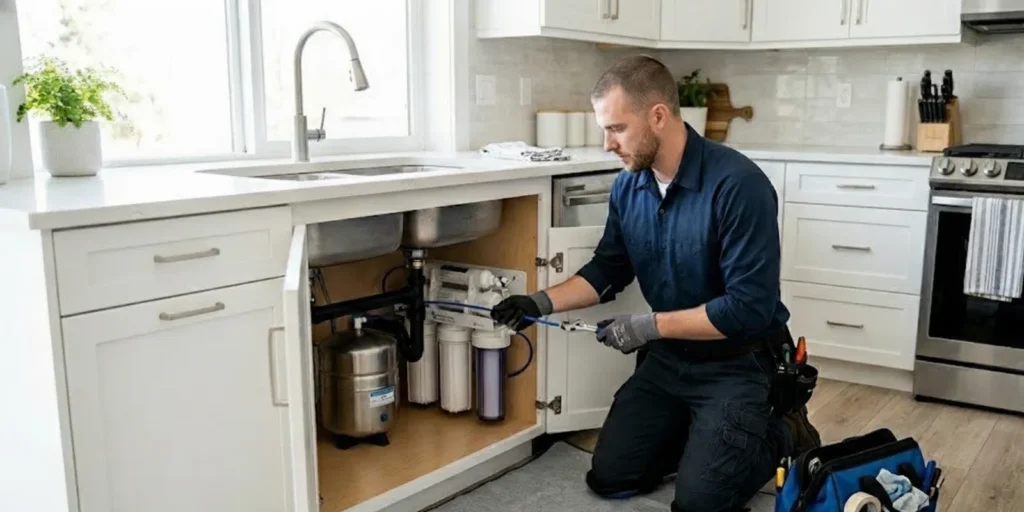
Garbage disposal installation cost depends on the appliance and the condition of the kitchen connections—not simply the time needed to attach a unit. A like-for-like replacement with sound existing parts may have a different scope from a first-time installation or a job that also needs plumbing or electrical changes. A useful estimate explains the work, parts, assumptions, and approval process before installation begins.
Request a clear installation quote
This guide is for homeowners comparing options before scheduling work. It does not promise a universal price because the setup under each sink is different. Instead, it shows how to understand a quote, what information to gather, and which questions can keep the scope clear.
What determines garbage disposal installation cost?
A quote reflects the equipment and the labor required for the described job. Before comparing totals, find out what each estimate includes and what conditions could change it.
- The disposal unit: Models vary in motor capacity, construction, dimensions, and features. A household that uses the appliance lightly may not need the same model as one with frequent use. Ask which options fit your sink and routine rather than assuming the largest model is best.
- Replacement or first installation: A replacement may reuse suitable mounting and drain components. A sink with no prior disposal may need a mounting assembly and compatible connections, plus confirmation that cabinet space and electrical supply are appropriate.
- Condition of existing parts: Corroded mounting hardware, worn seals, damaged drain fittings, or a leaking trap can add work. A quote should say whether it assumes those parts are serviceable.
- Compatibility: A new model may differ in size, mounting design, or drain outlet position. Those differences can affect fit and may require suitable additional parts.
- Electrical connection: The installer needs to confirm that the connection is suitable for the selected appliance. If it needs modification, clarify who will perform that work and whether it is part of the quote.
- Access and removal: Limited cabinet space, difficult access, and removal of an existing unit can affect the job’s steps. Ask whether taking away the old unit is included.
- Testing and cleanup: Confirm that the scope includes checking operation and looking for leaks after connections are made, as well as cleanup and handling of the old appliance.
These factors interact. For example, buying a different model before checking the mounting arrangement may create a compatibility issue that would not have arisen with a suitable replacement. Conversely, keeping a worn flange merely to limit the initial scope may not be a sound choice if inspection shows that it cannot support a dependable installation. The estimate should explain the reason for each included repair or part.
How do replacement and first-time installation compare?
The starting condition often determines how much work is involved. This table compares possible scopes, not prices; an assessment is needed to confirm which situation applies in a particular kitchen.
| Project type | Work to clarify in the estimate | Conditions that may change scope |
|---|---|---|
| Like-for-like replacement | Remove the old unit, install a compatible replacement, reconnect and test. | Worn mount, leaking seal, damaged drain part, or unsuitable connection. |
| Different replacement model | Check dimensions, mounting design, drain outlet, and electrical requirements. | Different fit or connection layout may call for compatible components or adjustment. |
| First-time installation | Assess sink opening, mount, drain route, cabinet space, and electrical supply. | Missing or unsuitable connections can add work beyond attaching the appliance. |
| Installation plus repair | Identify the issue and list repair work separately from the installation. | Hidden damage may become apparent only when existing components are inspected or removed. |
Use the table as a conversation guide. If two quotes describe different project types, their totals are not a fair comparison. A lower replacement estimate may assume the existing mount and electrical supply can be reused, while a more complete quote may include a specific part or task. Ask each provider to state assumptions in writing.
Which disposal should you choose?
Start with fit and intended use. Ask what models suit the sink, available cabinet space, existing drain arrangement, and household habits. Features such as sound reduction may matter to some households, while others may prefer a straightforward model. The selection should follow practical needs and compatibility, not a presumption that more capacity is always necessary.
Read the manufacturer’s product information for dimensions, installation requirements, and connection details. If you plan to provide the disposal yourself, share the make and model before the visit. Confirm who is responsible if it proves incompatible, has missing components, or arrives damaged. Also ask whether the installation quote changes if the selected model differs from the one discussed.
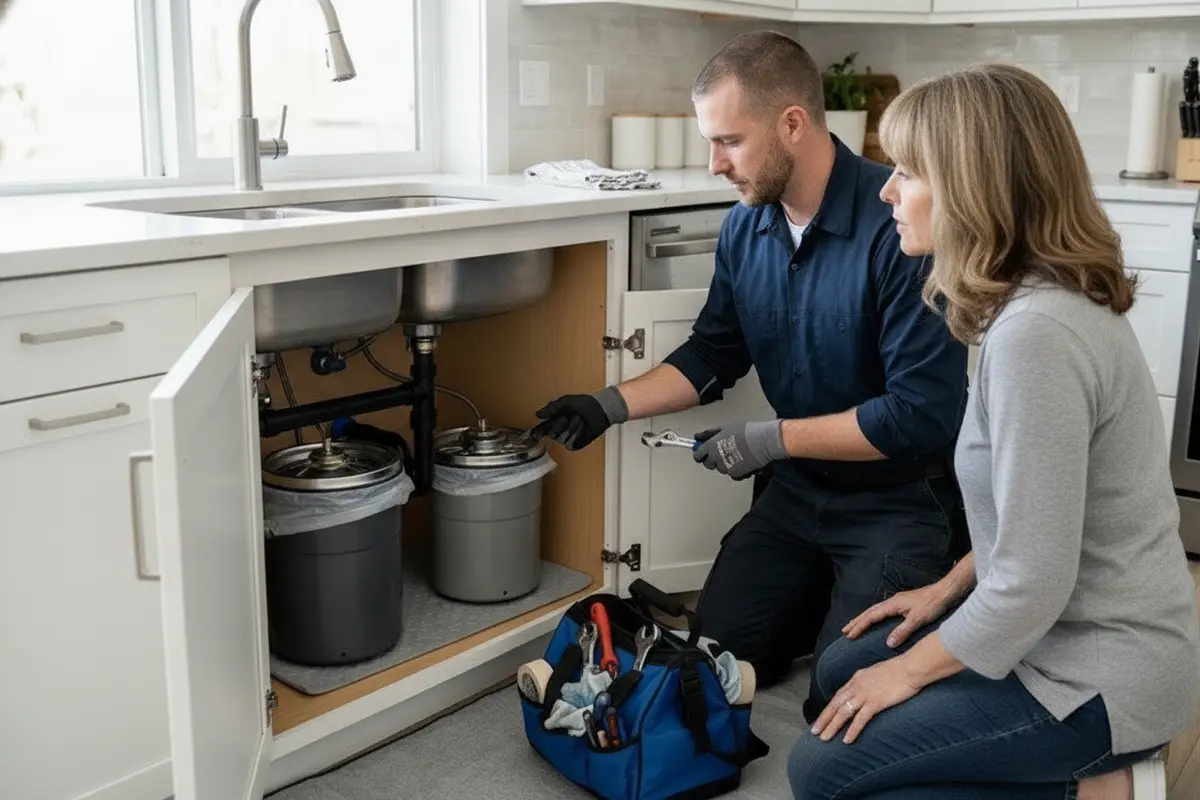
The U.S. Environmental Protection Agency’s food disposal guidance addresses disposals and food pulpers in a commercial water-use context, rather than residential installation pricing. It can help illustrate that equipment selection and operating practices depend on the setting; it should not be treated as a household price list. Read the EPA’s food disposal guidance.
What should an installation quote include?
A useful quote is specific enough that you can tell what you are approving. Check for the following details:
- The disposal make and model, or a clear description of the unit to be supplied.
- Removal of the existing appliance, if there is one, and whether disposal of it is included.
- Mounting hardware, flange, seals, drain fittings, and other connection parts included in the price.
- The assumed condition of the existing plumbing and electrical connection.
- Whether electrical changes or separate work are included or excluded.
- Testing for leaks and operation after installation.
- Cleanup, old-unit handling, and any applicable warranty terms.
- How unexpected conditions will be explained, priced, and approved before work continues.
Ask whether the quoted amount is fixed for the written scope or could change based on time or materials. Whiskey Creek Plumbing uses a fixed-price service model; the specific price depends on the work and should be confirmed for your home. If a condition cannot be confirmed until the old unit is removed, ask how the plumber will pause, explain the finding, and get your approval before proceeding with additional work.
It can help to ask for the quote in two parts: the planned installation and any conditional work. Conditional items are not automatically necessary. They are possibilities to discuss if inspection finds a specific issue. A clear distinction makes it easier to decide without feeling that you must approve optional changes as part of the basic installation.
What can make a straightforward replacement more involved?
Some conditions are hidden by the appliance or become visible only during removal. Water beneath the sink could come from a seal, a drain fitting, the disposal body, or a separate plumbing issue. A replacement that does not match existing mounting hardware may need compatible parts. A unit that will not run may have an electrical problem rather than a failed motor.
Ask the plumber to describe the finding and identify the component involved. When practical, request a look at the issue before deciding. Have the installer distinguish the work needed to complete the agreed installation from optional upgrades. Agree on any added scope and price before it begins.
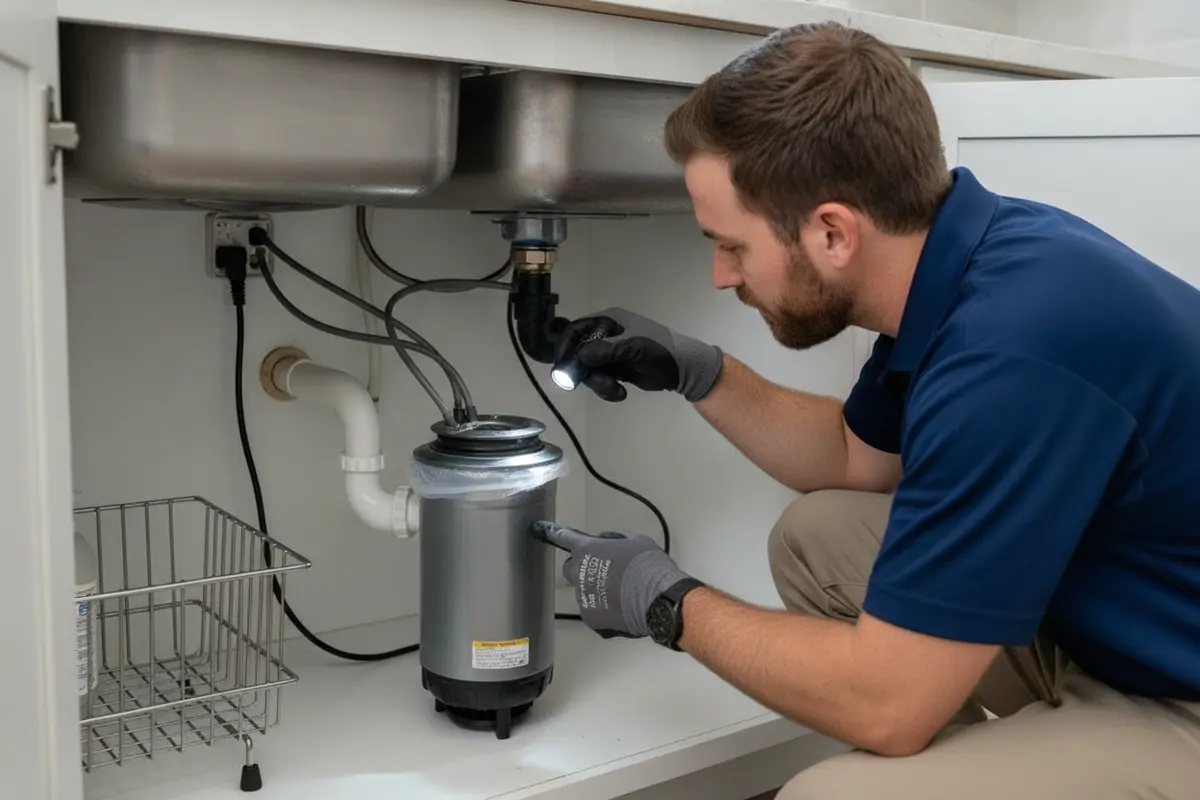
If the current disposal leaks or makes unusual noises, note when the symptom occurs and whether water is present in the cabinet. Do not put a hand inside the appliance. If it is safe, switch it off and keep the area clear until it can be checked. These observations help describe the problem but do not establish which part needs repair.
A repair and an installation are related but not identical decisions. If the existing appliance is being replaced, clarify whether diagnosing a separate leak or electrical fault is included in the installation estimate. For questions about water under the sink, see our leak detection and repair information. For details about the service itself, review garbage disposal installation.
How can you prepare for an installation assessment?
A few details make it easier to discuss the right scope and reduce avoidable uncertainty.
- Say what kind of project you have. Explain whether you are replacing a unit, adding a disposal for the first time, or combining installation with a repair.
- Share the model details. If the current unit or proposed replacement has a visible model number, provide it. Do not assume two units with similar appearance use the same mount or connections.
- Describe symptoms clearly. Note leaks, unusual sounds, clogs, or failure to operate, and when they occur. Avoid guessing at the cause.
- Clear the cabinet. Move stored items so the mounting area and connections can be reached and inspected.
- Discuss your appliance plan. If you have bought a model, share its information. If not, ask what fits and whether the installer can supply a suitable unit.
- Review the scope before work starts. Confirm removal, parts, testing, cleanup, price, and how any added work will be approved.
Photos can help explain the current arrangement when requesting an estimate, but they may not show worn seals, damage, or every connection. Treat a preliminary discussion as a way to clarify likely scope, not as a substitute for checking conditions that cannot be seen.
For more on fixed-price plumbing, read what a flat-rate plumber means for homeowners. You can also use the service scheduling page to arrange a visit and review the company’s background.
How do you compare estimates fairly?
Compare like with like. Put the estimates side by side and check whether they refer to the same unit and same work. A simple checklist helps expose differences that a bottom-line figure hides.
- Is the same make and model included, or are you comparing different appliances?
- Does each estimate include removing the old unit and taking it away?
- Are the mounting assembly and drain parts included or listed as conditional additions?
- Does each quote assume the existing electrical connection is ready for use?
- Are leak checks, operation testing, and cleanup included?
- What specific conditions could change the price, and must you approve them first?
- Is the quote fixed for its stated scope, and how long does it apply?
For example, imagine one estimate includes a disposal and installation but assumes that the existing mounting hardware is reusable. Another includes new mounting parts and removal. The first total may look lower, but it is not necessarily describing the same work. Ask the provider to clarify the difference rather than treating either amount as the complete comparison.
Likewise, a quote that lists a possible drain repair should explain what finding would make that repair necessary. A vague allowance is hard to evaluate. Ask whether the plumber will show you the condition and pause for approval if the actual work differs from the estimate. Written scope protects both sides from relying on different assumptions.
For another perspective on how fixed-price service is described, see our fixed-price plumbing guide. If you are still comparing providers, focus on the work and the approval process rather than a single headline number.
Frequently asked questions
Is replacing a disposal usually simpler than installing one for the first time?
It can be, when the existing mount, drain, and electrical connections are suitable and in good condition. Inspection and compatibility with the replacement model determine the actual scope.
Can I buy the disposal before getting an estimate?
You can, but share the exact model details first and confirm that it fits the sink and connections. Ask who is responsible if the appliance is incompatible or arrives with missing parts.
Does an installation quote include electrical work?
Not necessarily. Ask whether the quote assumes an existing usable connection and what happens if it needs changes. Confirm which work is included before approving the job.
Why might the scope change after the estimate?
Some problems, such as a damaged fitting or worn mounting hardware, may only become clear during inspection or removal. Ask how the finding will be explained and priced, and require approval before added work starts.
Should I choose the most powerful disposal available?
Not automatically. Choose a model that suits household use and fits the sink and connections. Ask the installer to explain the practical difference between compatible options.
Ask for an installation assessment
Get a clear next step for your kitchen
Before approving an installation, make sure the unit, removal, connections, testing, and any conditional repairs are accounted for. Whiskey Creek Plumbing can discuss the existing setup and provide a quote for the stated work. For a service-specific overview, visit the garbage disposal installation page.
Request a quote for your kitchen
A clear scope helps you understand what the installation includes and make a confident decision for your home.