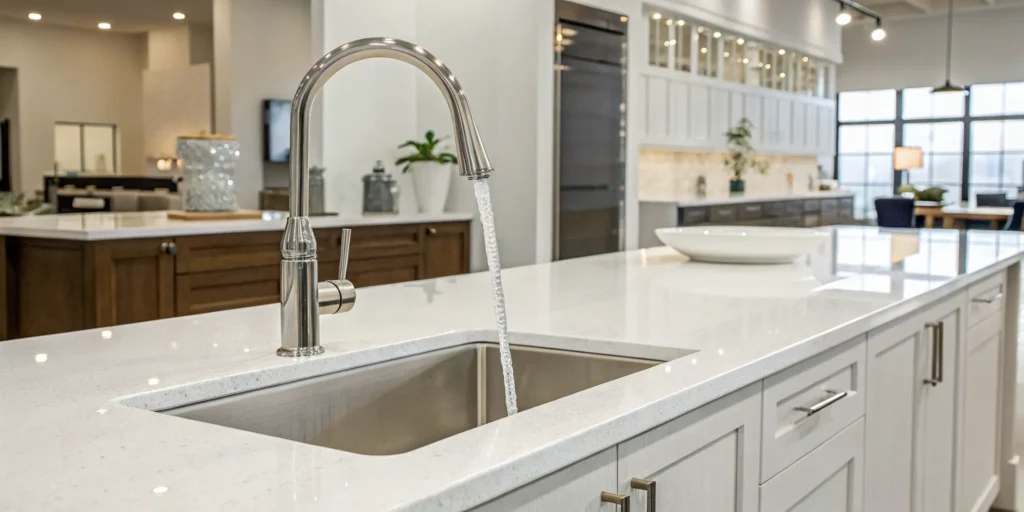
The humble faucet has come a long way. Today’s models are packed with incredible technology designed to make life more convenient and hygienic. You can find faucets that turn on with a simple touch, respond to your voice, or even dispense a precise amount of water for a recipe. These innovations are more than just cool gadgets; they can help you save water and keep your kitchen cleaner. This guide explores the latest features in the world of smart and touchless faucets, explaining how they work, which brands are leading the way, and whether one of these high-tech fixtures is the right upgrade for your home.
Need a Plumber in Fort Myers?
Whiskey Creek Plumbing has delivered five-star, fixed-price plumbing services to Southwest Florida homeowners and businesses since 2006. No surprises — just guaranteed work.
Locally owned & operated · Fixed-price guarantee · Serving Fort Myers since 2006
Key Takeaways
- Look beyond the finish: A faucet’s durability comes from its internal parts, not just its looks. Opt for solid brass construction and a ceramic disc valve for a fixture that is built to last.
- Match your faucet to your sink and lifestyle: Before buying, check the number of holes in your sink to ensure a proper fit. Then, think about how you use the space to choose a functional style, like a pull-down sprayer for a busy kitchen.
- Know when to DIY and when to call for help: You can often fix low water pressure by cleaning the aerator yourself. However, for persistent drips, complex installations, or noises in your pipes, calling a professional is the smartest move to protect your home.
What Is a Faucet, Anyway?
We use them every single day, but how often do we stop to think about them? A faucet is essentially the gatekeeper for the water in your home. It’s more than just a spout; it’s a complete system with handles and internal valves that let you turn the water on, control the pressure, and get that perfect warm temperature for washing your hands. While they all serve the same basic purpose, faucets come in a surprising variety of types, styles, and technologies. Understanding the fundamentals is the first step toward choosing a new one for your kitchen or bathroom, or even just figuring out what’s going on when one starts to drip.
How Does a Faucet Work?
At its core, a faucet’s job is simple: it controls water flow. Think of it this way: water is always waiting in the hot and cold supply pipes under your sink. When you turn a handle or lift a lever, you’re operating a valve inside the faucet’s body. This valve opens a seal, allowing water to travel up through the faucet and out of the spout. In a double-handle model, you’re controlling the hot and cold valves separately to mix the water yourself. In a single-handle model, the movements of the lever control two valves at once. Knowing these basics can help you describe an issue if you ever need professional plumbing services.
Residential vs. Commercial Models
You’ve probably noticed that the faucet at a public restroom in a restaurant or airport feels different from the one in your home, and there’s a good reason for that. Commercial faucets are built to be workhorses. They are designed for extreme durability and high-volume use, often featuring heavier brass construction and simpler, more robust internal parts. Many are touchless or have automatic shut-offs to promote hygiene and conserve water. Companies like Chicago Faucets specialize in these heavy-duty models. Residential faucets, on the other hand, prioritize style, ergonomics, and a wider range of finishes and features, like pull-down sprayers, to fit the aesthetics and needs of a home.
A Look Inside: Faucet Valve Types
Ever wondered what’s happening inside your faucet when you turn the handle? The magic is in the valve. Think of the valve as the engine of your faucet; it’s the internal part that controls the water flow and temperature. The type of valve a faucet has determines how it feels to operate, how durable it is, and how easy it is to repair. Understanding these four common types will help you choose a faucet that not only looks great but also works beautifully for years to come.
Compression Faucets
This is the original faucet design, and you’ve likely seen it in older homes. Compression faucets are the classic two-handle models, with one for hot and one for cold. Inside, a rubber washer is compressed against a valve seat to stop the water flow when you tighten the handle. While they are simple and inexpensive to fix (usually just by replacing a worn-out washer), they are the most prone to leaks and drips. That constant drip, drip, drip is often a sign that a washer has worn out, a common reason people call for plumbing services.
Ball Faucets
Ball faucets were one of the first types of single-handle, washerless faucets. You’ll often find them in kitchens. They work using a slotted metal or plastic ball that rotates as you move the handle, controlling both the water flow and the temperature mix. The single handle makes them convenient for one-handed operation. While they are a big improvement over compression faucets, they have more parts than other washerless designs. This can sometimes make pinpointing and repairing a leak a little more complex, but it’s a routine job for a professional.
Cartridge Faucets
Cartridge faucets are a very popular and reliable choice for both kitchens and bathrooms. They can have a single handle or two handles. Inside, a hollow cartridge controls the water flow when you move the handle. The action is typically very smooth and consistent. One of the best things about this design is its easy maintenance. If a leak develops, the fix is usually as simple as pulling out the old cartridge and putting in a new one. This straightforward design makes them a dependable workhorse for any busy household.
Ceramic Disc Faucets
This is the modern standard in faucet technology. Ceramic disc faucets use two highly durable, polished ceramic discs that slide against each other to control water flow. When the discs are aligned, water passes through; when they are separated, the seal is watertight. This design is incredibly durable and almost never wears out from normal use, making leaks a rarity. While they may have a higher price tag upfront, their longevity makes them a fantastic long-term investment. As a family-run business, we at Whiskey Creek Plumbing always appreciate products built to last.
Exploring Faucet Styles and Mounts
Once you know which valve type you prefer, the fun part begins: choosing a style that fits your kitchen or bathroom’s look and your daily routine. Faucets come in a surprising variety of shapes and mounting options, each with its own set of benefits. From sleek, single-handle designs to high-tech touchless models, the right faucet can make your space more functional and stylish. Let’s walk through the most common styles so you can find the perfect match for your home.
Single-Handle
Single-handle faucets are a popular choice for a reason: they’re incredibly user-friendly. With just one lever, you can control both the water flow and the temperature, making it easy to operate with one hand when you’re busy in the kitchen or bathroom. Inside, a metal or plastic ball with slots manages the mix of hot and cold water. This simple, streamlined design works well in almost any setting, from modern to traditional. If you value convenience and a clean, uncluttered look on your countertop, a single-handle faucet is a fantastic option to consider for your next upgrade.
Double-Handle
If you appreciate a classic look and precise control, a double-handle faucet might be right for you. This traditional style features separate handles for hot and cold water, allowing you to fine-tune the temperature with accuracy. Many of these faucets use a time-tested compression mechanism to control water flow. They offer a symmetrical, balanced appearance that complements many bathroom and kitchen designs, especially those with a more vintage or farmhouse feel. While they require two hands for temperature adjustments, many people prefer the distinct control and timeless aesthetic that double-handle faucets provide.
Pull-Down and Pull-Out
For ultimate flexibility in the kitchen, pull-down and pull-out faucets are game-changers. Both styles feature a spray head that you can detach from the main spout, connected by a flexible hose. This makes rinsing vegetables, filling large pots, and cleaning every corner of your sink incredibly easy. Pull-down models have a high-arc spout where the sprayer pulls straight down, while pull-out models have a more compact spout where the sprayer pulls out toward you. Both are excellent choices for busy kitchens, and our team can handle the plumbing installation to get your new faucet working perfectly.
Wall-Mounted
Wall-mounted faucets offer a clean, contemporary look by lifting the fixture off the countertop entirely. Installed directly on the wall behind the sink, this style frees up counter space and creates a striking design statement. They are an especially great pairing for vessel sinks that sit on top of the counter or for freestanding tubs where deck space is limited. Because the installation is more involved and requires the water lines to be in the wall, it’s a job best left to a professional. A wall-mounted faucet can give your bathroom or kitchen a unique, high-end feel.
Widespread and Deck-Mounted
These terms describe how a faucet is installed on your sink or countertop. A deck-mounted faucet is attached directly to the sink’s rim or the counter behind it. In contrast, a widespread faucet has three separate pieces: a central spout and two individual handles for hot and cold water. This allows for more flexible spacing, making it ideal for wider sinks. Widespread faucets often create a more substantial, elegant look, while standard deck-mounted options offer a more compact and unified design. Your choice will depend on the pre-drilled holes in your sink and your personal style preference.
Touchless and Smart
For a truly modern experience, touchless and smart faucets bring convenience and hygiene to your fingertips, or rather, away from them. Touchless faucets use a motion sensor to turn the water on and off, which is perfect for preventing the spread of germs when your hands are messy. Smart faucets take it a step further, sometimes offering voice activation, precise temperature control, and even measured dispensing. These high-tech options are becoming more common in residential homes, adding a touch of luxury and practicality. If you’re ready to upgrade, we provide a wide range of plumbing services to get your smart home started.
How to Choose the Right Faucet
Picking a new faucet can feel surprisingly complex. It’s not just about finding one that looks good; you also have to think about how it functions, how it fits your sink, and how long it will last. A faucet is one of the most-used fixtures in your home, so making a thoughtful choice now can save you a lot of hassle later. Think of it as an investment in your daily routine. A great faucet can make washing dishes less of a chore, add a beautiful finishing touch to your kitchen or bathroom, and even help you save on your water bill.
To make the right decision, you need to balance style with substance. It’s easy to fall for a trendy finish or a sleek design, but if it doesn’t meet your household’s needs, you’ll end up frustrated. Do you need a high-arc faucet to fill large pots? Are you interested in water-saving features? What kind of installation does your current sink support? Answering these questions will help you narrow down the options and find a faucet you’ll be happy with for years. If you feel overwhelmed by the technical details, remember that our team at Whiskey Creek Plumbing is always here to help with expert advice and professional installation.
Find Your Style and Finish
This is the fun part where you get to define the look of your space. Faucets come in a huge variety of styles, from modern pull-down models that are perfect for kitchens to classic, elegant bridge-style faucets. You can also choose from single-handle designs for simple temperature control or double-handle fixtures for a more traditional feel. Think about how you use your sink every day. A pull-out or pull-down sprayer can be incredibly convenient for rinsing vegetables or cleaning the sink basin.
Once you have a style in mind, consider the finish. Finishes like polished chrome, brushed nickel, matte black, and champagne bronze can dramatically change the feel of a room. It’s a good idea to match your faucet finish to other hardware in the room, like cabinet pulls and light fixtures, to create a cohesive look. There are so many stylish and functional options out there that you’re sure to find one that fits your personal taste and practical needs.
Consider Water Efficiency
A water-efficient faucet is good for the planet and your wallet. Many modern faucets are designed to use less water without sacrificing performance, which can lead to noticeable savings on your monthly water bills. When you’re shopping, look for the EPA’s WaterSense label. Faucets with this certification are independently tested to meet water efficiency and performance criteria, ensuring they use at least 20% less water than standard models.
These low-flow faucets often achieve water savings through special aerators that mix air into the water stream, so you still get a strong, steady flow. Some models offer flow rates as low as 0.50 gallons per minute, which is a significant reduction from older, less efficient fixtures. Choosing one of these WaterSense labeled faucets is a simple way to make your home a little greener and more economical without any extra effort on your part.
Check the Flow Rate
While related to water efficiency, the flow rate, measured in gallons per minute (GPM), directly impacts your user experience. Federal standards mandate a maximum flow rate of 2.2 GPM for kitchen faucets and 2.5 GPM for bathroom faucets, but many efficient models come in much lower. For example, a kitchen faucet might have a flow rate of 1.8 GPM, which provides a great balance between water conservation and the pressure needed to wash dishes or fill pots quickly.
When choosing, think about your priorities. If you value strong water pressure above all else, you might want a faucet closer to the maximum GPM. If saving water is your main goal, a lower GPM will be a better fit. Some faucets even come with dual-function sprayers that let you switch between a standard stream and a more powerful spray for heavy-duty cleaning, giving you the best of both worlds.
Match Installation Needs
Before you fall in love with a faucet, you need to make sure it will actually fit your sink and countertop. Faucets are designed for specific installation types, so take a look at your current setup. How many holes are in your sink or countertop? Most sinks have one, two, three, or four holes. Your new faucet will need to match this configuration, though you can often use a deck plate to cover unused holes if you’re switching from a three-hole to a single-hole faucet.
You also need to consider the mounting style. Most faucets are deck-mounted, meaning they are installed directly onto the sink or countertop. However, wall-mounted faucets are another option, especially in modern bathrooms or kitchens with unique layouts. Checking these details beforehand will prevent the disappointment of bringing home a faucet that won’t work. If you’re unsure, our plumbing professionals can help you figure out exactly what you need.
Evaluate Durability and Warranty
A faucet is a fixture you’ll use multiple times a day, so it needs to be built to last. The material a faucet is made from is a key indicator of its durability. Solid brass construction is widely considered the best choice because it’s incredibly resilient and resistant to corrosion. While they may cost more upfront, high-quality materials will save you from dealing with leaks and replacements down the road. Cheaper faucets made with plastic parts are more likely to crack and fail over time.
Don’t forget to check the warranty. A manufacturer that offers a limited lifetime warranty is showing confidence in its product’s quality. This warranty can protect you against defects in materials and workmanship, giving you peace of mind. Investing in a durable, well-made faucet from a reputable brand is always a smart move for any homeowner.
Top Faucet Brands to Know
Walking through the faucet aisle at a home improvement store can feel a bit overwhelming. With so many brands, styles, and features, how do you know which one is the right fit for your home? While our team at Whiskey Creek Plumbing can install any faucet you choose, it helps to know the key players in the market. Each brand has its own personality and strengths. Getting familiar with the top names will help you narrow down your options and find a faucet that you’ll love for years to come. Let’s look at five of the most trusted brands you’re likely to encounter.
Moen
Moen is a household name for a reason, striking a great balance between innovation, style, and reliability. They are particularly well-known for their MotionSense touchless faucets, which are a game-changer for kitchen hygiene and convenience; just wave your hand to turn the water on or off. Many of their products also meet WaterSense criteria, helping you conserve water without sacrificing performance. What I really appreciate is their commitment to quality, backed by a limited lifetime warranty on most faucets. This tells you they stand behind their products, offering peace of mind that your investment is protected. For many homeowners, Moen represents a dependable and stylish choice that’s built to last.
Delta
If you love technology that makes life easier, you’ll want to check out Delta Faucet. They are pioneers in user-friendly innovation, with standout features like Touch2O technology that lets you turn the faucet on and off with a simple tap anywhere on the spout or handle. It’s perfect for when your hands are full or messy. Another clever feature is TempSense, which uses an LED light to show you the water’s temperature, helping prevent accidental scalds. Beyond the tech, Delta offers a huge range of designs to fit any kitchen or bathroom aesthetic. They also focus on sustainability, designing faucets that help you reduce water usage, which is always a plus for your utility bills and the environment.
Kohler
For those who see their faucet as a statement piece, Kohler is a brand that delivers luxury and elegance. Known for high-quality materials and sophisticated designs, Kohler faucets often feel like the centerpiece of the room. They offer everything from classic, traditional looks to sleek, modern styles. Kohler is also at the forefront of smart home integration, with voice-activated and touchless faucets that respond to your command. While they are a premium brand, the craftsmanship and performance are undeniable. A Kohler faucet is an investment in quality and design, perfect for anyone looking to add a touch of high-end style and cutting-edge functionality to their home.
Pfister
Looking for great style that won’t drain your wallet? Pfister is a fantastic brand to consider. They have a reputation for creating fashionable and affordable faucets, making it easy to find a design that matches your decor without going over budget. Whether you prefer a modern matte black or a classic polished chrome, Pfister offers a wide variety of finishes and styles. They also focus on making installation straightforward, which is a detail that plumbers and DIY enthusiasts can both appreciate. For homeowners who want to update their space with a reliable and attractive faucet, Pfister proves that you don’t have to sacrifice style for affordability. It’s a popular choice for a reason.
Grohe
With a strong foundation in German engineering, Grohe is a premium brand known for its exceptional quality and sleek, European designs. These faucets are built with precision and a focus on performance. You can feel the quality in features like their SilkMove technology, which ensures the handle moves smoothly and effortlessly for years. Grohe also prioritizes durability with its StarLight finish, designed to resist scratches and tarnishing. For the eco-conscious homeowner, many Grohe faucets include the EcoJoy feature, which reduces water consumption without compromising your experience. If you appreciate minimalist aesthetics, superior craftsmanship, and innovative technology, Grohe is a brand that consistently delivers on all fronts.
Breaking Down Faucet Costs
Let’s talk about the price tag. Faucet costs can range from under a hundred dollars to well over a thousand, so it’s helpful to know what you’re getting for your money. The price often comes down to the materials used, the brand’s reputation, the complexity of the design, and any special features like touchless technology. For example, a solid brass body will almost always cost more than a plastic one, but it will also last significantly longer and resist corrosion better. The finish also plays a role; a standard chrome finish is usually more affordable than a specialty finish like matte black or brushed gold.
Think of it as an investment in your home. A faucet is one of the most frequently used fixtures in your kitchen or bathroom, so choosing one that can withstand daily use is important. While it’s tempting to go for the cheapest option, a slightly higher upfront cost can save you money on repairs and replacements down the line. No matter which price point you land on, our team can handle the plumbing installation and ensure everything works perfectly from day one. To help you find the right fit for your budget and needs, we’ll break down the costs into three common categories: budget-friendly, mid-range, and high-end.
Budget-Friendly Options
You don’t have to spend a fortune to get a functional and decent-looking faucet. Budget-friendly options, typically found for under $150, are perfect for a quick refresh, a rental property, or a low-traffic guest bathroom. Big-box home improvement stores are a great place to start your search, as they offer a large variety of affordable faucets in standard finishes like chrome and brushed nickel.
The main trade-off here is usually durability. These models often use more plastic components and may have thinner finishes that can wear out faster. While they get the job done, they might not have the same solid feel or long-term reliability as their more expensive counterparts. Still, for a simple, straightforward fixture, a budget model can be a smart choice.
Mid-Range Models
This is the sweet spot for most homeowners, where style, quality, and price find a happy balance. Ranging from about $150 to $400, mid-range faucets offer a significant step up in construction and design. You’ll find more faucets made with solid brass bodies, durable ceramic disc valves, and a wider array of stylish finishes. This category is also where features like pull-down sprayers and high-arc spouts become standard.
For example, a popular commercial-style fixture like the Kraus Bolden faucet often falls in this price range, offering a high-end look without the premium cost. Investing in a mid-range model usually means you’re getting a reliable, long-lasting faucet that will look great for years to come.
High-End Selections
If you’re looking for a true statement piece or a faucet with specialized capabilities, the high-end market is where you’ll find it. These faucets, which can cost anywhere from $400 into the thousands, are defined by superior craftsmanship, premium materials, and cutting-edge technology. Think lifetime finishes that resist tarnish and scratches, hands-free smart features, and designs from top-tier brands known for their innovation.
This category also includes specialty faucets designed for specific environments. For instance, companies like Chicago Faucets build commercial-grade models that are vandal-resistant or designed for sterile healthcare settings. For a home, a high-end faucet is a luxury investment in daily convenience and standout design.
The Best Materials for a Durable Faucet
When you’re picking out a new faucet, it’s easy to focus on the style and finish. But what it’s made of on the inside is just as important for its long-term performance. The right material ensures your faucet can handle daily use and resist the wear and tear that comes with being in a wet environment. Choosing a durable material from the start can save you from dealing with premature leaks, corrosion, and other headaches down the road. Let’s look at the most common options so you can make a confident choice.
Brass
Brass is often considered the gold standard for faucets, and for good reason. It’s incredibly durable and stands up well to corrosion, which is a must-have quality in Florida’s humid climate. Made from an alloy of copper and zinc, brass faucets have a long lifespan and can handle high temperatures without breaking down. While they can be more of an upfront investment, their reliability makes them a worthwhile one. A solid brass faucet is a classic fixture that you can count on for years, making it a popular pick for both kitchens and bathrooms.
Stainless Steel
If you prefer a more modern look, stainless steel is another fantastic, long-lasting option. It’s known for being tough, durable, and highly resistant to rust and stains. This makes it a practical choice for a busy kitchen where it will see a lot of action. Stainless steel is also very easy to clean and won’t tarnish over time, so its sleek finish will last. Just like brass, it’s a premium material that offers excellent performance and durability, ensuring your faucet remains a reliable part of your home’s plumbing system.
Zinc Alloy
Zinc alloy faucets are a common budget-friendly alternative to brass or stainless steel. They are often designed to look like more expensive metals, giving you a high-end look for a lower price. However, there is a trade-off in durability. Zinc and zinc alloys are more susceptible to corrosion, especially in areas with hard water. Over time, you might notice issues that you wouldn’t see with a brass model. If you’re considering a zinc alloy faucet, it’s a good idea to also look into water treatment solutions to help extend its life.
Plastic
Plastic faucets are the most affordable option on the market. They are lightweight and completely resistant to rust and corrosion, which can make them useful for utility sinks, outdoor setups, or temporary situations. However, plastic is the least durable of all the materials. It can crack under heavy use and may not hold up well to hot water over the long term. While a plastic faucet might work in a pinch or for a low-use area, it’s generally not recommended for your primary kitchen or bathroom sink where you need dependable, everyday performance.
Modern Faucet Features and Innovations
Faucets aren’t just for dispensing water anymore. Today’s models are packed with technology that can make your life easier, save you money, and add a major style statement to your home. From touchless activation to smart controls, the latest innovations are truly impressive. If you’re considering an upgrade, here are some of the most exciting features to look for. These advanced systems often require precise installation, so it’s a good idea to have a professional from our plumbing services team handle the job.
Smart Technology
Imagine telling your faucet to dispense exactly one cup of water. That’s the reality with smart technology. These faucets connect to your home’s Wi-Fi for voice or app control. Some brands offer special apps like CF Connect that let you manage your faucet from a smartphone. You can track water usage, which is great for managing your utility bills, or activate special cleaning modes. It’s a futuristic touch that adds real convenience to your daily routine.
Touchless Activation
You’ve probably used a touchless faucet in a public restroom, and now that same hygienic convenience is available for your home. A simple wave of your hand turns the water on and off, which is perfect for when your hands are messy. Some programmable models even come with built-in scald protection to keep the water from getting dangerously hot, making them a great choice for families. It’s a simple upgrade that makes a big difference in keeping your kitchen and bathroom cleaner, and you can find them among Chicago Faucets’ offerings.
Water-Saving Designs
Being mindful of water usage is good for the planet and your wallet, and modern faucets make it easy. Many new models are designed to be highly efficient without sacrificing performance. For instance, some faucets offer low-flow options that use as little as 0.35 or 0.50 gallons per minute, significantly reducing your water consumption. These water-saving designs help you conserve a precious resource and can lead to noticeable savings on your utility bills over time. It’s a smart choice that pays for itself.
Custom Finishes and Styles
Your faucet is like jewelry for your sink; it should match your personal style. Gone are the days of being limited to basic chrome. Today, you can find faucets in a huge range of finishes, from matte black and brushed gold to oil-rubbed bronze. Whether your home has a sleek, modern vibe or a more classic, traditional feel, there’s a design out there for you. You can find a wide variety of options at different price points, so you don’t have to break the bank to find a faucet that perfectly complements your decor.
Common Faucet Problems (and How to Fix Them)
Even the highest-quality faucet can run into problems over time. From the maddening drip-drip-drip in the middle of the night to a sudden drop in water pressure, faucet issues are a common headache for homeowners. The good news is that many of these problems have simple explanations and fixes.
Understanding what’s going wrong is the first step toward getting your faucet back in working order. Some issues are perfect for a quick DIY fix, while others are signs of a deeper problem that needs a professional eye. Here’s a breakdown of the most frequent faucet troubles and what you can do about them.
Leaks and Drips
That constant dripping isn’t just annoying; it’s also a waste of water and money. Most often, leaks and drips are caused by a worn-out internal part. Inside your faucet, small components like washers, O-rings, or seals are responsible for creating a watertight barrier. Over time, these parts can degrade or become dislodged, allowing water to seep through.
Replacing these small parts can often solve the problem. While it can be a simple fix if you’re comfortable with basic plumbing, it sometimes requires special tools. If a new washer doesn’t stop the drip, it might be time to call for a professional diagnosis. A persistent drip could point to a more serious issue, so it’s best not to ignore it. Our team is always ready to handle any leak detection and repair you might need.
Low Water Pressure
If your faucet has gone from a strong stream to a disappointing trickle, you’re likely dealing with low water pressure. Before you worry about a major plumbing problem, check the simplest culprit: the aerator. This is the small screen at the very tip of your faucet spout. It can get clogged with mineral deposits and sediment over time, restricting water flow.
Unscrewing the aerator and cleaning it with an old toothbrush or soaking it in vinegar often restores pressure immediately. If that doesn’t work, the blockage could be deeper within the faucet or your home’s pipes. Mineral buildup can affect your entire system, especially in areas with hard water. If a clean aerator doesn’t solve it, our plumbing services can help identify the root cause.
Corrosion and Buildup
Do you see chalky white residue or greenish crust forming on your faucet? That’s mineral buildup and corrosion. This is especially common in Florida, where hard water leaves behind mineral deposits like calcium and magnesium. This buildup isn’t just unsightly; it can also interfere with the faucet’s function, making handles stiff or clogging internal parts.
For surface cleaning, a cloth soaked in vinegar can work wonders to dissolve the deposits. Regular cleaning helps prevent the buildup from getting out of control. However, if you’re constantly fighting scale, the long-term solution is to treat the water itself. Installing a water treatment system, like a water softener, can protect all the fixtures and appliances in your home from the damaging effects of hard water.
Noisy Operation
Your faucet should operate quietly. If you hear whistling, chattering, or a loud banging sound (known as a “water hammer”) when you turn the water on or off, something is wrong. A high-pitched whistle could be caused by a washer that’s the wrong size or is wearing out. Chattering might indicate a loose part, like a screw in the handle that needs tightening.
While you can check for loose fittings yourself, noises like a water hammer often point to high water pressure or air in the pipes. These issues can put stress on your entire plumbing system and should be addressed by a professional. A plumber can properly diagnose the sound and determine if you need a pressure regulator or other adjustments to protect your pipes.
DIY Fix or Call a Pro?
That constant drip, drip, drip can be maddening, and your first instinct might be to grab a wrench. Sometimes, that’s all it takes. Many common faucet issues, like a simple leak from a worn-out washer or a clogged aerator, are perfect for a weekend DIY project. But how do you know when you’re getting in over your head and it’s time to call for backup?
If you’ve tried a simple fix and the leak persists, it’s a sign of a deeper issue. The same goes for low water pressure that isn’t resolved by cleaning the aerator. Definite red flags include water stains under the sink, a musty smell, or any visible damage to the surrounding wall or countertop. These symptoms often point to hidden leaks that can cause significant water damage if left unchecked. Complex installations, like putting in a new wall-mounted or widespread faucet, can also be trickier than they appear. Getting the connections perfect is essential for avoiding future problems. There’s no shame in handing the job over to an expert; it’s a smart move that protects your home. When you face a stubborn plumbing puzzle, our team is always here to help with our guaranteed plumbing services.
Simple Maintenance to Extend Your Faucet’s Life
A little bit of care can go a long way in keeping your faucet working smoothly for years, and the best part is that it’s easy. Start by giving your faucet a regular wipe-down with a soft cloth and a gentle cleaner. This prevents grime and mineral buildup, which is common here in Florida. Every few months, unscrew the aerator (the small screen at the tip of the spout) and rinse it out to clear any sediment affecting your water flow. It’s also a good idea to periodically inspect the washers and O-rings for signs of wear. Catching these small issues early is the best way to stop a tiny drip from turning into a major headache.
Related Articles
- Plumbing Installation | Whiskey Creek Plumbing
- Plumbing Services Archive | Whiskey Creek Plumbing
- About Us | Whiskey Creek Plumbing
- Before you buy a water heater from a big box store | Whiskey Creek Plumbing
- Sump Pumps | Whiskey Creek Plumbing
Need a Plumber in Fort Myers?
Whiskey Creek Plumbing has delivered five-star, fixed-price plumbing services to Southwest Florida homeowners and businesses since 2006. No surprises — just guaranteed work.
Locally owned & operated · Fixed-price guarantee · Serving Fort Myers since 2006
Frequently Asked Questions
What type of faucet is the most durable and a good investment? If you’re looking for a faucet that will last, focus on two things: a ceramic disc valve and a solid brass body. Faucets with ceramic disc valves are the modern standard because their internal parts are incredibly hard and don’t wear out from normal use, which means they are far less likely to drip. Pairing that with a solid brass body, which resists corrosion, gives you a fixture that’s built for the long haul. It might cost a bit more upfront, but it’s a smart investment that will save you from replacement costs and repair headaches later on.
My faucet’s water pressure has gotten really weak. Do I need a new one? Not necessarily, so don’t rush to buy a new one just yet. The most common reason for a sudden drop in pressure is a clogged aerator, which is the little screen on the tip of the spout. Mineral deposits and tiny bits of sediment can get trapped there and restrict the flow. Try unscrewing it, giving it a good rinse and a scrub with an old toothbrush, and then screwing it back on. If that doesn’t solve it, the blockage might be deeper in your pipes, which is a good time to call a professional.
Is it really worth spending more on a mid-range or high-end faucet? In most cases, yes. The price difference between a budget faucet and a mid-range one often comes down to the quality of the internal parts. Cheaper models tend to use more plastic components, which can crack and fail over time. When you invest in a mid-range or high-end faucet from a trusted brand, you’re paying for better materials like solid brass, more durable finishes that resist scratches, and a better warranty. It’s about buying for reliability, not just for looks.
I want to replace my faucet myself. What’s the one thing I must check before buying a new one? Before you fall in love with a style or finish, take a look at your sink or countertop and count the number of holes available for the faucet. Sinks are typically drilled with one to four holes, and your new faucet needs to match that configuration. For example, if you have three holes, you can choose a widespread faucet or a single-handle faucet with a deck plate to cover the extra holes. Checking this first will save you a lot of frustration and a potential second trip to the store.
I live in Florida and my faucets always get that crusty white buildup. What can I do? That frustrating buildup is a classic sign of hard water, which we have plenty of here in Florida. For a temporary fix, you can regularly clean the faucet’s surface with a cloth soaked in white vinegar to dissolve the mineral deposits. However, if you’re tired of constantly scrubbing, the best long-term solution is a whole-home water softener. This system treats the water before it ever reaches your faucet, protecting not just your new fixture but all of your pipes and appliances from mineral damage.
