
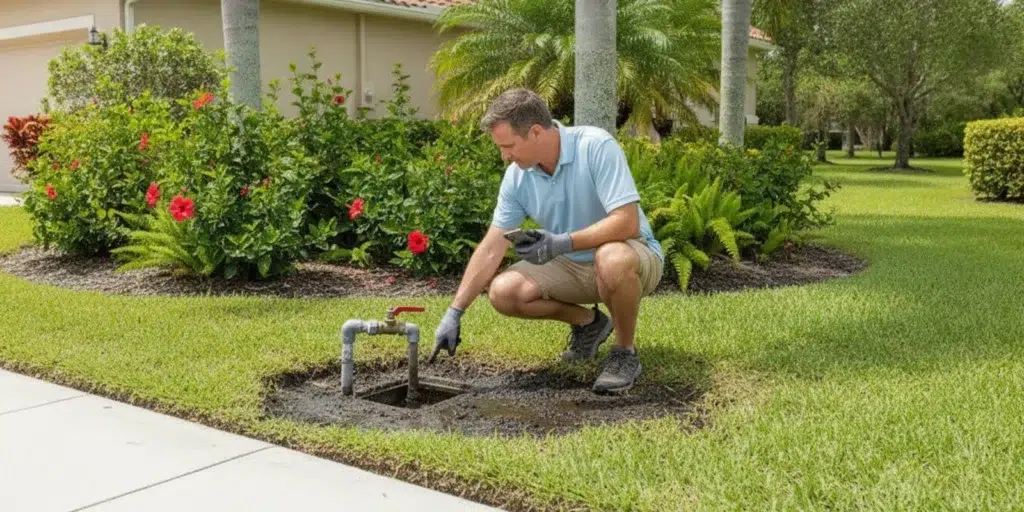
An emergency water line repair may be needed when a supply pipe suddenly leaks, breaks, or leaves your home without water. Start by limiting water flow if you can do so safely, protecting people and property, and giving the plumber clear information. The exact repair should follow a diagnosis, not a guess based on where water first appears.
Call for help with an urgent water line problem
What should you do first when a water line breaks?
Take these steps in order. Do not rush into standing water, open an electrical panel, or start digging. Water can move through soil and emerge some distance from a damaged pipe, so the wettest spot is not always the source.
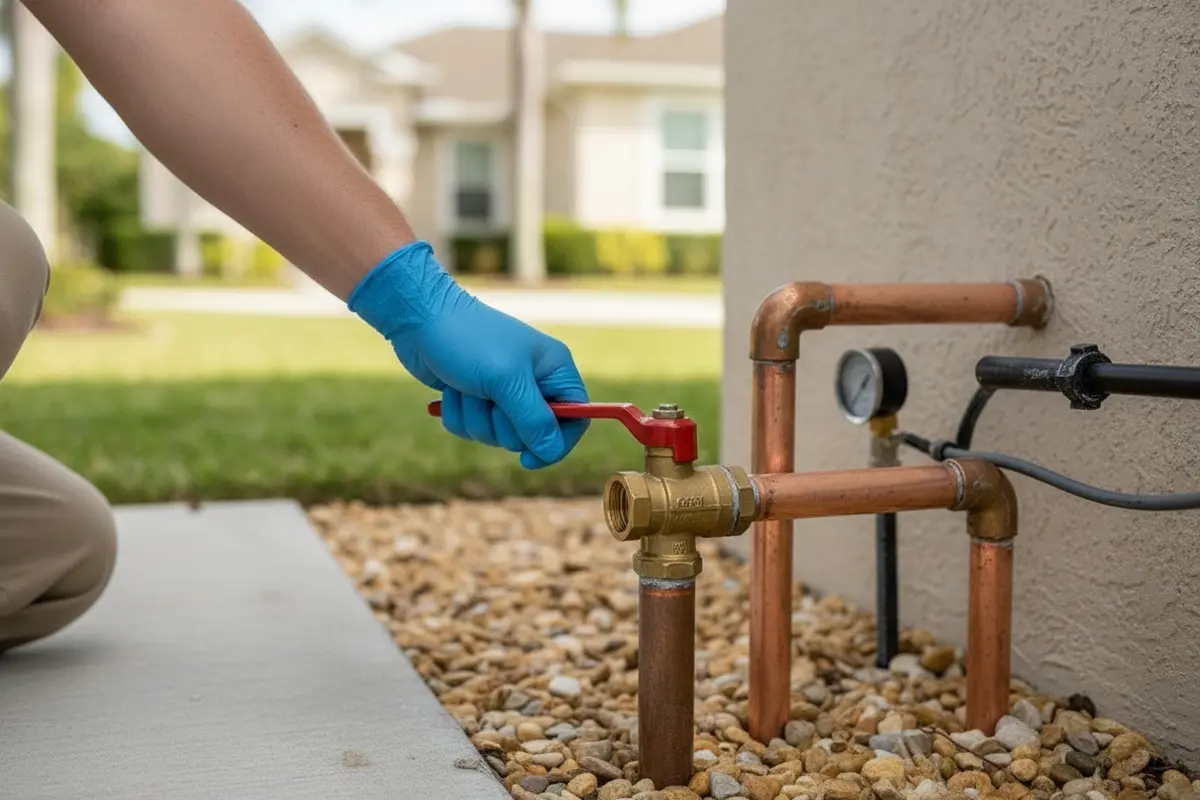
- Find and close the main water shutoff if safe. Turn off the home’s main valve to stop water entering the plumbing. If you cannot identify it, it is corroded, or it will not turn with normal effort, do not force it. Tell the plumber what you observed.
- Keep people away from hazards. Keep children and pets out of wet rooms and away from soft ground. If water is near electrical equipment, do not enter the area or touch wet devices. Seek appropriate emergency assistance where there is immediate danger.
- Reduce further damage where safe. Move portable belongings away from water. Use towels or buckets only if you can reach the area without crossing water near electricity or walking on unstable ground. Do not operate appliances in a wet area.
- Note what changed. Record when the leak began, whether water pressure changed, and which fixtures still work. If the event followed landscaping or construction, note that too.
- Call a plumber. State whether water is shut off, where water is visible, whether service is interrupted, and whether anyone is at risk.
- Take photos from a safe distance. A few clear images can help describe the affected area. Do not delay a call to collect them, and do not approach an unsafe location for a better picture.
If the issue appears to involve a public water main, contact the water utility as well as a plumber. The City of Philadelphia’s guidance on water emergencies describes utility crews flushing and disinfecting a main when needed and patching the road after a break. Procedures vary by utility, so use your own provider’s emergency contact for a suspected public-side issue.
How can you tell whether the leak is on your side?
A sudden loss of pressure, water pooling in a yard, a soft patch of ground, or unexpectedly high water use can point to a supply-line problem. None proves the cause or ownership by itself. Irrigation, drainage, a leaking fixture, or a nearby utility issue may produce similar clues. Underground water can also travel before it reaches the surface.
Begin with safe observations. Note whether the wet area remains after irrigation is off, whether the symptoms change after the home’s water is shut off, and whether some or all fixtures have lost pressure. Do not use these checks to make a final responsibility decision. The boundary between utility and private piping differs by local system.
For a suspected leak in piping serving the property, a professional assessment can distinguish a water-line issue from a fixture, irrigation, or other plumbing problem. Whiskey Creek Plumbing serves Lee County; review its plumbing services and ask which service applies to the symptoms you see. For a general explanation of leak checks, see the guide to plumbing water leak detection.
What should you avoid before help arrives?
- Do not dig blindly. Buried utilities and other lines may be near the suspected leak. Leave locating and excavation to qualified professionals and the appropriate utility-marking process.
- Do not repeatedly run water to test the problem. That may add water to a damaged line. Leave the main off if safe and practical until you receive guidance.
- Do not force valves or attempt a pressurized repair. A stuck valve or improvised repair can worsen the leak or complicate diagnosis.
- Do not assume the utility is responsible. Ask the water provider about public infrastructure and have the private service line assessed as appropriate.
- Do not enter standing water near electrical hazards. Keep clear and get appropriate help rather than touching wet electrical equipment.
- Do not cover a leak with soil or materials. Concealing the area may make observation and access harder. Keep people away and explain what you can see.
What information helps the plumber diagnose the problem?
Specific observations help a plumber plan the assessment and ask useful follow-up questions. Before calling, gather what you can without entering an unsafe area:
- Where water is visible: indoors, outdoors, near the meter, or near a fixture.
- When the symptoms began and whether they changed suddenly or gradually.
- Whether the main shutoff is closed and whether water service stopped.
- Which fixtures have low pressure or no water, and whether hot and cold water are both affected.
- Whether the wet patch changes when irrigation is not running.
- Any recent landscaping, construction, or work near the suspected route.
- Photos from a safe distance, plus any immediate property damage or safety concern.
Do not guess the pipe material, depth, or exact break point. Those details can be confirmed during inspection. If water is off, say so early in the call because the loss of service affects the urgency and planning. If you are unsure whether a shutoff controls the whole home, describe its location instead of experimenting with other valves.
What happens during an emergency water line assessment?
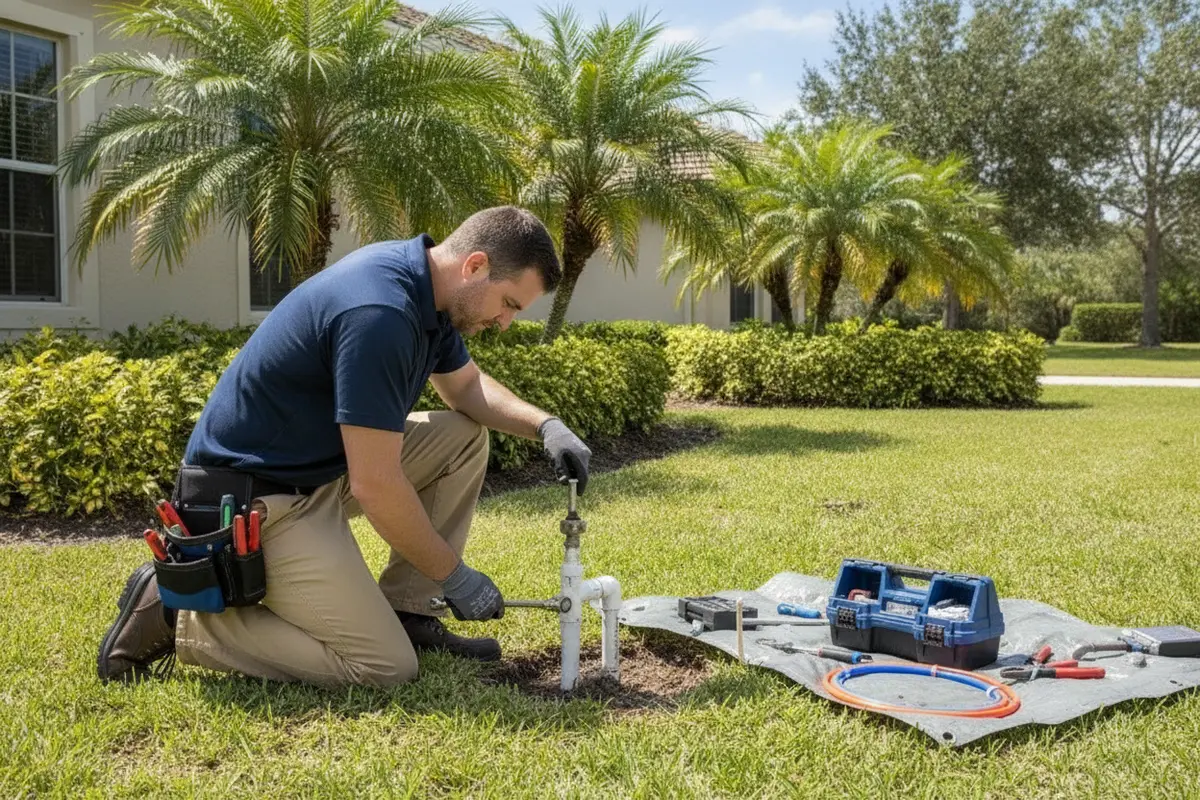
The plumber first asks about symptoms, shutoff status, and safety conditions. The next steps depend on the route of the line, site access, and what the initial inspection shows. An assessment may involve checking visible piping, examining the likely service route, testing the plumbing, or using suitable leak-detection methods. The objective is to identify the source and likely scope before selecting a repair.
Keep access clear to the meter, main shutoff, and visible wet area, but do not expose a buried line yourself. Let the plumber know about irrigation lines, paving, landscaping, or other known features near the route. If the issue may be on the public side, ask who should contact the utility and whether the utility needs to inspect before private work proceeds.
Once the likely cause and scope are understood, ask for a plain-language explanation. A useful proposal identifies the affected section, the repair approach, access needs, expected water interruption, cleanup, and work not included. Whiskey Creek Plumbing uses fixed-price service; ask for the price and stated scope before work starts so you can decide with the available information.
Which repair approach might fit the problem?
There is no single repair for every emergency. A localized defect in an accessible section may be addressed at that point. Multiple failures, broader deterioration, or damage in a hard-to-access area may lead to a larger repair or replacement recommendation. The right option depends on verified pipe condition, material, location, and access, not just the visible puddle.
Ask whether the recommendation addresses the cause rather than only the place where water surfaced. If a plumber recommends replacing more than one section, ask what observations support that scope and what alternatives are practical. If a limited repair is proposed, ask whether the surrounding pipe condition was assessed and what signs would warrant follow-up. These questions do not challenge a professional diagnosis; they help you understand its basis.
Access can also shape the plan. Some locations require targeted excavation or opening a finished surface, while other situations may allow a less disruptive approach. Do not assume a method is available until the site has been assessed. Ask what will be disturbed, who handles restoration, and whether restoration is included or separate.
How can you compare repair proposals?
Compare the stated scope and uncertainties, not only the total price. A lower quote may omit access, cleanup, or restoration. A useful proposal explains what the contractor observed, what work is included, what could change the scope, and how additional work will be approved. If two proposals differ, ask each provider to clarify the same points.
| Proposal detail | Question to ask | Why it matters |
|---|---|---|
| Diagnosis | What line or section is believed to be affected, and what supports that conclusion? | Separates observed facts from assumptions. |
| Repair method | Is the proposed repair or replacement explained in plain language? | Shows how the work is intended to address the cause. |
| Access | Will the crew need excavation, wall access, or removal of paving or landscaping? | Helps you anticipate disruption and site preparation. |
| Price and exclusions | Does the fixed price apply to the stated scope, and what is excluded? | Makes proposals easier to compare fairly. |
| Water service | How long might service be interrupted, and what happens next? | Helps plan for a temporary loss of water. |
| Restoration and approval | Who restores disturbed surfaces, and how is added work approved? | Clarifies what remains after plumbing work. |
Ask for changes in scope to be explained and approved before additional work begins, where circumstances permit. Keep the written proposal and service record. For another perspective on defining plumbing scope and pricing, see the guide to fixed-price plumbing.
What can affect the scope of an urgent repair?
A dependable price depends on inspection because several site conditions can affect the work. These may include the line’s depth and accessibility, the distance between the home and meter, pipe type and condition, the location of the failure, and obstacles such as paving, landscaping, or other buried features. If water has entered the home, drying and property restoration may require separate work beyond plumbing.
For example, a visible wet spot beside an accessible shutoff is not automatically a small repair: water may have traveled from another point, or access may be limited. Conversely, a broad wet area does not prove the full line needs replacement. The plumber should explain what is known, what remains uncertain, and what inspection is needed to settle the question.
Homes and properties in Southwest Florida differ in layout, landscaping, and service-line access. A neighbor’s repair is not a direct comparison unless the line route, condition, access, and work scope are similar. Ask which site conditions shape your proposal and whether its price covers all listed plumbing work.
How should you plan for water service interruption?
If the main supply must stay off while the line is assessed or repaired, plan around essential household needs. Ask the plumber when water is expected to be shut off, whether any limited use is safe, and how you will be told when service can resume. Do not turn the system back on to test it without instruction if a leak is active or a repair is underway.
For a home with children, older adults, pets, or someone who needs water for care, mention that when arranging the visit. Keep drinking water available if appropriate and follow local utility guidance if there is any concern about water quality. Do not assume water from an affected line is safe or unsafe based only on appearance; contact the utility or qualified professional for situation-specific direction.
Businesses can reduce confusion by identifying who can authorize work, who can meet the plumber, and which rooms or operations depend on the water supply. A concise handoff avoids repeated calls: share the shutoff status, symptoms, access details, and a contact who can approve the written scope.
How can you prepare for the repair visit?
- Keep the route to the meter, shutoff, and visible leak area accessible.
- Secure pets and keep people away from wet or excavated areas.
- Tell the plumber about irrigation, recent landscaping, or known buried features.
- Have photos and notes ready, but do not delay an urgent call to collect them.
- Ask whether the utility needs to inspect if public infrastructure may be involved.
- Before work starts, confirm the scope, price, access plan, expected interruption, and who handles restoration.
After work, ask what was repaired and whether there are follow-up steps, such as monitoring the area or arranging separate restoration. Keep the proposal, approval, and service documentation with your property records. If symptoms return, document when they recur and contact the service provider rather than repeatedly testing the line yourself.
When is professional help important?
Contact a qualified plumber promptly when water is actively escaping, the home has lost service, the leak may be underground, or you cannot safely identify the source. A professional assessment is also important when a shutoff will not operate, water is affecting finished rooms, or the suspected route is near electrical equipment or buried utilities.
For a suspected public main break, call the water utility because the utility controls its own infrastructure and response process. For a leak on the property side, a plumber can assess the service line and explain the available work. These calls may need to happen in parallel; do not wait for a responsibility dispute to make a dangerous area safe.
Frequently asked questions
Should I shut off the water if a line is leaking?
If you can reach and operate the main shutoff safely without forcing a stuck valve, shutting off the water may limit further flow. Stay clear of electrical hazards and call a plumber for guidance.
Can I repair a broken water line myself?
Do not dig or attempt a pressurized underground repair without knowing what utilities are present. A plumber can locate the problem, explain options, and provide a defined scope.
How do I know if the utility or homeowner is responsible?
Responsibility depends on the local system and the boundary between public and private piping. Contact the water utility about a suspected public-side problem and have a plumber assess the line serving your property.
Will the plumber need to dig?
Possibly, but the access method depends on the location and repair plan. Ask what access is required and whether surface restoration is included in the written scope.
What should I do if the leak is near electrical equipment?
Do not enter standing water or touch wet electrical equipment. Keep people away and seek appropriate emergency assistance before anyone approaches the area.
Request help with a water line problem
Plan the next step for your water line
A fast response starts with safe shutoff, clear observations, and a professional diagnosis rather than guesswork. Once the source is identified, compare the written scope and price before approving repair work.
Call Whiskey Creek Plumbing about an urgent leak
When water is moving where it should not, protect people first and get qualified help to determine the right repair.