.
A burst pipe can turn a manageable plumbing problem into water damage within minutes. Start by protecting people, shutting off the water if you can do so safely, and keeping away from electrical equipment or potentially contaminated water. Then call for help while documenting what happened.
If you need an emergency plumber fort myers homeowners can trust, Whiskey Creek Plumbing provides 24/7 emergency service, prioritizes active leaks, and typically reaches Fort Myers calls within 45 to 60 minutes. We explain the work and provide a fixed price before repairs begin.
Our family-run team handles burst pipes, severe drain clogs, failing water heaters, and other urgent issues across Fort Myers and Southwest Florida. We can also connect emergency repairs with longer-term sewer, leak detection, and repiping services when the underlying problem requires more than a temporary fix.
Call Whiskey Creek Plumbing at (239) 785-9022 for emergency help.
What to Do in the First 5 Minutes of a Plumbing Emergency
When water is spreading through a room, focus on safety and control first. Do not try to diagnose the entire plumbing system. Move calmly, keep children and pets away from the affected area, and do not take risks to reach a valve or appliance. Your goal is to stop the flow if it is safe, protect people from electrical hazards, and give the plumber accurate information.
- Stop the water if you can do so safely. Turn off the nearest fixture shutoff if the problem is isolated to a toilet, sink, or appliance. For a burst pipe or leak that is still flowing, close the home’s main water shutoff valve. Locating and testing this valve before an emergency makes it easier to act quickly when a pipe fails. If the valve is stuck, difficult to reach, or in an area covered by water, do not force it or wade into the leak. Move to the next safety step and call for professional help.
- Protect yourself from electrical danger. Water and electricity can create a life-threatening hazard. If the leak is near outlets, wiring, appliances, a water heater, or other electrical components, do not step into the water to reach a switch. Turn off power at the main breaker only if you can reach the panel without crossing wet flooring or touching wet equipment. If reaching the panel is not safe, leave the area and call 911 or your utility provider for immediate safety guidance.
- Keep potentially contaminated water away from your family. Water from a sewage backup, damaged water main, or unknown pipe break may not be safe for drinking, cooking, brushing teeth, or washing. Use clean bottled water if available, and keep food, towels, and personal items away from the affected area. The CDC recommends avoiding suspected contaminated water for drinking, cooking, and washing until the source is addressed and the water is confirmed safe.
- Limit damage and document what happened. Once the area is safe, move portable belongings away from the water. Use towels or containers only when doing so does not expose you to electrical or contaminated water risks. Take a few photos from a dry location, note where the water started, and record whether the flow stopped after shutoff. This information helps the plumber prioritize the repair and identify what equipment or access may be needed.
- Call for emergency plumbing help. Tell the dispatcher whether the leak is active, whether the main valve is closed, whether electricity was affected, and whether sewage or other contamination may be involved. Do not cut into drywall, remove flooring, or attempt a pipe repair while water is still present. A professional can identify the source and recommend the safest next step after the immediate hazard is controlled.
If you cannot safely stop the water, treat the situation as urgent. Getting people clear of the danger area matters more than protecting belongings.
How to Shut Off Your Main Water Valve in Fort Myers
Knowing where your main shutoff valve is can limit damage when a pipe breaks or a fixture will not stop running. The valve location varies by home, so do not assume a neighbor’s setup will match yours. In many Fort Myers homes, the main valve may be near the point where the water service enters the house. Such as a garage, utility area, exterior wall, or another accessible service location. If your property has a meter box or equipment outside, the home-side shutoff may be near that service point. Never enter a locked or flooded area to reach it.
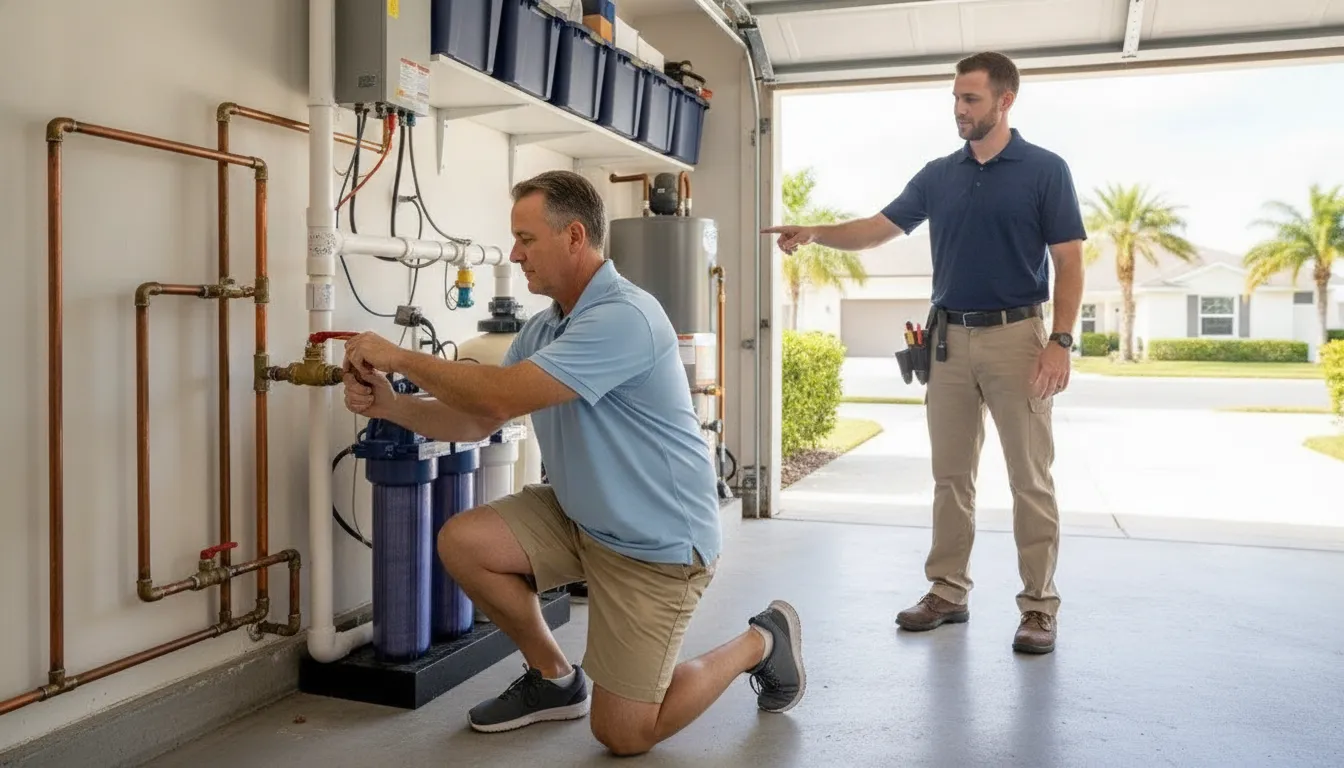
- Find the valve before you need it. Look for a handle or wheel on the main water line where it enters the home. Check around the garage, utility room, mechanical area, and accessible exterior service locations. If you are unsure which valve controls the whole house, ask a plumber to identify it during a routine visit.
- Test it while conditions are calm. Turn on a nearby faucet, then slowly turn the shutoff clockwise. A wheel-style valve usually closes by turning clockwise several times. A lever-style ball valve is generally closed when the handle is turned so it sits across the pipe, but do not force a handle that resists movement. Confirm the water flow stops at the faucet, then reopen the valve gently by turning counterclockwise or returning the lever to its original position.
- Close it during an active leak. If water is escaping from a burst pipe or failed connection, turn the valve clockwise until the flow stops. Open a faucet briefly afterward to relieve pressure in the lines. Keep children and pets away from standing water. If water is near outlets, appliances, or other electrical components. Shut off power at the main breaker before approaching the water, and do not touch electrical equipment while standing in water.
- Stop if the valve is stuck, damaged, or inaccessible. Do not use excessive force, a wrench, or heat to make it move. A broken valve can worsen the leak or leave you without a reliable way to control the system. If the valve is behind a locked gate, buried, flooded, or impossible to reach safely, contact a professional plumber and explain what you can see. We can help locate the control point and address the underlying failure.
Locating and testing the main shutoff is a basic maintenance step that can help prevent extensive water damage. If you cannot stop an active leak in Fort Myers, call Whiskey Creek Plumbing for emergency guidance and service.
When Should You Call an Emergency Plumber in Fort Myers?
Call an emergency plumber when a plumbing problem is actively causing damage, creating a sanitation concern, or leaving your home without essential water service. A slow drip can often wait for a scheduled appointment. A burst pipe, spreading leak, sewage backup, or failing water heater may become more expensive and hazardous by the hour.
We provide 24/7 emergency plumbing availability for critical issues in Fort Myers and nearby communities. Our typical Fort Myers response is about 45 to 60 minutes, although actual arrival time depends on traffic, weather, call volume, and your location. We prioritize calls involving active leaks because stopping the water is the fastest way to limit property damage.
Call right away for these plumbing emergencies
- Burst or broken pipes: If water is spraying, pooling, or running through walls, shut off the main water supply if you can do so safely, then call. Even after the visible flow stops, water may remain inside walls, ceilings, or flooring.
- Active leaks: A leak under a sink is urgent when it cannot be contained, while a leak from a ceiling, wall, slab, or supply line deserves immediate attention. Hidden water can damage building materials before the source is obvious.
- Severe clogs: Call when multiple fixtures back up, wastewater rises from a drain, or a toilet overflows repeatedly. Avoid chemical drain cleaners, especially if a technician may need to open the line.
- Sewer backups: Stop using affected fixtures and keep people and pets away from contaminated water. Sewage can spread through floors and create a sanitation problem, so do not treat a backup as an ordinary clogged drain.
- Failing water heaters: A tank that is leaking, ruptured, or releasing hot water can damage flooring and surrounding structures. If you can safely reach the shutoff, turn off the water supply and the heater’s power or gas source, then request service.
When is it unsafe to wait?
Waiting is risky when water is still moving, the source cannot be identified, electrical equipment may be wet, or contaminated water is present. Do not step into standing water near electrical components. If the situation is unsafe, leave the area and contact the appropriate emergency service before approaching the plumbing problem. For suspected contamination after a pipe break, do not use the water for drinking, cooking, or washing until the system has been assessed and restored. CDC water safety guidance supports avoiding potentially contaminated water for these uses.
If you are unsure whether the issue qualifies, calling for professional guidance is reasonable. Describe what is happening, where the water or backup appears, whether the main shutoff is closed, and whether anyone is at risk. That information helps us determine the safest next step without asking you to take unnecessary risks.
Common Plumbing Emergencies in Southwest Florida
Southwest Florida homes face a mix of plumbing emergencies. Some begin with an obvious rush of water, while others develop quietly until a ceiling, wall, fixture, or drain shows the first warning. Knowing the common patterns helps you respond sooner and explain what is happening when you call for help.
Hidden leaks behind walls or under floors
A leak does not have to be visible to cause serious trouble. Damp drywall, peeling paint, musty smells, warm spots on the floor, unexplained water use, or sounds of running water can point to a hidden supply-line leak. Leaks may worsen gradually, then become a burst pipe when pressure, corrosion, or a weakened connection finally gives way.
Professional leak detection can help identify the source without immediately opening multiple walls or floors. Our technicians use specialized equipment to locate concealed leaks, so the repair can focus on the affected area. If you notice signs of moisture but cannot find the source, arrange professional leak detection before the damage spreads.
Water-heater failures
An aging water heater can shift from a routine appliance problem to an active flooding risk. Water heaters over 10 years old have a higher risk of tank failure. Rust-colored water, pooling around the base, rumbling sounds, inconsistent hot water, or a relief valve that keeps releasing water should not be ignored.
If the tank is leaking, turn off its water supply and follow the manufacturer’s safety instructions for shutting down the unit. Do not touch electrical components while standing in water. A technician can determine whether the unit needs a repair or replacement and address the leak before it damages nearby flooring or belongings.
Storm-related drainage and sewer backups
Heavy rain places extra demand on drainage systems. A slow drain, bubbling toilet, foul odor, or water returning through a floor drain can signal a developing sewer or drainage problem. During storm season, a partial obstruction may become a backup when the system is under additional strain.
Do not use chemical drain cleaners as a substitute for diagnosis, especially when several fixtures are affected. Professional drain cleaning and a proper inspection can help address blockages and reduce the risk of sewage entering the home. Keep people and pets away from contaminated water, and avoid using affected fixtures until the source is understood.
Severe clogs and burst pipes
A single slow sink is different from a severe clog that stops multiple fixtures, overflows a toilet, or sends wastewater into the home. Stop using connected fixtures and call for service rather than repeatedly forcing water into a blocked line.
Burst pipes require immediate action. Shut off the main water supply, protect belongings if it is safe, and avoid electrical hazards. A lasting repair should address the failed section and comply with applicable plumbing codes, not simply cover the opening temporarily.
What Happens When an Emergency Plumber Arrives?
When an emergency plumber arrives, the first priority is to stop the immediate threat and understand what caused it. We begin with a practical assessment, not a rushed guess. That means looking at where water is coming from, how quickly it is spreading, and which fixtures, walls, floors, or electrical components may be affected.
1. We assess and isolate the problem
We confirm whether the issue is a burst supply pipe, a failed connection, a blocked drain, a water heater problem, or another source of damage. If the water is still running, we isolate the affected fixture or shut down the appropriate section of the system. This helps limit additional damage while keeping more of the home’s plumbing available when possible.
A visible puddle does not always show where the failure began. Water can travel behind cabinets, under flooring, or inside walls. When the source is hidden, professional leak detection tools can help locate it more precisely and reduce unnecessary access to finished surfaces.
2. We explain the repair options
After identifying the source, we explain what needs to be repaired. What may happen if the issue is left unresolved, and which repair options fit the condition of the plumbing. For a burst pipe, the goal is not only to stop the leak. The repair should also address the underlying failure and help prevent another leak in the same area.
Before work starts, ask questions about the repair scope, parts, expected timeline, and any follow-up work. A trustworthy technician should be able to explain the recommendation in plain language. It is also reasonable to confirm that the team is licensed and insured before allowing work on your property.
3. We provide a fixed quote before work begins
We review the proposed work and provide a fixed quote before beginning the repair. That gives you a clear opportunity to approve the scope and understand the price without making decisions while the clock is adding pressure. Our fixed-price guarantee means the quoted amount remains the price even if the repair takes longer than expected.
4. We complete a code-conscious repair and clean up
Once approved, we complete the repair with attention to proper installation, drainage, sanitation, and applicable Florida plumbing codes. Our plumbing services cover connected problems that may be discovered during the visit. We test the repaired system, check for continued leaks, explain any recommended next steps, and leave the immediate work area orderly. You should finish the visit knowing what was fixed and what to watch for next.
For a closer look at our family-run approach in the area, see our family-run Fort Myers plumbers page.
How Emergency Plumbing Pricing Works
Use this quick guide when comparing a repair decision during an active emergency:
| Step | What to expect |
|---|---|
| Assessment | The technician identifies the source, immediate risk, and repair scope. |
| Fixed quote | You receive the price for the agreed work before repairs begin. |
| Approval | You can ask questions and approve the proposed repair. |
| Completion | The system is tested, the work area is left orderly, and any next steps are explained. |
When a plumbing emergency happens, the last thing you need is uncertainty about what the repair may cost. Our process is designed to make the financial side clear before work begins, so you can make an informed decision while addressing the problem quickly.
First, we assess the situation and identify the immediate cause. That may involve tracing an active leak, locating the failed section of pipe, evaluating a water heater problem, or determining why a drain is backing up. The assessment helps us understand what must be repaired, what materials and labor the job requires, and whether there are related conditions that could affect the outcome.
Next, we explain the recommended repair in plain language. We outline the work included in the proposed solution, discuss any practical options when more than one repair is appropriate, and answer your questions. The goal is not to pressure you into approving work. It is to give you enough information to decide how you want to proceed.
Before repairs start, we provide a fixed quote for the agreed scope of work. Our transparent pricing model is intended to prevent unexpected charges during an already stressful situation. You have the opportunity to review the quote and approve the work before our technician begins. If the scope changes because a separate issue is discovered, we explain that change and its potential cost rather than proceeding without your knowledge.
Our fixed-price guarantee adds another layer of certainty. For the repair covered by the approved quote, you pay the quoted amount even if the work takes longer than expected. That means the price is not based on an open-ended clock. The guarantee applies to the agreed repair scope, so it is still important to ask what is included. What is not included, and whether any additional work would require separate approval. We will address those details directly.
This approach helps you compare the repair decision with the urgency of the problem without guessing at a final bill. Whether you are dealing with a burst pipe, severe clog, or failing water heater, transparent communication matters as much as technical work. We want you to know what we recommend, why we recommend it, and what you can expect to pay before the repair moves forward.
Call Whiskey Creek Plumbing at (239) 785-9022 for emergency help.
Frequently Asked Questions
What would be considered a plumbing emergency?
A plumbing emergency is an active or rapidly worsening problem that can damage your home or affect safe water use. Common examples include burst pipes, major leaks, severe drain clogs, sewer backups, and failing water heaters. Active leaks receive priority because stopping the water can help limit property damage.
What is the fastest way to shut off water during a plumbing emergency?
Turn off the fixture’s local shutoff valve if you can reach it safely. If the leak continues, close the home’s main water shutoff valve. If water is near outlets, appliances, or other electrical components, turn off power at the main breaker before approaching the water. Do not force a stuck valve.
When should I call an emergency plumber instead of waiting until morning?
Call promptly when water is actively leaking, a pipe has burst, a sewer backup is present, or a water heater is releasing water. Waiting can allow damage to spread behind walls, under floors, or through cabinets. Emergency plumbing service is available 24/7 for critical issues in Fort Myers and surrounding communities.
How much does an emergency plumber usually cost?
The cost depends on the problem, access, parts, and scope of the repair. We provide a fixed quote before work begins, so you can review the recommended repair and price before approving it. Our fixed-price guarantee means the quoted amount remains the price even if the repair takes longer than expected.
Ready to Get Help With a Plumbing Emergency?
A burst pipe, active leak, or failing water heater can be difficult to manage alone. We can help you take the next practical step, assess the problem, and explain the repair clearly before work begins. If you need emergency plumbing help in Fort Myers or nearby Southwest Florida communities, call Whiskey Creek Plumbing at (239) 785-9022.
