
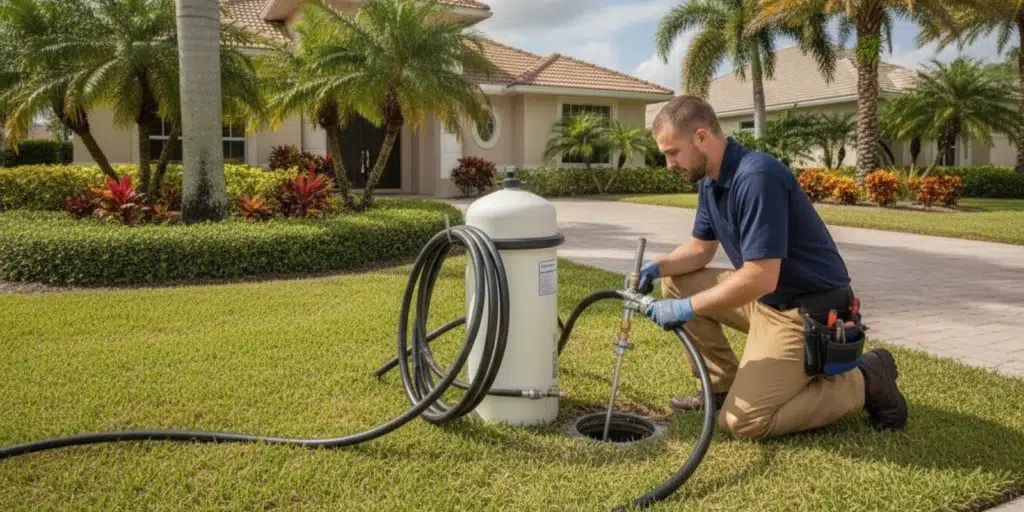
Emergency hydro jetting may be the right response when a serious blockage is backing up wastewater and an inspection indicates that the pipe can safely handle high-pressure cleaning. It is not automatically the best answer to every urgent clog: the cause, pipe condition, access, and extent of the blockage all matter.
In Fort Myers and across Southwest Florida, a drain emergency can disrupt a home or business quickly. Start by limiting water use, checking whether one fixture or several are affected, and arranging an assessment. Avoid repeatedly forcing a clog with chemicals or tools. If wastewater is rising or flooding an area, keep people and pets away, and tell the plumber what is backing up and where.
When can emergency hydro jetting be the right choice?
Hydro jetting sends water through a specialized hose and nozzle to clear material and clean the inside of a drain or sewer line. A plumber may consider it for extensive, recurring, or stubborn buildup, if the pipe is in suitable condition. The fact that a problem is urgent does not prove that jetting is appropriate. The line first needs a diagnosis.
Several symptoms are reasons to request prompt assessment. They do not, by themselves, identify the blockage or prescribe a cleaning method:
- More than one fixture is backing up. Several affected drains may share a branch or main line, but the layout and exact cause need checking.
- Wastewater appears at a low drain. Stop using fixtures that may discharge to the affected line and keep clear of the backup.
- A clog returns soon after it clears. A temporary path through the obstruction can restore flow without removing residue or resolving the underlying issue.
- A business drain failure disrupts operations. A blockage may affect restroom access, sanitation, or daily work. Explain what is affected and how quickly it is changing.
If water is escaping from a supply pipe or fixture rather than backing up through a drain, shut off the relevant supply if you can do so safely. With a drain backup, limiting water entering the affected system is usually the first practical step. Do not open a pressurized cleanout or handle contaminated water without appropriate protection.
What should you do before the plumber arrives?
A few careful actions can reduce additional water damage and make the assessment more useful. You do not need to diagnose the pipe yourself.
- Stop adding water to the affected line. Avoid running sinks, showers, dishwashers, or washing machines that may discharge into it. If you do not know which fixtures connect, use as little water as possible until you receive guidance.
- Keep people away from wastewater. Block access to the affected area and keep children and pets clear. Do not attempt cleanup if you cannot do it safely.
- Do not add drain chemicals. These products may fail to address a substantial blockage and can create a hazard for anyone working on the line. Tell the plumber if you have already used a product.
- Record the symptom pattern. Note which fixtures are affected, where water appears, when the problem started, whether it has happened before, and whether the flow changed after you stopped using water.
- Share what you know about access and pipe history. Point out a known cleanout and mention old, damaged, or previously repaired sections. Do not remove a cap if you are unsure how to do so safely.
These details help distinguish a single-fixture issue from a possible shared-line problem. For example, a kitchen sink that drains slowly while all other fixtures work normally presents a different pattern from a toilet and shower backing up together. Neither pattern proves the cause, but it helps a technician decide where to begin. Describe what you actually observed rather than guessing that roots, grease, or a broken pipe must be responsible.
How does the plumber decide whether jetting is suitable?
A sound recommendation starts with understanding the line, not simply connecting equipment and applying pressure. Depending on symptoms and access, the plumber may inspect a cleanout, use a drain camera, or consider a different clearing method. A camera can help locate an obstruction and show visible concerns such as damage, an offset, or heavy buildup.

Ask what the assessment found, what the proposed method is expected to address, and what might change the plan. High-pressure water can remove certain deposits, but a severely compromised pipe may need another approach. When pipe condition is uncertain, establishing what is known is more useful than rushing to a particular tool.
What problems may respond to hydro jetting?
Jetting may help remove accumulated grease, sludge, scale, and some root intrusion from a line that is suitable for the method. Because the water can clean a broader section of pipe than a cable tool, it may be considered when residue is widespread or a blockage keeps returning. The exact result depends on the material, line condition, access, and obstruction.
Roots are an important example: removing intrusion may restore flow, but roots can point to an opening or defect in the pipe. Cleaning does not repair structural damage. Ask whether the immediate goal is to reopen flow, remove residue, or learn more about a recurring problem. Those are related but different outcomes.
When might a different method be safer or more useful?
A cable machine may suit a localized obstruction or a line where high-pressure cleaning raises concerns. A damaged, collapsed, or badly offset pipe may need repair rather than repeated cleaning. If an object is lodged in the line, the right way to address it depends on its location and what it is. A plumber should explain the reason for selecting one option over another.
For more context on pipe condition, see our guide to hydro jetting in older drain pipes. Age alone does not establish whether a pipe can be jetted; visible condition, material, access, and the professional’s assessment matter.
How do emergency drain options compare?
| Option | Often considered for | What it does | Important limit |
|---|---|---|---|
| Drain cable | Many localized clogs and routine obstructions | Breaks through or retrieves material to reopen flow | May leave deposits on pipe walls |
| Hydro jetting | Substantial residue or recurring blockage in a suitable line | Uses pressurized water to clear and clean more of the pipe interior | Requires assessment of condition and access |
| Camera inspection | Unclear, recurring, or suspected line problems | Helps locate an obstruction and view visible pipe conditions | Provides information; it does not itself clear a clog |
| Pipe repair | Breakage, collapse, or other structural damage | Addresses the damaged section rather than only the blockage | Scope depends on the location and extent of damage |
These options are not always alternatives that exclude one another. A plumber might clear a line and then inspect it to understand why it keeps clogging. In another case, an inspection may indicate that cleaning should wait until a damaged section is addressed. The order should follow the findings and access available at the property.
Consider two simple examples. If one sink is slow and a cable clears a nearby obstruction, jetting may not be necessary. If multiple fixtures back up and a camera shows broad deposits in a line that appears suitable, a plumber may discuss jetting as a way to clean more than one small point. These examples illustrate decision-making, not a diagnosis; similar symptoms can have different causes.
What should an emergency hydro jetting visit include?
A clear visit has a defined problem, an explanation of the recommended work, and an agreed price before work proceeds. Whiskey Creek Plumbing uses fixed-price service rather than hourly billing. Ask for the scope and price to be confirmed before authorizing work. Urgency does not remove your right to understand what is proposed.
- Describe and locate the symptoms. Explain which fixtures are affected, when the backup began, and whether it has recurred.
- Assess access and pipe condition. The plumber determines where to work and whether inspection or another method is appropriate.
- Review the recommendation. Ask why jetting is being considered, what it is intended to clear, and what alternatives are available.
- Confirm scope and price. Clarify what the fixed price includes and what findings could require a different plan.
- Approve the work before it begins. Agree on the method and ask the technician to pause and explain any proposed change before additional work.
- Check the result. Ask how flow will be assessed and whether any unresolved concern or follow-up is recommended.
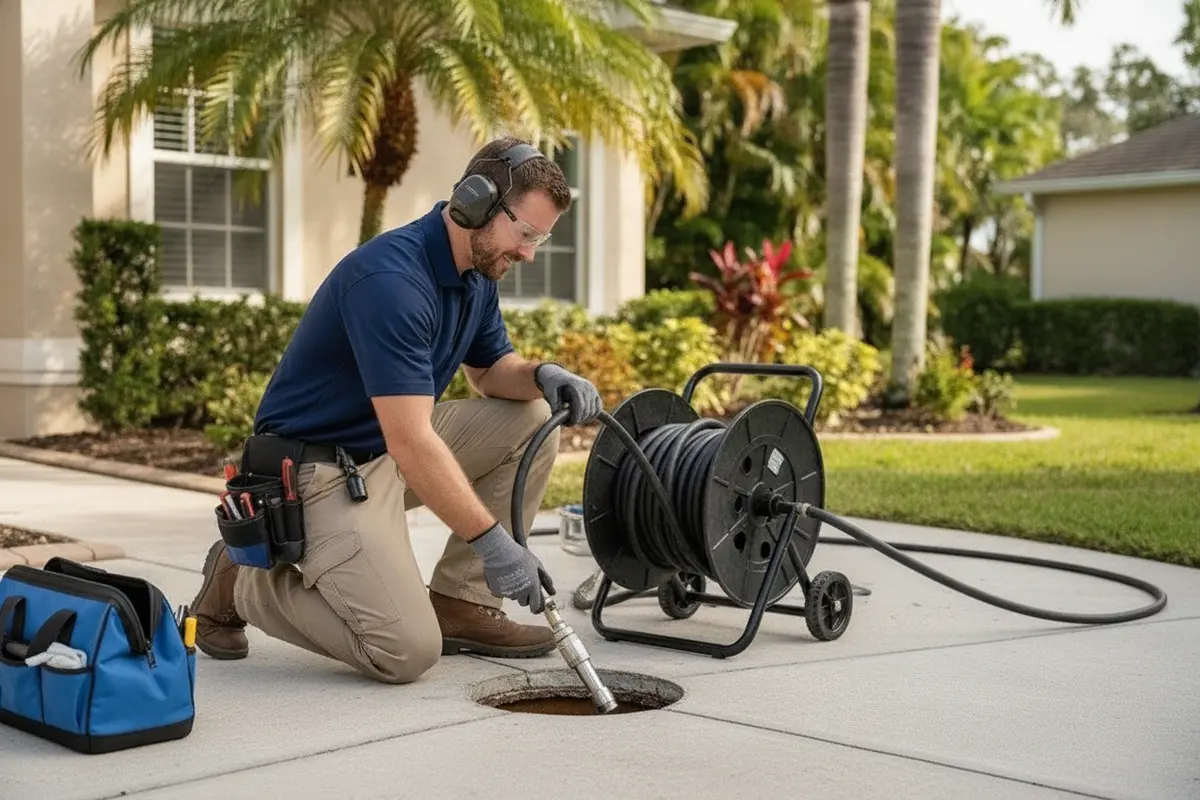
Useful questions include whether the price covers diagnosis, cleaning, and a post-service check; what happens if inspection reveals damage; and what the next step is if the line does not clear as expected. A quote should describe the work being authorized, not just name a tool. If the scope changes, request an explanation and updated approval before proceeding.
For general information about protecting drinking water and groundwater, the U.S. Environmental Protection Agency is a government resource. That broad resource does not determine whether a particular drain pipe is suitable for high-pressure cleaning; the pipe assessment and the work proposed for your situation do.
How can you reduce the chance of another urgent clog?
Prevention depends on what caused the blockage. In kitchens, avoid sending grease and food scraps down the drain. In bathrooms, use an appropriate drain screen and avoid flushing items not intended for the toilet. These habits can reduce common sources of obstruction, but they cannot correct a damaged pipe or guarantee that a line will never clog.
For a household, note whether a problem occurs at one fixture or several and whether it returns after service. For a business, keep a simple record of the date, affected drain, operational impact, and any previous clearing. A pattern is useful when discussing whether the issue is repeated buildup, a shared line, or a concern that needs inspection. Do not treat a temporary return of flow as proof that the underlying cause has gone away.
Whiskey Creek Plumbing provides plumbing services in Lee County, including drain-related work. You can also review our drain cleaning information to understand the service area of work, then share your symptoms so the appropriate next step can be discussed.
What questions should you ask before approving work?
When a drain is backing up, a few direct questions can help you make a decision without needing to identify the plumbing fault yourself:
- What evidence points to the affected section of line?
- How have you assessed whether the pipe can tolerate jetting?
- Would a cable, camera inspection, or repair be a better first step, and why?
- What exactly is included in the fixed price?
- What could change the scope, and will you pause for approval first?
- How will you check whether the drain is flowing after service?
A helpful explanation separates what is known from what is uncertain. For example, the plumber may be able to identify the location of a blockage but need further inspection to understand why it formed. It is reasonable to ask what the current work can accomplish, what it cannot accomplish, and whether a follow-up evaluation may be needed if the symptoms return.
When you call, have the affected fixtures, start time, backup location, prior episodes, and any chemical use ready to describe. If several drains are involved, mention whether they are on the same floor or in different parts of the building. These details do not replace inspection, but they help make the conversation specific and efficient.
Call (239) 785-9022 for plumbing help
Frequently asked questions
Is hydro jetting safe for every drain?
No. Suitability depends on pipe material, condition, access, and the type of blockage. A plumber should assess the line rather than treating jetting as a universal fix.
Does hydro jetting repair a broken pipe?
No. Jetting clears or cleans a line; it does not mend a crack, collapse, or separated joint. If inspection indicates structural damage, discuss repair options.
Should I use a chemical drain cleaner before calling?
Avoid adding chemicals when you expect the line to be serviced. They may not resolve a serious blockage and can create a hazard during drain work. Tell the plumber if a product has already been used.
Does a backup in several fixtures always mean the main line is blocked?
Not always. Multiple affected fixtures can suggest a shared-line problem, but the building layout and symptoms matter. Inspection helps locate the cause.
What should I have ready when I call?
Explain which fixtures are affected, when symptoms began, where water is appearing, and whether the problem has happened before. Mention any known cleanout, pipe concerns, or drain product already used.
Get a clear next step for a backed-up drain
When a serious blockage disrupts your home or business, start by limiting water use and arranging an assessment. We can explain the available options and provide a fixed-price scope before approved work begins, so you can decide based on the condition of the line.
Call (239) 785-9022 to discuss the drain problem
Tell us what is backing up and which fixtures are affected so we can help determine an appropriate next step.