
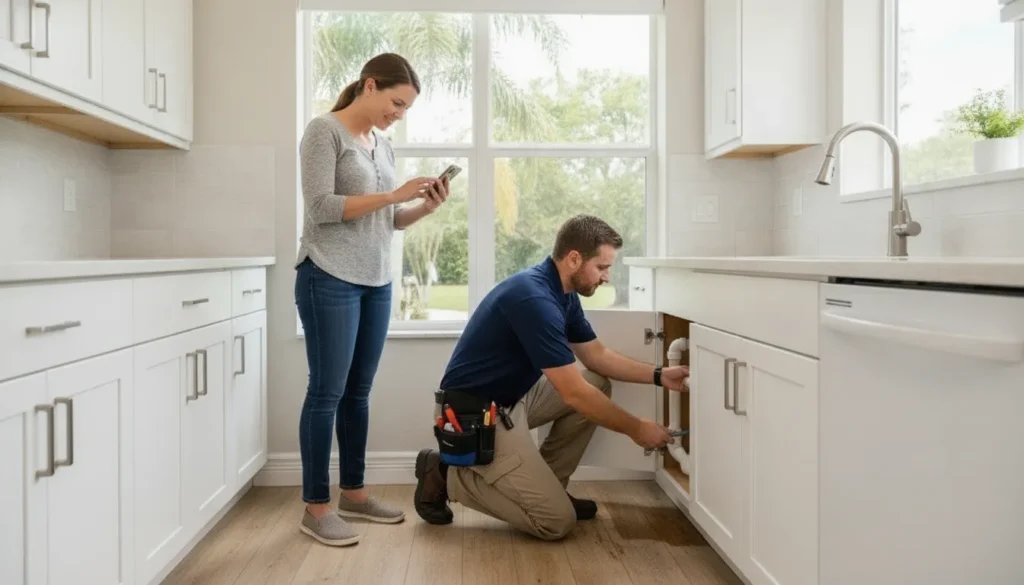
Does insurance cover plumbing repairs in Florida? Sometimes, but coverage usually depends on whether the water damage came from a sudden, accidental event, what part of the home was damaged, and the exclusions and deductible in your policy.
Get professional leak detection from Whiskey Creek Plumbing
Homeowners insurance may cover resulting water damage from a sudden, accidental plumbing failure, but it may not cover the worn or failed pipe, fixture, or appliance itself. Gradual leaks, corrosion, neglect, routine maintenance, sewer backup, and flooding can be treated differently. Your policy and the specific facts control the claim.
That distinction matters in Fort Myers and throughout Southwest Florida. A leak behind a wall can damage drywall, flooring, cabinets, or belongings before the source is obvious. Stop the water if it is safe, take photographs, and ask your insurer what it needs. A plumber can identify the source and separate the failed plumbing component from the resulting property damage.
For practical guidance on fixed-price plumbing decisions and what to ask before approving work, read our Plumbing Cost, Trust, and Service Education for Fort Myers Homeowners.
When Does Insurance Cover Plumbing Repairs in Florida?
Homeowners insurance is more likely to cover resulting water damage when a plumbing failure is sudden and accidental, subject to the policy, limits, exclusions, and deductible. The policy may address the damaged structure or personal property separately from the pipe, valve, hose, or fixture that caused the release.
Common examples include a pipe that breaks unexpectedly inside a wall or an appliance supply line that suddenly ruptures. Depending on the policy, dwelling coverage may apply to parts of the home such as drywall, flooring, or cabinets. Personal property coverage may apply to damaged belongings. Additional living expense coverage may apply if a covered loss temporarily makes the home unlivable.
Sudden failures and resulting water damage
Sudden does not automatically mean covered. The insurer can review the cause, the timeline, the condition of the plumbing, and whether the homeowner took reasonable steps to limit additional damage. A fast response can help preserve evidence and reduce the spread of water, but it cannot guarantee approval.
For example, a washing machine hose that fails without warning may create a different coverage question from a hose that has visibly deteriorated for months. Photograph the hose, valve, surrounding damage, and any visible failure before removing anything, when doing so is safe.
Which part of the loss may be treated separately?
Many policies distinguish between the source of the water and the damage that follows. The policy may cover repairs to resulting damage while excluding the cost to replace a corroded pipe or old appliance hose. Ask the adjuster to explain each decision in writing so you know which work is being considered.
- Structure: Ask how dwelling coverage applies to walls, floors, ceilings, cabinets, or other damaged building materials.
- Belongings: Make an inventory of furniture, electronics, rugs, and other personal property affected by water.
- Temporary living costs: Ask whether loss-of-use coverage applies if a covered event makes the home unsafe or uninhabitable.
- Plumbing component: Confirm whether the failed pipe, connector, valve, or fixture is excluded as wear, deterioration, or maintenance.
| Plumbing situation | Question to ask the insurer |
|---|---|
| Sudden pipe or hose failure | Is resulting water damage covered, subject to the deductible and policy limits? |
| Gradual leak or corrosion | Does the policy exclude damage from deterioration or a known condition? |
| Sewer backup or sump overflow | Is a specific endorsement required for this type of water loss? |
| Flooding or rising water | Does a separate flood policy apply instead of standard homeowners coverage? |
What Plumbing Damage Is Not Covered, and Why?
Insurance generally does not function as a maintenance plan for gradual deterioration, ordinary wear, or a known plumbing problem. A policy may exclude damage that developed over time or resulted from neglect, while a sudden loss may receive different treatment. Read the policy and ask your insurance professional about the exact exclusion instead of relying on a general rule.
Common coverage questions involve slow leaks, corrosion, recurring seepage, clogged drains, poor maintenance, and damage that continues after the homeowner knows a problem exists. A claim can also involve a deductible, coverage limit, sublimit, or endorsement that changes the result.
Gradual leaks, corrosion, and deterioration
A faucet that drips for months, a supply line with long-term corrosion, or a pipe that has slowly weakened may be treated as a maintenance issue. Resulting mold, rot, or structural damage can also raise separate questions. Keep records showing when you first noticed the issue and what steps you took afterward.
Neglect and known problems
If a homeowner knows a pipe is leaking and delays action, the insurer may question whether the later damage could have been prevented. The same concern can arise when a property is left without reasonable precautions during an extended absence. Do not make assumptions about denial or approval. Report the loss and ask what mitigation the insurer requires.
Sewer backup, sump pumps, and flooding
Standard homeowners coverage may not include sewer backup, sump pump overflow, or flood damage without a specific endorsement or separate policy. These are different water-loss categories, and Southwest Florida homeowners should ask how storm-related water, rising water, and wastewater backups are defined in their policy.
For an additional perspective on sudden plumbing failures and common exclusions, the Travelers guide to burst-pipe coverage explains why sudden accidental damage is treated differently from long-standing problems. It is general information, not a substitute for your policy or insurance representative.
How Do Slab Leaks Affect an Insurance Claim in Florida?
A slab leak does not have one automatic insurance answer. Coverage can depend on how the leak began, whether the damage was sudden or gradual, what the policy excludes, and which repairs are needed. A professional diagnosis helps document the location and source, but only the insurer can interpret the policy and decide a claim.
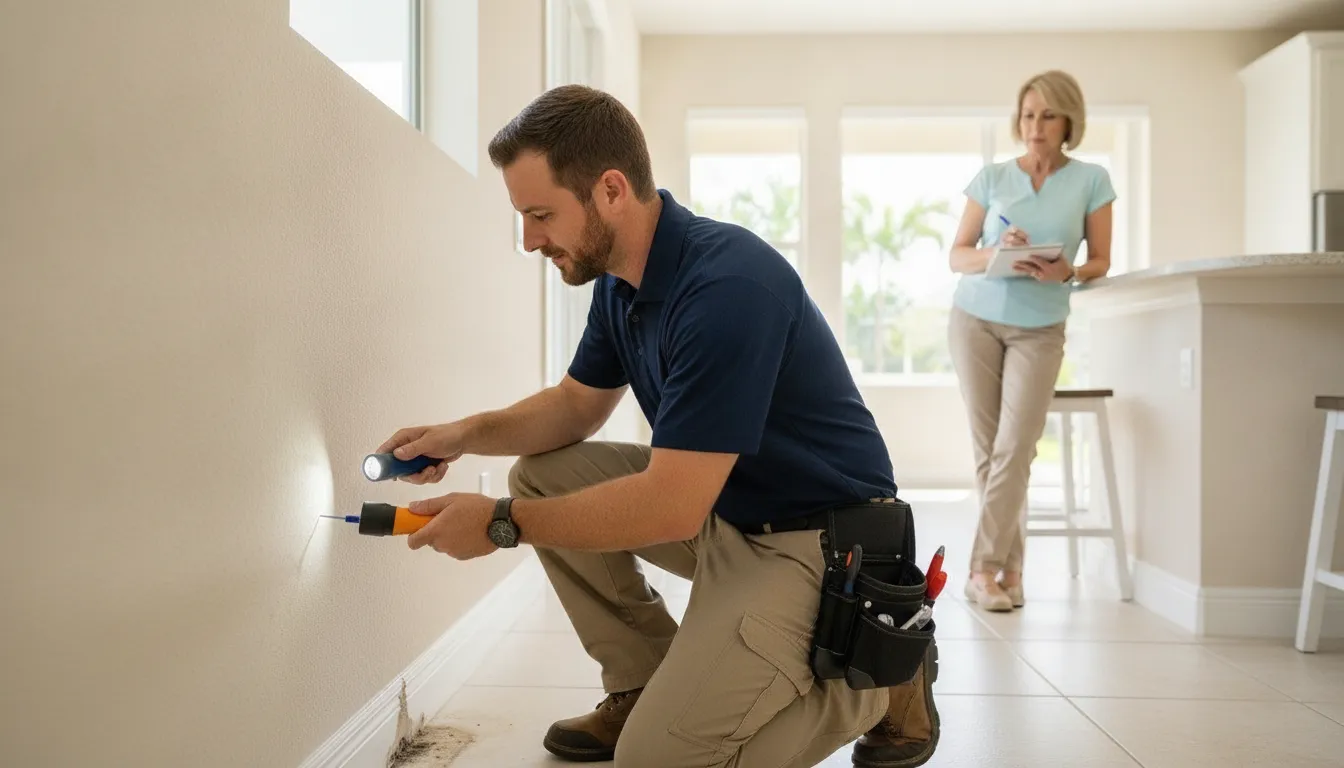
In a Florida home, a hidden leak beneath or near a concrete slab may show up as warm flooring, unexplained water use, damp areas, sound from running water, or cracks and damage that seem unrelated. These signs can have more than one cause, so avoid cutting into flooring or walls until the source is understood when possible.
Identify the source before deciding what to claim
Leak detection can help establish whether water is coming from a supply line, drain, fixture, appliance connection, or piping below the slab. It can also help identify the areas that need access and reduce unnecessary demolition. Give the insurer the diagnostic findings, photographs, invoices, and timeline.
Separate emergency mitigation from permanent repair
Stopping active water and preventing additional damage may be urgent. Permanent work can involve rerouting, access, drying, replacement, or restoration. Ask your insurer which emergency steps it authorizes and keep receipts. Do not promise yourself that every plumbing charge will be reimbursed.
Our leak detection service is intended to identify the plumbing problem and explain repair options. We provide an upfront fixed-price quote for work we recommend, but we do not determine insurance coverage or guarantee claim reimbursement.
How Should You File a Plumbing Insurance Claim in Florida?
To file a plumbing claim, make the situation safe, document the damage, notify your insurer promptly, follow mitigation instructions, and keep a complete record of every conversation and expense. A plumber can help diagnose the plumbing issue, while your insurer or licensed insurance representative explains the policy process.
- Stop the water if safe. Close the fixture valve or main shutoff, and avoid electrical hazards or unsafe areas.
- Protect people and property. Move belongings only when it is safe and use reasonable steps to prevent additional damage.
- Photograph before cleanup. Capture the source, standing water, damaged materials, affected belongings, and any visible labels or model information.
- Notify the insurer. Ask how and when to report the loss, whether an adjuster must inspect before repairs, and what emergency work is authorized.
- Arrange diagnosis and mitigation. Keep the plumber’s findings, photographs, invoices, estimates, and records of drying or restoration.
- Ask coverage questions in writing. Request an explanation of covered resulting damage, excluded components, deductible, limits, and endorsements.
- Keep the timeline current. Record the date of discovery, shutoff, calls, inspections, mitigation, and repairs.
Do not delay necessary protection while waiting for an answer
Follow your insurer’s instructions, but do not allow an active leak to continue damaging the home while waiting for a callback. Tell the insurer what emergency action is needed and keep evidence of the condition before and after mitigation. If a repair must happen immediately, ask how to preserve the failed part and documentation.
What Should You Document Before Calling Your Insurance Company?
Before calling, document what happened, when you noticed it, where the water traveled, what was damaged, and what you did to limit further loss. Clear documentation gives the insurer and any adjuster a usable timeline. It also helps a plumber focus the inspection without confusing the plumbing repair with restoration work.
Build a simple timeline
- When you first noticed water, a sound, a stain, a smell, or a change in water use.
- When you shut off a fixture or the main water supply.
- When you contacted the insurer, plumber, restoration company, landlord, or utility.
- When inspections, drying, demolition, or repairs occurred.
Preserve visual and financial records
Take wide photographs that show the room and close photographs that show the source and affected materials. Photograph undamaged areas when they help establish the extent of the loss. Save receipts for emergency supplies, drying, temporary lodging, damaged-item replacement, and authorized repairs. Do not discard damaged belongings unless the insurer or safety conditions require it, and ask how to preserve them.
Include the diagnostic report and any written estimate. A clear estimate should distinguish source repair, access, mitigation, restoration, and replacement. That separation makes it easier to ask which part of the work is being evaluated under the policy.
Why Does Local Diagnosis Matter Before You File a Claim?
A local plumbing diagnosis can clarify the source, urgency, and scope of a problem before you make assumptions about insurance. In Fort Myers and nearby Southwest Florida communities, the same visible stain can come from a fixture, supply line, drain, roof intrusion, condensation, or a hidden pipe. Identifying the source is the first practical step.
Our team serves residential and commercial properties with repair, leak detection, water heater, drain, sewer, and piping services. We explain what we find, discuss options, and provide fixed-price quotes before approved work begins. The quote describes plumbing work, not an insurance promise.
For a broader look at how to compare plumbing service options without relying on a vague hourly estimate, use the Fort Myers plumbing cost and service education guide. It belongs to the same trust-and-service topic cluster as this insurance explainer.
Questions to ask during the diagnosis
- Where is the water coming from?
- Does the evidence suggest a sudden failure or a long-standing condition?
- What must be done immediately to stop additional damage?
- Which work is source repair, and which work is access, drying, or restoration?
- What photographs, findings, and invoices should be saved for the insurer?
Frequently Asked Questions About Plumbing Insurance Coverage
Does homeowners insurance cover plumbing leaks?
It may cover resulting water damage from a sudden, accidental leak, subject to the policy and deductible. Gradual leaks, deterioration, neglect, and the failed plumbing component may be excluded or treated separately.
Is a burst pipe covered by homeowners insurance?
A burst pipe may be covered when the failure is sudden and accidental, but coverage is not automatic. Ask how the policy treats resulting damage, the burst pipe itself, emergency mitigation, and any applicable deductible or endorsement.
Does insurance cover slow leaks or damage from neglect?
Many policies treat slow leaks, known problems, corrosion, and ordinary wear differently from sudden failures. Report the loss, document when you noticed it, and ask the insurer to explain the policy language rather than assuming approval or denial.
Does homeowners insurance cover sewer line replacement?
Standard coverage may not cover every sewer backup or service-line repair. A specific endorsement or separate coverage may be required. Ask your insurer how it defines sewer backup, service-line damage, flooding, and related restoration.
Can a plumber tell me whether my claim will be approved?
No. A plumber can identify the plumbing source, document conditions, and explain repair options. Your insurer or licensed insurance representative must interpret the policy and determine whether the loss is covered.
Get the Plumbing Problem Documented Clearly
Insurance questions are easier to discuss when you have a safe home, a documented timeline, photographs, and a clear diagnosis. Coverage depends on your policy, the cause of the loss, and the damage involved. We can identify the plumbing problem, explain repair options, and provide a fixed-price quote before work begins.
Whiskey Creek Plumbing is a family-run Southwest Florida plumbing company serving Fort Myers, Lee County, Collier County, Naples, Marco Island, and surrounding communities. We bring 25 years of experience and a commitment to transparent service.
Call Whiskey Creek Plumbing at (239) 785-9022 to schedule plumbing service